How Crystals Form: Pegmatite, Hydrothermal, Sedimentary
Every crystal on Earth formed through one of a handful of geological processes, and once you understand those processes, identification and valuation start to make intuitive sense. A flawless aquamarine the length of your forearm did not happen by accident. It required a granitic melt rich in water, boron, and beryllium, a pocket with room to grow, and tens of thousands of years of patient cooling. The same logic applies at the other end of the scale: a thumbnail halite cube is the record of an ancient sea drying out in the sun. This article walks through the five main pathways crystals take from atoms in solution or melt to the specimens in your collection, plus a few special cases that do not fit neatly into any category.
What actually makes a crystal
A crystal is matter arranged on a periodic lattice. Atoms or ions occupy repeating positions in three dimensions, and that internal order propagates outward into the flat faces and sharp angles we recognize as crystal habit. The arrangement is not decorative. It reflects the lowest-energy configuration those particular atoms can adopt under the temperature and pressure conditions where they grew.
This is what separates a crystal from an amorphous solid. Volcanic glass has roughly the same silicon and oxygen chemistry as quartz, but it cooled too fast for the atoms to line up. Opal is silica plus water, but it forms spheres rather than lattices. Both materials are beautiful and collectable, but strictly speaking they are not crystalline.
The geological question, then, is simple. What conditions let atoms find their lattice positions? The answers fall into a small number of distinct environments.
1. Igneous: magmatic crystallization
The most direct route is freezing from a melt. As magma cools, individual minerals reach their crystallization temperature and begin to solidify out of the liquid. Olivine and pyroxene come out first at high temperatures, followed by plagioclase feldspar, then potassium feldspar, muscovite, and finally quartz at the low-temperature end of the sequence.
In most volcanic rocks this process is fast. Lava erupting at the surface cools in hours to days, and the resulting crystals are tiny or absent entirely. Basalt flows sometimes contain larger phenocrysts of olivine (the gem variety is peridot) that began growing slowly at depth before the eruption carried them upward. Deep-seated peridotite bodies can host larger olivine crystals because cooling was measured in thousands of years rather than days.
The general rule is straightforward. Slower cooling produces larger crystals. This is why the next category exists at all.
2. Pegmatites: the giant crystal factories
Pegmatites are the specimen collector's favorite rock. They form from the last dregs of a granitic magma chamber, the residual melt that remains after the main body of granite has already crystallized. This residual liquid is unusual in two ways. It is enriched in water and other volatiles (boron, fluorine, phosphorus, lithium), and it is concentrated in the "incompatible" elements that did not fit into the early-forming feldspars and micas. Those elements include beryllium, lithium, cesium, rubidium, niobium, tantalum, and the rare earths.
The combination is potent. High water content lowers the melt's viscosity dramatically, which lets atoms diffuse across large distances to find growing crystal faces. The concentrated rare elements mean the melt can build minerals that would never crystallize from ordinary granite. And pegmatites typically cool over tens of thousands of years deep in the crust.
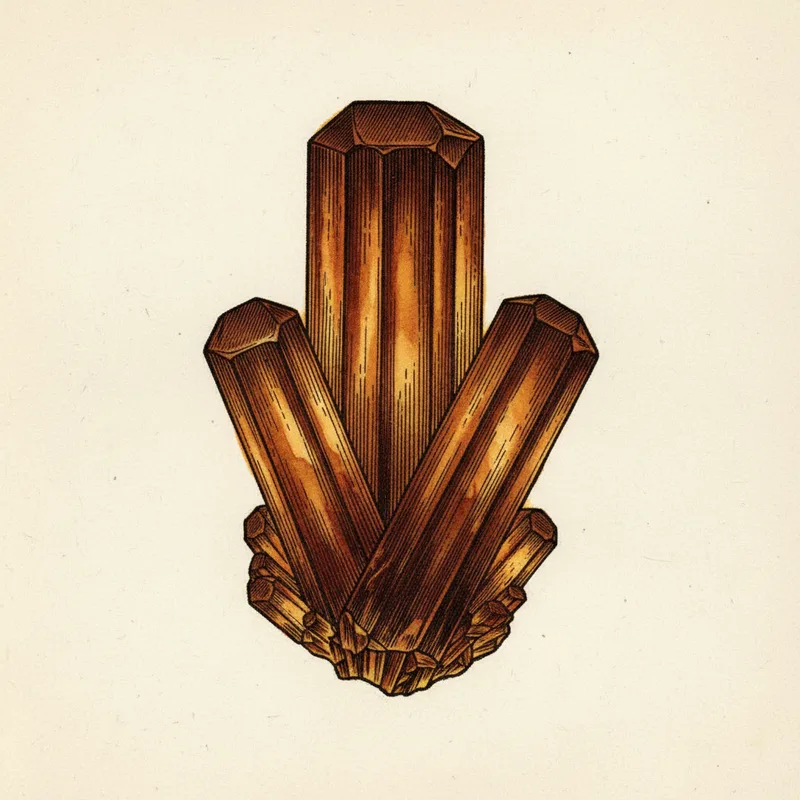
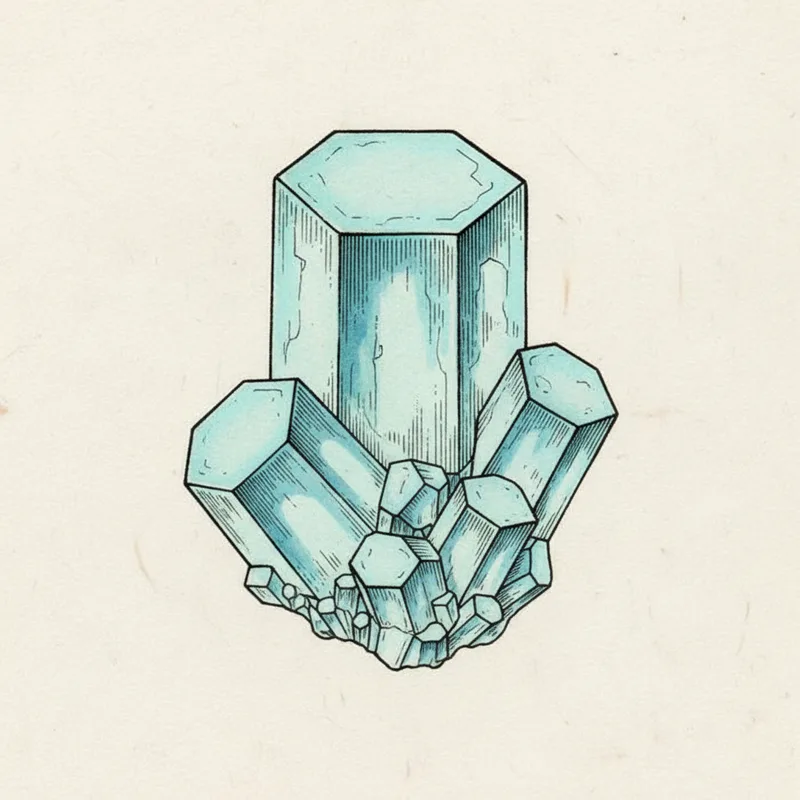
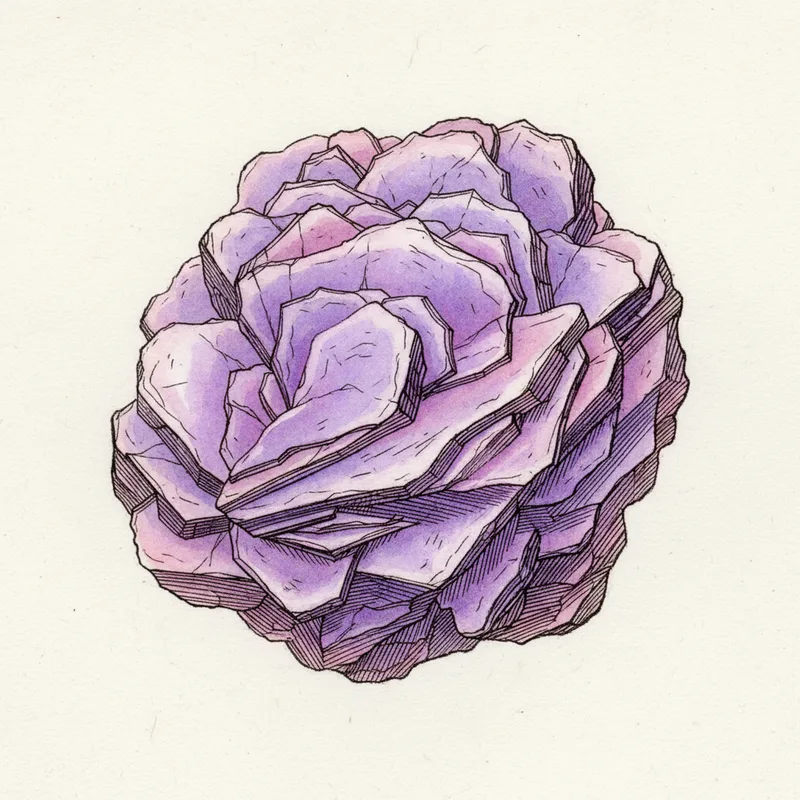
The result is the famous giant-crystal pockets. Beryl crystals (emerald, aquamarine, morganite, heliodor, goshenite) form with the composition Be₃Al₂Si₆O₁₈. Tourmaline, a complex borosilicate, produces black tourmaline (schorl) in simpler pegmatites and the elbaite varieties (watermelon tourmaline, rubellite, indicolite, verdelite) where lithium is abundant. Topaz (Al₂SiO₄(F,OH)₂), spodumene (the gem varieties kunzite and hiddenite), lepidolite, and cleavelandite round out the classic pegmatite assemblage.
The Pala District in California, Minas Gerais in Brazil, the pegmatite belts of Afghanistan and Pakistan, and the gem fields of Madagascar all owe their reputation to this geology. When you see a single flawless kunzite crystal weighing several pounds, you are looking at a pegmatite pocket that stayed undisturbed for geological time.
3. Hydrothermal: water does the work
Water at high temperature and pressure behaves very differently from the water coming out of your tap. It dissolves silica, carbonates, sulfides, and fluorides in quantities that would be impossible at surface conditions. When hot, mineral-charged fluids circulate through fractures in rock and then cool, drop in pressure, or react with the host rock, their dissolved load crystallizes on the fracture walls. These are hydrothermal vein deposits, and they account for an enormous portion of the crystal specimens on the market.
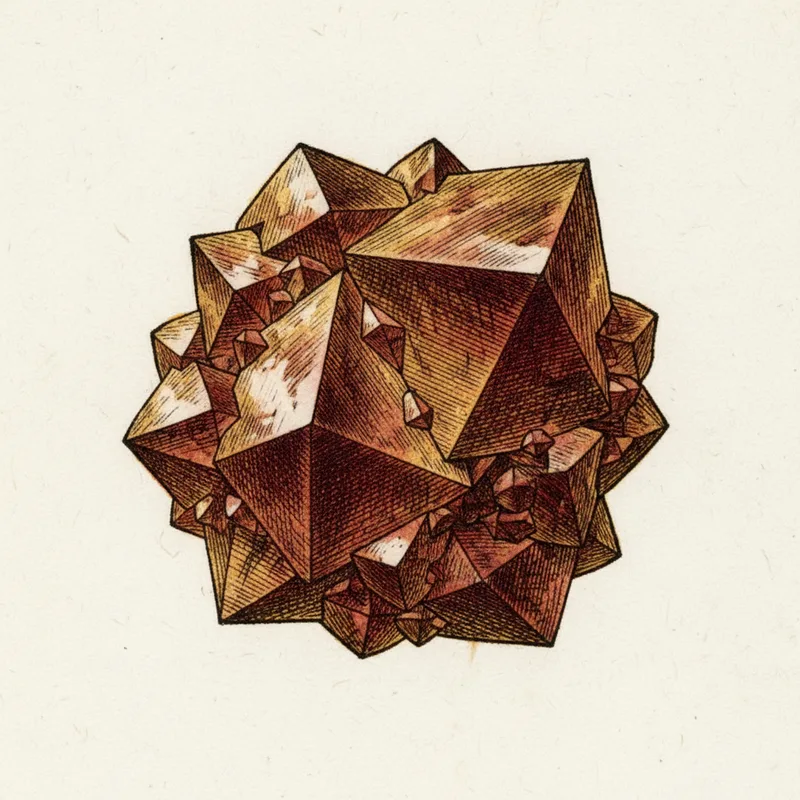
Quartz (SiO₂) is the archetypal hydrothermal mineral. The clear, amethyst, citrine, and smoky varieties all grow in veins or pockets where silica-rich fluids cooled slowly. Fluorite (CaF₂), calcite (CaCO₃), and barite crystallize alongside quartz in many deposits. The metal sulfides, pyrite (FeS₂), galena (PbS), and sphalerite (ZnS), are hydrothermal products too, and they often host the silver and lead ores that made historical mining districts famous.
Geodes are a special hydrothermal story. A gas bubble in a basalt flow or a cavity in a sedimentary rock becomes the host for slow mineral deposition as groundwater carries silica or carbonate through it. The outer shell is typically chalcedony, and the inward-pointing crystals are quartz or amethyst or calcite, depending on the chemistry of the fluids.
Hydrothermal crystals are often remarkably clean optically. The slow growth from a clear fluid produces fewer inclusions than you typically see in pegmatite or metamorphic minerals.
4. Metamorphic: heat and pressure
Metamorphic crystals grow in the solid state. A rock buried in the crust experiences rising temperature and pressure as it descends, and the minerals already present recrystallize into new phases that are stable under the new conditions. No melt is involved. Atoms migrate through the solid matrix, slowly, and reorganize into the lowest-energy minerals available for the bulk chemistry at hand.
This is where garnet, kyanite, staurolite, sillimanite, andalusite, and jadeite come from. Garnet (the almandine, pyrope, grossular, and spessartine series) forms in a wide range of metamorphic rocks and serves as an index mineral for moderate-grade conditions. Kyanite (Al₂SiO₅) is diagnostic of high-pressure, moderate-temperature metamorphism. Staurolite, with its famous cruciform twins, tracks a narrower slice of the same range. Jadeite requires very high pressure and relatively low temperature, which is why it is restricted to ancient subduction-zone rocks.
Geologists distinguish regional metamorphism, which affects large volumes of rock during mountain-building, from contact metamorphism, where a smaller aureole of rock is baked near an intruding magma body. Both produce crystalline specimens, though the large, collectable garnet and kyanite blades usually come from regional terrains where time and volume were both generous.
Metamorphic crystals tend to be tough and compact. They grew under compression, which tends to produce equant or prismatic habits rather than delicate sprays.
5. Sedimentary: slow chemistry at the surface
Some of the most interesting crystals form at surface conditions, where temperatures are modest and the work is done by evaporation or by groundwater chemistry.
Evaporites are the classic case. When a restricted body of salt water dries out, the dissolved ions crystallize in a predictable sequence. Calcium carbonate drops out first, then gypsum (CaSO₄·2H₂O), then halite (NaCl, rock salt), and finally the bittern salts of magnesium and potassium. Halite cubes and the blade, fishtail, and desert-rose forms of selenite (the transparent variety of gypsum) are recordings of ancient seas. The Naica cave in Mexico and the salt deposits of Poland and the American Southwest are all evaporite localities.
Silica can also move through sedimentary systems. Silica-rich groundwater percolating through cavities in basalt or limestone deposits layer upon layer of microcrystalline quartz, producing agate, chalcedony, jasper, and carnelian. The banding you see in agate is a record of fluctuating fluid chemistry over long stretches of time. Opal forms in a related setting, though it remains amorphous rather than crystallizing fully.
Fossilization overlaps with sedimentary mineralization. When groundwater replaces the original tissue of a plant or animal atom by atom, the result is petrified wood (silica replacing cellulose) or pyritized ammonites or agatized bone. The process is called permineralization, and it can preserve cellular detail at submicron resolution.
Amber and jet are the outliers in this category. Both are organic. Amber is fossilized tree resin, hardened over tens of millions of years into a stable polymer. Jet is a dense, coal-like form of fossilized wood, typically from the Jurassic. Neither has a crystal lattice, but both are routinely sold and displayed alongside true minerals, and both deserve mention in any honest account of what collectors encounter.
6. The special cases
A few specimens on the collector market do not fit cleanly into any of the five categories above.
Obsidian is volcanic glass. It has the chemistry of rhyolite but cooled too fast to organize into crystals, so it is technically amorphous rather than crystalline. The same is true of tektites, which are glass produced when meteorite impacts melt terrestrial rock and fling droplets through the atmosphere. Moldavite is the best-known tektite, formed roughly 15 million years ago by the Ries impact in what is now Germany.
Biogenic materials are produced directly by living organisms. Pearls (aragonite, CaCO₃, laid down in concentric layers by mollusks), coral, and the calcite and aragonite of mollusk shells all count. The mineral is real and crystalline at the microscopic scale, but the overall object is a biological secretion rather than a geological growth.
Native metals, including copper, silver, and gold, can crystallize hydrothermally or from low-temperature groundwater in the right redox conditions. Iron oxides like hematite (Fe₂O₃) and magnetite (Fe₃O₄) form in environments ranging from hydrothermal veins to banded iron formations, the latter a distinctly sedimentary product of the Great Oxygenation Event more than two billion years ago.
How this helps you as a collector
Knowing formation pathway is not a trivia exercise. It correlates directly with what you should expect to pay, what size is realistic, and what flaws to look for.
Pegmatite species can be enormous. A ten-kilogram beryl or a museum-sized kunzite is not unusual, and large clean specimens are where the value lives. Hydrothermal quartz and calcite tend to be optically cleaner than metamorphic equivalents because they grew from fluid rather than rearranging through solid rock. Metamorphic garnet and staurolite are tough and hard but rarely achieve the size or clarity of pegmatite gems. Sedimentary specimens, including selenite, halite, and gypsum desert roses, are visually striking but soft. Selenite is hardness 2, which means a fingernail will mark it. Display and handling matter more for sedimentary than for any other category.
The fastest way to become a better collector is to ask, of every specimen in front of you, where did this grow. The answer tells you almost everything else.
Crystals in This Article
- Quartz
- Amethyst
- Citrine
- Smoky quartz
- Tourmaline
- Black tourmaline
- Watermelon tourmaline
- Beryl
- Emerald
- Aquamarine
- Morganite
- Topaz
- Spodumene
- Kunzite
- Lepidolite
- Garnet
- Kyanite
- Staurolite
- Jadeite
- Fluorite
- Calcite
- Pyrite
- Galena
- Sphalerite
- Halite
- Selenite
- Gypsum
- Agate
- Chalcedony
- Opal
- Obsidian
- Moldavite
- Amber
- Jet
- Pearl
- Peridot
- Olivine
- Hematite
- Magnetite
Metaphysical and “healing” associations mentioned here are cultural traditions, not medical advice or scientific fact. Crystals are not a substitute for professional medical care. Full disclaimer.
Crystals in This Article
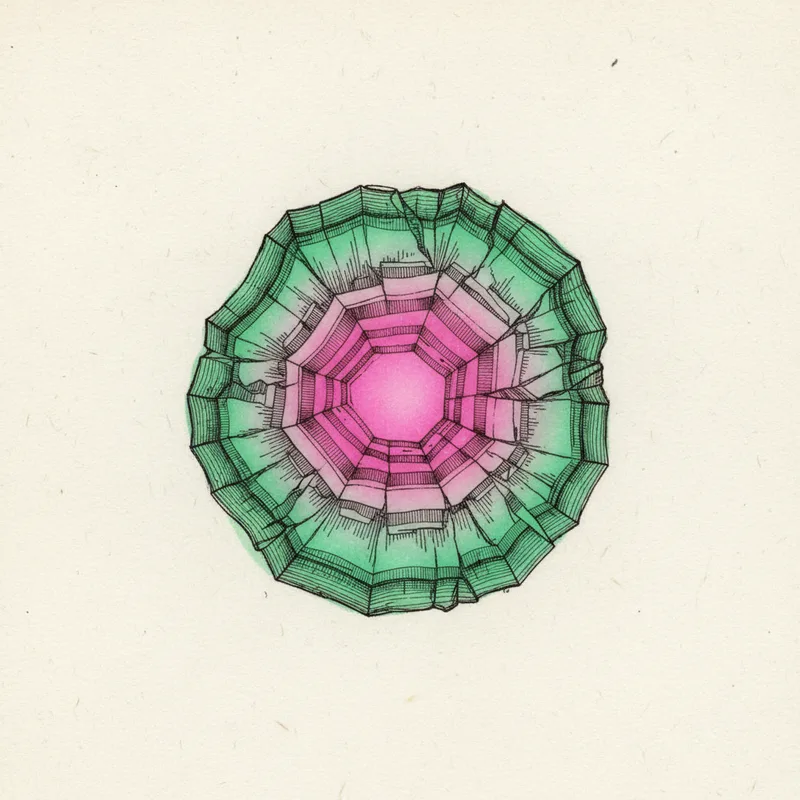
Watermelon Tourmaline
The Dual Heart Stone
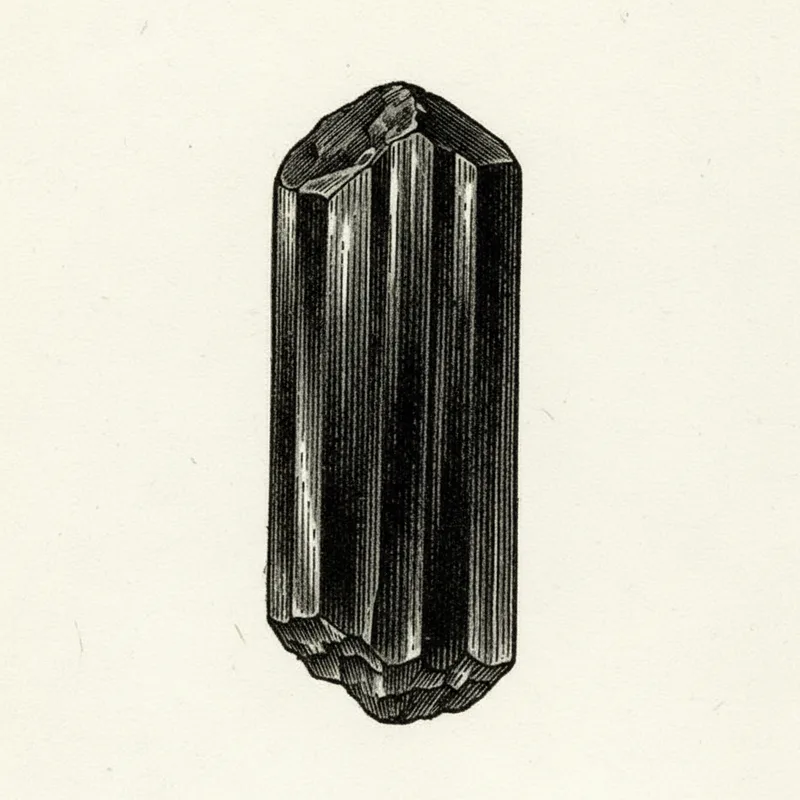
Black Tourmaline
The Shield Stone
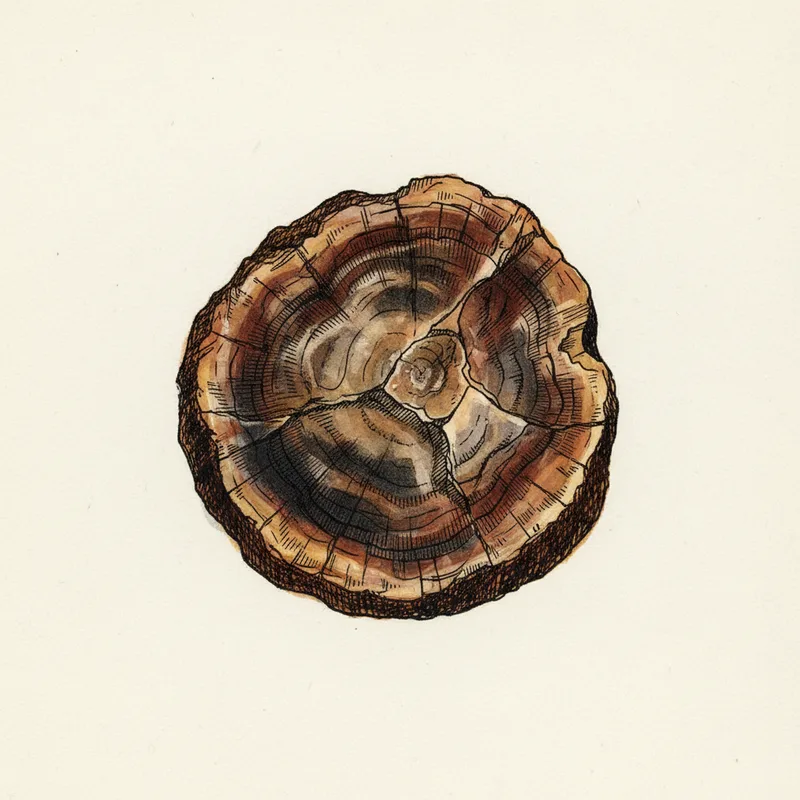
Petrified Wood
Time Written in Stone
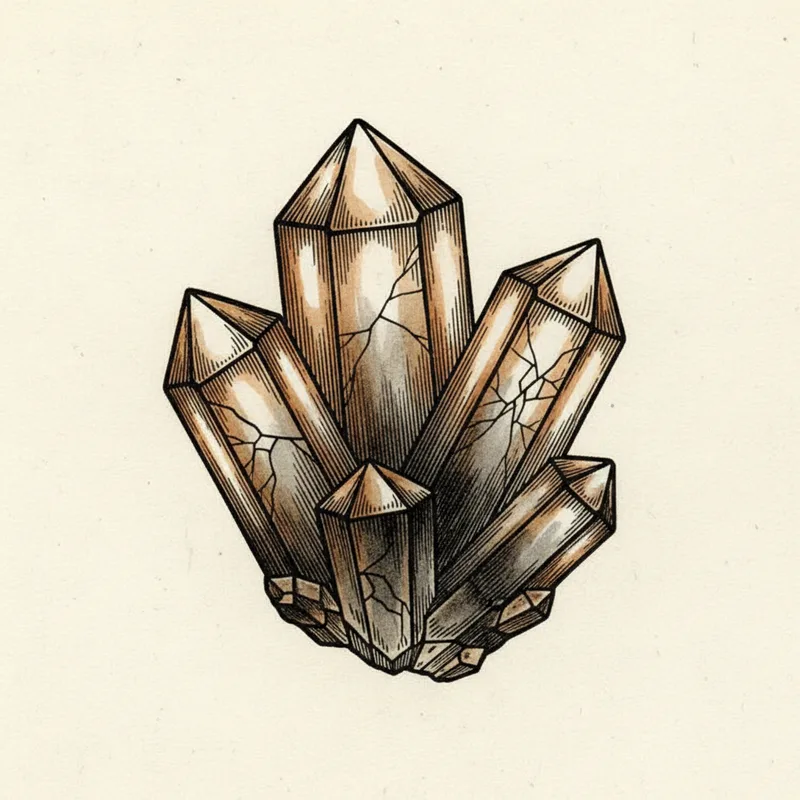
Smoky Quartz
The Grounding Stone
Tourmaline
The Rainbow Stone
Aquamarine
The Sailor's Gem
Lepidolite
The Peace Stone
Sphalerite
The Fire Diamond
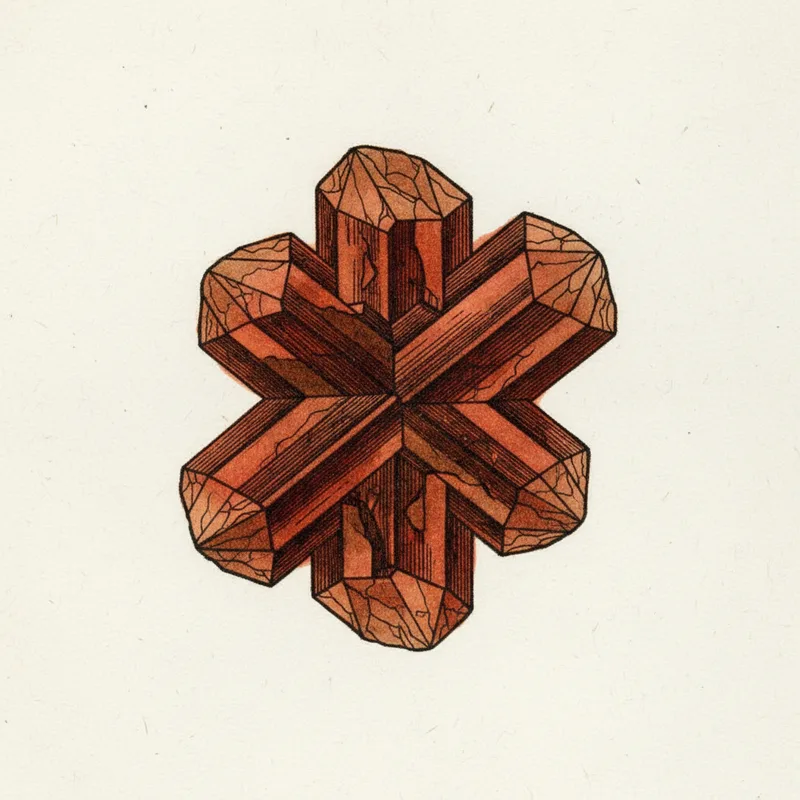
Staurolite
The Fairy Cross
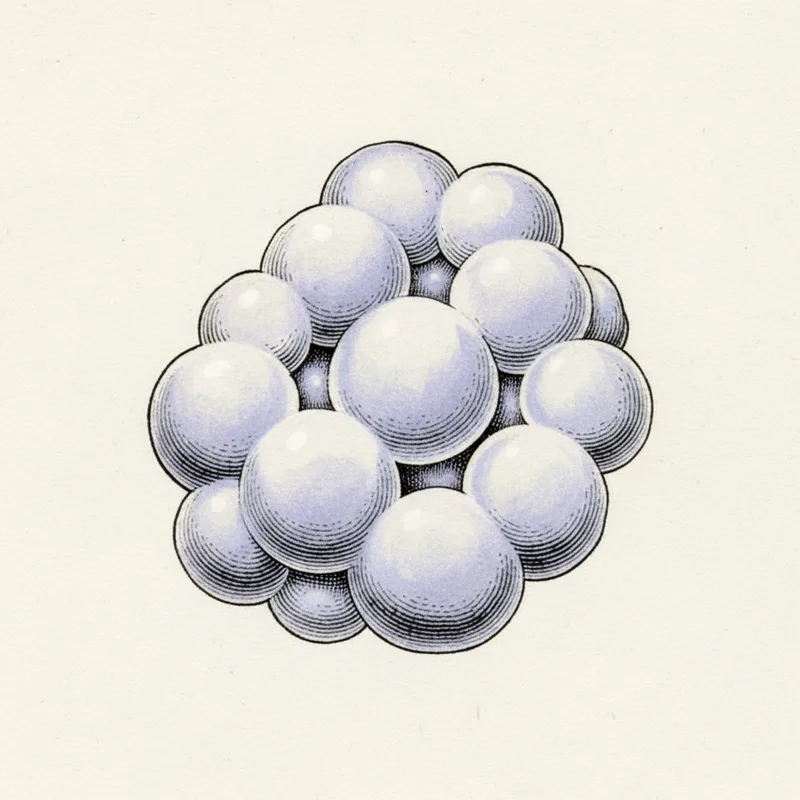
Chalcedony
The Mother of Agates
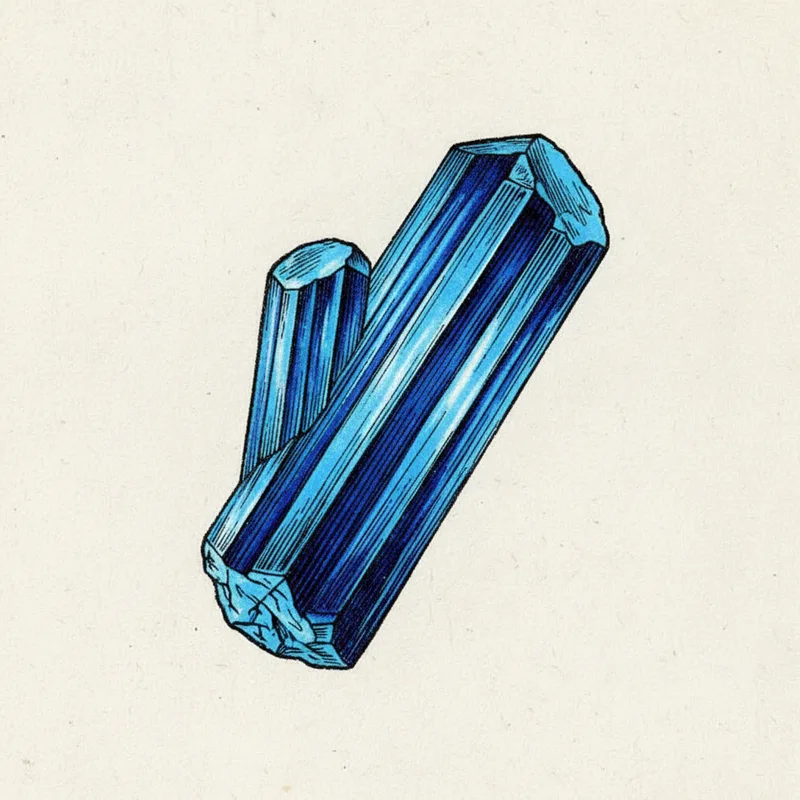
Indicolite
The Blue Tourmaline
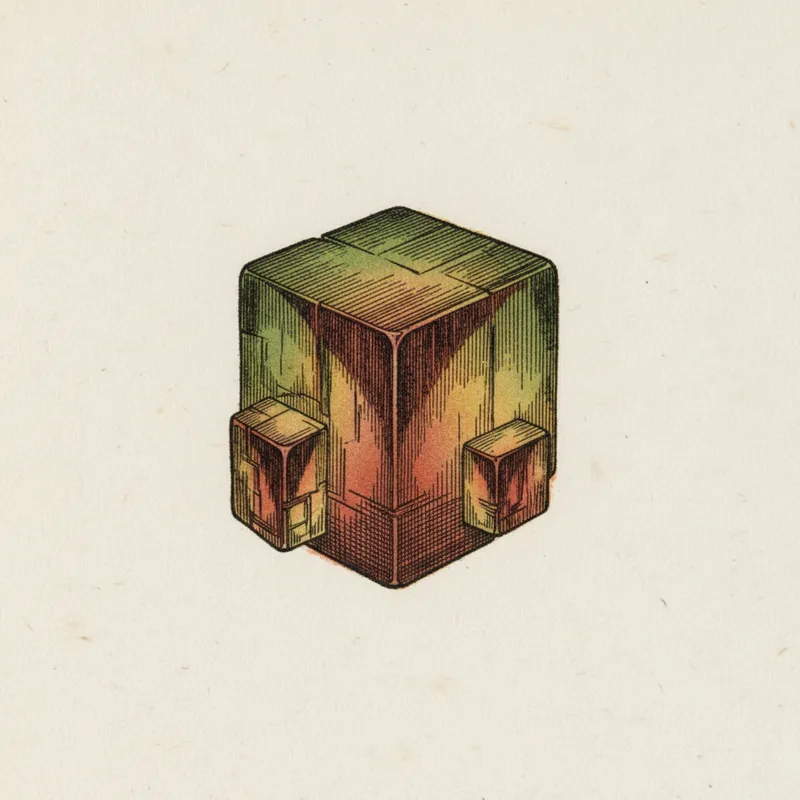
Andalusite
The Poor Man's Alexandrite
Keep Reading
Newsletter
Something shiny, now and then
A stone worth knowing, or a fake worth spotting, every so often. No spam.