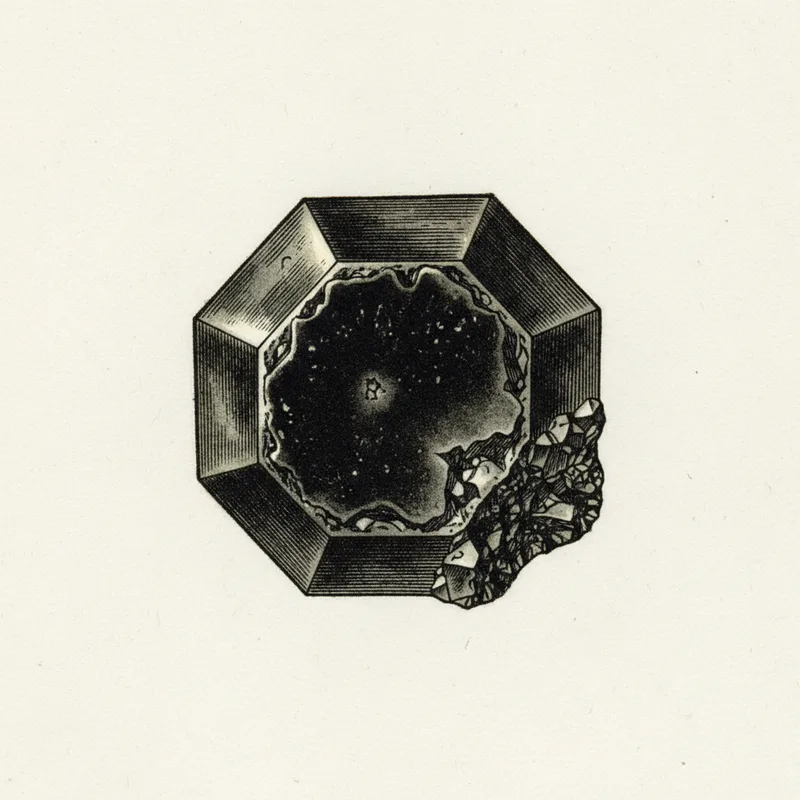
Magnetite
The Lodestone
Affiliate links. We may earn a commission, at no cost to you.
Quick Facts
Formation & Origin
Magnetite is an iron oxide that holds a unique place in human history - it's the most magnetic naturally occurring mineral on Earth. Certain specimens, called lodestones, are permanently magnetized and will attract iron filings and deflect compass needles. The discovery of lodestone's magnetic properties led directly to the invention of the magnetic compass, which enabled the Age of Exploration.
Magnetite forms in igneous, metamorphic, and sedimentary environments. In igneous rocks, it crystallizes directly from magma as an accessory mineral. In banded iron formations (2-3 billion years old), it's a major component alongside hematite, recording the oxygenation of Earth's atmosphere. Magnetite also forms through biological processes - magnetotactic bacteria synthesize microscopic magnetite crystals that function as biological compasses.
Not all magnetite is magnetic enough to be called lodestone. Lodestone's permanent magnetism is thought to come from lightning strikes that magnetize surface-exposed magnetite, aligning the magnetic domains permanently. This means lodestones are literally created by lightning.
Identification Guide
Magnetite is identified by its black color, metallic luster, black streak (distinguishing it from hematite's red-brown streak), hardness of 5.5-6, and magnetic properties. A simple magnet test is diagnostic - magnetite is attracted to magnets, and lodestone specimens attract iron.
Distinguish from hematite (red-brown streak vs black), ilmenite (non-magnetic, different crystal form), and chromite (slightly different streak). The magnetic test is the fastest and most reliable identification method.
Spotting Fakes
Natural magnetite is abundant and inexpensive, so faking is unnecessary. However, 'magnetic hematite' beads (which are actually synthetic barium-strontium ferrite ceramic, not hematite or magnetite) are ubiquitous in the crystal market. These manufactured beads are very strongly magnetic - much more so than natural magnetite - and have no geological origin. Real magnetite specimens have natural crystal faces or rough surfaces, not the perfect polished spheres of synthetic material.
Some links in this post go to Amazon and Etsy. Crystal Almanac earns a commission from qualifying purchases at no extra cost to you. Tools recommended here are ones we would use ourselves to run the tests described - the recommendation comes first, the link is downstream of it.
Cultural & Metaphysical Traditions
Presented as cultural traditions, not scientific evidence
Lodestone has been used in folk magic and spiritual practice for millennia. In Hoodoo/Rootwork tradition (African American folk magic), lodestones are 'fed' with iron filings and used to attract luck, money, and love - one of the most important and continuously practiced uses of minerals in any magical tradition. Ancient Greeks called magnetite 'the bone of Horus' and attributed it to the gods. Chinese geomancers used lodestone compasses for feng shui centuries before Western navigation adopted the compass.
Metaphysical and “healing” associations are cultural traditions, not medical advice or scientific fact. Crystals are not a substitute for professional medical care.
Where It's Found
Massive iron ore deposits, world-class
Major deposits associated with platinum mining
Historic mining, good crystal specimens
Naturally magnetic lodestone specimens
Price Guide
Good to Know
Scratch test: At hardness 5.5, Magnetite resists scratching from a knife but can be scratched by quartz. Best for pendants and earrings rather than rings.
Global supply: Found in 4 notable locations worldwide, from Sweden to Bolivia.
Heft test: With a specific gravity of 5.18, Magnetite feels surprisingly heavy for its size. This weight is actually a useful identification tool.
Common Questions
What is the chemical formula of Magnetite?
The chemical formula of Magnetite is Fe₃O₄.
What is Magnetite's Mohs hardness?
Magnetite has a Mohs hardness of 5.5 on the 1 to 10 Mohs scale, hard enough to scratch glass but softer than quartz.
Is Magnetite a mineral?
Yes. Magnetite is a naturally occurring mineral (Oxide Group) with a definite chemical composition and an ordered crystal structure.
Care & Safety
The water, salt, and sunlight questions people actually ask before cleansing or displaying magnetite, answered from its hardness (Mohs 5.5) and chemistry (Fe₃O₄).
Can Magnetite go in water?
Not recommended. Magnetite can react with water, draw in moisture, or break down when it gets wet, so skip the rinse. Wipe it with a dry or barely damp cloth and dry it right away.
Can Magnetite go in salt water?
No. Magnetite is best kept away from water altogether, and salt water is the harsher version of that problem: the dissolved salt is corrosive while the stone is wet, then leaves gritty crystals behind in cracks and crevices as it dries. Magnetite's iron content also makes rust staining likely if salt residue sits on the surface.
Sources & References
The mineralogical and gemological data on this page is drawn from and can be cross-checked against these external references.
- WikipediaMagnetite on Wikipedia
- WebmineralMagnetite mineral data (Webmineral)
- Handbook of MineralogyMagnetite (Handbook of Mineralogy, PDF)
Related Minerals
Iron oxide with red streak, not magnetic
Iron sulfide, metallic but not magnetic
Iron titanium oxide, weakly magnetic
Naturally permanently magnetized magnetite
Explore More
Oxide & Hydroxide Minerals
The Grounding Collection
Literally magnetic. Lodestone's physical pull on iron is the most dramatic demonstration of Earth energy in any mineral.
How to Identify a Crystal by Its Mineral Group
How Crystals Form: Pegmatite, Hydrothermal, Sedimentary
Crystals That Fade in Sunlight (The Chemistry Explained)
Mohs Hardness Scale
See where Magnetite sits on the scale
Crystal Care Guide
Water safety, sunlight, and handling tips
Save This Stone

Keep this magnetite reference handy. Save the card to a Pinterest board and the profile is one tap away.
Save to PinterestNewsletter
Something shiny, now and then
A stone worth knowing, or a fake worth spotting, every so often. No spam.