Tektite
Meteorite Impact Glass
Affiliate links. We may earn a commission, at no cost to you.
Quick Facts
Formation & Origin
Tektite is a natural glass formed from terrestrial rock melted and ejected during a high-velocity meteorite impact, then quenched in flight. Tektites form during hypervelocity meteorite impacts. When a large meteorite strikes the Earth, the enormous energy melts and vaporizes both the meteorite and the target rock. Molten material is ejected at high speed into the upper atmosphere or even briefly into space, where it cools rapidly into glass as it falls back to Earth.
Different impact events created different tektite strewn fields. The Australasian field (the largest and youngest, ~790,000 years old) covers Southeast Asia to Australia. The Central European field produced moldavites (~15 million years old) from the Ries crater impact in Germany. The North American field (~35 million years old) is associated with the Chesapeake Bay impact.
The aerodynamic shapes of tektites (spheres, dumbbells, teardrops, discs) result from their spinning while molten during flight. Splash-form tektites cooled while spinning in the air. Layered tektites (Muong Nong type) solidified as thick, layered pools from material that didn't travel as far.
Identification Guide
Tektites are glassy, usually black or very dark, and feel lighter than expected for their size. Surface textures include pitting, grooves, and sculptured forms from atmospheric ablation. Splash-form tektites have distinctive aerodynamic shapes.
Distinguish from obsidian (which has flow banding and is volcanic, not impact-related), slag (typically has metallic inclusions and irregular vesicles), and artificial glass (too uniform). Tektites are virtually free of crystalline inclusions and water content, unlike volcanic glasses.
Spotting Fakes
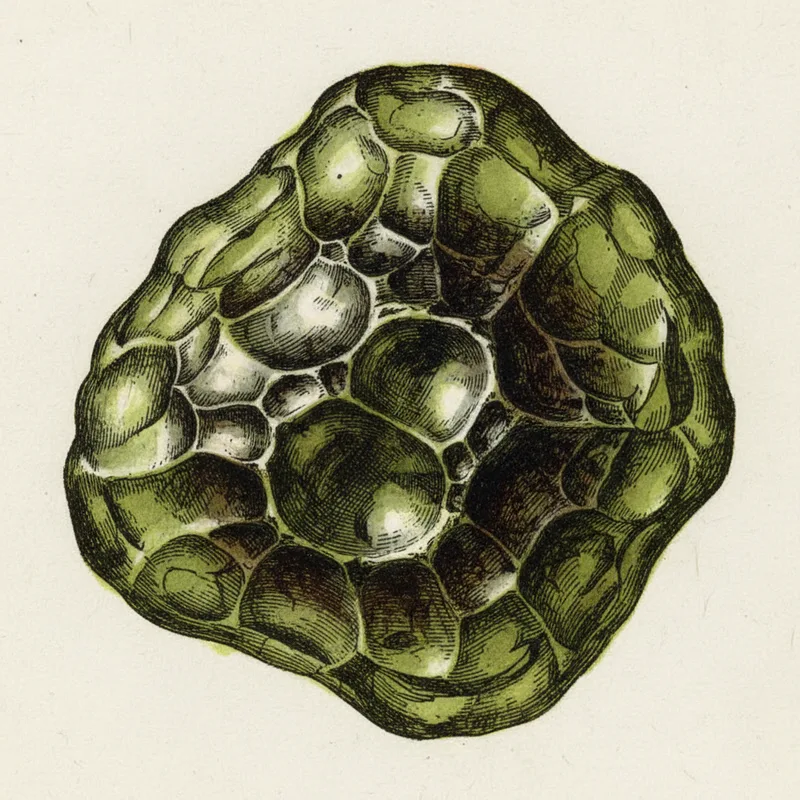
The most commonly faked tektites are 'moldavites,' which command high prices. Genuine moldavite has a distinctive bubbly, wrinkled surface texture, green color when held to light, and contains lechatelierite (pure silica glass) inclusions visible under magnification. Factory-made glass moldavites are increasingly sophisticated but typically have a too-perfect green color, visible mold seams, and lack internal flow structures. For standard black tektites, the main risk is obsidian or slag being misrepresented.
Some links in this post go to Amazon and Etsy. Crystal Almanac earns a commission from qualifying purchases at no extra cost to you. Tools recommended here are ones we would use ourselves to run the tests described - the recommendation comes first, the link is downstream of it.
Cultural & Metaphysical Traditions
Presented as cultural traditions, not scientific evidence
Tektites have been revered across cultures as sky stones or star stones. Their extraterrestrial connection (though they're terrestrial material transformed by impact) gives them a special status in crystal healing. Practitioners associate them with transformation, cosmic connection, and rapid spiritual growth. Moldavite in particular has developed a devoted following for its reputed intensity.
Metaphysical and “healing” associations are cultural traditions, not medical advice or scientific fact. Crystals are not a substitute for professional medical care.
Where It's Found
Indochinite tektites, Australasian strewn field
Moldavites (green variety), highly collectible
Ivory Coast tektites, ~1.1 million years old
Bediasites and georgiaites, North American strewn field
Price Guide
Good to Know
Scratch test: At hardness 5.5, Tektite resists scratching from a knife but can be scratched by quartz. Best for pendants and earrings rather than rings.
Global supply: Found in 4 notable locations worldwide, from Southeast Asia to United States.
Heft test: With a specific gravity of 2.30-2.50, Tektite feels lighter than most minerals. This lightness can help identify it.
Common Questions
What is the chemical formula of Tektite?
The chemical formula of Tektite is SiO₂-rich glass (variable composition).
What is Tektite's Mohs hardness?
Tektite has a Mohs hardness of 5.5 on the 1 to 10 Mohs scale, hard enough to scratch glass but softer than quartz.
Is Tektite a mineral?
No. Tektite is a natural glass (a mineraloid), not a true mineral, because it cooled too fast to develop the ordered crystal structure that defines a mineral.
Care & Safety
The water, salt, and sunlight questions people actually ask before cleansing or displaying tektite, answered from its hardness (Mohs 5.5) and chemistry (SiO₂-rich glass (variable composition)).
Can Tektite go in water?
Yes. Tektite is not water-soluble and durable enough (Mohs 5.5), so a rinse or a quick wash with mild soap is no problem, cleanse it in water freely if that is your practice. A long soak does nothing for it either way, so skip that, and dry the stone afterward.
Can Tektite go in salt water?
Not recommended, even though tektite itself is hard and not water-soluble. Salt is both corrosive and mildly abrasive: it can dull a polished surface, attack metal settings, and crystallize inside small fractures as the stone dries. A quick dip will not destroy tektite, but rinse it with fresh water afterward and dry it. For routine cleaning, plain water is the kinder choice.
Sources & References
The mineralogical and gemological data on this page is drawn from and can be cross-checked against these external references.
- WikipediaTektite on Wikipedia
Explore More
Volcanic & Impact Glass
How Crystals Form: Pegmatite, Hydrothermal, Sedimentary
The 10 Most Faked Crystals on TikTok (With Tests)
Is My Moldavite Real? 6 Tests Geologists Use
Mohs Hardness Scale
See where Tektite sits on the scale
Crystal Care Guide
Water safety, sunlight, and handling tips
Save This Stone

Keep this tektite reference handy. Save the card to a Pinterest board and the profile is one tap away.
Save to PinterestNewsletter
Something shiny, now and then
A stone worth knowing, or a fake worth spotting, every so often. No spam.