Jasper
The Supreme Nurturer
Affiliate links. We may earn a commission, at no cost to you.
Quick Facts
Formation & Origin
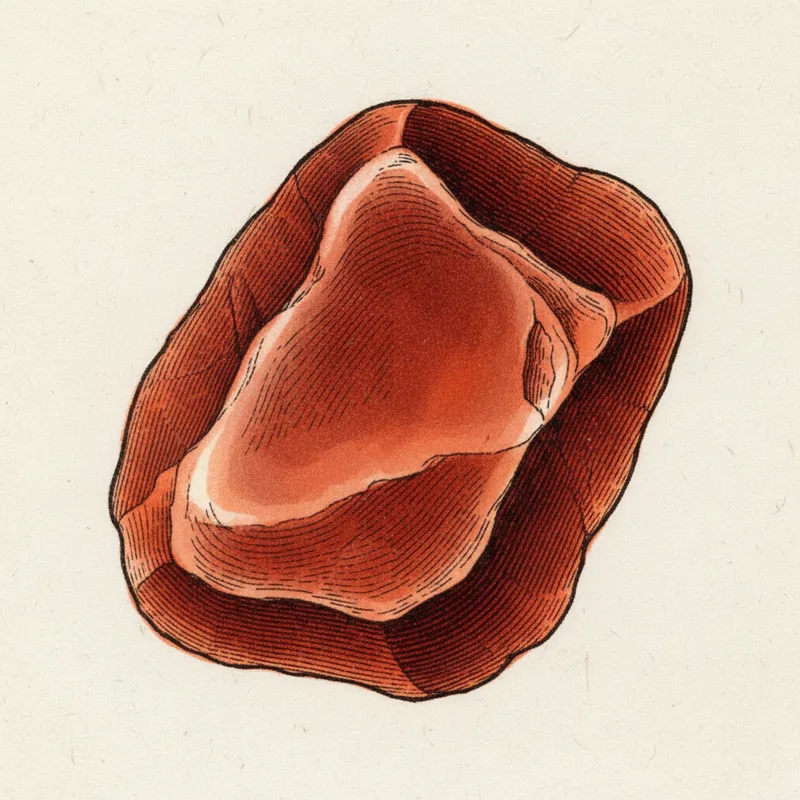
Jasper is an opaque, impure variety of microcrystalline quartz that gets its wide range of colors and patterns from mineral inclusions - primarily iron oxides, clay minerals, and organic matter. It forms through silicification, where silica-rich fluids permeate and replace existing rocks or sediments.
The incredible diversity of jasper patterns reflects the diversity of formation environments. Picture jasper from Oregon preserves ancient landscapes in stone - the patterns are actual cross-sections of volcanic ash deposits, each colored band representing a different eruption. Ocean jasper from Madagascar forms in volcanic rock with distinctive orbicular (circular) patterns created by radial crystal growth. Mookaite from Australia is a biogenic jasper formed from the silicified remains of microscopic marine organisms (radiolaria).
This variety makes jasper one of the most collectible mineral groups - each locality produces patterns and colors found nowhere else, and new varieties continue to be discovered and named.
Identification Guide
Jasper is defined by being opaque microcrystalline quartz - this distinguishes it from agate (translucent, banded), carnelian (translucent, orange), and chalcedony (translucent, various colors). At Mohs 7, it's hard and durable with a waxy luster.
Identifying specific jasper varieties requires familiarity with locality-specific patterns. The fracture is typically smooth to splintery. Jasper does not fluoresce. In thin section under a microscope, it shows a granular texture of interlocking quartz microcrystals.
Spotting Fakes
Jasper is too abundant and varied to be commonly faked, but locality fraud exists - lower-grade jasper from one location may be sold under the name of a more valuable locality. Ocean jasper, for instance, comes from a single depleted beach in Madagascar and commands premium prices. Some 'ocean jasper' on the market is orbicular jasper from other locations. Genuine ocean jasper typically shows a specific palette of greens, pinks, and whites with distinctive druzy quartz-filled cavities.
Some links in this post go to Amazon and Etsy. Crystal Almanac earns a commission from qualifying purchases at no extra cost to you. Tools recommended here are ones we would use ourselves to run the tests described - the recommendation comes first, the link is downstream of it.
Cultural & Metaphysical Traditions
Presented as cultural traditions, not scientific evidence
One of the oldest known gemstones in human use, jasper appears in ancient Egyptian, Mesopotamian, and Greco-Roman traditions. The Bible mentions jasper repeatedly (the walls of the New Jerusalem include jasper). Native American traditions associate red jasper with the blood of the Earth. The name comes from the Greek 'iaspis.' Modern practitioners consider jasper a grounding and nurturing stone.
Metaphysical and “healing” associations are cultural traditions, not medical advice or scientific fact. Crystals are not a substitute for professional medical care.
Where It's Found
Ocean jasper - orbicular patterns, found on one beach
Biggs jasper and Deschutes picture jasper
Mookaite - vibrant reds, yellows, and purples
Classic red and green jasper, historic source
Price Guide
Good to Know
Scratch test: At hardness 7, Jasper can scratch glass and steel. It's durable enough for any type of jewelry.
Global supply: Found in 4 notable locations worldwide, from Madagascar to Russia.
Heft test: Jasper has average mineral density (2.60). It feels about as heavy as you'd expect from a stone its size.
Common Questions
What is the chemical formula of Jasper?
The chemical formula of Jasper is SiO₂.
What is Jasper's Mohs hardness?
Jasper has a Mohs hardness of 7 on the 1 to 10 Mohs scale, hard enough to scratch glass and stand up to daily wear.
Is Jasper a mineral?
Yes. Jasper is a naturally occurring mineral (Quartz Family (Chalcedony)) with a definite chemical composition and an ordered crystal structure.
Care & Safety
The water, salt, and sunlight questions people actually ask before cleansing or displaying jasper, answered from its hardness (Mohs 7) and chemistry (SiO₂).
Can Jasper go in water?
Yes. Jasper is hard (Mohs 7) and chemically stable, so a rinse or a quick wash with mild soap is no problem, cleanse it in water freely if that is your practice. A long soak does nothing for it either way, so skip that, and dry the stone afterward.
Can Jasper go in salt water?
Not recommended, even though jasper itself is hard and not water-soluble. Salt is both corrosive and mildly abrasive: it can dull a polished surface, attack metal settings, and crystallize inside small fractures as the stone dries. A quick dip will not destroy jasper, but rinse it with fresh water afterward and dry it. For routine cleaning, plain water is the kinder choice.
Sources & References
The mineralogical and gemological data on this page is drawn from and can be cross-checked against these external references.
- WikipediaJasper on Wikipedia
Related Minerals
Translucent chalcedony, often found together
Similar composition, different formation context
Dark green jasper with red iron oxide spots
Microcrystalline quartz, nodular formation
Explore More
Quartz & Chalcedony
The Grounding Collection
Called 'the supreme nurturer.' Jasper varieties have been used as grounding stones across virtually every culture with access to the mineral.
How to Protect Crystals from Summer Heat and Sunlight
Best Crystals for Grounding and Stability
Red, White, and Blue Crystals: The Real Geology
Mohs Hardness Scale
See where Jasper sits on the scale
Crystal Care Guide
Water safety, sunlight, and handling tips
Save This Stone

Keep this jasper reference handy. Save the card to a Pinterest board and the profile is one tap away.
Save to PinterestNewsletter
Something shiny, now and then
A stone worth knowing, or a fake worth spotting, every so often. No spam.