Cancer Season Crystals 2026: Stones for Intuition
Key Takeaway: Cancer season runs June 21 through July 22. It is the cardinal water sign ruled by the Moon, the sign of home, memory, and feeling. The crystals that pair with it are the ones that glow with internal light or carry water in their chemistry. Moonstone, selenite, larimar, pearl, carnelian, and ruby are the six worth keeping at hand for the next month.
The sun crosses into Cancer on June 21, the same day as the summer solstice in the Northern Hemisphere. The next month belongs to the fourth sign of the zodiac. Astrologers describe Cancer as intuitive, protective, and emotionally deep. The natural ruler is the Moon, not a planet but Earth's own satellite, which governs tides and cycles. The element is water. The natural domain is the fourth house of home, family, ancestry, and the inner emotional world.
If you come at crystals from a geological angle, the stones traditionally tied to Cancer cluster around two physical properties: internal light effects (moonstone's adularescence, selenite's fibrous glow) and water locked into the mineral structure (selenite is a hydrated sulfate, pearl and larimar both form in or near water). The Moon connection feels less arbitrary once you notice the stones literally hold light or water the way the Moon governs the tides.
Below are six crystals that suit Cancer season, with a note on what each looks like, how it formed, what tradition has done with it, and what you should expect to pay. At the end there is a short ritual for the month.
1. Moonstone: The Signature Cancer Stone
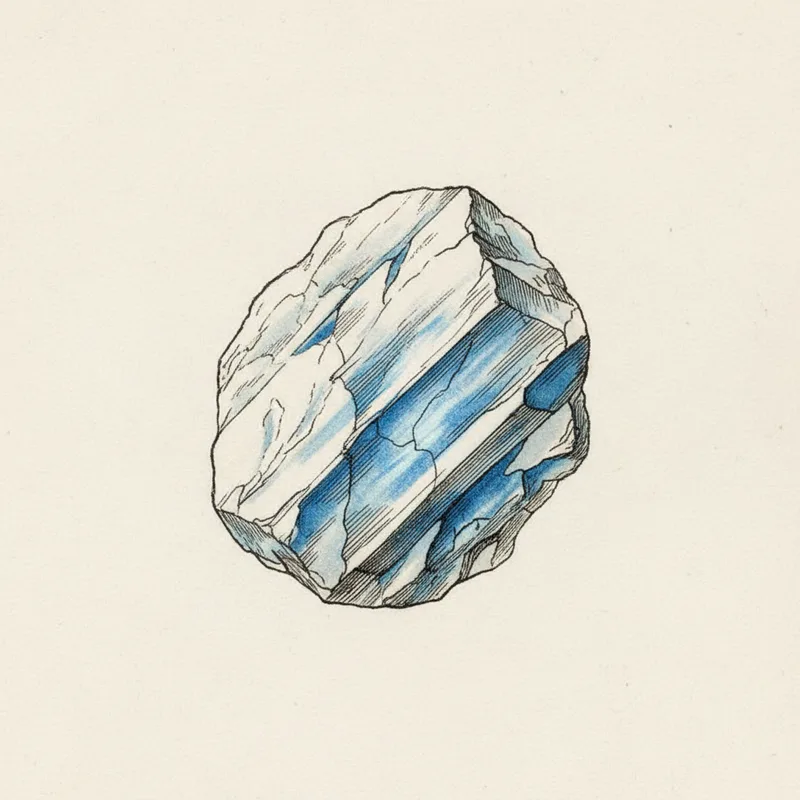
Moonstone is the obvious starting point. It is a potassium feldspar that produces a soft, floating blue-white glow called adularescence, which moves across the stone like moonlight on water.
The glow is a cooling story. As the molten feldspar cooled underground, two varieties (orthoclase and albite) separated into alternating microscopic layers. Light entering the stone scatters off those layers and re-emerges as the billowy sheen geologists call adularescence. It is the same physics that makes the sky blue (Rayleigh-style scattering off structures smaller than the wavelength of light), happening inside a stone.
Most fine moonstone comes from Sri Lanka and southern India. Expect $2-$30 per carat depending on transparency and the strength of the blue sheen. For the moonstone-versus-rainbow-moonstone confusion that trips up most buyers, see our rainbow moonstone vs white moonstone guide.
Traditional associations: Intuition, emotional balance, the divine feminine, new beginnings. Moonstone is the Moon's stone in nearly every tradition, which makes it the literal birthstone of Moon-ruled Cancer.
2. Selenite: The Moon-Goddess Stone
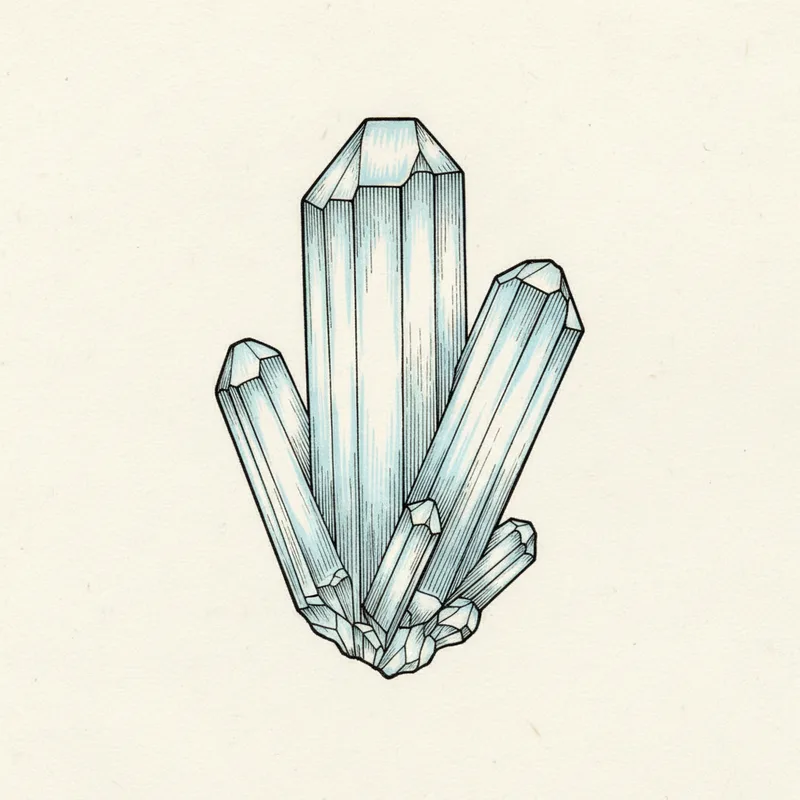
Selenite is named directly for Selene, the Greek Moon goddess, and it is hard to find a more on-theme Cancer crystal. It is a crystallized form of gypsum, calcium sulfate with two water molecules built into every formula unit (CaSO₄·2H₂O).
That water is the geological hook. Selenite forms when shallow saltwater evaporates and leaves gypsum behind, so the stone is quite literally a fossil of evaporated water. The "satin spar" variety shows a fibrous, cat's-eye glow when polished into wands and towers. It is also soft (hardness 2, you can scratch it with a fingernail) and water-soluble, so it should never be cleansed in water despite the marketing that suggests otherwise.
Most retail selenite comes from Morocco. Expect $5-$20 for a wand, $15-$60 for a tower.
Traditional associations: Mental clarity, cleansing, connection to the Moon. Practical use: many practitioners use a selenite slab as a "charging plate" for other stones during the season.
3. Larimar: The Caribbean Water Stone
Larimar is a blue variety of pectolite found in exactly one place on Earth: a single mountainside in the Dominican Republic. Its sea-blue color and white cloud-like patterning make it the most water-evocative stone on this list, which is why it suits a water sign.
The blue comes from copper substituting into the pectolite structure. It formed in gas cavities in ancient volcanic basalt, then weathered out and washed down rivers to the Caribbean coast, where it was first found as beach pebbles. The single-source rarity keeps prices higher than most blue stones: $20-$100+ per carat for good color.
Traditional associations: Calm, emotional release, soothing of fear and stress. Crystal tradition links it to the throat chakra and to "cooling" overheated emotions, a fitting pairing for the tender, sometimes tidal feelings Cancer season can stir up.
4. Pearl: The Organic Cancer Birthstone
Pearl is one of June's birthstones and, as an organic gem formed in water, one of the most fitting stones for Cancer. It is not a mineral in the strict sense; it is biomineral, built by a mollusk layering nacre (aragonite platelets in a protein matrix) around an irritant.
That layered nacre is what produces the soft luster and the faint rainbow "orient" on fine pearls. The same alternating thin layers that scatter light in moonstone are at work here too, which is why the two stones share that lunar, glowing quality. Freshwater cultured pearls are very affordable ($5-$50 a strand); fine saltwater Akoya, Tahitian, and South Sea pearls climb into the hundreds or thousands.
Traditional associations: Purity, emotional nourishment, the tides and the sea. Pearl's lunar and watery symbolism has made it a Moon-and-Cancer stone across cultures for centuries.
5. Carnelian: The Grounding Counterweight
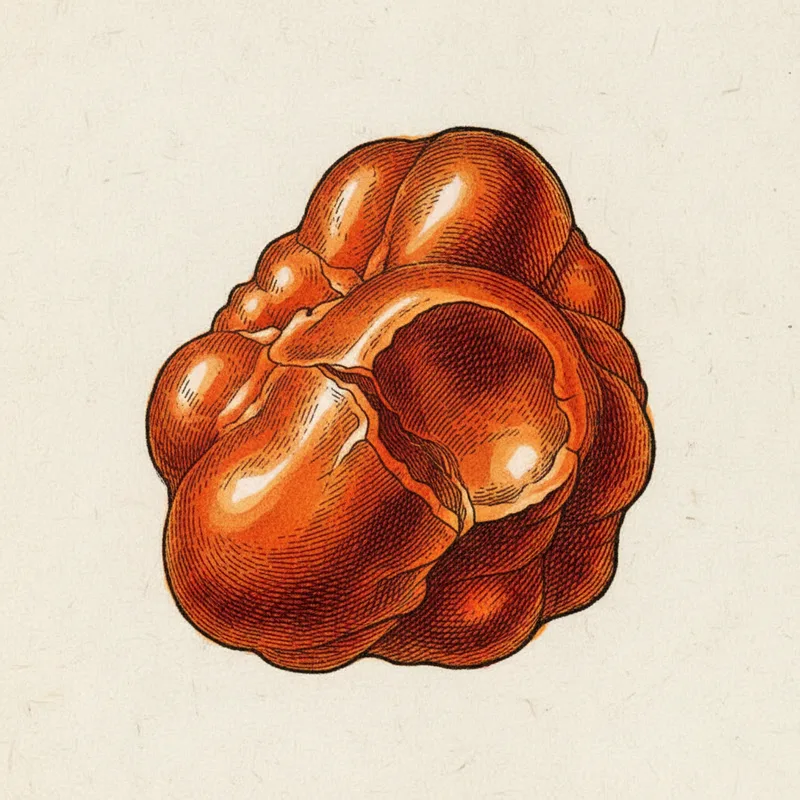
Carnelian is the warm-toned stone on an otherwise cool-and-watery list, and it earns its place as the grounding counterweight. It is a translucent orange-to-red chalcedony (microcrystalline quartz), colored by iron oxide distributed through the silica.
Because the color comes from a chromophore-style iron mechanism rather than a fragile color center, carnelian is stable in sunlight and easy to live with. Most comes from India, Brazil, and Uruguay. Expect $3-$15 for a tumbled stone.
Traditional associations: Courage, emotional warmth, motivation. For a water sign that can turn inward and tidal, tradition offers carnelian as the stone that keeps energy moving and grounded rather than stuck.
6. Ruby: The Heart Stone
Ruby brings warmth and protective fire to the season, and several traditions tie it to Cancer as a stone of the heart and the home. It is gem-quality corundum (aluminum oxide, Al₂O₃) colored red by trace chromium.
That chromium is worth understanding: it is a chromophore ion built directly into the crystal lattice, so ruby's red is permanent and completely sunlight-stable. You could leave a ruby in a window for a century and the color would not shift. At hardness 9 it is also second only to diamond, making it the most durable stone here. Fine rubies are among the most expensive gems by carat, but commercial-grade and untreated rough are accessible.
Traditional associations: Vitality, love, protection of the home and family, the heart. The home-and-heart symbolism maps directly onto Cancer's fourth-house themes.
A Three-Stone Ritual for the Month
If you want a simple way to engage these stones across Cancer season, the three most useful are moonstone, selenite, and larimar. The combination covers the three modes Cancer season tends to bring up: the intuition you want to trust (moonstone), the clarity you need to clear emotional clutter (selenite), and the calm tradition reaches for when feelings are tender (larimar).
Place all three together at the start of Cancer season (June 21). Because the season opens on the solstice and the longest day, a nice anchor is to set them out at sunset on the 21st, when the year's longest stretch of daylight gives way to the Moon. At the start of each week through July 22, hold each stone briefly and name one feeling you want to honor and one you want to release. The point is not magic. It is a structured habit of emotional attention; the stones are the prompt.
Care Notes for Cancer-Season Stones
Two of these stones need real care. Selenite is water-soluble and soft, so it must stay dry and away from other stones that could scratch it. Pearl is soft (hardness 2.5-4.5) and is harmed by perfume, sweat, and acids, so wipe it after wearing and store it separately. Moonstone and larimar are moderately soft and dislike sharp knocks. Carnelian and ruby are the toughest and most forgiving.
Cancer season also opens on the solstice, the peak-sunlight day of the year. If you are tempted to leave stones in the sun, check our summer solstice crystals guide for which stones are sun-safe and which fade, and our protecting crystals from summer heat and sunlight guide for the practical rules.
What Comes Next
The sun crosses into Leo on July 22-23, trading the Moon's tender water for the Sun's fire. The Leo-season crystals (sunstone, citrine, tiger's eye, golden healer quartz, carnelian, and pyrite) are a brighter, bolder palette. For now, Cancer season is here, and these are the six stones worth keeping nearby for the next month.
Related:
Metaphysical and “healing” associations mentioned here are cultural traditions, not medical advice or scientific fact. Crystals are not a substitute for professional medical care. Full disclaimer.
Crystals in This Article
Golden Healer Quartz
The Solar Catalyst
Rainbow Moonstone
The Labradorite in Disguise
Alexandrite
The Chameleon Gem
Chalcedony
The Mother of Agates

Satin Spar
The Silken Glow

Orthoclase
The Foundation Feldspar
Moonstone
The Traveler's Stone
Carnelian
The Singer's Stone
Aragonite
The Earth Healer
Selenite
The Liquid Light
Sunstone
The Stone of Light
Citrine
The Merchant's Stone
Keep Reading
Newsletter
Something shiny, now and then
A stone worth knowing, or a fake worth spotting, every so often. No spam.