June Birthstones: Pearl, Moonstone, and Alexandrite
June is the only birthstone month with three official options, and they could not be more different from each other. Pearl is biogenic calcium carbonate grown inside a living mollusk. Moonstone is a feldspar mineral whose ghostly blue glow comes from light scattering off microscopic internal layers. Alexandrite is a rare chromium-bearing chrysoberyl that reads green in daylight and red under lamplight, a real optical effect that is not a trick of marketing. One is soft and affordable, one is moderately durable and widely available, and one is harder than sapphire but can cost more per carat than diamond. This guide separates the mineralogy from the gift-buying pitch so you can pick correctly.
Why three birthstones?
The modern American birthstone list was standardized in 1912 by the National Association of Jewelers, later folded into the American Gem Trade Association framework. That original 1912 list already named pearl and moonstone for June, reflecting two long-standing traditions. Pearl has been tied to June for centuries through European and Persian calendars, while moonstone carried its lunar symbolism from Hindu and Roman sources.
Alexandrite was added in 1952, decades after its 1830 discovery, when the trade wanted a more modern and commercially exciting option. The stone's dramatic color change and its link to Russian royalty made it an obvious candidate. The result is a birthstone month with an ancient organic gem, a soft silicate with a folkloric glow, and a rare color-change crystal from the industrial era, all sharing a calendar slot.
1. Pearl, the organic birthstone
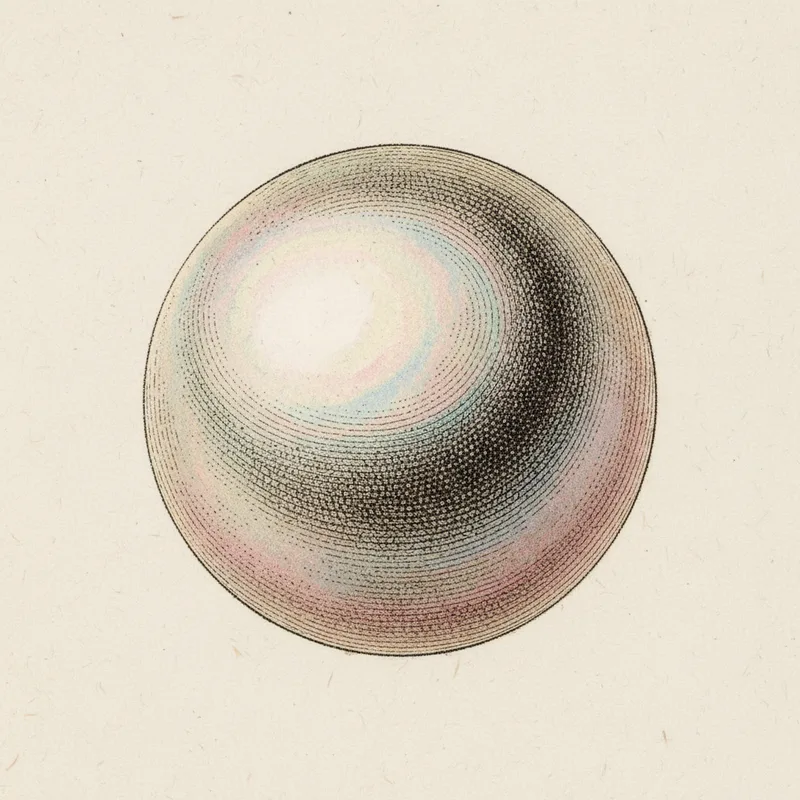
Pearl is the only major birthstone that is not a mineral in the strict sense. It is biogenic, meaning a living organism produces it. Mollusks such as oysters and freshwater mussels secrete layer after layer of nacre around an irritant lodged in their soft tissue. Nacre is calcium carbonate (CaCO₃) in the aragonite polymorph, bound together by a protein called conchiolin. Each layer is only a few hundred nanometers thick.
That layered structure is the source of a pearl's iridescent glow. The sheen, called orient, is structural color from thin-film interference. Light reflects off successive aragonite layers and the reflected waves interfere with each other, producing the soft pinks, greens, and blues that ride on top of the body color. No pigment is involved, which is the same physics that makes a soap bubble colorful.
Natural versus cultured
Almost every pearl sold today is cultured. Cultured pearls are real pearls grown inside real mollusks, just with human help. The Mikimoto method, developed in Japan around 1900, inserts a small polished bead of shell into the mollusk along with a piece of donor mantle tissue. The mollusk coats the bead with nacre over months or years. Freshwater pearls are often grown from a tissue graft alone with no bead nucleus, which is why they come in unusual baroque shapes.
Natural pearls, formed without human intervention, are extraordinarily rare and command museum-level prices at auction.
Types by origin
Saltwater pearls include Akoya (small, round, high luster, Japan and China), Tahitian (naturally dark gray to black, French Polynesia), and South Sea (the largest and most expensive, Australia, Indonesia, the Philippines). Freshwater pearls dominate modern supply by volume, with China producing the overwhelming majority.
Care
Pearl hardness is 2.5 to 4.5 on the Mohs scale, making it one of the softest gems in regular jewelry use. Perfume, hairspray, sweat, and household acids dissolve the surface nacre. Never use ultrasonic or steam cleaners. Wipe pearls with a soft damp cloth after wearing, store them separately from harder gems, and have pearl strands restrung on silk every few years.
Cultural history
Pearls predate faceted gemstones by millennia. Persian Gulf natural pearls were already trading as luxury goods in the third millennium BCE. Roman sumptuary laws restricted pearls to specific social ranks. Cleopatra reputedly dissolved one of her pearl earrings in vinegar to win a wager with Mark Antony about the cost of a single meal, a story that may be apocryphal but reflects how casually extravagant pearls were considered at the top of the Roman world. Tudor and Elizabethan portraits dripped with them, and Vermeer's seventeenth-century girl wears what is almost certainly a polished tin drop, not a real pearl, because the real thing was out of reach for most sitters. Fine Tahitian strands now run roughly $500 to $5,000 depending on size, luster, and matching. Natural non-cultured pearls of good size are effectively extinct in the market and appear almost exclusively at auction.
2. Moonstone, the optical illusion
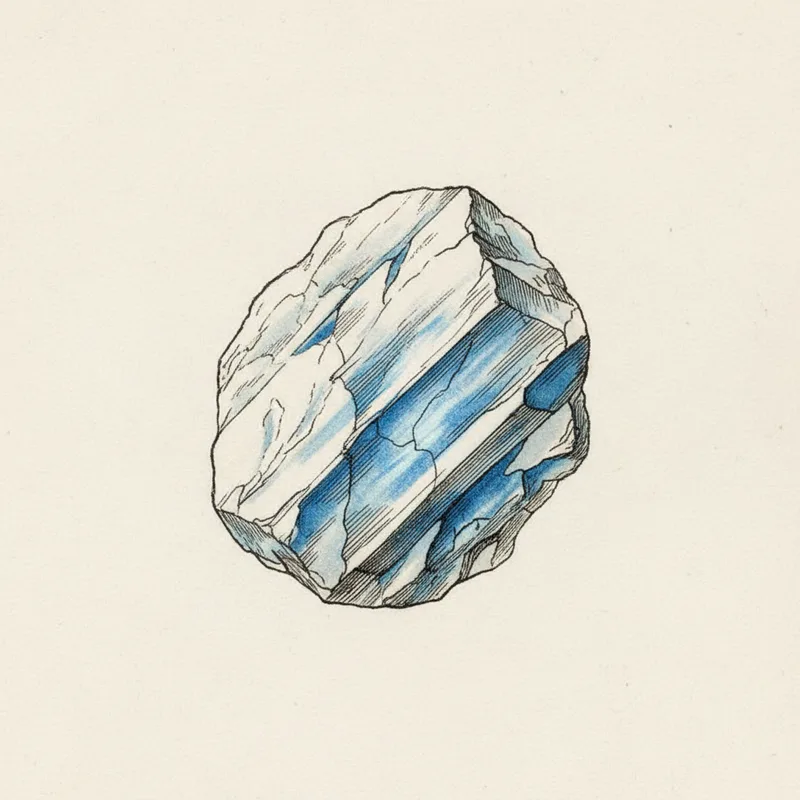
Moonstone is a gem variety of potassium feldspar, specifically orthoclase, with the general feldspar formula (K,Na)AlSi₃O₈. What makes a piece of orthoclase into moonstone is a microstructure. During slow cooling, the potassium-rich and sodium-rich feldspars separate into alternating lamellae too thin to see with the naked eye. Light entering the stone scatters at the boundaries between these layers, producing the floating blue-white billow known as adularescence.
This is the same family of optical phenomena that gives pearl its orient and labradorite its flash. The structure is different in each case, but the underlying physics involves light interacting with thin layers on the scale of its own wavelength.
Varieties
Classic blue-sheen moonstone comes mostly from Sri Lanka and southern India. Rainbow moonstone, popular in modern jewelry, is technically a white labradorite with similar internal structure, not a true orthoclase moonstone (we break down the full difference in rainbow moonstone vs white moonstone). Gray, peach, and brown moonstones come from India and Madagascar. The most prized material is colorless body glass with a strong vivid blue flash that seems to hover above the stone as it tilts.
Identification versus imposters
Opalite, a milky glass, is the most common moonstone substitute in costume jewelry. The difference is visual once you know it. Real moonstone shows a directional glow that moves as the stone tilts, with a slightly ghostly quality. Opalite is uniformly milky and does not shift. Real moonstone also has visible cleavage planes and sometimes internal stress fractures called centipede inclusions. Opalite is clean, perfect, and suspicious.
Care
Moonstone hardness is 6 to 6.5, with two directions of perfect cleavage. It is jewelry-capable in pendants, earrings, and protected ring settings, but vulnerable to sharp impact along cleavage planes. Clean with mild soap and water. Skip ultrasonics.
Cultural history
Hindu tradition calls moonstone chandrakanta, meaning beloved of the moon, and associates it with the god Chandra. Pliny the Elder wrote that the stone's appearance shifted with the phases of the moon, an observation that is not physically accurate but captures how the adularescent glow feels to the eye. Roman writers claimed the stone was solidified moonbeams that grew brighter as the moon waxed. Art Nouveau jewelers, especially Rene Lalique and Louis Comfort Tiffany, featured it heavily in the 1890s and 1900s, pairing it with enamel and sinuous gold to evoke a dreamlike naturalism. Modern commercial moonstone runs $10 to $100 per carat, while top Sri Lankan blue-flash cabochons can reach $500 or more per carat.
3. Alexandrite, the color-change marvel
Alexandrite is a chromium-bearing variety of chrysoberyl, formula BeAl₂O₄, with trace Cr substituting for Al. Chrysoberyl itself is hardness 8.5, placing it among the hardest gem species after diamond (10) and corundum (9). Alexandrite specifically adds one of the most dramatic optical effects in mineralogy.
The color change comes from how chromium absorbs visible light. Cr in the chrysoberyl lattice creates two absorption bands, one in the yellow and one in the violet, leaving two narrow transmission windows in the blue-green and the red. Under daylight, which is rich in blue and green wavelengths, the blue-green window dominates and the stone reads green to teal. Under incandescent or candlelight, which is rich in red and yellow wavelengths, the red window dominates and the stone reads purplish red. The phrase "emerald by day, ruby by night" is a genuine description of this alexandrite effect, not a jeweler's flourish.
History
Alexandrite was discovered in the emerald mines of Russia's Ural Mountains in 1830. Tradition holds that it was first recognized on the birthday of the future Tsar Alexander II and named in his honor. The stone's red and green color change mirrored the colors of imperial Russia, which turned it into a politically resonant gem at court. Russian mines produced the finest material ever found, with saturated green-to-red shifts, and that material set the benchmark for quality.
Modern sources
Russian production is effectively exhausted. Most current supply comes from Brazil's Minas Gerais state, with additional material from Sri Lanka, Tanzania, Madagascar, and other East African deposits. Brazilian stones tend toward bluish green to purplish red, Sri Lankan stones toward more khaki green to brown-red, and East African stones show a wide range. Documented Russian origin can multiply the price of a stone by five to ten times.
Synthetics and simulants
Lab-grown alexandrite has been produced since the 1960s and is a legitimate product when properly disclosed. The bigger problem is color-change synthetic corundum, widely sold in the mid-twentieth century as "alexandrite" in costume rings. Its color shift runs blue to purple, not green to red, and it is not alexandrite in any mineralogical sense. Two practical tests: check for a strong full green-to-red shift rather than a muddy blue-to-purple one, and insist on a GIA or equivalent lab report for any stone being sold as natural alexandrite above a few hundred dollars.
Care
At hardness 8.5 with no cleavage and excellent toughness, alexandrite is one of the most jewelry-durable colored stones available. It is safe for daily-wear rings, safe for ultrasonic and steam cleaning in most cases, and resistant to ordinary household chemicals. Only diamond, corundum, and a handful of rarer species outperform it for ring hardness.
Price signal
Commercial alexandrite with a visible but modest color change runs $500 to $2,000 per carat. Fine stones with strong saturated shifts run $10,000 to $30,000 per carat. Documented Russian material with exceptional color change has cleared $50,000 per carat at auction for sizes above one carat.
How to choose between them
Match the stone to the wearer and the occasion.
Pick pearl for classic, traditional, or heirloom-style gifts, especially a strand for a milestone birthday or a bridal piece. It is affordable up the quality ladder and instantly legible as a pearl.
Pick moonstone for someone who wants something unusual, spiritual, or Art Nouveau in flavor. It is affordable, widely available, and visually distinctive. Keep it out of rough daily-wear ring settings.
Pick alexandrite for an heirloom or investment purchase. It is the most durable of the three, the rarest, and the only one that holds and gains value over decades. Insist on lab documentation.
Care summary
| Stone | Hardness | Water-safe | Ultrasonic-safe | Notes |
|---|---|---|---|---|
| Pearl | 2.5 to 4.5 | Briefly, then dry | No | Avoid acids, perfume, sweat |
| Moonstone | 6 to 6.5 | Yes | No | Cleavage risk on impact |
| Alexandrite | 8.5 | Yes | Usually yes | Extremely durable |
Shopping for a later summer birthday? The next two months are covered in our July birthstone (ruby) and August birthstone (peridot) guides.
Crystals in This Article
- Pearl
- Moonstone
- Alexandrite
- Chrysoberyl
- Labradorite
- Orthoclase
- Feldspar group
- Aragonite
- Corundum (for hardness comparison)
Metaphysical and “healing” associations mentioned here are cultural traditions, not medical advice or scientific fact. Crystals are not a substitute for professional medical care. Full disclaimer.
Crystals in This Article
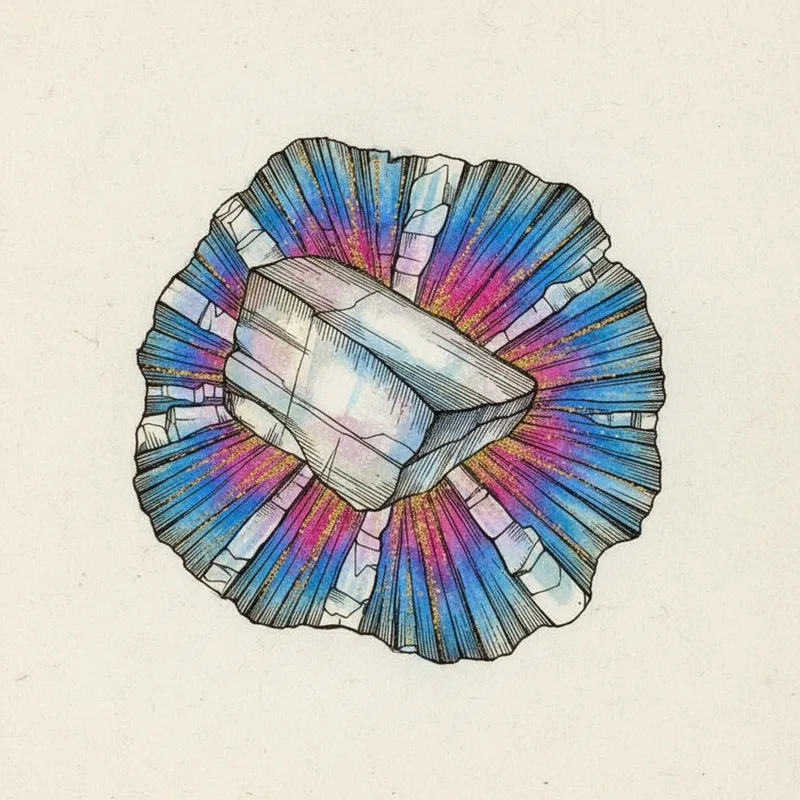
Rainbow Moonstone
The Labradorite in Disguise
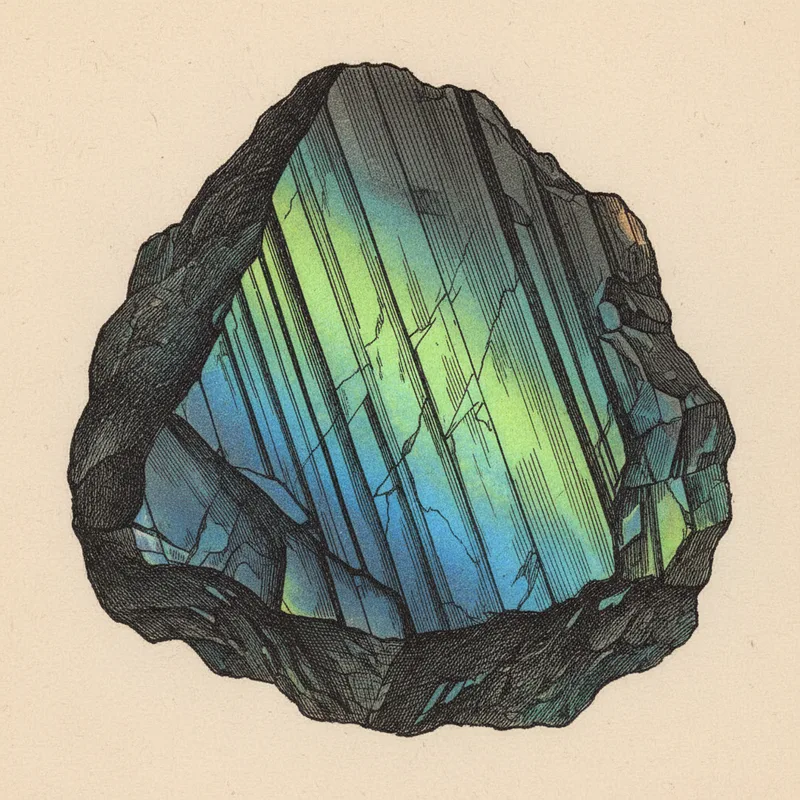
Labradorite
The Stone of Transformation
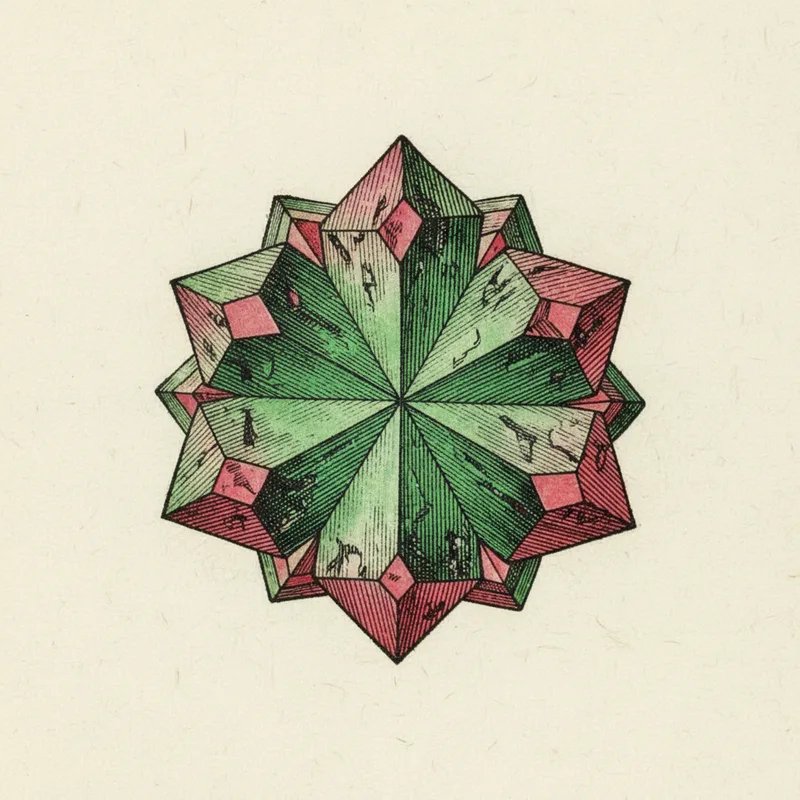
Alexandrite
The Chameleon Gem
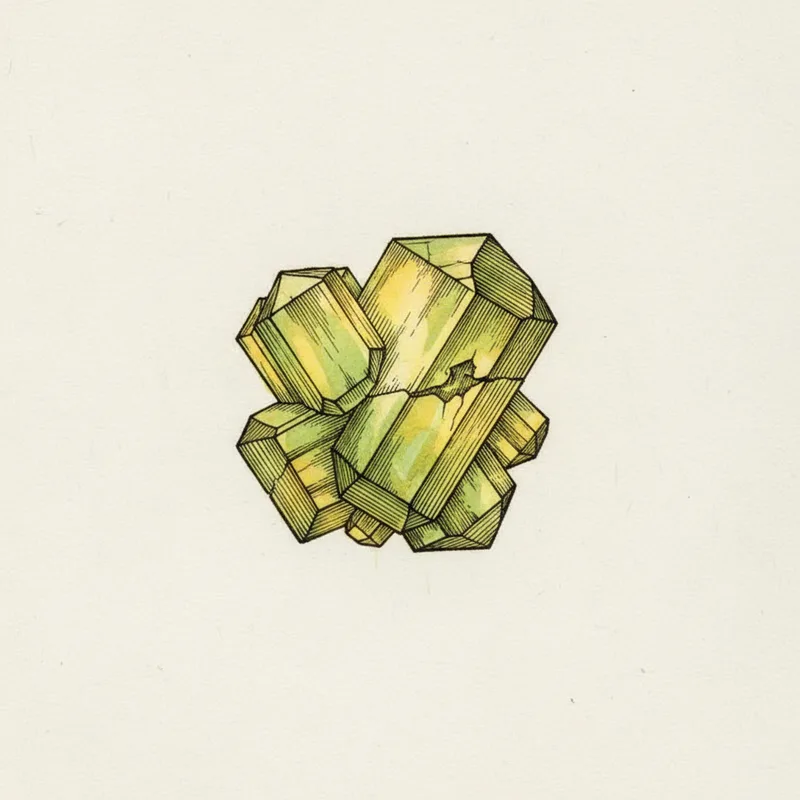
Chrysoberyl
The Cat's Eye Gem

Orthoclase
The Foundation Feldspar
Moonstone
The Traveler's Stone
Aragonite
The Earth Healer
Sapphire
The Gem of the Heavens
Peridot
The Evening Emerald
Diamond
The Invincible
Emerald
The Stone of Successful Love
Pearl
The Gem of the Sea
Keep Reading
Newsletter
Something shiny, now and then
A stone worth knowing, or a fake worth spotting, every so often. No spam.