Scorpio Season Crystals 2026: Stones for Transformation
Key Takeaway: Scorpio season runs October 23 through November 21. It is the fixed water sign, ruled by Mars in the old tradition and by Pluto in modern astrology, and it is the sign of depth, intensity, transformation, and what sits under the surface. The stones tied to it are the darkest and most protective in the catalogue: obsidian, malachite, labradorite, and garnet, plus the two November birthstones, topaz and citrine. These are the six worth keeping close as the light draws down.
The sun crosses out of Libra on October 23 and into the eighth sign of the zodiac, and the timing suits it. Scorpio season is the stretch of autumn where the days shorten fastest, the leaves finish falling, and the year turns unmistakably toward winter. Where Libra weighed and harmonized in the balanced light of the equinox, Scorpio goes looking for what the balance was covering up.
Astrologers describe Scorpio as intense, private, and transformative, the sign most at home with deep feeling, hidden motive, and change that goes all the way down. Its traditional ruler is Mars, planet of drive and confrontation; modern astrology adds Pluto, planet of death, rebirth, and buried power. Its element is water, but not the flowing water of a river. Scorpio is fixed water, water under pressure, still on the surface and moving hard underneath.
If you come at crystals from a geological angle, the stones traditionally tied to Scorpio are the ones the season looks like: dark, mirror-bright, or blood-red, and several of them literally born of transformation. There are the shadow-and-protection stones, black and reflective: obsidian and labradorite. There is the transformation stone, banded green and dramatic: malachite. There is the Mars stone, deep red and driven: garnet. And there are the two November birthstones that Scorpio shares with the month, warm against all that darkness: topaz and citrine.
Below are six crystals for Scorpio season, each with a note on how it looks, how it formed, why tradition ties it to the sign, and how to use it. A ritual and a care section close things out, and the care section matters this month too: one of these stones is toxic in water, and two more are easily damaged by careless handling.
1. Obsidian: The Mirror Stone
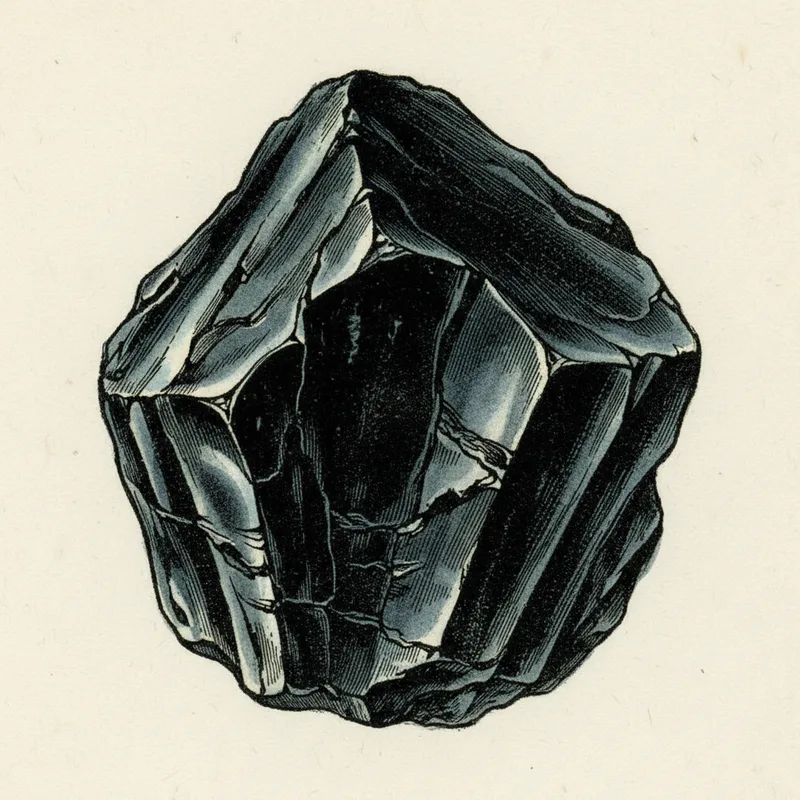
Obsidian is volcanic glass, jet black and glassy, the classic Scorpio stone and the one tradition reaches for first.
It is barely a mineral at all. Obsidian forms when felsic lava, rich in silica, erupts and cools so fast that its atoms never arrange into a crystal lattice, leaving a solid with the chemistry of quartz (SiO₂, amorphous) and the structure of glass. Because it has no lattice to cleave along, it fractures in smooth curved surfaces, breaking to edges finer than surgical steel, which is why cultures from the Aztec to the Jōmon of Japan knapped it into blades and mirrors for thousands of years. The Aztec god Tezcatlipoca, whose name means "smoking mirror," was named for polished obsidian, and the association is worth sitting with: this is a stone people have used to see themselves in for millennia.
Keep obsidian where you do your honest thinking. Crystal tradition ties it to protection, grounding, and shadow work, the practice of looking squarely at the parts of yourself you would rather not, and practitioners connect that mirror reputation directly to Scorpio's habit of refusing to look away. It is one of the most affordable stones on this list, usually $2 to $10 for a polished piece.
Traditional associations: Protection, grounding, truth, and unflinching self-examination.
2. Malachite: The Transformation Stone
Malachite is the vivid banded green of oxidized copper, the most visually dramatic stone of the season and the one that demands the most care.
It is a secondary copper mineral, copper carbonate hydroxide (Cu₂CO₃(OH)₂, monoclinic, hardness 3.5), and it does not form deep in the crust from magma. It forms near the surface, in the oxidation zone above copper ore bodies, where copper-rich groundwater reacts with carbonate rock and precipitates in concentric layers inside cavities. Each of those bands is a separate episode of deposition, so the stone is a literal record of change written in rings, which is most of why tradition made it the transformation stone. The Ural Mountains supplied the malachite for columns in the Winter Palace; the Congo is the major source today.
One caution that is not optional, because malachite is a real hazard. It is a copper mineral, and it releases toxic copper compounds in water, so never make a gem elixir with it, never put it in your drinking water, and keep it dry. The dust from cutting or polishing is also toxic to inhale, so leave lapidary work to professionals. A finished, polished, dry specimen on a shelf is safe to handle; treat it as a display stone, not a bath stone.
Keep malachite where a change is underway. Tradition frames it as the stone of transformation and emotional protection during that transformation, which places it squarely in Scorpio's territory. Expect $4 to $20 for a tumbled piece, more for fine botryoidal specimens. If you are choosing between green stones, our malachite vs chrysoprase comparison sorts them out.
Traditional associations: Transformation, change, and protection through it.
3. Labradorite: The Stone of Hidden Light
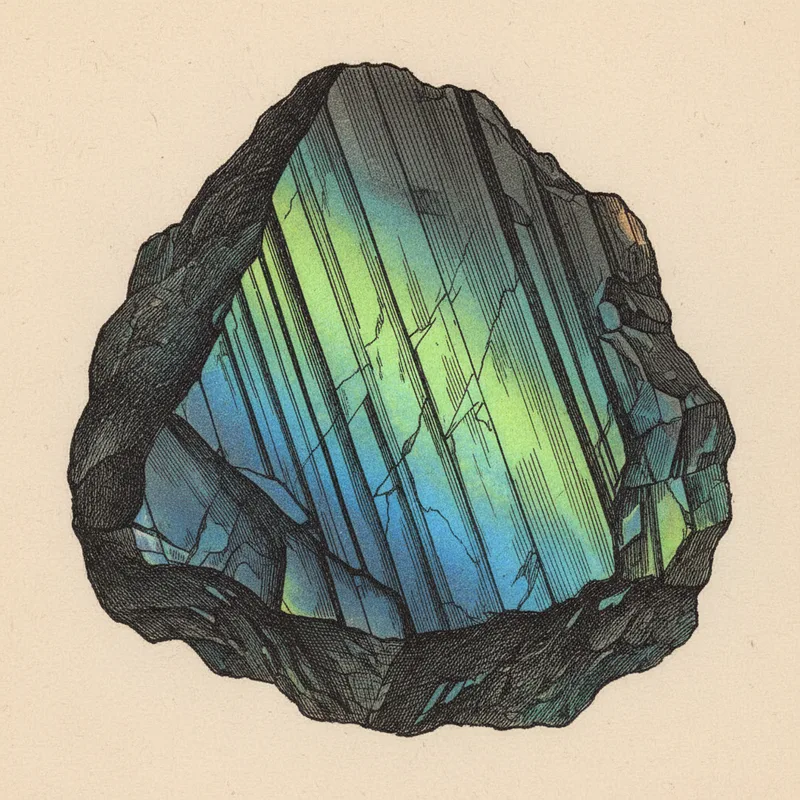
Labradorite is the gray feldspar that hides a flash of blue, gold, or green until the light catches it right, which makes it the near-perfect mineral metaphor for the sign of hidden depths.
It is a calcium-rich plagioclase feldspar ((Ca,Na)(Al,Si)₄O₈, triclinic, hardness 6.5), and its famous play of color, called labradorescence, is not surface shimmer. It comes from inside the stone: as the feldspar cooled, it separated into microscopically thin alternating layers, and light entering the stone reflects off those internal boundaries and interferes with itself, throwing color back out. The effect is invisible until you tilt the stone to the right angle, then it flares. It was first described in 1770 on the coast of Labrador, and an Inuit tradition holds that the northern lights were once trapped inside the rock until a warrior struck it and set most of them free.
Keep labradorite where you want to notice what is under the surface, your own or someone else's. Tradition ties it to intuition, transformation, and revealing what is hidden, and the way its color stays concealed until the angle is right is exactly why practitioners connect it to Scorpio. Expect $5 to $30 for a polished piece; full-spectrum Finnish spectrolite runs higher.
Traditional associations: Intuition, hidden knowledge, and transformation.
4. Garnet: The Mars Stone
Garnet is the deep blood-red of Scorpio's ruling planet, the stone of drive and passion on a list otherwise built from darkness.
Garnet is not one mineral but a group of silicates sharing a crystal structure and differing in chemistry (X₃Y₂(SiO₄)₃, cubic, hardness 7), which is why it ranges from the classic almandine red through orange, purple rhodolite, and even the rare green tsavorite. It forms under high heat and pressure, mostly in metamorphic rocks, the same transforming conditions that made it into schist and gneiss, so like several stones here it is a product of the earth being remade. The deep red almandine and pyrope varieties are the ones tradition ties to Scorpio, for the obvious Mars reason: this is the color of blood and heat, and Scorpio is the Mars-ruled sign.
Keep garnet where you need to remember what you actually want. Tradition frames it as a stone of passion, vitality, and committed energy, the drive underneath Scorpio's stillness, and its Mars rulership is why it belongs to this season rather than a cooler one. Almandine is affordable at $5 to $20 for a tumbled stone; fine tsavorite and gem-grade rhodolite are another matter. Our ruby vs garnet piece covers how to tell the two reds apart before you buy.
Traditional associations: Passion, vitality, drive, and committed energy.
5. Topaz: The November Birthstone
Topaz is the first of Scorpio's two birthstone bridges, the warm golden-orange stone that carries the season into November.
It is an aluminum silicate carrying fluorine and hydroxyl (Al₂SiO₄(F,OH)₂, orthorhombic, hardness 8), and it crystallizes in the last fluorine-rich stages of a cooling granite, often in the same cavities as tourmaline and beryl. At hardness 8 it is one of the harder gems you can own, though it has one perfect cleavage direction that a jeweller has to respect when cutting. The most valuable variety is imperial topaz, the sherry-orange to pink material from Ouro Preto in Brazil. Most blue topaz on the market is colorless stone that has been irradiated and heated to blue, a permanent and standard treatment worth knowing about rather than being surprised by.
Wear or display topaz through November as the birthstone anchor of the season. Golden imperial topaz is the traditional November stone, and its warm color is a deliberate counterweight to the darker stones of early Scorpio. Colorless and blue topaz are affordable; fine imperial topaz climbs quickly. Our citrine vs yellow topaz comparison matters here, because the two November-adjacent yellows are constantly confused and priced far apart.
Traditional associations: Strength, clarity of intention, and warmth.
6. Citrine: November's Golden Alternative
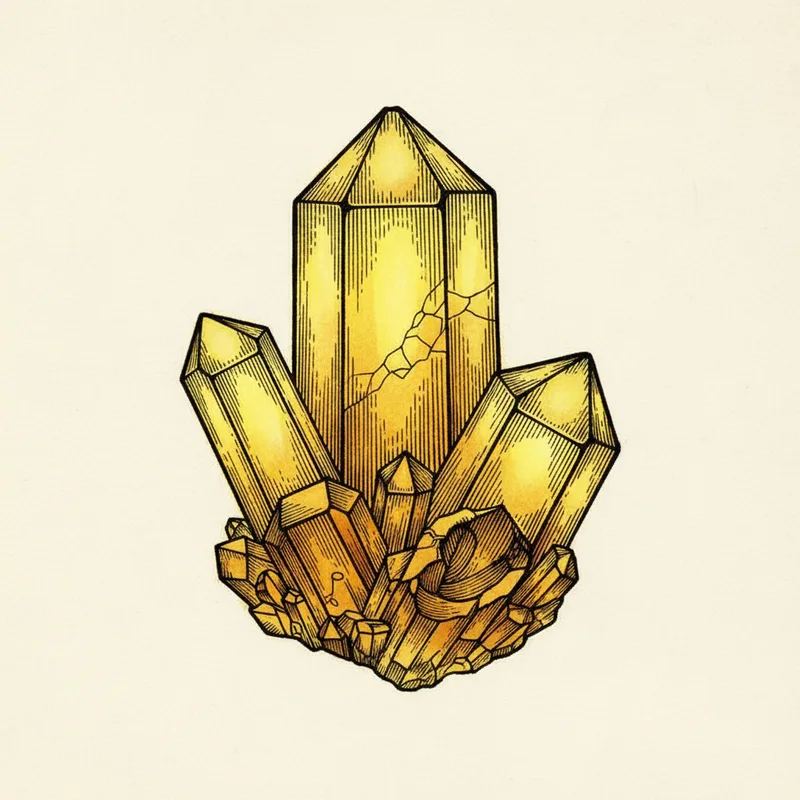
Citrine closes the season with the honey-to-amber yellow of quartz, the second November birthstone and the brightest stone on the list.
Citrine is the yellow variety of quartz (SiO₂, trigonal, hardness 7), colored by trace iron, and truly natural citrine is one of the rarest members of the quartz family. That rarity is the single most important thing to know before you buy: most commercial citrine is heat-treated amethyst, which turns from purple to yellow-orange in the process. The treatment is permanent and completely standard in the trade, but natural citrine, with its softer smoky-gold tone, is far scarcer than the shop displays suggest. Zambia and the Congo produce true natural material; most of the deep burnt-orange stone comes from heated Brazilian amethyst.
Keep citrine where you want the season's warmth without its weight. Tradition frames it as a stone of energy, optimism, and clarity, a bright counterpoint to Scorpio's intensity, and it shares November birthstone duty with topaz. It is affordable, usually $3 to $15 for a tumbled piece. Read our citrine meaning and properties guide for the full picture, including how to tell natural from heat-treated.
Traditional associations: Energy, optimism, and clarity.
A Three-Stone Ritual for the Month
For a simple way to work with these across Scorpio season, the three most useful are obsidian, malachite, and garnet. Between them they cover what the season actually asks of people: the honesty to look at what you have been avoiding (obsidian), the willingness to let something change (malachite), and the drive to act on it rather than only brood (garnet).
Set the three out together at the start of the season. Scorpio is the sign of going beneath the surface, so once a week through November 21, pick up one and name a single thing: something you have been refusing to look at, something you are ready to let go, or something you actually want badly enough to move toward. Keep the malachite dry and handle it last, then wash your hands, for the reasons in the care section. The point is not magic. It is a structured habit of honest attention, with the stones as the prompt, which suits the sign that would rather go deep than skate over.
Care Notes for Scorpio-Season Stones
This season's stones range from tough to quite demanding, and one of them is a real hazard.
Malachite is toxic in water, so keep it dry. It is a copper mineral and it releases toxic copper compounds when wet, so never make an elixir with it, never put it in drinking water, and never clean it in water for long; a quick dry wipe only. Its hardness of 3.5 also means it scratches easily and its polish dulls fast. Handle it, then wash your hands, and never inhale dust from a broken or unpolished piece.
Handle obsidian as the glass it is. At hardness 5.5 with no cleavage, obsidian will not scratch easily, but it is brittle and chips to razor edges when dropped on a hard surface. A chipped edge is dangerously sharp; store it where it will not knock against other stones.
Keep citrine and labradorite out of the permanent sun, and skip long soaks. Citrine's yellow, natural or heat-treated, can pale under prolonged direct sunlight, so a sunny windowsill is not its place; daily daylight is fine. Labradorite is a feldspar with cleavage planes, so a sharp knock can start a crack along one. Garnet at hardness 7 and topaz at hardness 8 are the durable ones here and handle daily wear well, though topaz's single cleavage direction means it too dislikes a hard impact. Our crystals that fade in sunlight guide covers the light-sensitive stones in more detail.
What Comes Next
The sun crosses into Sagittarius on November 22, trading Scorpio's fixed water for mutable fire and turning from depth and intensity toward expansion, travel, and the long view. The Sagittarius-season stones run brighter and more outward than this month's, and we will cover them when the season turns. For now, Scorpio season is here, and these are the six worth keeping close.
Related:
Metaphysical and “healing” associations mentioned here are cultural traditions, not medical advice or scientific fact. Crystals are not a substitute for professional medical care. Full disclaimer.
Crystals in This Article
Black Tourmaline
The Shield Stone
Imperial Topaz
The Crown Jewel of Topaz
Labradorite
The Stone of Transformation
Chrysoprase
The Stone of Venus
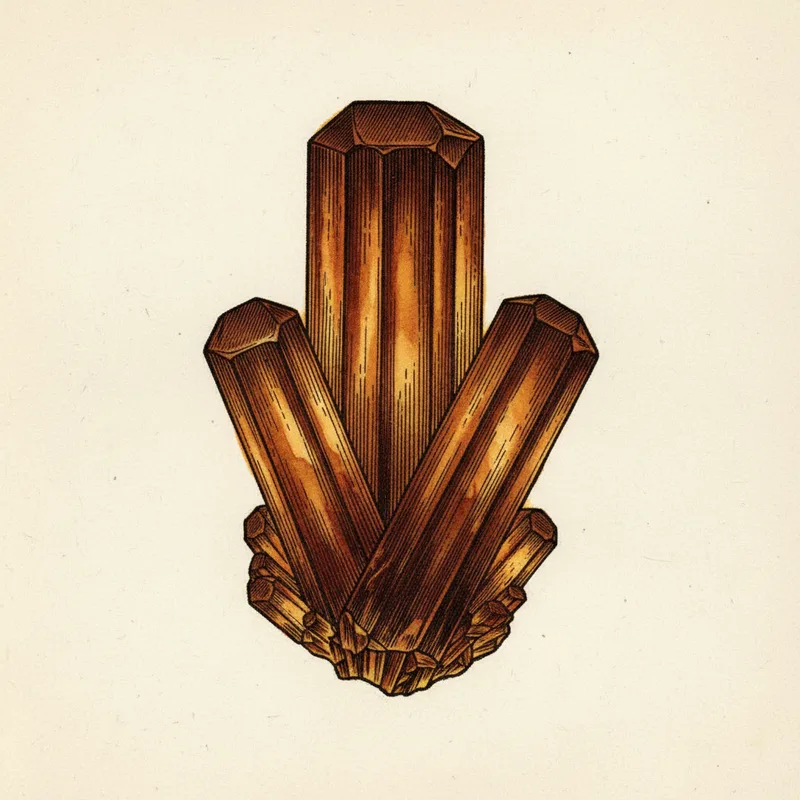
Tourmaline
The Rainbow Stone
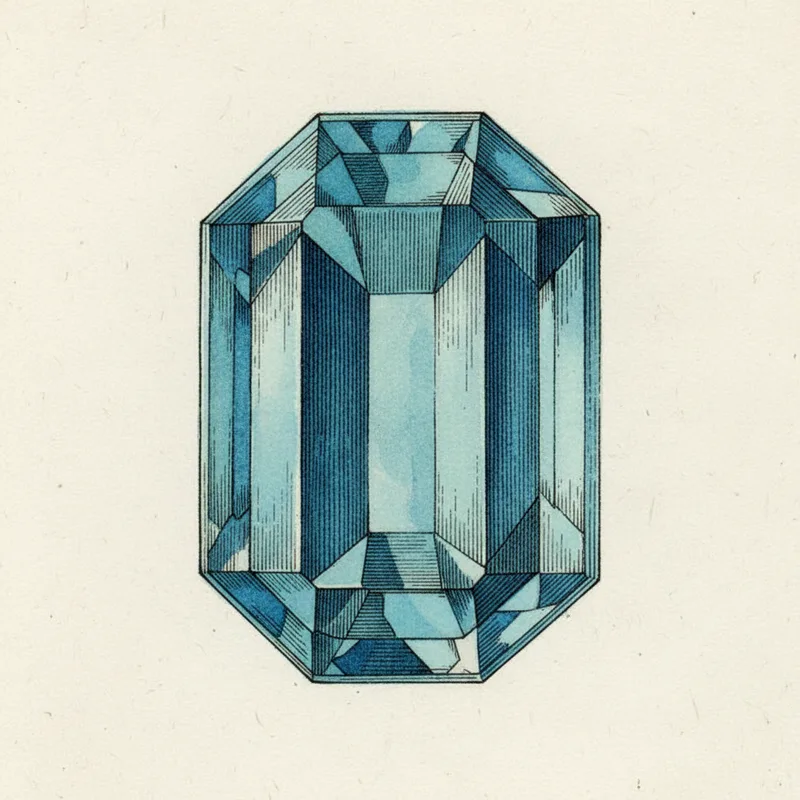
Blue Topaz
The Engineered Ice
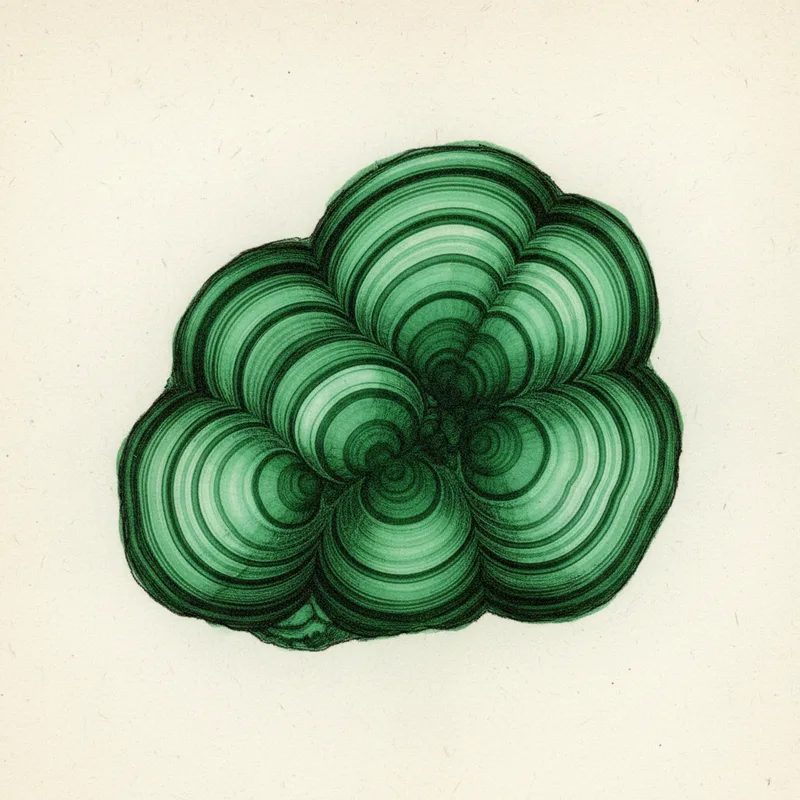
Malachite
The Stone of Transformation
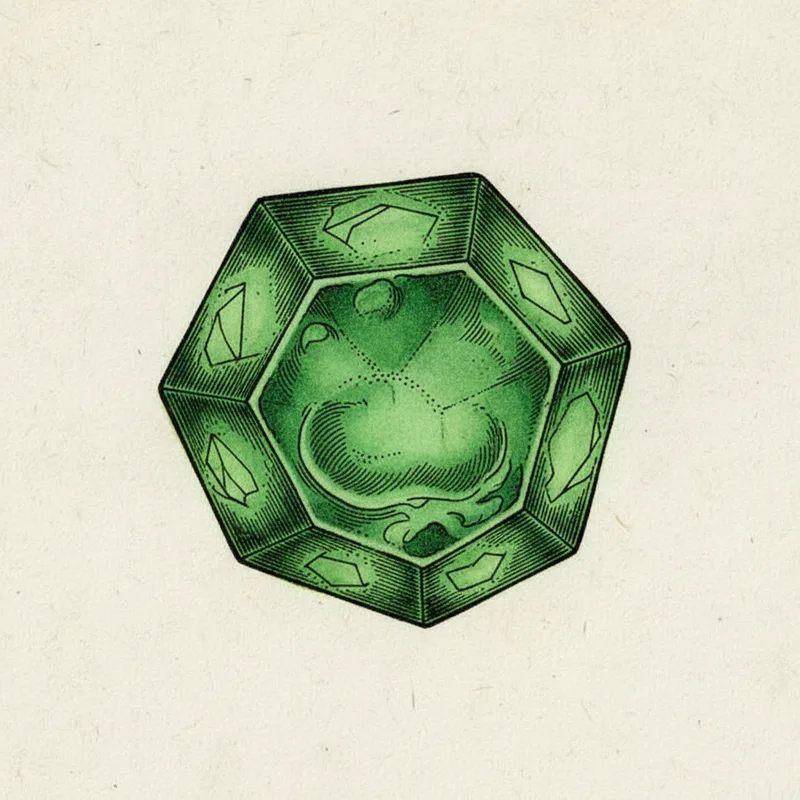
Tsavorite
The Emerald's East African Rival
Obsidian
The Volcanic Glass
Amethyst
The Stone of Spiritual Wisdom
Citrine
The Merchant's Stone
Granite
The Backbone of Continents
Keep Reading
Stay in the loop
From the Almanac
Updates from Crystal Almanac, when there’s something worth sharing.