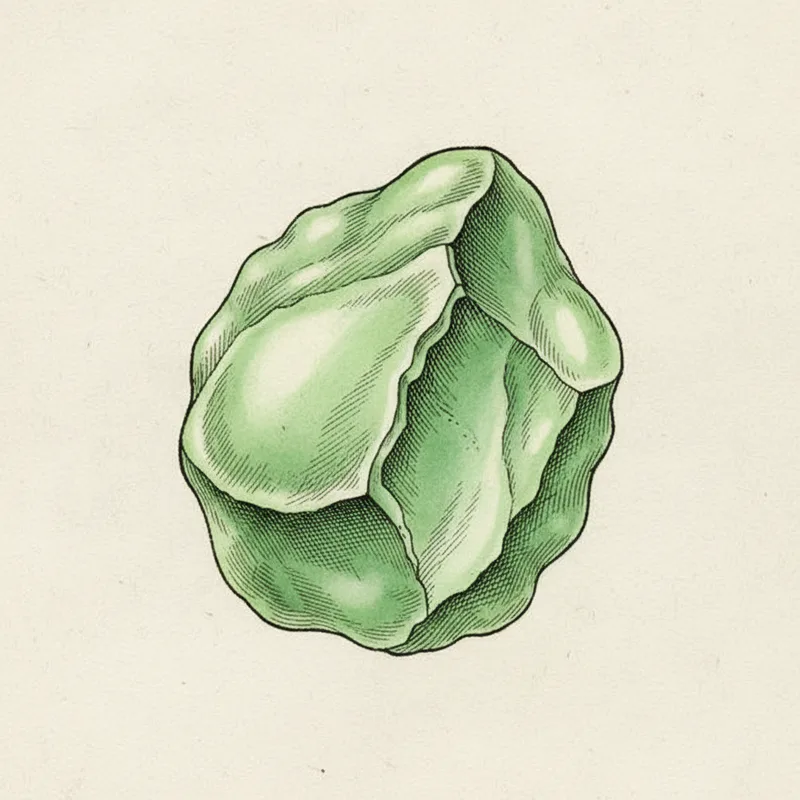
Chrysoprase
The Stone of Venus
Affiliate links. We may earn a commission, at no cost to you.
Quick Facts
Formation & Origin
Chrysoprase is the most valuable variety of chalcedony (microcrystalline quartz), prized for its distinctive apple-green color. Unlike most green gems, which owe their color to chromium or iron, chrysoprase gets its green from nickel - specifically, microscopic inclusions of nickel-bearing silicate minerals dispersed throughout the chalcedony.
It forms in the weathered crust (laterite) above nickel-bearing serpentinite rocks. As these rocks weather, nickel is released and carried by groundwater into silica-rich veins and cavities, where it co-precipitates with chalcedony. The best chrysoprase forms where the nickel concentration is high enough to produce vivid color but not so high that it creates opaque, dark material.
Like kunzite, chrysoprase can fade with prolonged heat or sunlight exposure. The nickel-bearing inclusions that create the green are stable, but dehydration of the chalcedony can reduce translucency and shift the color. Storing chrysoprase wrapped in a damp cloth can help restore faded color in some cases.
Identification Guide
Chrysoprase is identified by its distinctive apple-green translucent chalcedony composition. At hardness 7, it's durable and takes a beautiful polish. The green is evenly distributed (not spotted or banded like other green stones) and has a slightly waxy luster characteristic of fine chalcedony.
Distinguish from jade (denser, different luster), green aventurine (shows sparkly aventurescence), dyed green chalcedony (color in cracks), and prehnite (different crystal structure, often slightly yellow-green). Chrysoprase's even, translucent apple-green without sparkle or veining is distinctive.
Spotting Fakes
Dyed green chalcedony or agate is the most common chrysoprase substitute. The dye test is straightforward - check for color concentrated in cracks and fractures. Chrome chalcedony (colored by chromium rather than nickel) is sometimes sold as chrysoprase and is visually similar but comes from different localities. This distinction matters mainly to serious collectors. Glass imitations lack the waxy luster and translucent depth of genuine chrysoprase.
Some links in this post go to Amazon and Etsy. Crystal Almanac earns a commission from qualifying purchases at no extra cost to you. Tools recommended here are ones we would use ourselves to run the tests described - the recommendation comes first, the link is downstream of it.
Cultural & Metaphysical Traditions
Presented as cultural traditions, not scientific evidence
Alexander the Great reportedly wore chrysoprase into battle for victory. Frederick the Great of Prussia decorated his palace at Sanssouci with chrysoprase panels. In medieval European tradition, it was associated with the goddess Venus and believed to make the wearer invisible when held in the mouth (a claim we can safely disregard). Modern practitioners associate it with joy, optimism, and heart-centered emotional healing.
Metaphysical and “healing” associations are cultural traditions, not medical advice or scientific fact. Crystals are not a substitute for professional medical care.
Where It's Found
World's largest producer, consistent quality
Fine apple-green material
Historic European source, known since medieval times
Good commercial-grade material
Price Guide
Good to Know
Scratch test: At hardness 7, Chrysoprase can scratch glass and steel. It's durable enough for any type of jewelry.
Global supply: Found in 4 notable locations worldwide, from Australia to Brazil.
Heft test: Chrysoprase has average mineral density (2.60). It feels about as heavy as you'd expect from a stone its size.
Common Questions
What is the chemical formula of Chrysoprase?
The chemical formula of Chrysoprase is SiO₂ (with Ni).
What is Chrysoprase's Mohs hardness?
Chrysoprase has a Mohs hardness of 7 on the 1 to 10 Mohs scale, hard enough to scratch glass and stand up to daily wear.
Is Chrysoprase a mineral?
Yes. Chrysoprase is a naturally occurring mineral (Quartz Family (Chalcedony)) with a definite chemical composition and an ordered crystal structure.
Care & Safety
The water, salt, and sunlight questions people actually ask before cleansing or displaying chrysoprase, answered from its hardness (Mohs 7) and chemistry (SiO₂ (with Ni)).
Can Chrysoprase go in water?
Yes. Chrysoprase is hard (Mohs 7) and chemically stable, so a rinse or a quick wash with mild soap is no problem, cleanse it in water freely if that is your practice. A long soak does nothing for it either way, so skip that, and dry the stone afterward.
Can Chrysoprase go in salt water?
Not recommended, even though chrysoprase itself is hard and not water-soluble. Salt is both corrosive and mildly abrasive: it can dull a polished surface, attack metal settings, and crystallize inside small fractures as the stone dries. A quick dip will not destroy chrysoprase, but rinse it with fresh water afterward and dry it. For routine cleaning, plain water is the kinder choice.
Does Chrysoprase fade in sunlight?
It can. Chrysoprase's apple green comes from nickel in the chalcedony, and the color can pale with prolonged heat and sunlight, partly through dehydration. Some color may return in cool, moist, dark storage, but the safe approach is to keep it out of direct sun.
Sources & References
The mineralogical and gemological data on this page is drawn from and can be cross-checked against these external references.
- WikipediaChrysoprase on Wikipedia
- WebmineralQuartz mineral data (Webmineral)
- Handbook of MineralogyQuartz (Handbook of Mineralogy, PDF)
Explore More
Quartz & Chalcedony
The Love Collection
Alexander the Great wore chrysoprase into battle. Associated with Venus in medieval tradition.
Scorpio Season Crystals 2026: Stones for Transformation
Crystals That Fade in Sunlight (The Chemistry Explained)
Malachite vs Chrysoprase: Two Very Different Greens
Mohs Hardness Scale
See where Chrysoprase sits on the scale
Crystal Care Guide
Water safety, sunlight, and handling tips
Save This Stone

Keep this chrysoprase reference handy. Save the card to a Pinterest board and the profile is one tap away.
Save to PinterestNewsletter
Something shiny, now and then
A stone worth knowing, or a fake worth spotting, every so often. No spam.