October Birthstones: Opal and Tourmaline
October has two birthstones and they are opposites in almost every way that matters to a buyer. Opal is barely a mineral: amorphous hydrated silica holding up to a fifth of its own weight in water, soft at 5.5, and capable of an optical effect no other natural gemstone produces. Tourmaline is a hard, durable borosilicate at 7.5 that comes in every color there is, sometimes two at once in the same crystal. One is fragile and needs real thought about how you wear it. The other you can put in a ring and forget about. This guide covers the mineralogy, the treatments, the fakes, and the one piece of opal folklore that turns out to be a misreading.
Why two birthstones?
The modern American list was standardized in 1912 by the jewelers' trade association, and October's slot went to opal alone. Tourmaline was added in 1952, in the same revision that gave June its alexandrite, by the organization that had become Jewelers of America. So the two are not equal partners of equal age: opal is the original October stone and tourmaline is the twentieth-century addition, brought in partly because it offered buyers a durable, affordable, wildly colorful alternative to a gem that chips.
That difference in status still shows up in shops. Ask for an October birthstone ring and you will usually be offered opal first, which is the softer and riskier of the two for everyday wear.
1. Opal, the stone that is mostly water and geometry
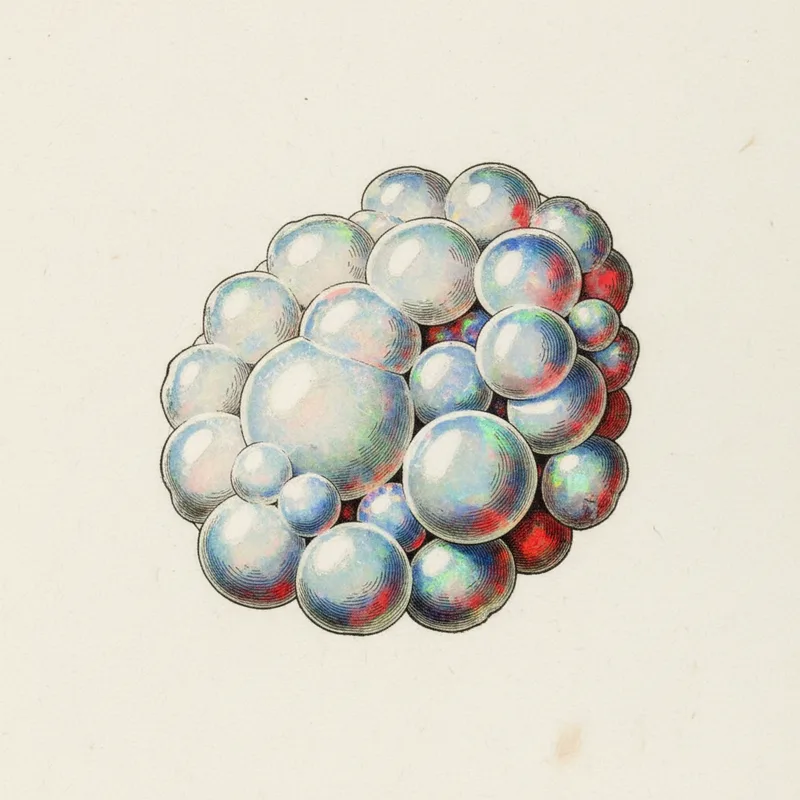
Opal is one of the few gemstones that is not crystalline at all. It is an amorphous solid, a hardened silica gel with the formula SiO₂·nH₂O, containing between 3 and 21 percent water by weight. It forms where silica-rich water seeps into cracks and cavities and evaporates slowly over millions of years, leaving behind stacked layers of microscopic silica spheres.
Where the fire comes from
The play-of-color is not pigment and not an inclusion. It is diffraction. When the silica spheres are uniform in size, roughly 150 to 400 nanometers, and packed into orderly three-dimensional arrays, they split white light into its component colors exactly as a diffraction grating does. Sphere size determines which colors you see: larger spheres throw red, the rarest and most valuable flash, and smaller spheres throw blue and violet. This is why a red-dominant opal costs a multiple of a blue one of the same size.
Common opal lacks the ordered sphere structure entirely and shows no play-of-color, which is why it sells for a few dollars while precious opal runs into the thousands.
The varieties worth knowing
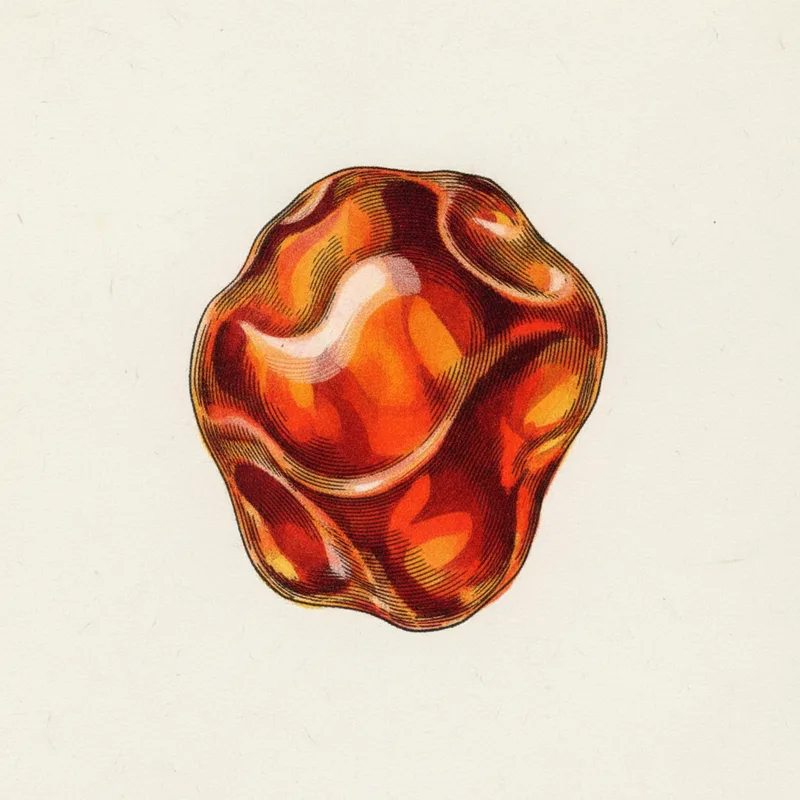
Black opal from Lightning Ridge in New South Wales is the most valuable, because a dark body color gives the fire maximum contrast. White and crystal opal from Coober Pedy and Brazil is the accessible middle. Mexican fire opal from Queretaro is transparent orange, with or without play-of-color. Ethiopian Welo opal is hydrophane: it absorbs water, turning temporarily transparent, then returns to its usual appearance as it dries. That is normal behavior for that material and not a defect, but it does mean Welo opal should never be soaked, and it can take on stains that solid Australian opal would shrug off.
Opal also famously replaces organic material. Opalized shells, bones, and wood are common at Australian fields.
Buying: doublets, triplets, and opalite
Opal is one of the more misrepresented stones on the market, though usually through vagueness rather than outright fraud. A doublet is a thin slice of genuine opal glued to a dark backing; a triplet adds a clear protective cap. Both are legitimate products and both should be priced far below solid opal. Look at the stone edge-on: a doublet shows a flat, dark base layer where solid opal would show continuous material. Synthetic Gilson opal exists and shows a distinctive lizard-skin pattern under magnification. And "opalite" is not opal at all, it is man-made glass. For any natural black opal at a premium price, insist on a lab report.
The bad-luck story, and why it is wrong
Opal is the one birthstone that carries an active superstition, and it is worth telling properly because the usual version is wrong.
The reputation is generally traced to Sir Walter Scott's 1829 novel Anne of Geierstein, in which the Lady Hermione wears a dazzling opal that sparkles when she is happy, shoots red when she is angry, and goes dark when holy water is sprinkled on it; she collapses, and by morning nothing remains of her but a small heap of ashes. The gemologist George Frederick Kunz examined this directly in 1913 and concluded that readers had simply misread it. In his words, there is "little doubt that much of the modern superstition regarding the supposed unlucky quality of the opal owes its origin to a careless reading" of the novel, which "contains nothing to indicate that Scott really meant to represent the opal as unlucky." Hermione's gem was enchanted because Hermione was enchanted. Kunz's view was that Scott picked an opal purely for its play of color and its known sensitivity to moisture, and that a diamond or a ruby would have served the plot equally well.
You will also see it claimed that the novel crashed the European opal trade by about half. That figure circulates widely but we could not trace it to a primary source, so treat it as folklore about folklore rather than a fact.
For context on how prized opal was before any of this, Pliny recorded that the Roman senator Nonius was proscribed by Mark Antony over an opal ring, and chose to flee into exile carrying that one ring out of everything he owned.
Care
This is the fragile one. At hardness 5.5 with a notably low specific gravity of 2.10, opal feels light for its size and chips more easily than most gems. Two specific hazards matter more than scratching:
Heat and dryness cause crazing, a network of fine permanent cracks. The light itself is not the problem; prolonged sun dehydrates the stone. Keep opal away from direct sun, heat sources, and very dry air. And because the water is structural, soaking causes differential expansion and the same cracking, so never leave opal in water and never use ultrasonic or steam cleaners. Wipe with a soft damp cloth. Our crystals that fade in sunlight and protecting crystals from heat and sunlight guides cover the mechanisms in more detail.
2. Tourmaline, the crystal that records its own history
Tourmaline is not one mineral but a group of complex boron silicates that share a structure while accepting an unusually wide range of chemistry. That tolerance is the whole story: tourmaline takes in whatever trace elements are available as it grows, so it comes in effectively every color in the gem world.
Why it comes in every color
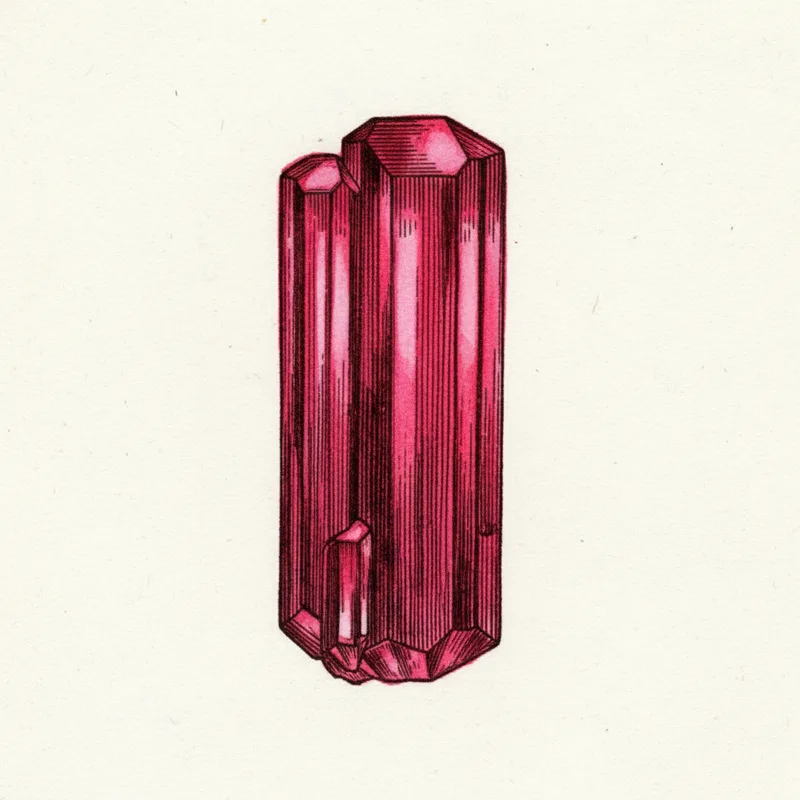
Tourmaline crystallizes in granitic pegmatites, the final boron-rich and lithium-rich pockets of fluid left as a granite body cools below about 600 degrees Celsius. Iron produces black (schorl) and green. Manganese gives pink and red (rubellite). Copper produces the electric neon blue-green of Paraiba material, the rarest and most expensive variety.
The best part is what happens when the fluid chemistry changes mid-growth. The crystal records the change as a change in color, which is why watermelon tourmaline comes out green on the outside and pink in the center. A single crystal holding two colors is a chemical diary of the pocket it grew in.
The party trick
Tourmaline is piezoelectric and pyroelectric: it develops an electrical charge when squeezed or heated. Dutch traders knew this well before anyone explained it, and used warmed crystals to pull ash out of their pipes, which is how the stone earned the name aschentrekker, the ash puller.
Identifying it
The diagnostic feature is shape. Tourmaline forms elongated striated prisms with a rounded triangular cross-section that no other common mineral shows. Color is useless for identification here, since tourmaline spans every hue, but shape plus hardness plus the absence of cleavage is definitive. Many crystals are strongly pleochroic: look down the length of a green tourmaline and it often appears far darker than from the side.
Buying and treatments
Glass imitations exist but lack both the pleochroism and the characteristic striations. Helpfully, lab-grown tourmaline is not commercially available, unlike synthetic ruby or sapphire, so any genuine tourmaline you are holding is natural stone. The real issue is treatment disclosure rather than outright fakes: many pink and red tourmalines are heated to improve color and some green material is irradiated. Ask, and expect a straight answer. Paraiba runs $5,000 to $50,000 and up per carat and should never be bought without a lab report confirming its copper content. Our how to tell if tourmaline is real guide goes through the tests.
Care
This is the easy one. At 7.5 with no cleavage, tourmaline handles daily wear in any setting, including rings. It is not in our sunlight-risk or water-risk groups. Ordinary care is enough.
Which should you choose?
Choose opal if the look is the point. Nothing else does what precious opal does, and no photograph really conveys it. Accept that you are buying a stone that needs thought: pendants and earrings over rings, no ultrasonic cleaner, no sunny windowsill, no soaking. If you want the effect at a lower price, a well-made doublet is an honest choice as long as it is sold and priced as one.
Choose tourmaline if the piece has to survive real life, or if you want a specific color. It is the better everyday ring stone by a wide margin, it covers every hue including the two-tone watermelon material, and outside Paraiba it stays affordable. It is also the better gift when you do not know how carefully someone treats their jewelry.
Buying for a child born in October who will actually wear the thing? Tourmaline, without much hesitation.
Care summary
| Stone | Hardness | Water-safe | Ultrasonic-safe | Notes |
|---|---|---|---|---|
| Opal | 5.5 | No, never soak | No | Crazes from heat, dryness, and soaking; keep out of direct sun |
| Tourmaline | 7.5 | Yes | Usually yes | Durable; ask about heat and irradiation treatment |
Shopping for a neighboring birthday? See our September birthstone (sapphire) and August birthstone (peridot) guides. Both October stones also appear in our Libra season crystals guide, since Libra runs September 23 to October 22, and opal's shimmer is compared against moonstone's in moonstone vs opal.
Metaphysical and “healing” associations mentioned here are cultural traditions, not medical advice or scientific fact. Crystals are not a substitute for professional medical care. Full disclaimer.
Crystals in This Article
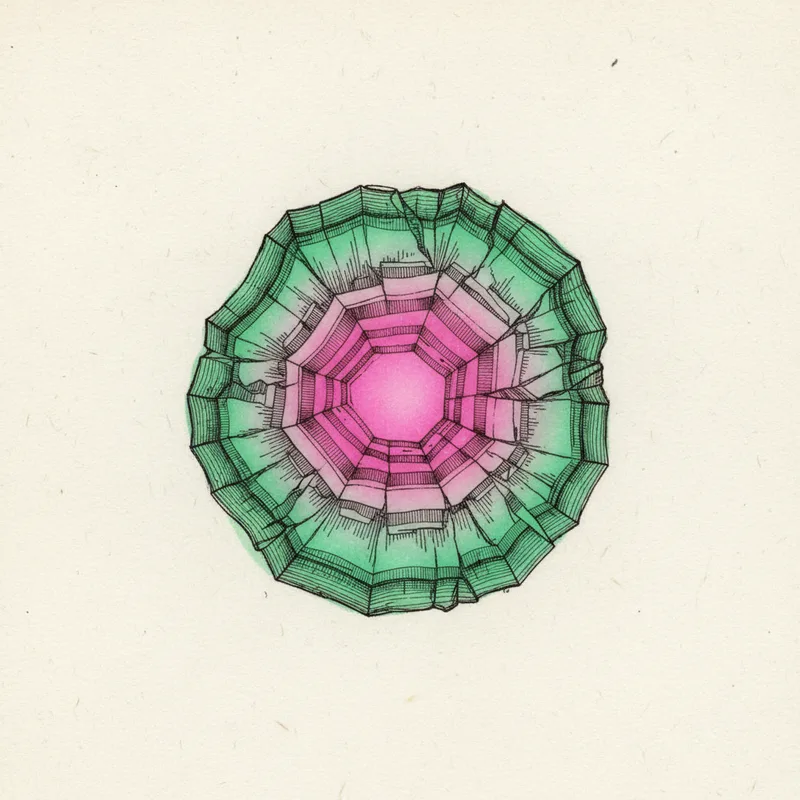
Watermelon Tourmaline
The Dual Heart Stone
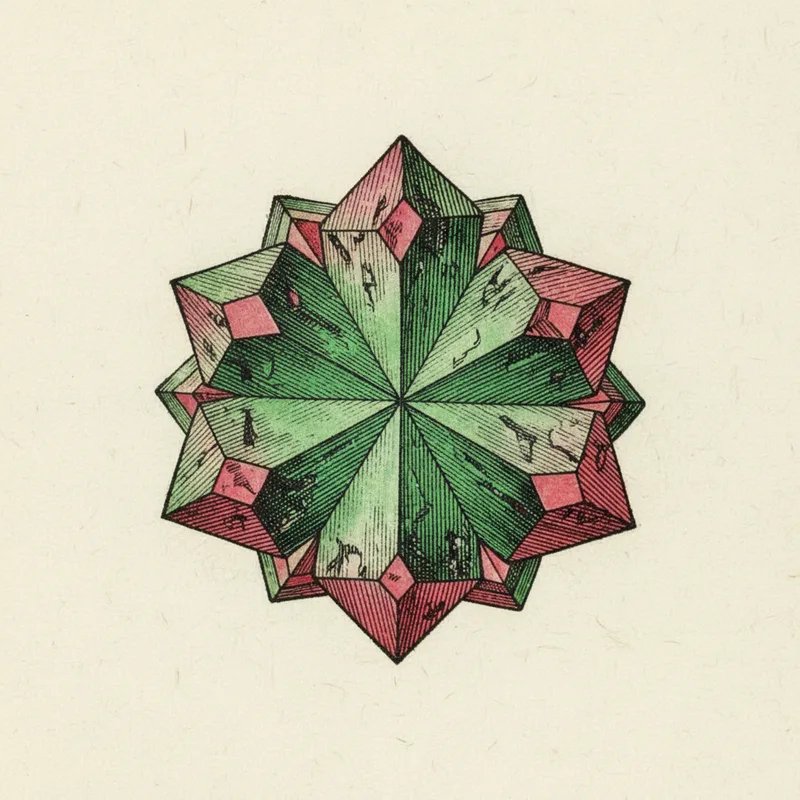
Alexandrite
The Chameleon Gem
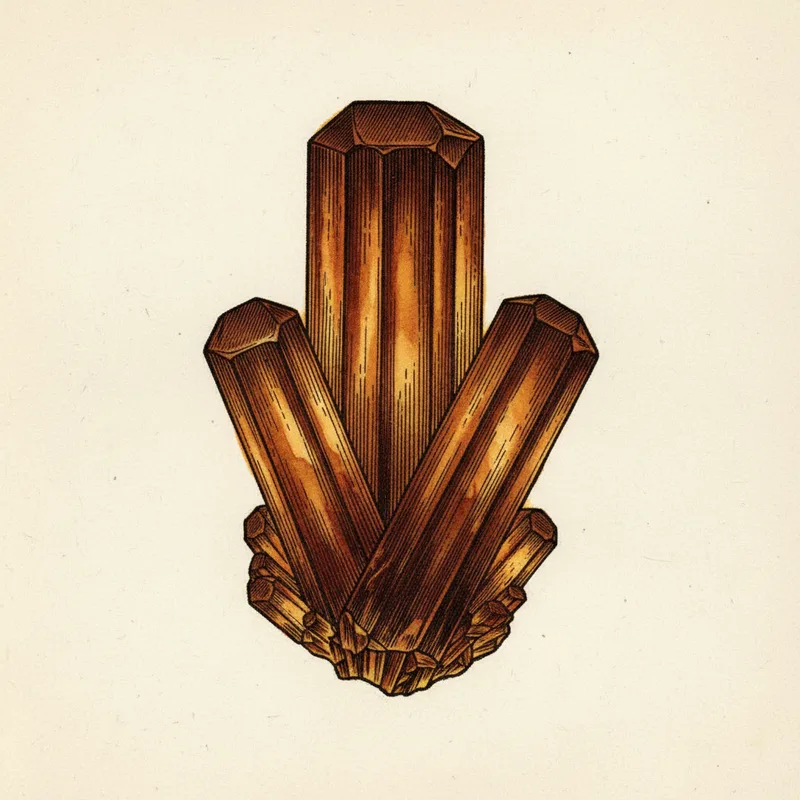
Tourmaline
The Rainbow Stone
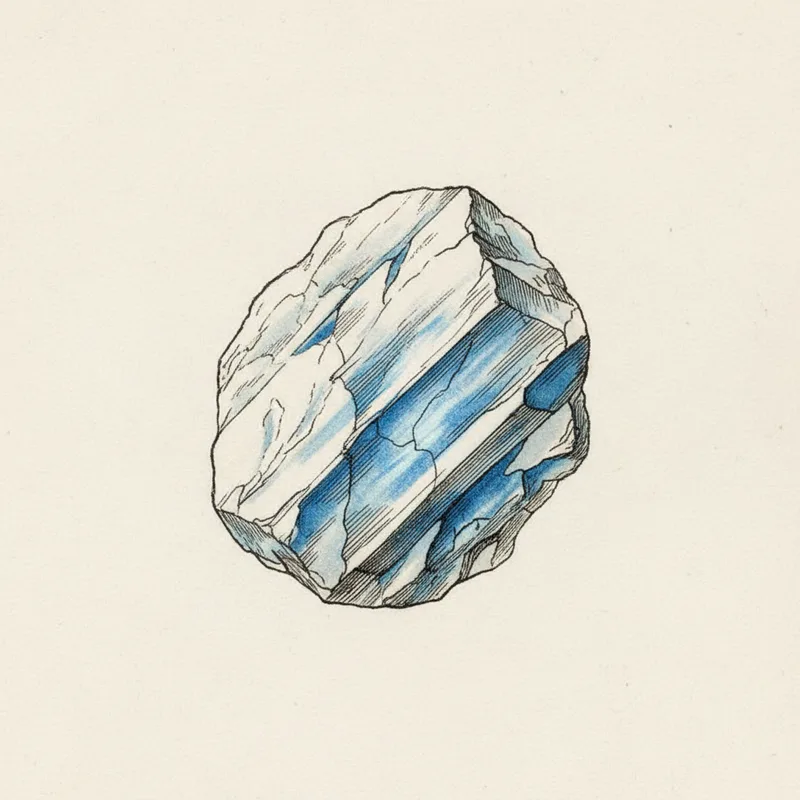
Moonstone
The Traveler's Stone
Fire Opal
The Aztec Sun Stone
Rubellite
The Red Tourmaline Royalty
Sapphire
The Gem of the Heavens
Peridot
The Evening Emerald
Diamond
The Invincible
Granite
The Backbone of Continents

Schorl
The Iron-Black Tourmaline
Opal
The Eye Stone
Keep Reading
Newsletter
Something shiny, now and then
A stone worth knowing, or a fake worth spotting, every so often. No spam.