Libra Season Crystals 2026: Stones for Balance
Key Takeaway: Libra season runs September 23 through October 22. It is the cardinal air sign ruled by Venus, the sign of balance, partnership, beauty, and fair judgment. The crystals that pair with it are the soft, harmonizing, and frankly the prettiest stones in the catalogue: lepidolite, lapis lazuli, rose quartz, opal, tourmaline, and morganite. These are the six worth keeping at hand as the year tips into autumn.
The sun crosses out of Virgo at the autumn equinox, which in 2026 falls on the evening of September 22 in North America and just after midnight UTC on the 23rd. It is a fitting doorway for this particular sign. The equinox is the moment day and night come closest to equal length, and Libra is the sign of the scales. The symbolism lines up on its own, without anyone having to reach for it.
The next month belongs to the seventh sign of the zodiac. Astrologers describe Libra as diplomatic, aesthetic, and relational, the sign most concerned with fairness and with how things look and feel. Its ruler is Venus, planet of beauty and attraction, its element is air, and its natural domain is the seventh house of partnership. Where Virgo sorted and corrected, Libra weighs and harmonizes.
If you come at crystals from a geological angle, the stones traditionally tied to Libra split along the sign's own two preoccupations. There are the balance-and-judgment stones, cool and considered: lepidolite and lapis lazuli. And there are the Venus stones, pink and luminous and unapologetically decorative: rose quartz, morganite, and the two October birthstones, opal and tourmaline. After Virgo's clinical palette, the season turns soft, warm, and iridescent.
Below are six crystals for Libra season, each with a note on how it looks, how it formed, why tradition ties it to the sign, and how to use it. A ritual and a care section close things out, and the care section matters more than usual this month: half of these stones are genuinely fragile, and two of them are damaged by the sunny windowsill most people display crystals on.
1. Lepidolite: The Stone of the Scales
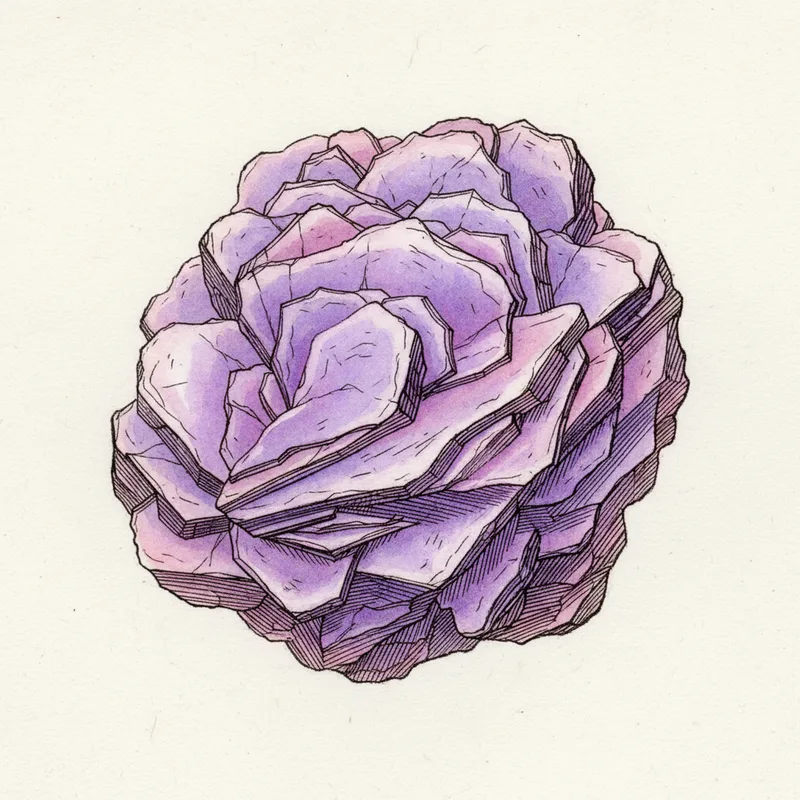
Lepidolite is a lilac-to-purple mica, soft and pearly, that separates into thin flexible sheets like the pages of a book.
It is a lithium-bearing mica (K(Li,Al)₃(Al,Si)₄O₁₀(F,OH)₂) that forms in granitic pegmatites, the last lithium-rich and boron-rich pockets of fluid to crystallize as a granite body cools. That is the same nursery that produces tourmaline, which is why the two so often turn up on the same piece of matrix. The purple comes from its lithium and manganese content. It really does contain lithium, enough that deposits once mined only for specimens are now being evaluated as battery-grade lithium sources. It is worth being clear about what that does and does not mean: the lithium is locked inside a stable aluminosilicate lattice, so holding the stone does not deliver any of it to you.
Keep lepidolite where decisions pile up. Crystal tradition ties it to emotional balance and calm decision-making, and practitioners connect that balancing reputation directly to Libra's scales. Our lepidolite and anxiety piece goes further into where that reputation came from. Expect $2 to $6 for a tumbled stone.
Traditional associations: Balance, calm, emotional steadiness, and unhurried decisions.
2. Lapis Lazuli: The Stone of Fair Judgment
Lapis lazuli is the deep celestial blue flecked with metallic gold, the most historically loaded stone on this list.
It is not a mineral but a rock, built mainly from lazurite with calcite for the white marbling and pyrite for the gold. Its blue comes from something unusual: a trapped sulfur radical anion (S₃⁻) sitting inside the lazurite structure, one of the few gem colors produced by a captive molecular ion rather than a transition metal. It forms where limestone meets intruding magma and gets cooked and chemically rewritten. The Badakhshan mines of Afghanistan have supplied the finest material continuously for more than 6,500 years, and the pigment ultramarine was ground from this stone, at times worth more by weight than gold, until synthetic versions arrived in the 1820s.
Keep lapis where you have to be fair to someone, or to yourself. Tradition connects it to truth, wisdom, and balanced judgment, which is about as close to the Libra archetype as a stone gets. If you are shopping, read our lapis lazuli vs sodalite comparison first, because the two are constantly confused and priced apart.
Traditional associations: Truth, fair judgment, wisdom, and honest self-assessment.
3. Rose Quartz: The Venus Stone
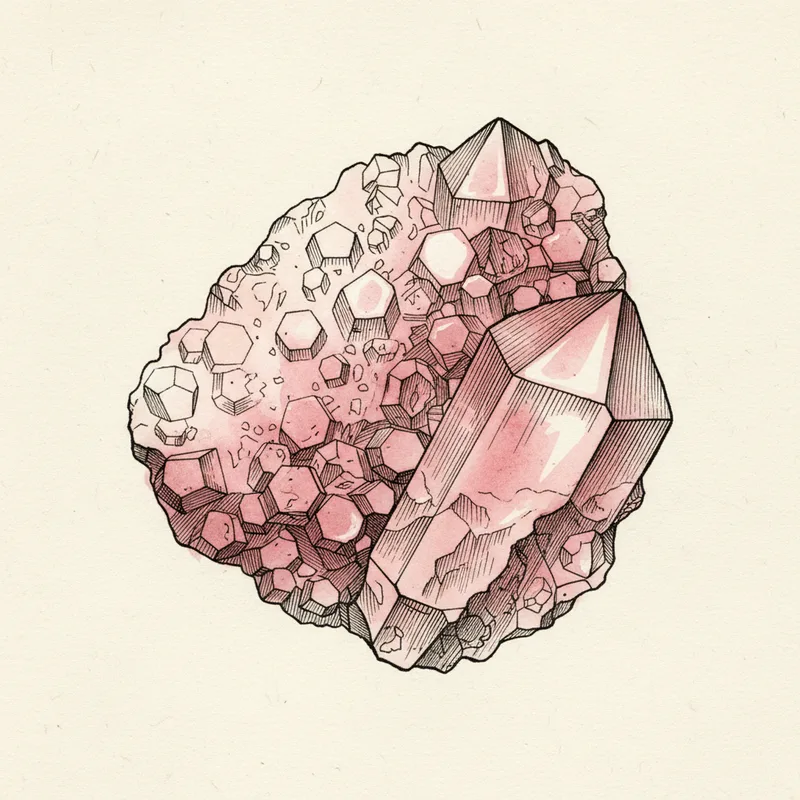
Rose quartz is the soft translucent pink of the quartz family, and the obvious stone for a Venus-ruled season.
Its color is a genuine surprise, and it is the detail most crystal shops get wrong. Rose quartz is not pink because of a trace element, the way amethyst is purple from iron. The pink comes from microscopic fibrous inclusions of dumortierite, needles roughly 1 to 10 micrometers long, far too small to see, which collectively absorb certain wavelengths and leave the pink behind. It is a pink made of tiny threads rather than tinted glass. Brazil supplies most of the world's material, and star rose quartz from Madagascar shows a six-rayed asterism when lit from a point source.
Keep rose quartz where relationships happen, which for most people means a bedside or a living room rather than a desk. Tradition frames it as the stone of unconditional love and gentle repair, and the Venus rulership is why it belongs to this season rather than to a working one. Just do not put it in the window, for reasons in the care section below.
Traditional associations: Love, gentleness, reconciliation, and self-compassion.
4. Opal: The October Birthstone
Opal is the first of Libra's two birthstone bridges, and the most purely beautiful thing in the catalogue. It is also, appropriately for the sign of aesthetics, a stone whose entire value rests on how it looks.
Opal is barely a crystal at all. It is amorphous hydrated silica (SiO₂·nH₂O), a hardened gel holding between 3 and 21 percent water by weight, formed where silica-rich water seeped into voids and slowly evaporated over millions of years. The play-of-color is pure physics: microscopic silica spheres, uniform in size at roughly 150 to 400 nanometers, stack into orderly three-dimensional arrays and diffract white light into its components, a natural diffraction grating. Larger spheres throw red, which is the rarest and most valuable flash; smaller spheres throw blue and violet. Australian black opal from Lightning Ridge commands the highest prices because a dark body color gives the fire maximum contrast.
Wear or display opal through October as the birthstone anchor of the season. Common opal starts around $5 to $30; white opal with play-of-color runs $50 to $500; fine black opal reaches many thousands. Our October birthstones guide covers the doublets, triplets, and hydrophane behavior worth knowing before you buy, and moonstone vs opal sorts out which shimmer is which.
Traditional associations: Beauty, imagination, emotional expression, and hope.
5. Tourmaline: The Stone That Holds Two Colors at Once
Tourmaline is October's other birthstone, and the single best mineral metaphor for Libra in the entire catalogue.
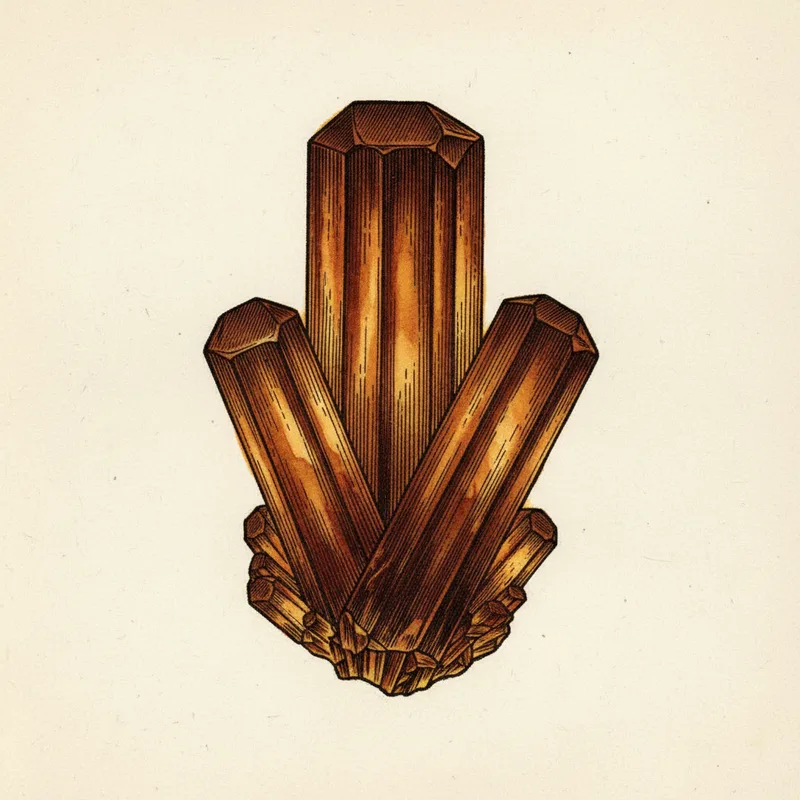
It is a group of complex borosilicates sharing one structure and accepting almost any chemistry, which is why it comes in effectively every color: iron for black and green, manganese for pink and red, copper for the electric neon of Paraiba material. Some crystals record a change in the fluid they grew from as a change in color, coming out green on the outside and pink in the center. That is watermelon tourmaline, a single crystal holding two colors in balance, which is not a bad thing to have on the desk during the season of the scales. Tourmaline is also piezoelectric and pyroelectric, generating a charge when squeezed or heated. Dutch traders knew this and used warmed crystals to pull ash out of their pipes, calling the stone aschentrekker, the ash puller.
Tourmaline is hardness 7.5 with a distinctive rounded triangular cross-section that no other common mineral shares. It shares October with opal, and our October birthstones guide covers why it was added to the month only in 1952. Black schorl runs $1 to $5; colored gem specimens $20 to $500; Paraiba is in another world entirely. It is also widely faked, so see how to tell if tourmaline is real before buying, and rose quartz vs pink tourmaline if you are choosing between this season's two pinks.
Traditional associations: Balance, protection, and holding opposites together.
6. Morganite: The Partnership Stone
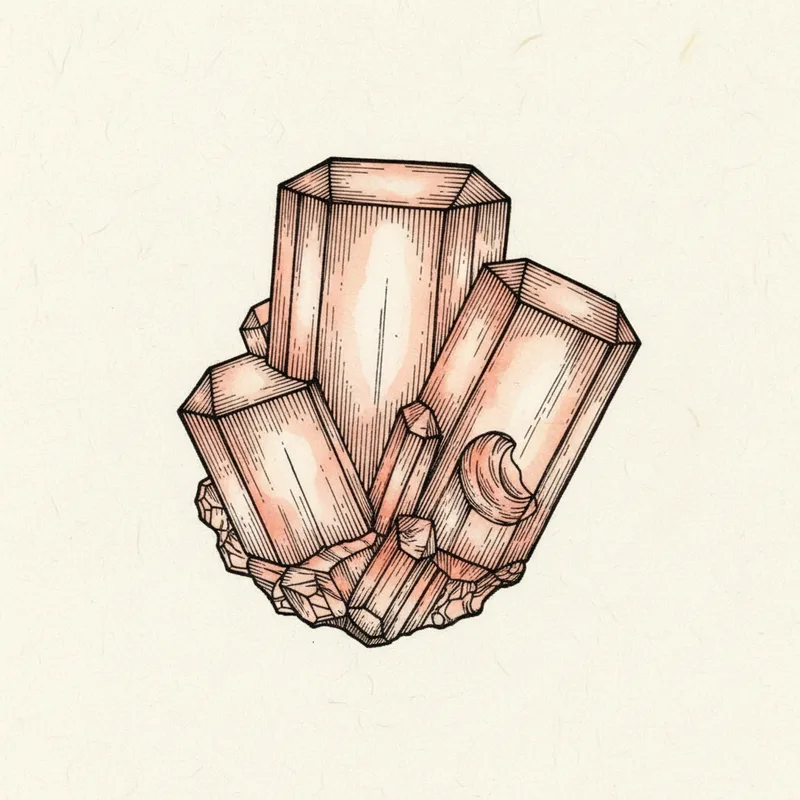
Morganite closes the season with the peachy pink of gem beryl, the most refined stone on the list.
It is beryl (Be₃Al₂Si₆O₁₈), the same species as emerald and aquamarine, tinted by manganese sitting in the crystal structure. Like its siblings it grows in granitic pegmatites, in the final stages of a cooling magma. It was identified in 1910 in Madagascar and named after J.P. Morgan by George Frederick Kunz of Tiffany and Co., the gemologist whose own name is on kunzite; Morgan's collection now sits in the American Museum of Natural History. One honest note that a jeweller may not volunteer: most gem morganite is heat-treated to strip yellow and orange overtones and leave a purer pink. The treatment is permanent and entirely standard in the trade, but you should know it is normal rather than assume your stone's color is untouched.
Morganite is the relationship stone of the season, traditionally linked to compassion and partnership, which places it squarely in Libra's seventh house. Commercial material runs $20 to $100 per carat, fine saturated pink $100 to $400. Read morganite meaning, properties, and how to spot fakes before you buy, since dyed and coated substitutes are common.
Traditional associations: Compassion, partnership, and open-heartedness.
A Three-Stone Ritual for the Month
For a simple way to work with these across Libra season, the three most useful are lepidolite, lapis lazuli, and rose quartz. Between them they cover what the season actually asks of people: the steadiness to sit with a decision (lepidolite), the honesty to judge it fairly (lapis), and the warmth to stay kind while you do (rose quartz).
Set the three out together at the equinox. Libra is the season of weighing things, so each morning through October 22, pick up one and name a single thing you are deciding, a person you owe a fair hearing, or a relationship you want to tend. The point is not magic. It is a structured habit of attention, with the stones as the prompt, which suits the sign that would rather think it through than rush.
Care Notes for Libra-Season Stones
This is the fragile season, and two of these stones are damaged by exactly the place people like to display crystals.
Keep rose quartz and opal out of the window. Rose quartz can pale slowly under prolonged direct sun and the change is permanent. With opal the light is not the problem, the heat and dryness are: it is hydrated silica, and prolonged sun can dehydrate it into crazing, a network of fine permanent cracks. Our crystals that fade in sunlight and protecting crystals from summer heat and sunlight guides cover the mechanisms.
Keep three of them away from water. Lepidolite is a mica at hardness 2.5 with perfect basal cleavage, so water works between the layers, stays there, and delaminates the stone; it also scratches with a fingernail. Lapis lazuli carries pyrite and calcite, and both degrade in water, with the pyrite able to rust and stain the blue. Opal holds up to 20 percent water internally, so soaking causes differential expansion and cracking. Dry cleaning only for all three.
Tourmaline at 7.5 and morganite at 7.5 are the durable ones, and rose quartz at 7 is tough enough for daily handling as long as it stays out of the sun.
What Comes Next
The sun crosses into Scorpio on October 23, trading Libra's air for water and turning from balance and partnership toward depth, intensity, and what sits under the surface. The Scorpio-season stones run darker and more protective than this month's, and our Scorpio season crystals guide covers them now. For now, Libra season is here, and these are the six worth keeping close.
Related:
Metaphysical and “healing” associations mentioned here are cultural traditions, not medical advice or scientific fact. Crystals are not a substitute for professional medical care. Full disclaimer.
Crystals in This Article
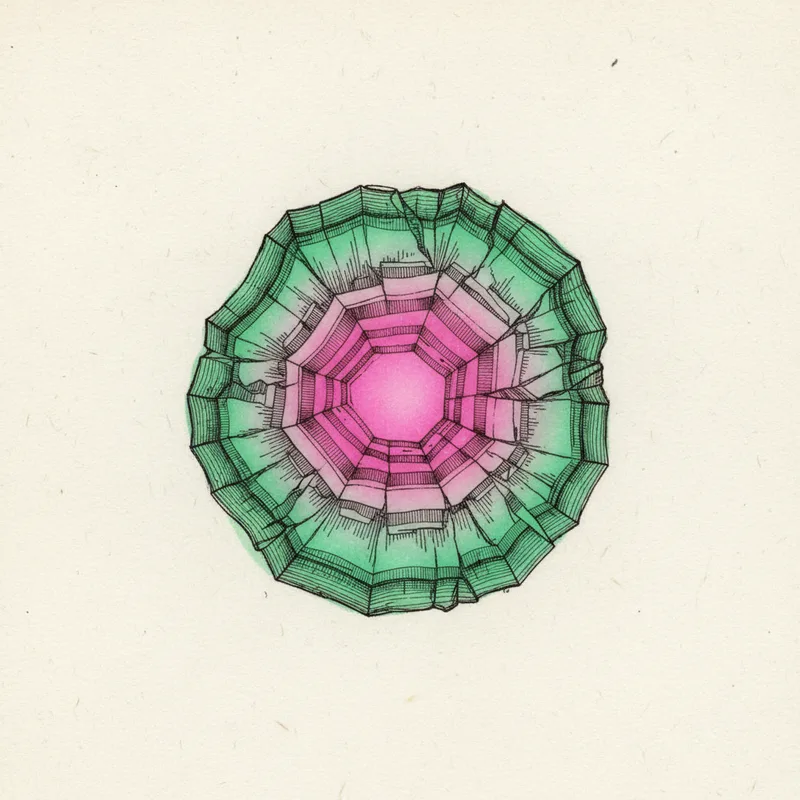
Watermelon Tourmaline
The Dual Heart Stone

Star Rose Quartz
The Star of the Heart
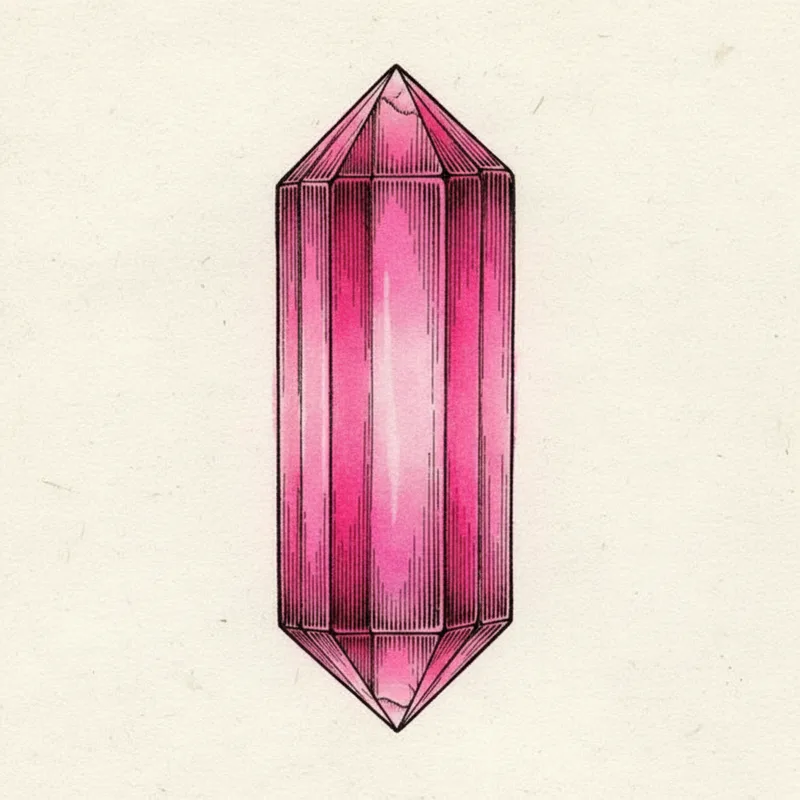
Pink Tourmaline
The Manganese Elbaite
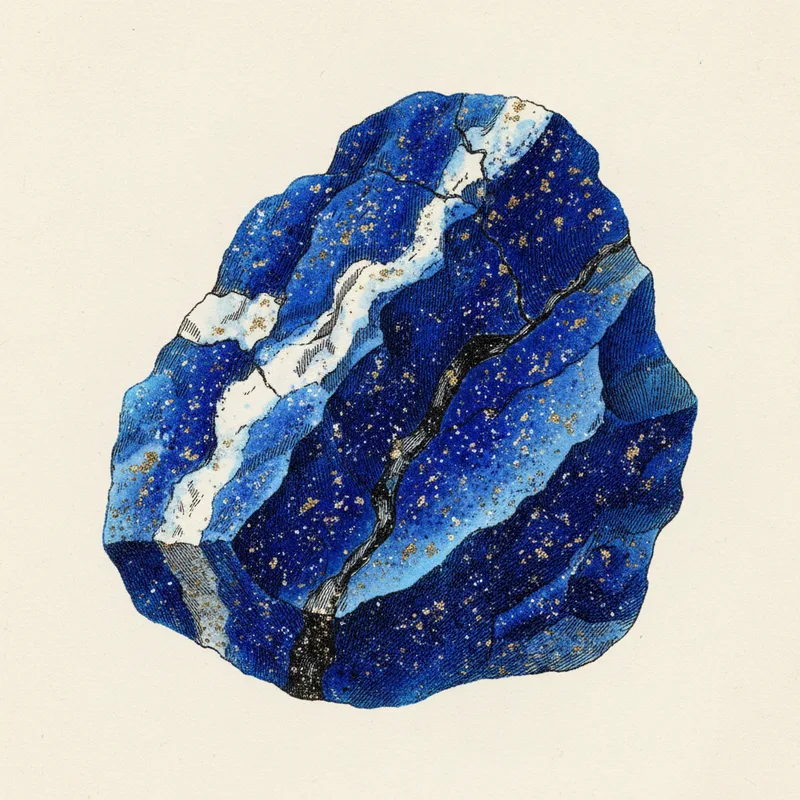
Lapis Lazuli
The Stone of the Heavens
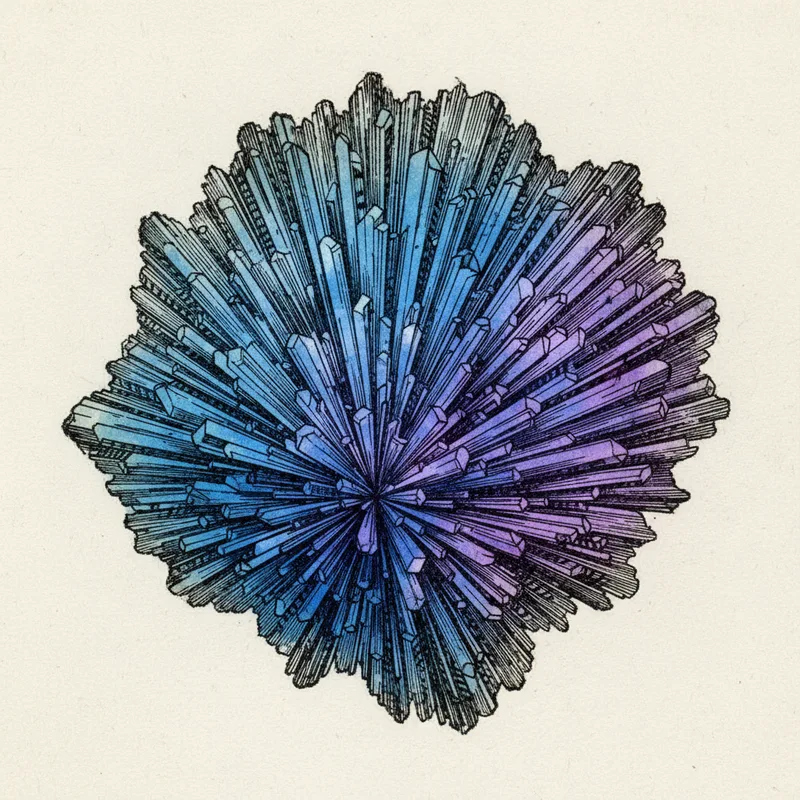
Dumortierite
The Patience Stone
Rose Quartz
The Stone of Unconditional Love
Tourmaline
The Rainbow Stone
Aquamarine
The Sailor's Gem
Lepidolite
The Peace Stone
Moonstone
The Traveler's Stone
Morganite
The Divine Love Stone
Limestone
The Fossil Record
Keep Reading
Newsletter
Something shiny, now and then
A stone worth knowing, or a fake worth spotting, every so often. No spam.