Ruby vs Garnet: The Red Stone Showdown
Key Takeaway: Ruby and garnet both flash deep red, but they belong to entirely different mineral families. Ruby is corundum (hardness 9), one of the rarest and most expensive gemstones on Earth. Garnet is an abundant nesosilicate group (hardness 6.5 to 7.5) with dozens of species. A UV flashlight, a hardness test, or a refractometer will separate them instantly.
Pick up a deep red gemstone at a flea market or estate sale and you face the oldest identification puzzle in gemology. Is it a ruby or a garnet? For most of recorded history, people did not know the difference. Medieval jewelers lumped every red stone under the Latin word "carbunculus." It was not until the late 1700s that mineralogists sorted corundum from the garnet group, and the price gap between the two has widened every decade since.
This guide breaks down everything that separates these two red heavyweights: chemistry, formation, optical behavior, durability, history, price, and the practical tests you can run at home.
At a Glance
| Feature | Ruby | Garnet (Red Species) |
|---|---|---|
| Mineral Group | Corundum | Garnet group (nesosilicates) |
| Hardness | 9 | 6.5 to 7.5 |
| Chemical Formula | Al₂O₃ (+ Cr trace) | Varies by species (see below) |
| Crystal System | Trigonal | Isometric (cubic) |
| Refractive Index | 1.762 to 1.770 | 1.714 to 1.887 |
| Specific Gravity | 3.97 to 4.05 | 3.51 to 4.32 |
| Color Cause | Chromium replacing aluminum | Iron, chromium, or manganese depending on species |
| UV Fluorescence | Strong red (long-wave UV) | Usually inert |
| Typical Price | $100 to $100,000+ per carat | $5 to $500 per carat |
| Best For | Heirloom fine jewelry, engagement rings | Everyday jewelry, vintage styles, collector specimens |
What They Actually Are
Ruby: The Red Corundum
Ruby is the red variety of corundum, the same mineral species as sapphire. Its chemical formula is Al₂O₃, aluminum oxide. What makes it red is chromium. When roughly 1 to 3 percent of the aluminum atoms in the crystal lattice get replaced by chromium ions (Cr³⁺), the stone absorbs yellow-green light and transmits a vivid red. More chromium means deeper red, but too much chromium prevents crystals from growing large, which is one reason big rubies are so extraordinarily rare.
Corundum is the second hardest natural mineral on Earth, ranking 9 on the Mohs scale. Only diamond is harder. This means ruby resists scratching from virtually everything it encounters in daily life, making it one of the most practical gemstones for rings.
Garnet: A Family, Not a Single Mineral
Garnet is not one mineral. It is a group of closely related nesosilicate minerals that share the same crystal structure but swap out different metal ions. The general formula is X₃Y₂(SiO₄)₃, where X can be calcium, magnesium, iron, or manganese, and Y can be aluminum, iron, or chromium.
The red garnet species most commonly confused with ruby are:
Pyrope (Mg₃Al₂(SiO₄)₃): The classic "fiery" red garnet. Its magnesium content gives it a blood-red to slightly purplish hue. Pyrope is the species most commonly mistaken for ruby because its color can be remarkably similar.
Almandine (Fe₃Al₂(SiO₄)₃): The most abundant garnet on Earth. Its iron content typically gives it a darker, brownish-red to purplish-red color. Almandine is the garnet you find in most affordable jewelry.
Rhodolite (a pyrope-almandine blend): A naturally occurring mixture that sits between pyrope and almandine in composition. Rhodolite garnets display a distinctive raspberry to purplish-pink color that is lighter and livelier than either parent species. Fine rhodolite from Tanzania or Mozambique is among the most desirable garnet on the market.
Other garnet species come in completely non-red colors. Tsavorite is a vivid green grossular garnet. Spessartine is orange. Demantoid is green with a fire that rivals diamond. Uvarovite forms tiny emerald-green crystals. The garnet group is one of the most color-diverse mineral families in existence.
How They Form
Ruby's Impossible Recipe
Ruby formation reads like a geological improbability. Corundum crystallizes from aluminum-rich, silica-poor environments, and those two conditions rarely coexist in the Earth's crust. Silicon and oxygen are the two most abundant elements in crustal rocks, so finding a pocket where silica is depleted enough for corundum to grow is inherently unusual.
The finest rubies on Earth formed in marble. In places like the Mogok Valley of Myanmar, ancient limestone was subjected to intense regional metamorphism. As temperatures climbed past 600 to 700 degrees Celsius under enormous pressure, the calcite recrystallized into marble, and aluminum-rich impurities within the limestone concentrated into corundum crystals. The critical ingredient, chromium, was supplied by trace amounts already present in the original sedimentary rock. Because marble is naturally silica-poor, the corundum crystals could grow without being converted to other aluminum silicate minerals like kyanite or sillimanite.
Rubies also form in basaltic environments. In Thailand, Cambodia, and parts of Australia, rubies occur in alkali basalt rocks or in alluvial gravels eroded from basalt. These rubies tend to be darker and more iron-rich than marble-hosted stones, giving them a deeper, sometimes brownish-red hue that is less commercially desirable. The Burmese marble-hosted rubies, with their pure chromium-red color and natural fluorescence, remain the gold standard.
A third formation pathway involves metamorphic schist and gneiss. Rubies from Mozambique, Madagascar, and parts of East Africa often formed in amphibolite-facies metamorphic rocks. These deposits have become increasingly important in the global market over the past two decades, producing stones that rival Myanmar's output in both quality and size.
Garnet's Simpler Path
Garnets are geological generalists. They form in a wide range of conditions, which is exactly why they are so abundant. Most red garnets (almandine and pyrope) crystallize during regional metamorphism. When shale, mudstone, or other aluminum-rich sedimentary rocks are buried deep and heated to 400 to 800 degrees Celsius under high pressure, garnet is one of the first minerals to appear.
Almandine, the iron-rich end member, is so common in metamorphic rocks that geologists use its appearance as an indicator of metamorphic grade. When you see large garnet crystals in a schist, you know that rock reached at least the amphibolite facies of metamorphism.
Pyrope forms under even more extreme conditions. It is characteristic of the Earth's upper mantle, typically crystallizing at depths of 75 kilometers or more. Pyrope garnets reach the surface by hitchhiking inside volcanic pipes called kimberlites, the same explosively erupted rock formations that carry diamonds to the surface. This is why pyrope garnet is actually used as a prospecting indicator for diamond deposits. When geologists find pyrope garnets in stream sediments, they follow the trail upstream looking for a kimberlite pipe.
The key difference is abundance. Ruby requires the convergence of multiple unlikely geological conditions: aluminum concentration, silica depletion, chromium availability, and the right temperature-pressure window. Garnet just needs heat, pressure, and common rock-forming elements. This fundamental geological asymmetry is why a carat of fine ruby can cost a thousand times more than a carat of fine garnet.
Five Ways to Tell Them Apart
1. The UV Flashlight Test
This is the easiest and most dramatic test. Hold a long-wave UV light (a simple blacklight will work) over the stone in a dark room. Rubies fluoresce a vivid, glowing red because the chromium in their crystal lattice absorbs UV energy and re-emits it as visible red light. The effect is unmistakable. A good Burmese ruby will glow like a hot coal under UV.
Most garnets are completely inert under UV. They just sit there, dark and unchanged. Some pyrope garnets show a very faint orangey glow, but it is nothing like the strong red fluorescence of ruby. This test alone will correctly identify the vast majority of ruby-garnet pairs.
One caveat: synthetic rubies also fluoresce strongly (they contain the same chromium). So fluorescence confirms you have corundum, not garnet, but it does not confirm natural origin.
2. Refraction: Single vs. Double
Garnet is singly refractive. Light passes through it without splitting. Ruby, like all corundum, is doubly refractive, meaning it splits incoming light into two slightly different rays.
With a jeweler's loupe at 10x magnification, you can sometimes see this doubling effect in rubies. Look through the stone at the back facets. In a doubly refractive stone, the facet edges may appear slightly doubled or fuzzy. In garnet, the edges will be sharp and singular.
A gemological refractometer gives the definitive answer. Ruby reads 1.762 to 1.770 with a birefringence of 0.008. Garnets read as a single line on the refractometer, typically between 1.73 (pyrope) and 1.83 (almandine).
3. The Hardness Gap
Ruby sits at 9 on the Mohs scale. Red garnets range from 6.5 to 7.5. That is a significant gap. If you have an unset stone and are willing to test it (carefully, on an inconspicuous spot), a ruby will scratch topaz (hardness 8), while garnet will not. A piece of quartz (hardness 7) will scratch almandine garnet but will not leave a mark on ruby.
For mounted stones, the scratch test is obviously impractical, but long-term wear tells the story. A ruby ring worn daily for decades will still look polished. A garnet ring under the same conditions will develop fine surface scratches over time, gradually losing its polish.
4. Color and Hue
This test requires experience, but the color signatures are genuinely different. The finest rubies have a color that gemologists describe as "pigeon blood": a pure, saturated red with a slight blue undertone and no brown. The chromium fluorescence actually adds to the perceived redness, making top rubies appear to glow from within, even in normal daylight.
Red garnets almost always carry a secondary hue. Almandine leans brownish or purplish-red. Pyrope can be very close to ruby red but usually has a slightly darker, wine-like tone. Rhodolite has a distinctive raspberry or pinkish-purple cast. If the stone looks brownish, wine-dark, or strongly purple, it is almost certainly garnet. If it has a pure, electric red that seems to radiate its own light, it is more likely ruby.
5. Inclusions Under Magnification
A gemologist examining a stone under 10x or higher magnification will look for diagnostic inclusions. Rubies commonly contain:
- Silk: Fine, needle-like inclusions of rutile (TiO₂) that cross at 60-degree angles. This is a classic ruby fingerprint.
- Fingerprint inclusions: Healed fractures that look like actual fingerprints.
- Mineral crystals: Tiny included crystals of calcite, apatite, or zircon.
Garnets have their own inclusion signatures:
- Rounded crystal inclusions: Garnets often contain small, rounded crystals of other minerals.
- Needle inclusions: Some garnets contain rutile needles, but they tend to be shorter and more randomly oriented than the organized silk in ruby.
- "Horsetail" inclusions: Characteristic of demantoid garnet, though not typically seen in red garnets.
Famous Rubies vs. Famous Garnets
The world's most celebrated rubies and garnets illustrate the gap between these two stones in terms of cultural prestige and financial value.
Legendary Rubies
The Sunrise Ruby is a 25.59-carat Burmese pigeon blood ruby that sold at Sotheby's Geneva in May 2015 for $30.42 million, making it the most expensive colored gemstone ever sold at auction at the time. That works out to roughly $1.19 million per carat.
The Liberty Bell Ruby was the largest mined ruby in the world, a 4-pound, 8,500-carat sculpture carved into the shape of the Liberty Bell. It was famously stolen from a jewelry store in Wilmington, Delaware in 2011 and has never been recovered.
The Rosser Reeves Star Ruby is a 138.7-carat star ruby housed in the Smithsonian. Its six-rayed asterism, caused by aligned rutile silk inside the crystal, creates a glowing star that slides across the dome of the cabochon as the stone moves.
Notable Garnets
The Bohemian Garnets of the Czech Republic drove an entire regional industry. For centuries, pyrope garnets mined in the volcanic hills of northern Bohemia were the signature gemstone of Central European jewelry. Victorian-era Bohemian garnet jewelry, with its tightly packed clusters of small, deep red pyrope stones, remains highly collectible today.
The Ant Hill Garnets of Arizona are tiny, gem-quality pyrope garnets (sometimes called "chrome pyrope" for their chromium content) that are literally mined by ants. The Navajo Nation's red ant colonies bring small garnet crystals to the surface while excavating their hills. These garnets are usually under one carat but are known for their unusually vivid, pure red color.
The Demantoid Garnets of the Ural Mountains are not red, but they deserve mention as the most valuable garnets on Earth. First discovered in Russia in the 1850s, demantoid is an andradite garnet with a dispersion (fire) higher than diamond. Fine Russian demantoid with characteristic "horsetail" inclusions of chrysotile asbestos can sell for $5,000 to $10,000 per carat.
The Price Gap: Why It Exists
Fine natural rubies are among the most expensive gemstones on Earth. Per carat, they regularly outpace diamonds. The reasons are straightforward:
Supply: Natural, untreated rubies of fine color are extraordinarily rare. The geological conditions required for their formation are unusual, and the deposits that produce top-quality stones are limited and, in many cases, politically complicated (Myanmar's Mogok Valley has been affected by decades of conflict and sanctions).
Demand: Ruby has been revered across virtually every major culture for millennia. It is one of the "Big Three" colored gemstones (alongside emerald and sapphire), and demand from Asian markets, particularly China and India, has intensified dramatically.
Treatment transparency: Most rubies on the market are heat-treated to improve color and clarity. Untreated stones of fine quality command significant premiums. Lead-glass-filled rubies, which are heavily treated low-quality stones infused with lead glass to fill fractures, are sold at a fraction of the price but are not considered true gemstone-quality by the trade.
Garnet prices tell a completely different story. Because almandine and pyrope are geologically common, the supply of red garnet is essentially unlimited. A beautiful, eye-clean, two-carat almandine garnet might cost $20 to $40. The same quality and size in ruby would run $2,000 to $20,000 or more, depending on origin and treatment status.
The exceptions in the garnet world are the rare species. Tsavorite garnet in large sizes (over 3 carats) can cost $2,000 to $8,000 per carat. Demantoid garnet from Russia with horsetail inclusions commands similar prices. Color-change garnets, which shift from green in daylight to red in incandescent light (mimicking alexandrite), can fetch $1,000 to $5,000 per carat. But the common red garnets remain firmly in the affordable category.
The Spinel Wildcard
Any discussion of ruby vs. garnet should mention spinel, the third red stone that has confused gem identification for centuries. Red spinel is actually closer to ruby in appearance, hardness (8), and value than garnet is. Several of history's most famous "rubies" turned out to be spinels, including the Black Prince's Ruby in the British Imperial State Crown and the Timur Ruby in the British Royal Collection.
Spinel is singly refractive like garnet, but its hardness (8) falls between garnet and ruby. It also tends to have a more vivid, cleaner red than most garnet, and fine red spinel from Myanmar or Tanzania can cost thousands per carat. If you are trying to identify a red stone, keep spinel in mind as a third possibility.
Garnet Species That Fool People
Not all garnets look the same, and some species are much more convincing ruby imposters than others.
Pyrope is the most common culprit. High-chromium pyrope from sources like Arizona or the Czech Republic can achieve a red so pure and saturated that it approaches pigeon blood ruby in color. The key giveaway is usually the darkness. Pyrope tends to be slightly darker and more "wine-colored" than fine ruby, and it will not fluoresce under UV.
Rhodolite is actually less likely to be confused with ruby because its color is distinctly pinkish-purple, almost raspberry. But in small sizes or under certain lighting, it can look deceptively ruby-like. Rhodolite is popular in its own right as an affordable, attractive alternative to pink sapphire or rubellite tourmaline.
Chrome pyrope and color-change garnet are the trickiest. Chrome pyrope has chromium as its color agent, just like ruby, and can display a very similar hue. Color-change garnets are rare but fascinating, appearing green or teal in daylight and red to purplish in incandescent light.
Hessonite (a grossular garnet variety) and spessartine are orange to brownish-red and generally not confused with ruby, but they sometimes appear in collections labeled vaguely as "red garnet."
Lab-Created Rubies: The Modern Wrinkle
Since the early 1900s, synthetic rubies have been manufactured using the Verneuil flame-fusion process. These stones are chemically identical to natural ruby (Al₂O₃ with Cr³⁺), have the same hardness of 9, and fluoresce strongly under UV. They cost a tiny fraction of natural rubies.
If you are trying to distinguish garnet from ruby and the stone turns out to be ruby, the next question is whether it is natural. Synthetic rubies often show curved growth lines (called "striae") under magnification, whereas natural rubies show angular growth zoning. Gas bubbles, visible as tiny round inclusions, are another telltale sign of flame-fusion synthesis. More advanced synthesis methods (flux growth, hydrothermal) produce inclusions that can closely mimic natural ones, requiring a trained gemologist or a laboratory report for definitive identification.
The practical takeaway: if a "ruby" costs less than $50 per carat and looks flawless, it is almost certainly synthetic or glass-filled. At those prices, a natural garnet is actually the more authentic and geologically interesting stone.
Cultural and Historical Traditions
Both ruby and garnet carry long histories of cultural significance.
Ruby has been called the "king of precious stones" in Hindu tradition (ratnaraj). Ancient Sanskrit texts described rubies as solidified drops of divine blood. Burmese warriors reportedly embedded rubies into their skin before battle, believing the stones would make them invulnerable. In medieval European courts, rubies symbolized passion, authority, and the blood of Christ. Ruby is the birthstone for July and is traditionally associated with the root and heart chakras.
Garnet has its own deep history. The name comes from the Latin "granatum," meaning pomegranate, because garnet crystals resemble the fruit's seeds. Ancient Egyptian pharaohs were buried with garnet necklaces. Roman signet rings were frequently carved from garnet. During the Middle Ages, red garnets were believed to cure inflammatory diseases and calm anger. Garnet is the birthstone for January and is traditionally linked to the root chakra.
Both stones have been associated with vitality, courage, and protection across multiple cultures. The practical difference, historically, was that garnets were accessible to merchants and minor nobility, while rubies were reserved for royalty and the extraordinarily wealthy.
Practical Buying Advice
If You Want Red and Have a Budget
Garnet is the clear choice. A two-carat, eye-clean, richly saturated almandine or pyrope garnet will cost $20 to $80 and look stunning in a well-designed setting. Rhodolite offers a more refined raspberry color for slightly more. For everyday jewelry, garnet's hardness of 6.5 to 7.5 is adequate for earrings, pendants, and rings that receive gentle wear.
If You Want an Heirloom
Ruby is worth the investment. Its hardness of 9 means it can take a lifetime (or several lifetimes) of daily wear without losing its polish. A well-chosen natural ruby with a reputable lab report (GIA, Gubelin, SSEF) is a stone that will hold or increase its value over decades. Start with stones in the 0.5 to 1.5 carat range if budget is a concern. Heat treatment is standard and accepted in the trade, so a heat-treated natural ruby remains a genuine, valuable gemstone.
If You Cannot Tell Which One You Have
Get it tested. Most gemological laboratories and many local jewelers can run a basic identification for $25 to $75. The combination of refractive index measurement, UV fluorescence check, and inclusion examination will give a definitive answer. Do not rely on color alone, and do not trust a seller who cannot provide documentation.
The Bottom Line
Ruby and garnet are both beautiful red stones with rich geological histories, but they occupy completely different tiers in the gemological world. Ruby is corundum, the second hardest natural substance, colored by chromium, and so rare in fine quality that it commands prices rivaling or exceeding diamond. Garnet is an entire mineral family, abundant and geologically diverse, producing gorgeous red stones at a fraction of the cost.
Neither stone is "better" in an absolute sense. A person wearing a well-cut, richly colored pyrope garnet owns something genuinely beautiful, geologically ancient, and historically significant. A person wearing a fine Burmese ruby owns one of the rarest objects that the Earth's crust has ever produced. The difference is not beauty. It is scarcity, durability, and the extraordinary geological improbability that a ruby represents.
Know what you are buying, know how to test it, and choose the stone that fits your purpose. That is the only showdown that matters.
Metaphysical and “healing” associations mentioned here are cultural traditions, not medical advice or scientific fact. Crystals are not a substitute for professional medical care. Full disclaimer.
Crystals in This Article
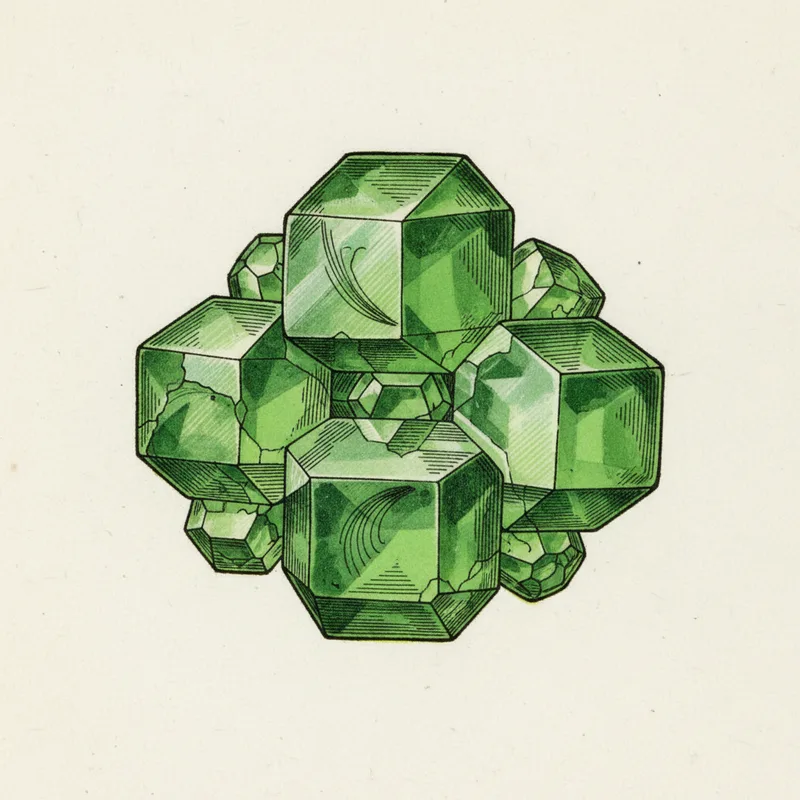
Demantoid Garnet
The Green Fire

Almandine Garnet
The Warrior's Stone

Grossular Garnet
The Rainbow Garnet

Andradite Garnet
The Collector's Garnet

Pyrope Garnet
The Fire Garnet
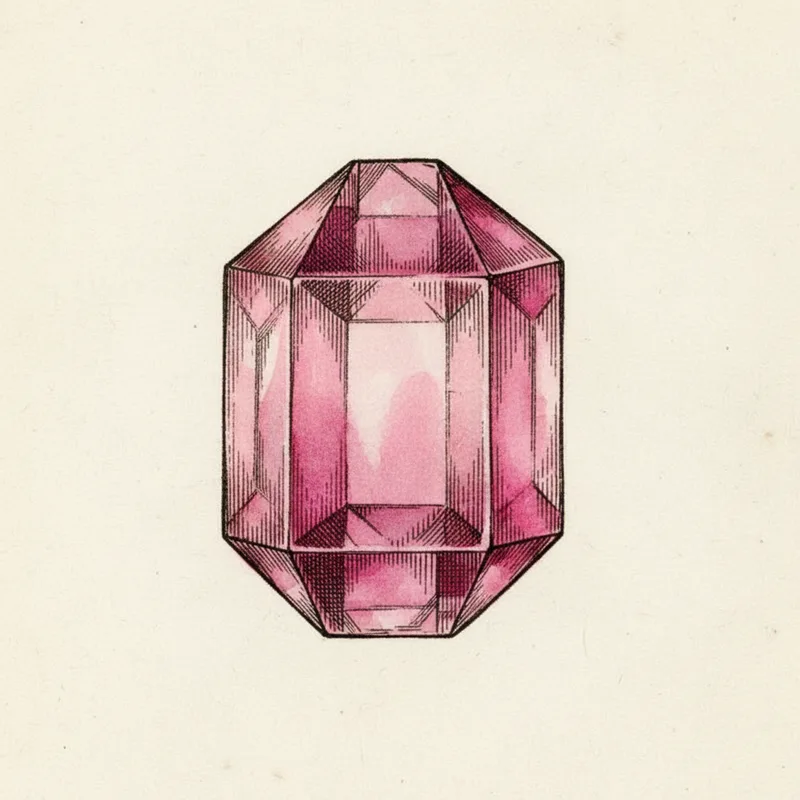
Pink Sapphire
Chromium's Softer Signature
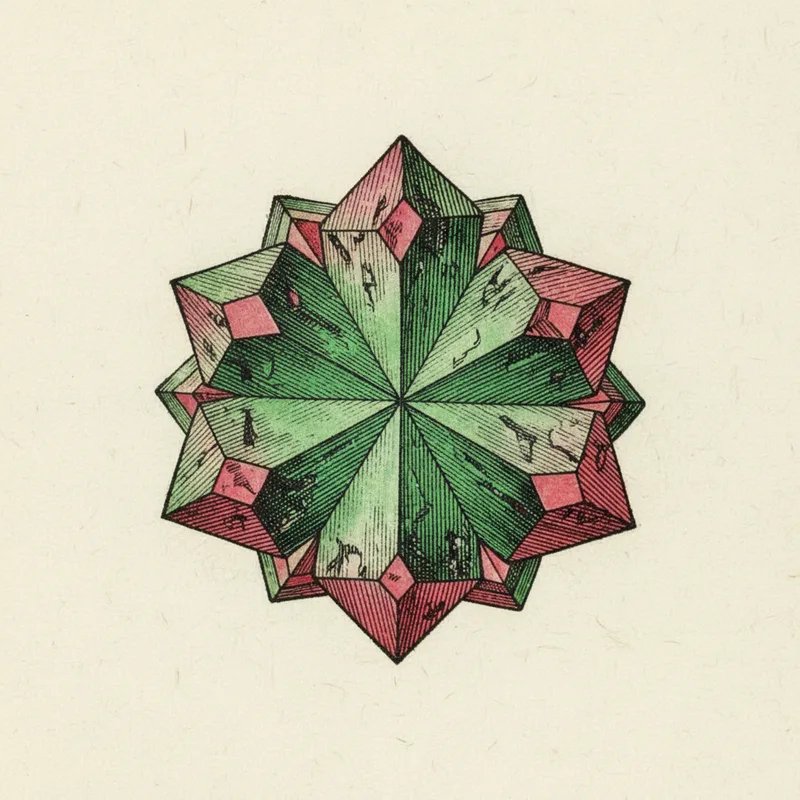
Alexandrite
The Chameleon Gem
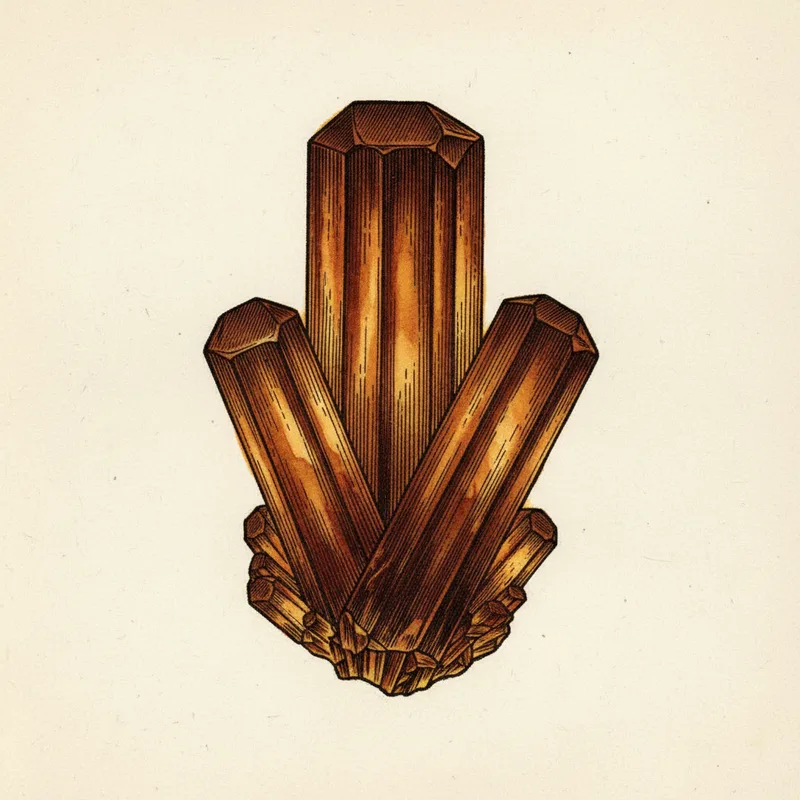
Tourmaline
The Rainbow Stone

Chrysotile
The Serpentine Fiber
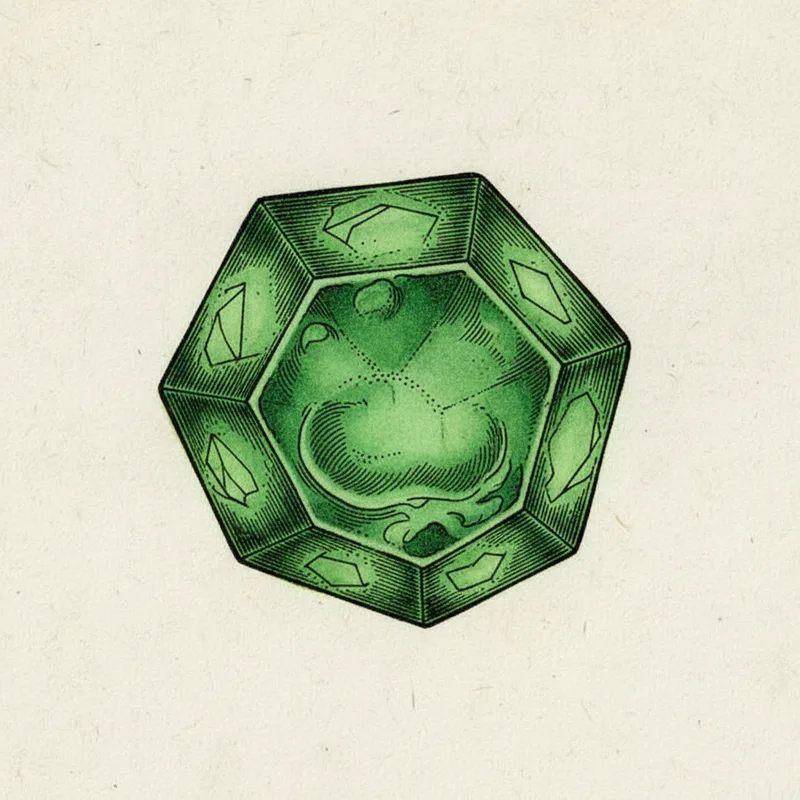
Tsavorite
The Emerald's East African Rival
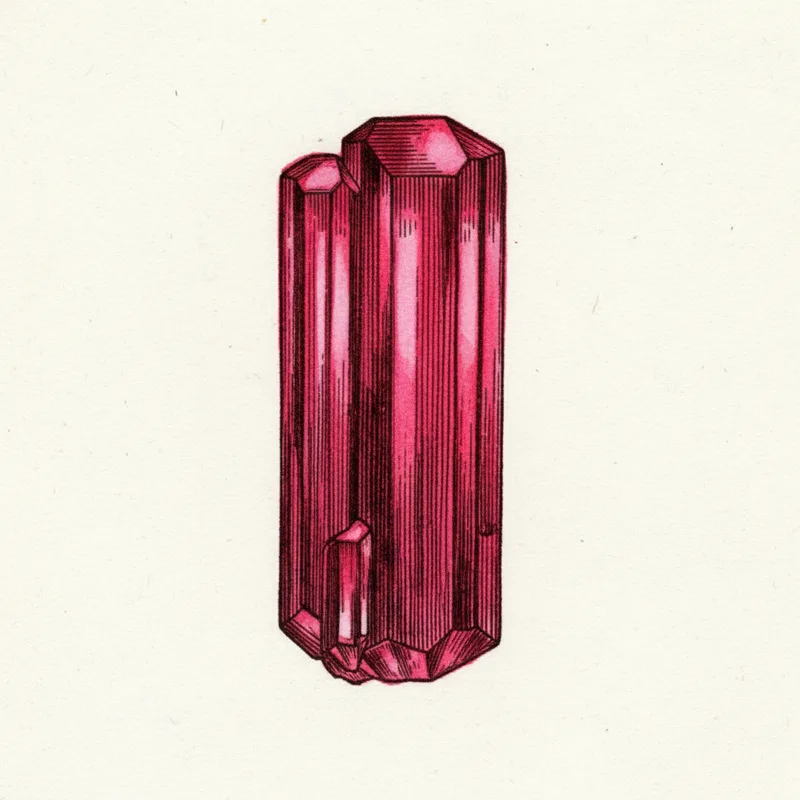
Rubellite
The Red Tourmaline Royalty
Limestone
The Fossil Record
Keep Reading
Newsletter
Something shiny, now and then
A stone worth knowing, or a fake worth spotting, every so often. No spam.