Best Crystals for Grief and Loss
Key Takeaway: Grief is not a problem to fix. It is the natural cost of loving someone, and no crystal will make it stop hurting. But humans have carried stones through mourning for thousands of years, across every continent and culture, because holding something solid when the world feels formless is one of the oldest instincts we have. Here are ten minerals with deep geological roots and genuinely ancient grief traditions, along with the real psychology of why tactile grounding works during loss.
Before anything else: if your grief feels unmanageable, if you can't eat, can't sleep, can't function for weeks or months, please reach out to a mental health professional. That's not weakness. That's wisdom.
The crystals in this article are companions, not treatments. They are beautiful, ancient, geologically fascinating objects that can sit beside you in the hard moments. They are not substitutes for human support. They do not have the power to heal a broken heart. Nothing has that power except time, love, and sometimes professional guidance.
With that said, let's talk about something remarkable and very old. Humans have been carrying stones during grief for a very, very long time. Longer than we've been writing. Longer than we've been farming. Possibly longer than we've been fully modern humans.
The Human Tradition of Mourning Stones
The practice of holding, wearing, or burying stones with the dead is one of the most cross-cultural traditions in human history. It predates written language. It predates agriculture. It may predate Homo sapiens.
Neolithic burial sites across Europe contain carefully placed stones alongside the deceased, selected and positioned with obvious intention. The Neanderthal burial at Shanidar Cave in Iraq, dating to roughly 60,000 years ago, included mineral pigments placed deliberately around the body. Whether this constitutes "grief" in the way we understand it is debatable, but the impulse to mark death with earth materials is older than civilization itself.
Ancient Egyptians polished obsidian into mirrors and placed them in tombs so the dead could see into the afterlife. They carved scarabs from lapis lazuli, carnelian, and turquoise to protect the dead on their journey. The mineral choices were not random. Each stone corresponded to specific protective functions described in the Book of the Dead.
Roman mourners wore jet and dark gemstones during prescribed grieving periods. Roman law actually regulated mourning attire and its duration, and specific minerals were deemed appropriate for each phase. This wasn't personal preference. It was codified social practice.
Victorian England formalized this into the most elaborate mourning jewelry tradition in Western history, with jet from Whitby becoming so associated with bereavement that an entire industry grew around it after Prince Albert's death in 1861. We'll cover this in detail when we get to jet.
Indigenous traditions worldwide carry their own stone-grief connections. Maori greenstone (pounamu) is passed between generations, and the stone accumulates the mana (spiritual power) of each person who carries it. Receiving a pounamu from someone who has died is one of the most meaningful forms of inheritance in Maori culture. The stone literally carries the person's spirit forward. Native American traditions include placing specific stones with the dead and carrying others during bereavement, with particular minerals associated with particular kinds of loss. Aboriginal Australian practices involve ochre, a mineral pigment made from iron-oxide-rich earth, in elaborate mourning ceremonies that can last for months.
Japanese Buddhist traditions place stones on graves and build cairns at crossroads between the living world and the afterlife. The practice of stacking stones, found across cultures from Iceland to Tibet, may represent one of humanity's most universal mourning gestures: placing something that endures at the boundary where a life ended.
This is not fringe. This is not modern crystal healing culture. This is one of humanity's oldest and most persistent ritual behaviors.
People reach for stones during loss because stones endure. When everything else changes, when the person who was your constant is suddenly and permanently gone, the rock in your hand stays the same temperature, the same weight, the same texture. It was the same yesterday. It will be the same tomorrow. That consistency matters profoundly when grief makes the world feel unrecognizable. The stone doesn't change. And in the early days of loss, when everything has changed, that immutability is its own form of comfort.
What Grief Actually Is
The popular understanding of grief still leans on Elisabeth Kubler-Ross's five stages model from 1969: denial, anger, bargaining, depression, acceptance. It is one of the most widely cited psychological frameworks in history, and also one of the most widely misunderstood.
Kubler-Ross herself clarified before her death that these were never meant to be linear stages you pass through like checkpoints. They were patterns she observed in terminally ill patients (not in bereaved people, which is often forgotten), and she regretted how rigidly people applied them. "They were never meant to help tuck messy emotions into neat packages," she wrote. Modern grief psychology has moved considerably further.
The Dual Process Model developed by Margaret Stroebe and Henk Schut in 1999 describes grief as an oscillation between two modes. Loss-oriented coping is the confronting side: crying, remembering, yearning, sitting with the absence. Restoration-oriented coping is the rebuilding side: handling practical matters, building new routines, re-engaging with the world, sometimes even laughing and feeling guilty about it afterward. Healthy grieving involves moving back and forth between these poles, sometimes within the same hour. Getting stuck on either side is where complications arise.
This oscillation explains why grief feels so chaotic. You're not failing at grief when you're fine one moment and devastated the next. You're doing it correctly. The back-and-forth is the process.
Continuing Bonds Theory, formalized by Dennis Klass, Phyllis Silverman, and Steven Nickman in 1996, challenged the old assumption that healthy grief means "letting go" and "moving on." For decades, the clinical standard was that the bereaved needed to sever their emotional attachment to the deceased in order to heal. Continuing Bonds Theory said: no. Maintaining an ongoing internal relationship with the person who died is normal, common across cultures, and often healthy. The bond transforms but does not end. You do not stop being someone's child, parent, partner, or friend because they have died. The relationship continues in a different form.
Both of these models share something important: grief is not a straight line, and it does not have an endpoint. It comes in waves. Some days the water is calm. Some days it knocks you flat.
Psychologist Lois Tonkin offered one of the most helpful reframings of grief in the 1990s. The common assumption is that grief starts large and slowly shrinks until it becomes manageable. Tonkin proposed the opposite: grief stays the same size. What changes is that your life grows around it. The grief doesn't shrink. You expand. This distinction matters enormously because it removes the pressure to "get over it" and replaces it with permission to grow alongside the loss.
Understanding this matters because the crystals people gravitate toward during grief tend to mirror this reality. They are not about fixing or ending grief. They are about surviving the waves.
1. Apache Tear
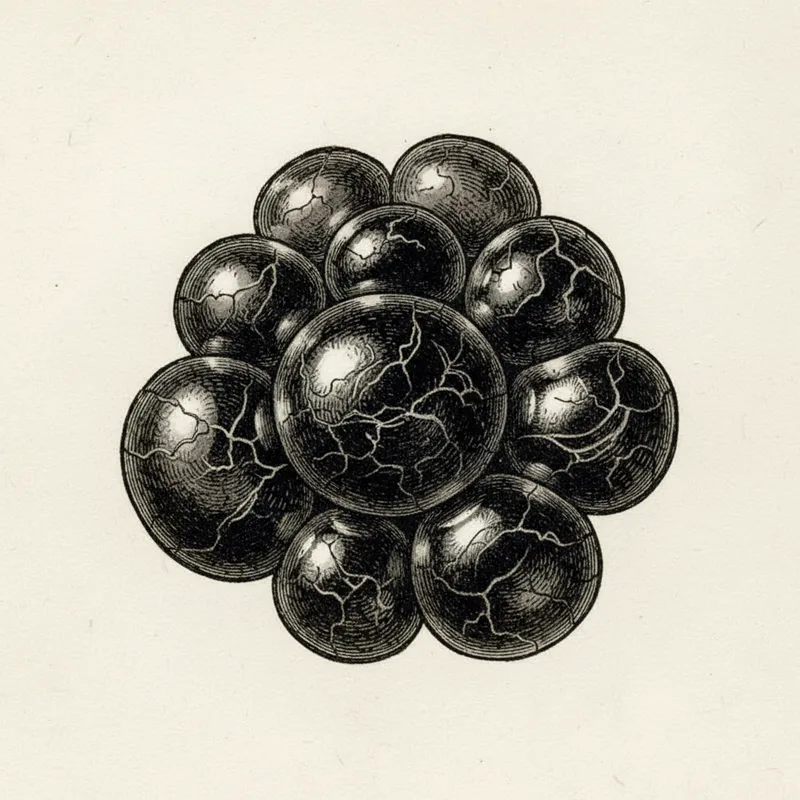
Apache tear is a rounded nodule of obsidian, typically 1-3 centimeters across, found weathered out of perlite deposits in the volcanic fields of Arizona and Nevada. Chemically, it is the same material as any obsidian: roughly 70-75% SiO₂ with varying amounts of iron, magnesium, and other elements frozen in an amorphous (non-crystalline) volcanic glass.
What makes Apache tears distinctive is their translucency. Hold one up to a strong light and it glows a warm amber-brown, sometimes honey-gold. This happens because these nodules cooled more slowly than the surrounding perlite, allowing slightly more structural ordering in the glass. Not enough to form crystals, but enough to reduce the opacity that makes regular obsidian jet-black.
This translucency test is also the simplest way to confirm you have a genuine Apache tear rather than a piece of ordinary obsidian. If a strong flashlight pressed against the stone produces a warm glow through the edges, it is the real material. If it remains completely opaque, it is regular obsidian, which is still a meaningful stone but a different geological object.
The name comes from an Apache legend. The story holds that a band of about 75 Apache warriors, cornered by the U.S. cavalry on a cliff in the Superstition Mountains of Arizona, rode their horses over the edge rather than surrender. When the women and children of the tribe found the fallen warriors, their tears fell to the ground and turned to dark stone. The legend says that whoever carries an Apache tear will never need to cry again, because the Apache women shed enough tears for all people for all time.
It is a devastating story. And geologists who work in that region will tell you that these obsidian nodules are genuinely abundant in the soils of central Arizona, weathering out of rhyolitic tuff deposits millions of years older than the legend. The volcanic eruptions that produced the perlite and obsidian in central Arizona occurred roughly 10-15 million years ago during the Basin and Range extension, when the Earth's crust was being pulled apart across the American Southwest.
The geology and the grief tradition occupy the same landscape. And there is something about the scale of that geological time, millions of years of volcanic activity producing the small dark stones that would later carry one of the most emotionally powerful legends in Native American tradition, that puts human grief into a context that is simultaneously humbling and comforting. The Earth has been making these stones since long before there were humans to grieve. It will keep making them long after.
Why it resonates during grief: Apache tears are small, smooth, and easy to carry in a pocket. The translucent quality, revealed only when you hold it up to light, mirrors the way grief can feel opaque and total until a moment of light breaks through.
What to buy: Apache tears are affordable, typically $2-5 for a single nodule. Look for specimens that show translucency when held up to a phone flashlight. They are naturally smooth and rounded, so tumbling isn't necessary. Arizona specimens are the most traditional and widely available.
2. Obsidian
Obsidian is volcanic glass formed when silica-rich lava cools too rapidly for crystals to form. Technically, it is not a crystal at all. It has no crystal structure, no ordered atomic lattice, no repeating symmetry. It is an amorphous solid, a frozen liquid, a material caught permanently in the act of becoming something it never quite became.
The eruption temperature is typically 700-900°C, and the rapid cooling, often from contact with water or exposure to cold air, creates a glass with conchoidal fracture. This means it breaks with smooth, curved surfaces that can be sharper than surgical steel. Obsidian's edge has been measured at 30 angstroms, roughly 500 times thinner than a steel scalpel blade. Some surgeons have experimented with obsidian blades for delicate procedures because the cuts heal with less scarring.
Ancient Mesoamerican cultures, particularly the Aztecs, polished obsidian into mirrors used in divination and ritual. These mirrors were associated with Tezcatlipoca, "Smoking Mirror," a deity connected to fate, darkness, and the things we would rather not see. The obsidian mirror was a tool for confronting truth.
Egyptian mortuary practices included obsidian mirrors and obsidian-bladed ritual implements. The material's ability to take a perfect polish and its deep black color connected it to the afterlife, to the boundary between the living and the dead. A polished obsidian mirror in a dark room, reflecting a candle flame, creates an effect that is genuinely unsettling even to a modern viewer. You can understand why ancient cultures saw it as a portal.
The John Dee obsidian mirror, now in the British Museum, was used by Queen Elizabeth I's court astrologer for "scrying," the practice of gazing into reflective surfaces to receive visions. It was originally an Aztec artifact, brought to Europe after the Spanish conquest. One object carrying two cultures' worth of grief-adjacent ritual.
In modern crystal traditions, obsidian is associated with truth, protection, and cutting through denial. It is considered a powerful grief stone specifically because grief demands honesty. The loss is real. The absence is permanent. Obsidian's uncompromising blackness and razor-sharp edges carry a symbolism that practitioners connect to the unflinching reality of death.
Why it resonates during grief: Obsidian doesn't soften anything. For people who are past the early shock and need to sit with the full weight of what has happened, its blunt geological character matches the moment. It is Earth's most honest material.
What to buy: A polished obsidian palm stone runs $5-12 and fits comfortably in the hand. Raw obsidian has genuinely sharp edges, so polished is safer for daily carry. Black obsidian is the most common and affordable. Rainbow obsidian, which shows iridescent bands caused by nanoparticle inclusions of magnetite, adds a subtle visual complexity that some find comforting.
3. Rose Quartz
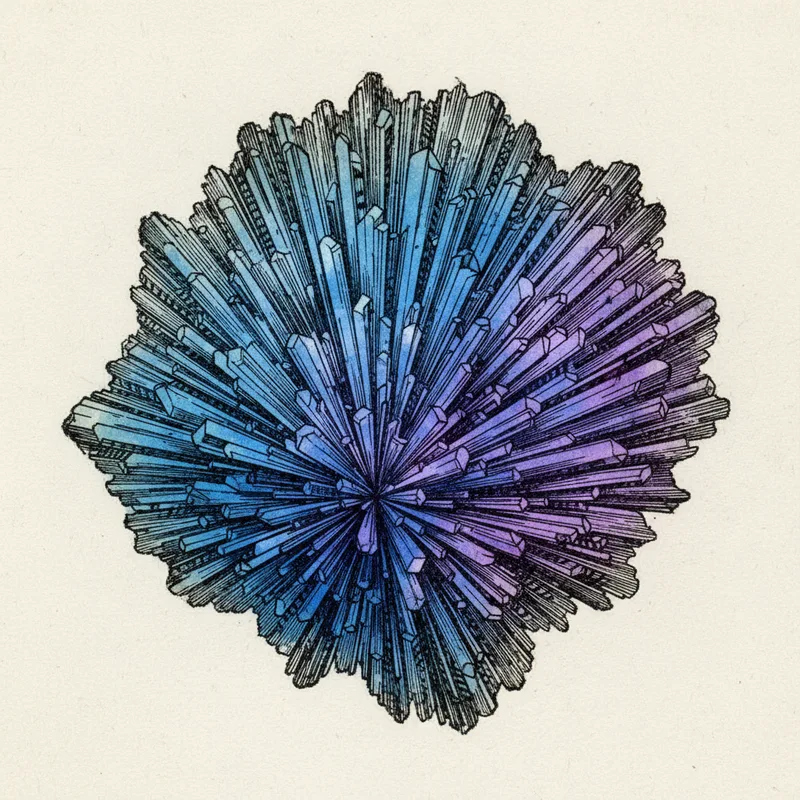
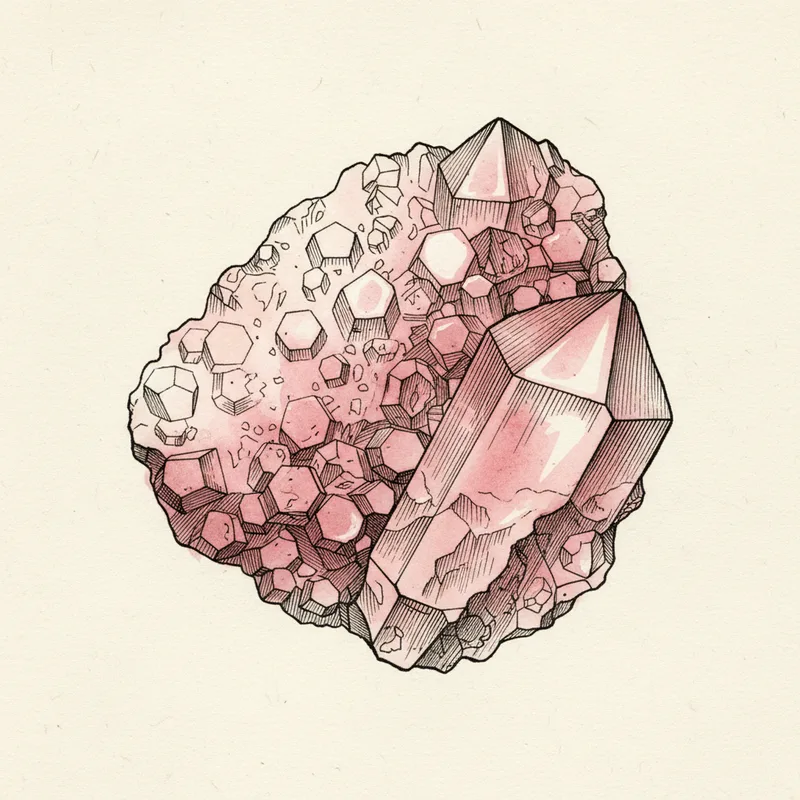
Rose quartz is SiO₂, the same chemical formula as amethyst, citrine, and smoky quartz. Its distinctive soft pink comes primarily from microscopic fibers of dumortierite, a borosilicate mineral (Al₇(BO₃)(SiO₄)₃O₃), included within the quartz matrix during formation. These fibrous inclusions are so fine that they create a translucent, milky-pink appearance rather than a transparent crystal.
Rose quartz forms in the cores of granitic pegmatites, those coarse-grained intrusions where silica-rich fluids cool slowly enough for massive crystal bodies to develop. Major deposits occur in Madagascar, Brazil, South Dakota, and Namibia. Some pegmatite bodies in Madagascar have produced rose quartz masses weighing several tonnes.
The mineral is among the most abundant and affordable gemstones on Earth, which matters during grief because accessibility matters when you are suffering. You should not have to spend real money to find a physical source of comfort during the worst days of your life.
Across virtually every crystal healing tradition worldwide, rose quartz is associated with love, self-compassion, and gentle emotional healing. Ancient Egyptian women used rose quartz in facial treatments, connecting the stone to self-care rituals that would be recognizable in any modern wellness context. Roman traditions linked rose quartz to Aphrodite and Venus, specifically to the healing quality of love rather than its romantic dimension. In Chinese feng shui, rose quartz placed in the southwest sector of a home is associated with nurturing relationships, including the relationship with yourself.
The through-line across cultures and centuries is always the same: this stone is about being tender with yourself. During grief, that message can feel almost unbearably necessary.
Why it resonates during grief: Grief can make you cruel to yourself. You replay conversations, catalogue regrets, punish yourself for not saying enough or saying too much. Rose quartz's tradition of self-compassion speaks directly to the part of grief where you need to be told, gently, that you did enough. You loved enough. The soft pink is not accidental in its emotional effect. Color psychology research consistently links pink tones to calming and nurturing responses.
What to buy: Rose quartz is one of the most abundant and affordable crystals available. A polished palm stone costs $3-8. Madagascar material tends to have the deepest, most saturated pink. A heart-shaped rose quartz, while shaped by human hands rather than nature, carries an additional symbolic weight during grief that some people find meaningful.
4. Smoky Quartz
Smoky quartz demonstrates one of mineralogy's more elegant color mechanisms. Trace amounts of aluminum (Al³⁺) substitute for silicon (Si⁴⁺) in the quartz lattice. When natural gamma radiation from surrounding rocks, typically from the decay of potassium-40, uranium, or thorium, hits these aluminum sites, it displaces electrons and creates color centers. These centers absorb light selectively, producing tones from pale tea-brown to nearly black, depending on radiation dose and aluminum concentration.
Scotland has a deep relationship with this stone. Smoky quartz from the Cairngorm Mountains, called cairngorm, has been the national gem since at least the medieval period. It was set into the hilts of sgian-dubhs (ceremonial daggers), brooches, and kilt pins. Celtic tradition associated dark quartz with the earth, with grounding, and with safe passage through difficult transitions, including death. The stone was a companion for crossing thresholds.
The word "cairngorm" itself became synonymous with smoky quartz in Scottish culture. Highland warriors carried cairngorm stones into battle, and they were placed in the hands of the dying in some traditions. The connection between this dark, earthen crystal and moments of transition is deeply embedded in Scottish and broader Celtic tradition. It is a stone that says: I will hold you to the ground while the world shifts.
The Dual Process Model of grief describes that oscillation between confronting loss and rebuilding daily life. Smoky quartz's traditional role as a "grounding" and "transmutation" stone maps remarkably well to the restoration-oriented side of that cycle.
Grief has a particular physical symptom that many bereaved people describe but rarely see named: derealization. The world feels unreal. Familiar places look strange. Your own hands look like they belong to someone else. It is a dissociative response to overwhelming emotional input, and it is completely normal, though frightening when it happens. Practitioners recommend smoky quartz specifically for these moments, when grief threatens to pull you out of your body entirely, when the world goes distant and unreal. The stone's heft and warmth are physical facts that counteract the floating sensation of derealization.
Why it resonates during grief: Grief can feel like floating. Smoky quartz's weight and warmth, combined with its tradition of grounding, speaks to the need to stay present in your body even when your mind wants to leave. The Scottish cairngorm tradition of wearing it during transitions gives it a historical gravitas that feels appropriate to the weight of loss.
What to buy: Natural smoky quartz from Brazil, Madagascar, or Scotland shows warm brown tones with natural color variation. A polished point runs $5-15. Be cautious of very dark, uniform specimens, which may be clear quartz that has been artificially irradiated. Natural smoky quartz almost always shows some gradation in color intensity.
5. Rhodonite
Rhodonite is a manganese inosilicate, (Mn,Fe,Mg,Ca)SiO₃, with a Mohs hardness of 5.5-6.5. Its distinctive rose-pink color comes from manganese, and the black veining that runs through most specimens is manganese oxide, formed when manganese at the surface oxidizes. These black fracture patterns are not flaws. They are records of the stone's history, visible evidence of stress and healing within the mineral itself.
Rhodonite forms in manganese-rich metamorphic rocks, typically through contact metamorphism where manganese-bearing sediments are heated and recrystallized by nearby magmatic intrusions. The transformation itself is relevant: this mineral literally became what it is through heat and pressure. Raw manganese-bearing rock was subjected to intense forces and recrystallized into something pink and beautiful, threaded with dark veins that record the stress.
Major sources include the Ural Mountains of Russia (where it was historically called "eagle stone" and placed in infants' cradles for protection), Australia, Madagascar, and Sweden. Massachusetts designated rhodonite as its state gemstone in 1979.
In the 18th and 19th centuries, Russian aristocracy prized rhodonite for decorative carvings and architectural features. The Hermitage Museum in Saint Petersburg contains rhodonite columns and a massive rhodonite sarcophagus weighing over 7 tonnes, carved for Tsarina Maria Alexandrovna. The stone was considered regal enough for a final resting place. Death and rhodonite have been linked in Russian tradition for centuries.
In crystal healing traditions, rhodonite is specifically associated with emotional rescue and recovery. Not the acute phase of crisis, but the rebuilding that comes after. Practitioners describe it as the stone you reach for when the worst of the storm has passed and you need to reconstruct yourself. Its Russian folk name, orletz ("eagle stone"), connected it to strength and resilience.
Why it resonates during grief: The black veins running through pink stone look exactly like what emotional healing feels like. The beauty is not separate from the damage. It runs through it. Rhodonite's tradition of rebuilding after emotional devastation makes it particularly resonant for the phase of grief where you are learning to carry the loss rather than be crushed by it.
What to buy: Rhodonite tumbled stones with visible black veining cost $4-10. The contrast between the pink body and the black manganese oxide patterns varies by specimen. Choose one where the balance between pink and black feels right to you. That choice itself can be a small act of self-awareness during a time when everything feels beyond your control.
6. Jet
Jet is not a mineral. It is fossilized wood from Araucaria trees, ancient conifers that dominated Jurassic forests 180 million years ago. These trees fell into swamps, were buried under anoxic sediment, and underwent a process similar to coal formation but under specific pressure and temperature conditions that produced a material harder and more lustrous than lignite but softer than anthracite. Jet's composition is primarily carbon with some hydrogen and oxygen, and it takes a brilliant polish.
The finest jet comes from Whitby on the Yorkshire coast of England, where Jurassic-age deposits erode from sea cliffs. Whitby jet has been worked since the Bronze Age, with jet beads found in burial mounds across Britain. But its greatest era was Victorian England. When Queen Victoria's husband Prince Albert died in 1861, she entered a period of mourning that lasted the rest of her life, over 40 years. She wore Whitby jet almost exclusively, and the fashionable world followed. Whitby's jet carving industry expanded from a handful of workshops to over 200, employing 1,500 workers at its peak.
Victorian mourning customs dictated specific jewelry materials for each phase of grief. First mourning (the first year): only jet. Second mourning: jet could be mixed with onyx or dark garnet. Half mourning: lighter stones were gradually permitted. The material mapped to the grief. Jet was grief's uniform.
The demand was so intense that Whitby jet was eventually supplemented by French jet (actually black glass) and vulcanite (hardened rubber), which could be molded into similar forms at a fraction of the cost. These imitations tell their own story about grief and commerce: the desire to mourn properly was so universal that an entire imitation industry arose to serve it.
The tradition is older than Victoria, though. Much older. Roman women wore jet amulets, and Pliny the Elder described jet as a stone that "when heated, repels serpents and reveals epilepsy." Spanish traditions used jet (azabache) as protective talismans for children and mourners alike, a practice that persists in parts of Spain and Latin America today. Jet rosaries were common in medieval Christian tradition, combining the stone's mourning associations with religious devotion.
The Whitby Museum in Yorkshire holds one of the world's finest collections of Victorian mourning jet, and if you ever visit, the craftsmanship will astonish you. Jet was carved into cameos, lockets, brooches, earrings, and elaborate bead necklaces. Some pieces contain compartments designed to hold a lock of hair from the deceased, turning the jewelry into a portable memorial.
In all these traditions, jet's origin as ancient living wood that transformed through pressure and time into something durable and beautiful carries an obvious metaphorical weight. This was once a tree. It lived, it fell, it was buried, it endured unimaginable pressure, and it became something new. The transformation took 180 million years. But it happened.
Why it resonates during grief: Jet is literally transformed life. A living tree that endured 180 million years of pressure and emerged as something you can hold in your hand. For people processing the death of someone they loved, that transformation story, that proof of endurance, is not nothing. It is also warm to the touch and extremely lightweight, making it a physically gentle stone to carry during an already heavy time.
What to buy: Genuine Whitby jet is increasingly rare and commands premium prices, $20-80 for a small polished piece. Spanish jet (azabache) is more affordable. Beware of black glass, plastic, or vulcanite sold as jet. Real jet is warm to the touch (unlike glass), extremely lightweight (it's fossilized wood, not stone), and will produce a brown streak when rubbed on unglazed porcelain. If it feels cold and heavy, it's not jet.
7. Moonstone
Moonstone is an orthoclase feldspar (KAlSi₃O₈) that displays adularescence, a phenomenon where a soft, billowing light appears to float beneath the surface. This optical effect has a precise geological cause. As the feldspar cools from magma, two components, orthoclase and albite, separate into alternating microscopic layers through exsolution. When light enters and scatters between these lamellae, which are approximately 500 nanometers thick for blue adularescence, you see that characteristic internal glow.
The light moves as you turn the stone. It shifts. It waxes and wanes. The resemblance to moonlight is not an interpretation. It is a direct visual comparison that every culture that has encountered this mineral has independently made.
Hindu tradition considers moonstone sacred, formed from solidified moonbeams. Roman natural historian Pliny the Elder wrote that moonstone changed appearance with the phases of the moon (it doesn't, but the visual logic is understandable). In Art Nouveau jewelry of the early 1900s, moonstone experienced a major revival, prized by designers like Rene Lalique for its ethereal quality. The stone has always attracted people drawn to softness, mystery, and the beauty of things that cannot be fully grasped.
In modern crystal traditions, moonstone is associated with emotional cycles, with honoring the natural rhythm of feeling rather than forcing a timeline. Practitioners connect it to feminine energy and the moon's cycle, but the underlying principle is more universal: emotions, like tides, have a rhythm. Resisting that rhythm creates more suffering than accepting it.
Why it resonates during grief: Grief comes in waves. Tonkin's model of growing around grief rather than shrinking it applies here directly. The good days get more frequent, but the waves of loss still come. Moonstone's shifting, wavelike light mirrors this experience. Its tradition of honoring emotional cycles rather than rushing through them offers a quiet permission to grieve at your own pace, which is the only pace that works.
What to buy: Sri Lankan moonstone with strong blue adularescence is the most prized, running $15-40 for a good cabochon. Indian moonstone is more affordable and often shows a warm white or peach sheen. For grief work, a simple polished moonstone that fits in your palm and shows clear adularescence is ideal. The shifting light gives you something to focus on during difficult moments.
8. Amethyst
Amethyst is quartz (SiO₂) colored purple by iron (Fe³⁺) impurities that have been exposed to natural gamma radiation. The iron substitutes for silicon in the crystal lattice, and radiation creates color centers that absorb yellow-green light, transmitting violet. The geological recipe is straightforward: silica-rich fluid plus iron plus radiation plus time equals purple.
The word amethystos is ancient Greek for "not intoxicated." The mineral was carved into drinking vessels and worn as an amulet to prevent excess and promote clear-headedness. In the myth, the god Dionysus, in a rage, set tigers upon a young woman named Amethystos. The goddess Artemis saved her by turning her into a clear crystal, and Dionysus, regretting his cruelty, wept tears of wine over the stone, staining it purple. A story about rage, loss, regret, and tears literally coloring stone.
But the stone's association with grief runs deeper than its sobriety reputation or its origin myth.
Medieval European traditions specifically used amethyst as a grief stone. Bishops and clergy wore amethyst rings not just as symbols of spiritual authority but as emblems of compassion for the suffering. In bereavement traditions, amethyst was given to the grieving as a stone of comfort and spiritual protection during the vulnerable period following a death. The logic was straightforward: grief leaves you exposed, and amethyst was believed to provide a protective calm.
Buddhist practice uses amethyst mala beads for meditation on impermanence and acceptance, themes that sit at the center of any grief experience. Tibetan tradition considers amethyst sacred to the Buddha, and it appears frequently in meditation and mourning contexts. The Christian tradition of bishops wearing amethyst rings persists to this day, and the stone's association with sobriety extends naturally to the clarity and calm that grief demands.
There is also a geological poetry to amethyst that deserves mention. Its purple is created by damage. Iron atoms displaced by radiation. Color born from disruption. And yet the result is one of the most beautiful minerals on Earth. For someone navigating grief, that chemistry, beauty emerging from disruption, can carry a meaning that no amount of metaphysical language improves upon.
Why it resonates during grief: Amethyst's calming purple and its long tradition as a stone of spiritual comfort during loss make it one of the most historically grounded grief stones. Its widespread availability and affordability mean it is accessible to anyone, which matters enormously when you are in pain and should not have to spend significant money to find comfort.
What to buy: Amethyst is abundant and affordable. A polished palm stone costs $5-15. Uruguayan and Zambian amethyst tends to show the deepest purple. Even a small amethyst cluster, placed on a bedside table or desk, can serve as a visual anchor during a difficult period. The color is genuinely calming, independent of any metaphysical claims, because the blue-violet wavelengths are at the low-energy end of the visible spectrum.
9. Chrysocolla
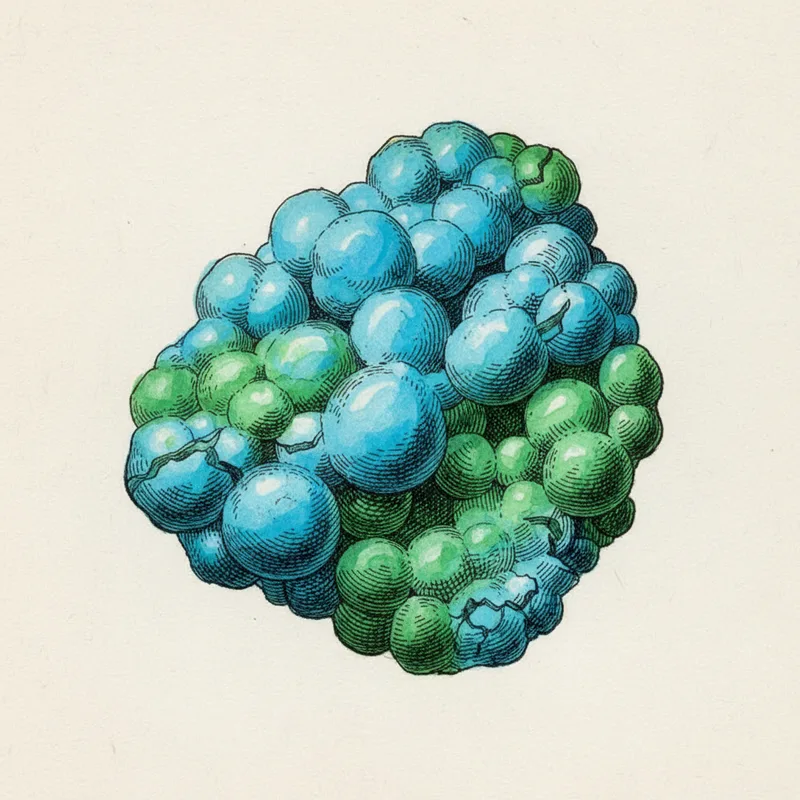
Chrysocolla is a hydrated copper phyllosilicate, (Cu,Al)₂H₂Si₂O₅(OH)₄·nH₂O. The blue-green color comes from copper in its +2 oxidation state, the same element that gives verdigris its patina and the Statue of Liberty its green. Chrysocolla forms in the oxidation zones of copper deposits, where groundwater carrying dissolved silica interacts with copper minerals near the surface.
It is a relatively soft mineral, 2.5-3.5 on the Mohs scale, which means it scratches easily and requires careful handling. Pure chrysocolla can even be damaged by water, which is unusual for a mineral that forms in the presence of groundwater. The chemistry of formation and the chemistry of preservation don't always align.
But when chrysocolla forms within or alongside quartz, creating what is sometimes called chrysocolla-in-quartz or gem silica, the hardness increases to 7 and the material becomes durable enough for everyday wear in jewelry. Gem silica from Arizona and Peru is among the most beautiful blue-green material in the mineral world, and fine specimens can command prices comparable to high-quality turquoise.
The name chrysocolla comes from the Greek chrysos (gold) and kolla (glue), because ancient metalworkers used a green copper compound, possibly chrysocolla itself, as a flux for soldering gold. Theophrastus described it in the 4th century BCE. The mineral has been known and worked for over 2,400 years.
Cleopatra reportedly carried chrysocolla as a diplomatic talisman. Whether or not this specific historical claim survives scrutiny, the tradition connecting chrysocolla to composure during crisis is old and consistent. In crystal healing practices, chrysocolla is associated with calm communication, with finding words during impossible conversations, with maintaining grace when the ground has fallen away. Practitioners specifically recommend it during the practical phases of grief, when there are phone calls to make, arrangements to handle, and conversations to navigate while your inner world has come apart.
Why it resonates during grief: Grief demands difficult conversations. Telling people. Accepting condolences. Making decisions about services, belongings, and legacies while your brain is operating at a fraction of its usual capacity. Chrysocolla's tradition of supporting calm, clear communication during emotional turmoil speaks directly to this particular strain of grief. It is the stone for the conversations you never wanted to have.
What to buy: Pure chrysocolla is very soft and fragile. For daily carry, look for chrysocolla-in-quartz (sometimes labeled gem silica or chrysocolla quartz), which is much more durable. Tumbled chrysocolla costs $5-12. Keep it away from water and chemicals. Check our care guide for handling details, as this is one of the more delicate minerals on this list.
10. Amazonite
Amazonite is a green variety of microcline feldspar, KAlSi₃O₈, the same basic formula as moonstone but with a different crystal structure (triclinic rather than monoclinic). The green color was long attributed to copper, but research in the 1980s and 1990s demonstrated that it actually comes from small quantities of lead (Pb²⁺) and water within the feldspar structure, combined with the effects of natural radiation creating color centers.
Amazonite forms in granitic pegmatites, often alongside smoky quartz and other feldspar varieties. The two minerals frequently occur together in pocket-like cavities within pegmatite bodies, and the pairing is striking: dark brown-black smoky quartz crystals nestled against vivid blue-green amazonite. Collectors prize these combination specimens, and the visual contrast between the two, darkness and brightness, grounding and hope, has its own resonance for anyone moving through grief.
Notable deposits occur in Colorado (Pikes Peak region, where spectacular crystal pockets produce world-class specimens), Russia, Madagascar, and Brazil. Despite its name, amazonite is not found in significant quantities along the Amazon River. The name likely derives from green stones traded from the region that were actually nephrite jade.
Ancient Egyptian artisans carved amazonite into amulets and jewelry. A carved amazonite scarab was found among Tutankhamun's grave goods. The stone's association with endurance and recovery in Egyptian tradition predates its modern "hope stone" designation by millennia.
In crystal traditions, amazonite is associated with hope, courage, and the ability to see a future beyond the present moment. Practitioners call it the "hope stone" and connect it specifically to recovery from emotional devastation. Its cool blue-green carries a quality that tradition describes as reviving, like coming up for air. In the context of the Dual Process Model, amazonite maps to the restoration-oriented pole: the moments when you turn, however briefly, from the loss toward the rebuilding.
Why it resonates during grief: There is a phase of grief, different for everyone, where the question shifts from "How do I survive this?" to "What does my life look like now?" Amazonite's tradition of forward-looking hope speaks to that transition. It does not rush you. It does not minimize what happened. It sits in the in-between, in the space where you begin to imagine a life that includes the loss rather than being defined by it.
What to buy: Amazonite tumbled stones with strong, even color cost $4-10. Colorado amazonite is prized for its vivid blue-green and often appears alongside smoky quartz in beautiful combination specimens. Russian and Madagascan material is also excellent. The color should feel like a breath. If it does, that's the right piece.
Why Holding Stones Actually Helps During Grief
Here is something that doesn't require any belief in crystal energy, any metaphysical framework, or any spiritual tradition: holding a smooth, cool, heavy stone during acute grief is a form of tactile grounding. And tactile grounding is an evidence-based therapeutic technique used in clinical settings worldwide.
The 5-4-3-2-1 technique. This is a staple of Dialectical Behavior Therapy (DBT) and Cognitive Behavioral Therapy (CBT) for managing acute emotional distress. You identify five things you can see, four things you can touch, three things you can hear, two things you can smell, and one thing you can taste. The purpose is to redirect the brain from emotional flooding to sensory present-moment awareness.
Holding a crystal engages this mechanism naturally. You notice its weight. Its temperature, cool at first, then warming to your body heat. Its texture, polished smooth or left rough. The way light refracts through translucent material or reflects off polished surfaces. The sound it makes when you turn it against your palm. A single crystal can engage three or four senses simultaneously without you even trying. The stone becomes an anchor to the present moment when grief is pulling you into the past or spiraling you into an anxious future.
Therapists who work with bereaved clients have noted that having a physical grounding object available during sessions, whether it's a crystal, a smooth river stone, or a stress ball, can help clients regulate their emotional arousal enough to stay in the therapeutic window where processing is possible. Too much flooding and the brain shuts down. Too little engagement and nothing moves. The stone helps find the middle.
Ritual as structure. One of grief's cruelest features is the way it dissolves structure. The person who was part of your daily routine is gone, and the hours that were organized around them become formless. The morning conversation that isn't happening. The evening routine that has lost its shape. Creating new rituals, even small ones like holding a particular stone during a morning moment of quiet, provides scaffolding during a period when the architecture of daily life has collapsed.
Research on grief recovery consistently identifies the reestablishment of routine and ritual as a key factor in adaptation. Anthropologist Victor Turner's work on liminality, the threshold state between what was and what will be, describes exactly what grief feels like: you are between identities, between realities, and ritual is what cultures have always used to navigate liminal space. The crystal is not the active ingredient. The ritual is. But the crystal gives the ritual a physical form, a beginning and an end, a thing to pick up and a thing to set down. That boundary matters when everything else is blurred.
Object permanence and continuing bonds. A stone carried for someone who died becomes a tangible link to the relationship. Continuing Bonds Theory tells us that maintaining a connection to the deceased is not pathological but normal and often healthy. Many cultures have always known this. Ancestor veneration, memorial altars, keeping personal objects of the deceased, these are not symptoms of "complicated grief." They are healthy expressions of an ongoing relationship that has changed form but not ended.
A crystal chosen in memory of someone, carried daily, held during difficult moments, serves as a physical anchor for that continuing bond. It is a small, portable, private way of saying "I carry you with me." Unlike a photograph or a letter, a crystal can be held without being seen by others. It is a grief practice you can take into a meeting, a grocery store, a school pickup line, without anyone knowing. That privacy matters during a process that the modern world often wants you to complete faster than your heart allows.
The weight matters. There is established research on the calming effects of deep pressure stimulation, the same principle behind weighted blankets. Firm, distributed pressure activates the parasympathetic nervous system, lowering heart rate and cortisol. While a crystal is much smaller than a blanket, the focused weight of a smooth stone in your palm activates similar pressure-sensitive mechanoreceptors. The brain registers "something solid is here," and that sensation of solidity is directly counteractive to the unmoored, free-falling quality that acute grief produces.
Interestingly, different crystals offer genuinely different tactile experiences. A piece of jet is startlingly lightweight because it's fossilized wood. A smoky quartz point has heft and coolness. A polished obsidian palm stone is glass-smooth and weighty. These are not interchangeable sensory experiences. The diversity is part of why people gravitate toward particular stones during particular emotional states. The body knows what it needs.
Beauty and awe reduce suffering. This sounds soft, but the research is not. Studies on awe, the emotion triggered by encountering something vast or beautiful that challenges your existing frame of reference, show measurable reductions in inflammatory cytokines and self-reported pain. A well-formed crystal, with its geometric precision, its internal light, its evidence of geological forces operating over millions of years, is genuinely awe-inspiring. The beauty is not decoration. It is a feature that makes these objects more effective as grounding tools than, say, a plain rubber ball, which would work for tactile grounding but lacks the attention-holding quality that natural beauty provides.
The act of choosing is therapeutic. In the aftermath of loss, much of life feels out of your control. Choosing a crystal, holding several, noticing which one feels right, making a small decision based on personal preference, is a minor act of agency during a period when agency feels absent. Grief researchers note that small, low-stakes decisions help rebuild the sense of personal competence that loss temporarily disrupts.
None of this is mystical. All of it is real.
Cultures across thousands of years arrived at these practices because the practices work. They named the mechanism differently than modern psychology does, but the behaviors they developed, holding stones during grief, creating ritual around sacred objects, carrying something physical as a symbol of connection, are precisely the behaviors that contemporary grief research supports. The ancient Egyptians, the Victorian mourners, the Apache women, the Scottish Highlanders, the Buddhist monks, the Maori elders, they all reached the same behavioral conclusion through wildly different cultural paths: hold something solid from the earth when the earth has shifted beneath your feet.
When to Seek Help
Grief is not a disorder. It is a natural, necessary process. But sometimes grief becomes complicated, and professional support makes a real difference.
The DSM-5-TR added Prolonged Grief Disorder as a diagnostic category in 2022, recognizing that for some people, grief becomes clinically stuck in a way that differs from depression or PTSD. This is not a judgment on the depth of your love. It is an acknowledgment that sometimes the brain's natural grief-processing system needs clinical support to function properly, the same way a broken bone sometimes needs more than rest to heal.
Consider reaching out to a therapist, counselor, or grief support group if:
- Your grief is intensifying rather than oscillating after several months
- You cannot perform basic daily functions (eating, sleeping, working) for an extended period
- You are using alcohol, drugs, or other substances to manage the pain
- You experience persistent thoughts of self-harm or joining the person who died
- You feel completely numb or disconnected from life for weeks at a time
- You find yourself avoiding all reminders of the person, or conversely unable to think about anything else
- Important relationships or responsibilities are falling apart and you cannot intervene
The 988 Suicide and Crisis Lifeline (call or text 988 in the United States) is available 24/7.
Crisis Text Line (text HOME to 741741) offers text-based support for those who find talking difficult.
The Grief Recovery Institute (griefrecoverymethod.com) specializes in grief-specific support and can connect you with trained professionals in your area.
There is no timeline for when grief "should" ease, and there is no amount of grief that is too much to deserve support. A crystal can sit in your pocket during the therapy session. The two practices are not in competition.
Seeking help is not a failure of grief. It is an act of the same love that caused the grief in the first place.
Building Your Own Practice
If you want to incorporate crystals into your grief experience, here are some grounded suggestions:
Start with one stone. Don't buy ten crystals. Choose the one that speaks to where you are right now. If you're in acute, raw grief, Apache tear or obsidian may feel right. If you're rebuilding, rhodonite or amazonite might resonate more. Trust your instinct. The stone you're drawn to is the right one.
Carry it with you. Put it in your pocket. Hold it during the hard moments. Feel its weight when you need to remember that something in the world is still solid.
Create a small ritual. Morning coffee with your stone on the table. A few quiet minutes before bed with it in your hand. The routine matters more than the duration.
Let it change. You may find that the stone you needed in the first weeks of grief is not the same stone you need six months later. The obsidian that felt right in the raw, early days may give way to rhodonite as you begin rebuilding, and eventually to amazonite as hope starts to return. That's not inconsistency. That's growth. The stones can map your journey if you let them.
Check our care guide for handling. Some crystals, like chrysocolla, are soft and water-sensitive. Knowing how to care for them is part of the practice.
Consider giving one. If someone you know is grieving, a crystal can be a more meaningful gesture than flowers. Flowers die. A stone endures. Choose one that fits the person and include a note about why you chose it. The specificity of the choice communicates something that a generic sympathy card cannot.
There is no wrong way to do this. If you want to hold a stone and cry, do that. If you want to set one on your desk and glance at it during the day, do that. If you want to put one in your pocket and forget about it until your hand brushes it at the grocery store and you feel the weight and remember what it represents, that's doing it right too.
You can explore all ten of these crystals and more in our grief and loss collection. For more on the psychology of crystal rituals, see our anxiety guide, which covers the neuroscience of grounding in greater detail. If your grief is specifically about a relationship ending rather than a death, see Best Crystals After a Breakup, which is organized by phase of recovery (acute / anxious middle / tentative reopening).
Grief is not a problem to solve. It is love with nowhere to go. The stones in this article will not fix that. Nothing fixes that.
But for thousands of years, across every human culture, people have reached for the Earth's most enduring objects during their least endurable moments. Neolithic parents placed stones with their children. Victorian widows wore fossilized trees around their necks. Apache women's tears became obsidian. Monks counted amethyst beads while meditating on impermanence. Roman mourners carried jet. Scottish warriors clutched smoky quartz through dark transitions.
There is wisdom in that instinct. The impulse to hold something solid when the world turns to water is not superstition. It is one of the oldest, most human things we do.
The rock in your hand is millions of years old. Some of them, billions. They have survived volcanic eruptions, continental collisions, ice ages, and the slow patient work of erosion. They are still here. And quietly, without promising anything, they remind you that endurance is possible. That something can pass through unimaginable pressure and emerge on the other side. Not unchanged. But intact. And sometimes, even beautiful.
Metaphysical and “healing” associations mentioned here are cultural traditions, not medical advice or scientific fact. Crystals are not a substitute for professional medical care. Full disclaimer.
Crystals in This Article
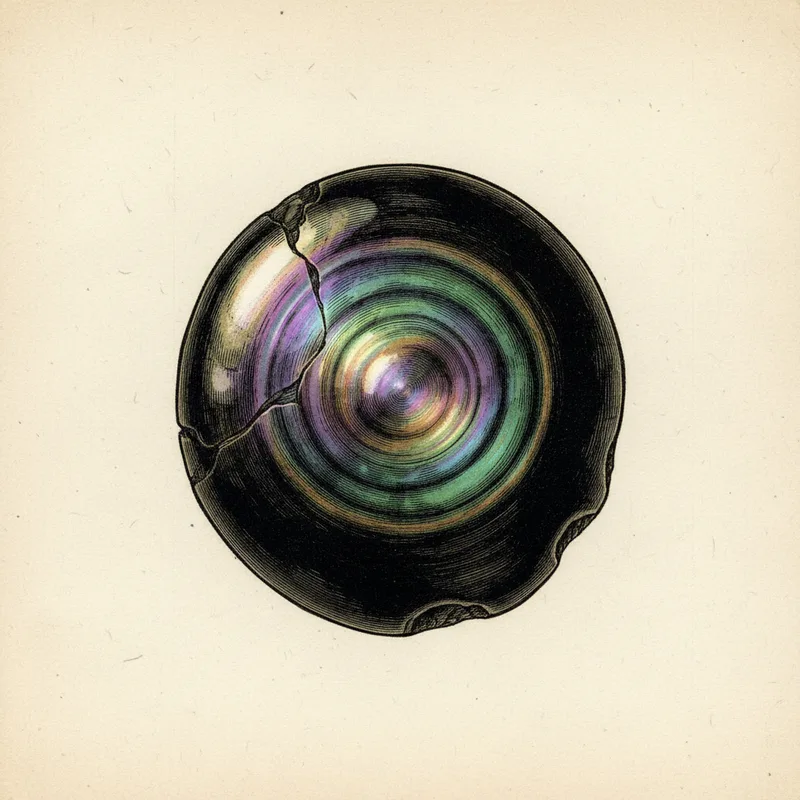
Rainbow Obsidian
The Stone of Light in Darkness
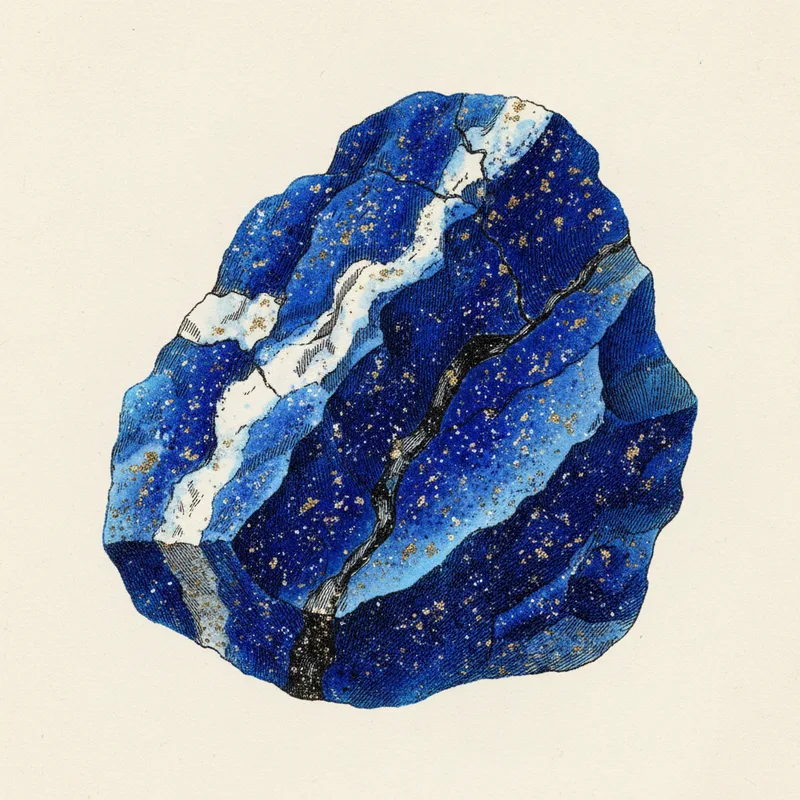
Lapis Lazuli
The Stone of the Heavens
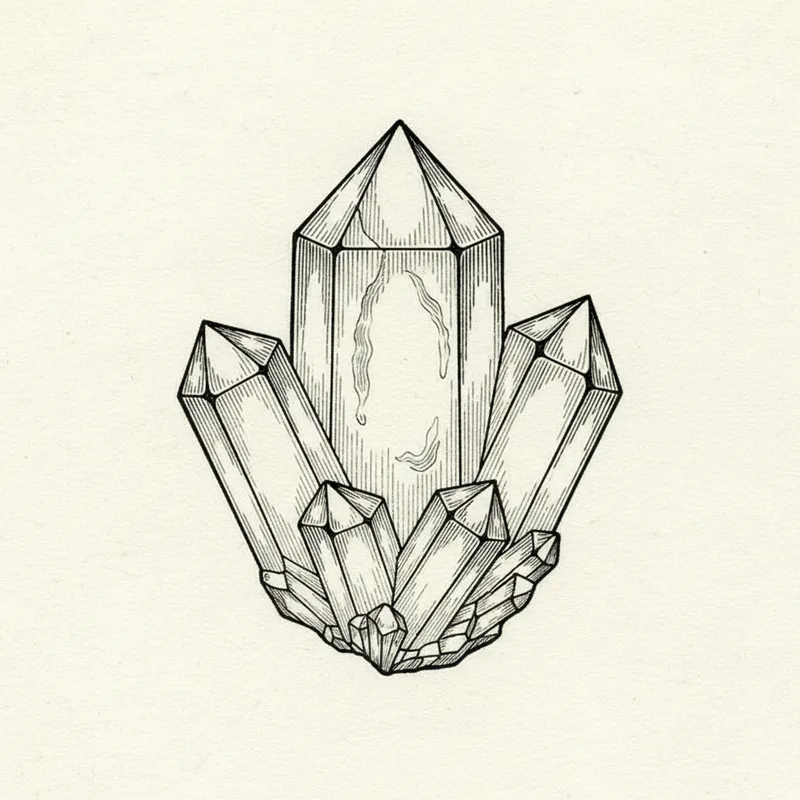
Clear Quartz
The Master Healer
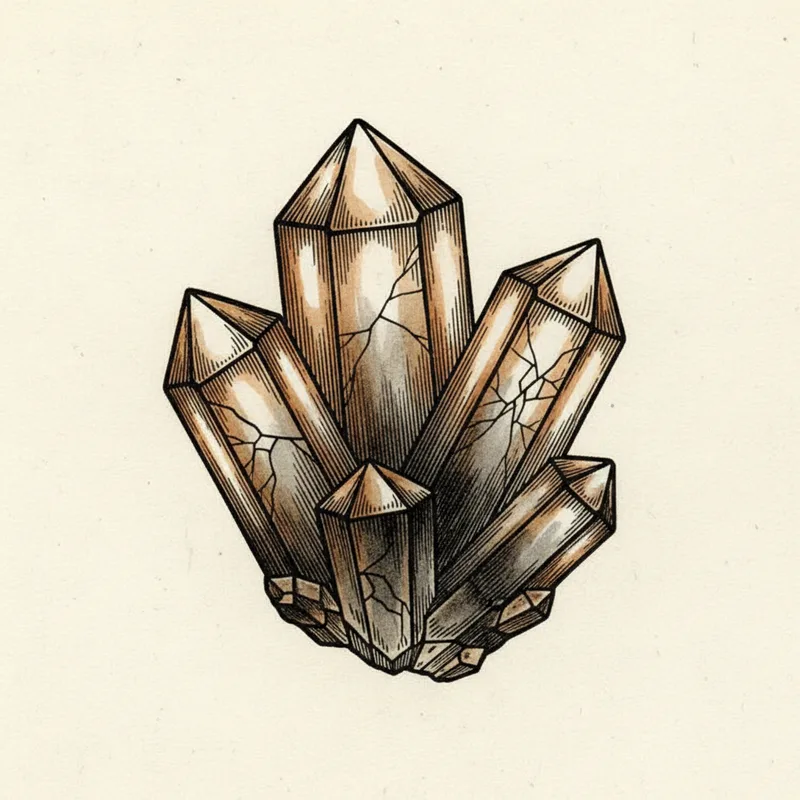
Smoky Quartz
The Grounding Stone
Dumortierite
The Patience Stone
Rose Quartz
The Stone of Unconditional Love
Chrysocolla
The Teaching Stone
Apache Tear
The Grief Stone

Orthoclase
The Foundation Feldspar
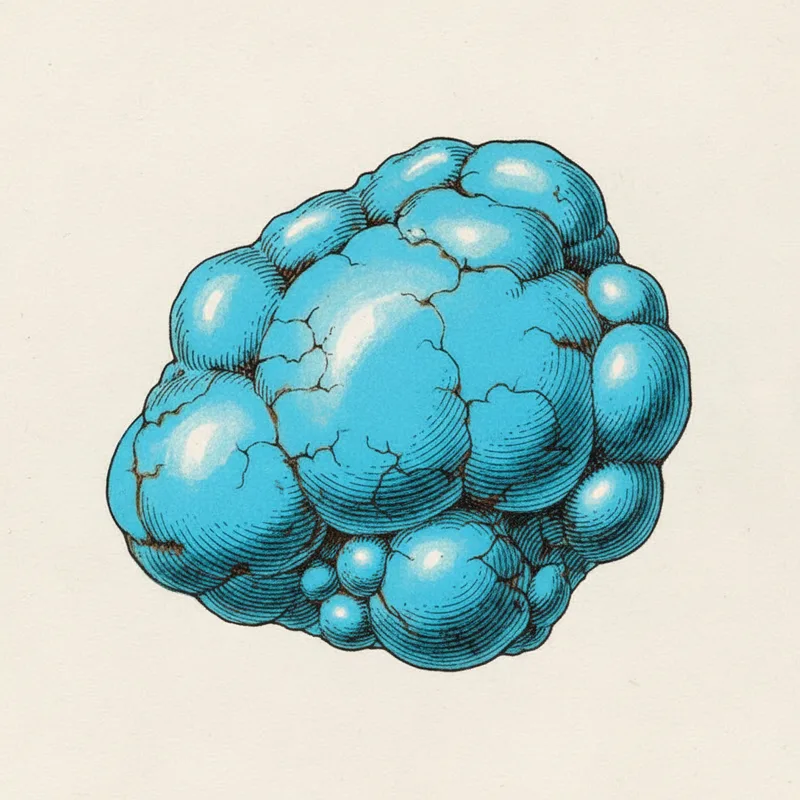
Turquoise
The Sky Stone
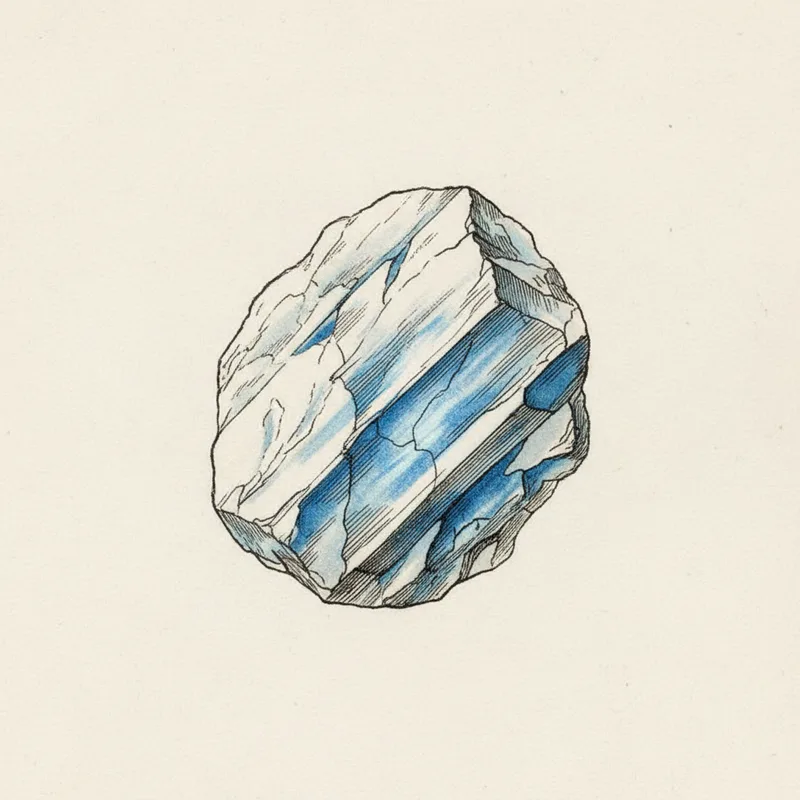
Moonstone
The Traveler's Stone
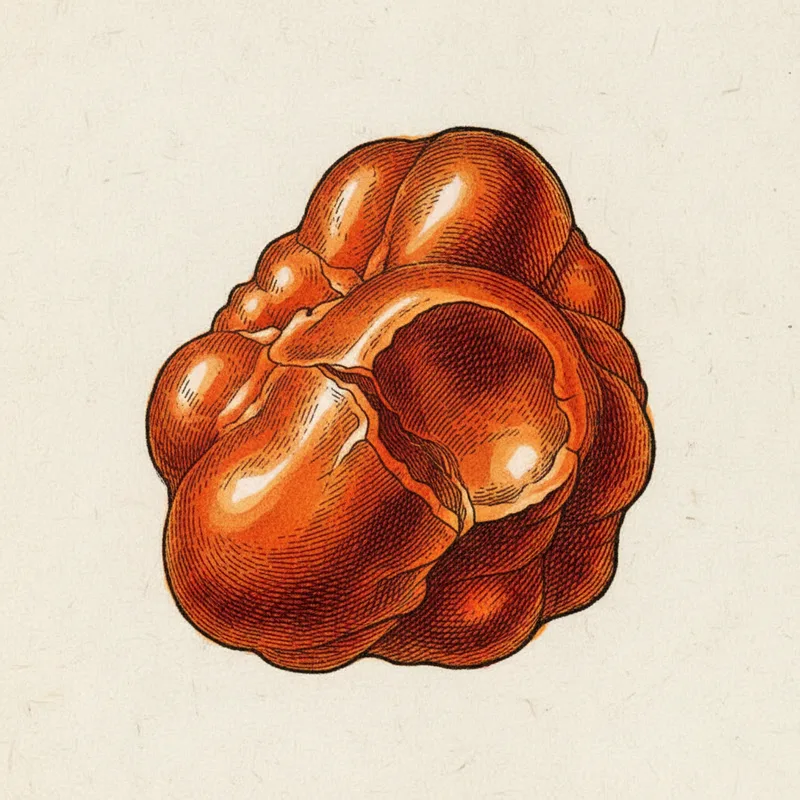
Carnelian
The Singer's Stone
Keep Reading
Newsletter
Something shiny, now and then
A stone worth knowing, or a fake worth spotting, every so often. No spam.