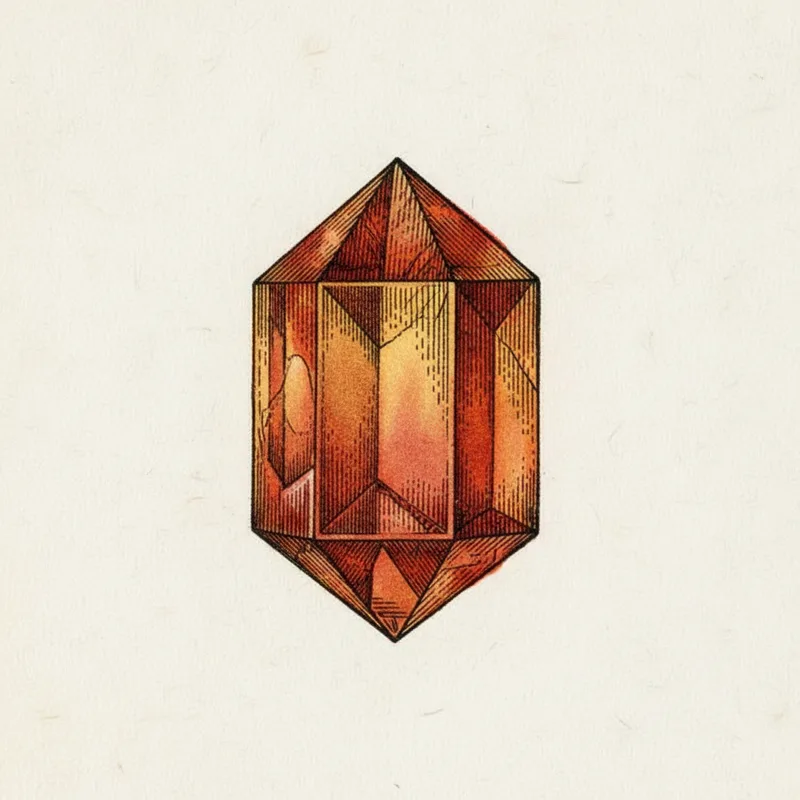
Zircon
The Eldest Gem
Affiliate links. We may earn a commission, at no cost to you.
Quick Facts
Formation & Origin
Zircon is the oldest mineral on Earth. The Jack Hills zircons from Western Australia have been dated at 4.4 billion years old - formed just 150 million years after Earth itself. These tiny crystals survived the Hadean eon, the period of intense meteorite bombardment and magma oceans, and preserve evidence of conditions on the earliest Earth, including signatures suggesting liquid water existed far earlier than previously thought.
Zircon crystallizes from magma as an accessory mineral in igneous rocks, particularly granites and pegmatites. It's extremely resistant to weathering and alteration, which is why it survives billions of years of geological recycling. Zircon is also the primary mineral used for uranium-lead radiometric dating - the technique that determined Earth's age.
Gem-quality zircon comes primarily from Cambodia, Sri Lanka, and Myanmar. Natural colors include yellow, orange, red, brown, and green. Blue zircon - the most popular gem variety - is produced by heating brown or reddish zircon from Cambodia.
Identification Guide
Zircon is identified by its high luster (adamantine - diamond-like), strong double refraction (visible doubling of back facet edges when viewed through the stone), and high specific gravity (4.70 - it feels noticeably heavy). The tetragonal crystal habit produces square prism shapes.
Distinguish from cubic zirconia (synthetic, singly refractive, different density), diamond (singly refractive, harder), and aquamarine (lower SG, lower luster). Zircon's doubled back facets visible through the crown are the quickest gemological test.
Spotting Fakes
Zircon's biggest problem is its name. Most consumers confuse 'zircon' with 'cubic zirconia' (CZ) - these are completely different materials. Zircon is a natural mineral; CZ is a synthetic lab product. This confusion has unfairly damaged zircon's market reputation. Beyond naming: synthetic zircon doesn't exist commercially, so any genuine zircon is natural. Heat treatment of zircon to produce blue color is universal and accepted.
Some links in this post go to Amazon and Etsy. Crystal Almanac earns a commission from qualifying purchases at no extra cost to you. Tools recommended here are ones we would use ourselves to run the tests described - the recommendation comes first, the link is downstream of it.
Cultural & Metaphysical Traditions
Presented as cultural traditions, not scientific evidence
In Hindu tradition, zircon (called 'hyacinth' historically) is associated with the celestial serpent Rahu. Medieval travelers believed it protected against disease and injury. Victorian-era jewelry featured brown and red zircon extensively. Its status as Earth's oldest mineral has given it modern associations with wisdom, memory, and deep time. Blue zircon is a December birthstone.
Metaphysical and “healing” associations are cultural traditions, not medical advice or scientific fact. Crystals are not a substitute for professional medical care.
Where It's Found
Major source of blue-treated material
Full color range, historic source
Fine natural colors
Contains Earth's oldest minerals (4.4 billion years)
Price Guide
Good to Know
Scratch test: At hardness 7.5, Zircon can scratch glass and steel. It's durable enough for any type of jewelry.
Global supply: Found in 4 notable locations worldwide, from Cambodia to Australia.
Heft test: Zircon has a specific gravity of 4.70 - noticeably heavier than quartz. You'll feel the density when you pick it up.
Common Questions
What is the chemical formula of Zircon?
The chemical formula of Zircon is ZrSiO₄.
What is Zircon's Mohs hardness?
Zircon has a Mohs hardness of 7.5 on the 1 to 10 Mohs scale, hard enough to scratch glass and stand up to daily wear.
Is Zircon a mineral?
Yes. Zircon is a naturally occurring mineral (Nesosilicate Group) with a definite chemical composition and an ordered crystal structure.
Care & Safety
The water, salt, and sunlight questions people actually ask before cleansing or displaying zircon, answered from its hardness (Mohs 7.5) and chemistry (ZrSiO₄).
Can Zircon go in water?
Yes. Zircon is hard (Mohs 7.5) and chemically stable, so a rinse or a quick wash with mild soap is no problem, cleanse it in water freely if that is your practice. A long soak does nothing for it either way, so skip that, and dry the stone afterward.
Can Zircon go in salt water?
Not recommended, even though zircon itself is hard and not water-soluble. Salt is both corrosive and mildly abrasive: it can dull a polished surface, attack metal settings, and crystallize inside small fractures as the stone dries. A quick dip will not destroy zircon, but rinse it with fresh water afterward and dry it. For routine cleaning, plain water is the kinder choice.
Sources & References
The mineralogical and gemological data on this page is drawn from and can be cross-checked against these external references.
- WikipediaZircon on Wikipedia
- WebmineralZircon mineral data (Webmineral)
- Handbook of MineralogyZircon (Handbook of Mineralogy, PDF)
- GIAZircon in the GIA Gem Encyclopedia
Related Minerals
NOT related - synthetic, different chemistry entirely
Hafnium analogue of zircon, extremely rare
Similar blue when treated, different properties
Similar blue, different mineral and luster
Explore More
Save This Stone

Keep this zircon reference handy. Save the card to a Pinterest board and the profile is one tap away.
Save to PinterestNewsletter
Something shiny, now and then
A stone worth knowing, or a fake worth spotting, every so often. No spam.