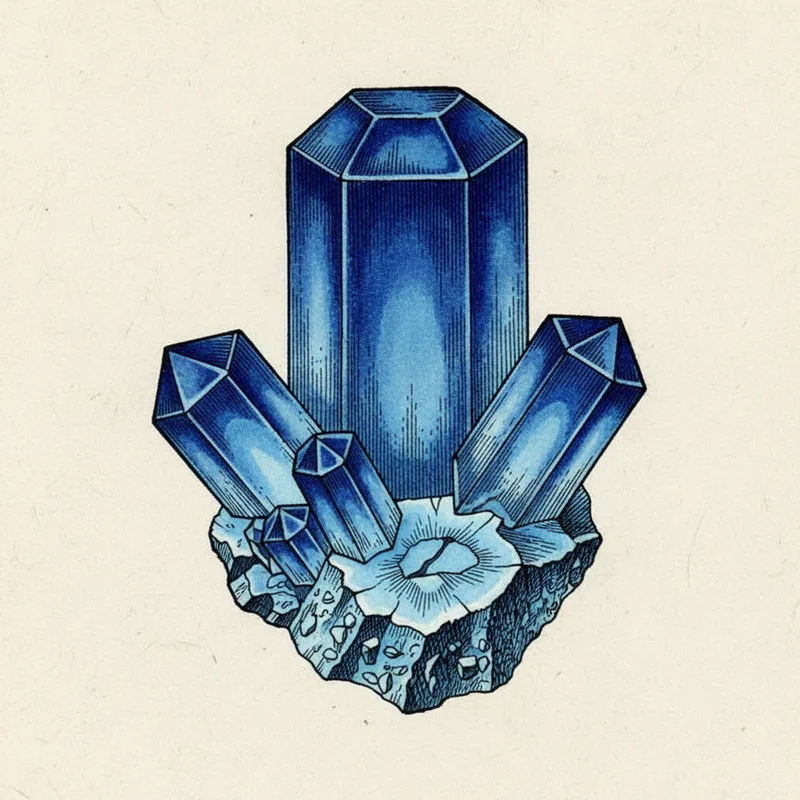
Sapphire
The Gem of the Heavens
Affiliate links. We may earn a commission, at no cost to you.
Quick Facts
Formation & Origin
Sapphire is the gem variety of corundum, crystalline aluminum oxide (Al₂O₃), in any color other than red, with blue the classic hue produced by trace iron and titanium. Sapphire encompasses all gem-quality corundum that isn't red (that's ruby). Blue sapphires get their color from a charge transfer between iron (Fe²⁺) and titanium (Ti⁴⁺) ions in the crystal structure - a mechanism completely different from chromium coloring in ruby.
Like ruby, sapphire forms in aluminum-rich, silica-poor environments. The most prized blue sapphires historically came from a single deposit in Kashmir, India, discovered around 1881 at an elevation of 4,500 meters. These Kashmir sapphires have a unique velvety appearance caused by microscopic rutile silk inclusions that scatter light, creating a soft, luminous blue unlike sapphire from any other source. The deposit produced intensively for only a few decades before being largely exhausted.
Sapphire also occurs in alluvial deposits (gravel beds) where it accumulates after weathering from its host rock. Sri Lanka's gem gravels have produced sapphires for over 2,000 years, including the rare padparadscha - a pink-orange sapphire named after the Sinhalese word for lotus blossom.
Identification Guide
Sapphire is identified by its exceptional hardness (9), high specific gravity (4.00), and hexagonal crystal habit. Blue sapphire's color is distinctive, but sapphires come in every color except red. The color-change variety appears blue in daylight and purple in incandescent light.
Distinguish from tanzanite (softer at 6.5, different pleochroism), blue spinel (singly refractive, lower SG), and synthetic sapphire (requires lab testing). Natural sapphire typically contains rutile silk (fine needle-like inclusions) and color zoning visible under magnification.
Spotting Fakes
Synthetic sapphire is abundant and inexpensive to produce. Flame-fusion synthetic sapphire has been manufactured since 1902 and is used in watch crystals and phone screens. In the gem market, synthetic sapphires require laboratory identification. Diffusion-treated sapphires (where color is added by diffusing elements into the surface) and heavily heated sapphires are common. Heat treatment of sapphire is widespread and generally accepted, but beryllium diffusion treatment is controversial. Lab reports are essential for any significant purchase.
Some links in this post go to Amazon and Etsy. Crystal Almanac earns a commission from qualifying purchases at no extra cost to you. Tools recommended here are ones we would use ourselves to run the tests described - the recommendation comes first, the link is downstream of it.
Cultural & Metaphysical Traditions
Presented as cultural traditions, not scientific evidence
Medieval clergy wore blue sapphires to symbolize heaven and divine wisdom. Kings believed sapphires protected against envy and harm. In Hindu astrology, blue sapphire (neelam) is associated with Saturn and is considered one of the most powerful - and potentially dangerous - gemstones. Prince Charles proposed to Princess Diana with a blue sapphire ring (now worn by Catherine, Princess of Wales), making it one of the most famous engagement rings in history.
Metaphysical and “healing” associations are cultural traditions, not medical advice or scientific fact. Crystals are not a substitute for professional medical care.
Where It's Found
Legendary velvety blue, deposits largely exhausted
Full range of colors including padparadscha
Fine royal blue, vivid fluorescence
Major modern source, diverse colors
Price Guide
Good to Know
Scratch test: At hardness 9, Sapphire can scratch glass and steel. It's durable enough for any type of jewelry.
Global supply: Found in 4 notable locations worldwide, from Kashmir to Madagascar.
Heft test: Sapphire has a specific gravity of 4.00 - noticeably heavier than quartz. You'll feel the density when you pick it up.
Common Questions
What is the chemical formula of Sapphire?
The chemical formula of Sapphire is Al₂O₃ (with Fe, Ti, Cr).
What is Sapphire's Mohs hardness?
Sapphire has a Mohs hardness of 9 on the 1 to 10 Mohs scale, hard enough to scratch glass and stand up to daily wear.
Is Sapphire a mineral?
Yes. Sapphire is a naturally occurring mineral (Corundum Family) with a definite chemical composition and an ordered crystal structure.
Care & Safety
The water, salt, and sunlight questions people actually ask before cleansing or displaying sapphire, answered from its hardness (Mohs 9) and chemistry (Al₂O₃ (with Fe, Ti, Cr)).
Can Sapphire go in water?
Yes. Sapphire is hard (Mohs 9) and chemically stable, so a rinse or a quick wash with mild soap is no problem, cleanse it in water freely if that is your practice. A long soak does nothing for it either way, so skip that, and dry the stone afterward.
Can Sapphire go in salt water?
Not recommended, even though sapphire itself is hard and not water-soluble. Salt is both corrosive and mildly abrasive: it can dull a polished surface, attack metal settings, and crystallize inside small fractures as the stone dries. Sapphire's iron content also makes rust staining likely if salt residue sits on the surface. A quick dip will not destroy sapphire, but rinse it with fresh water afterward and dry it. For routine cleaning, plain water is the kinder choice.
Famous Sapphire Specimens
Individual sapphires with documented histories - verified provenance, ownership timelines, and where each stone sits today.
Sources & References
The mineralogical and gemological data on this page is drawn from and can be cross-checked against these external references.
- WikipediaSapphire on Wikipedia
- WebmineralCorundum mineral data (Webmineral)
- Handbook of MineralogyCorundum (Handbook of Mineralogy, PDF)
- GIASapphire in the GIA Gem Encyclopedia
Explore More
Oxide & Hydroxide Minerals
October Birthstones: Opal and Tourmaline
Virgo Season Crystals 2026: Stones for Clarity
September Birthstone: Sapphire and Its Many Colors
Mohs Hardness Scale
See where Sapphire sits on the scale
Crystal Care Guide
Water safety, sunlight, and handling tips
Save This Stone

Keep this sapphire reference handy. Save the card to a Pinterest board and the profile is one tap away.
Save to PinterestNewsletter
Something shiny, now and then
A stone worth knowing, or a fake worth spotting, every so often. No spam.