September Birthstone: Sapphire and Its Many Colors
Sapphire is the September birthstone, and the single most useful thing to know about it is that "sapphire" is not a color. It is gem corundum in every color except red, because red corundum is called ruby. Same mineral, same chemistry, one word for the red ones and another for all the rest. That means your September stone can be blue, yellow, pink, green, violet, colorless, or the pink-orange padparadscha that costs more than most diamonds. At hardness 9 it is the most durable colored gem you can buy, second only to diamond, and it is close to the ideal everyday stone. What follows is the mineralogy, the treatments that decide the price, and how to buy one without overpaying.
What sapphire actually is
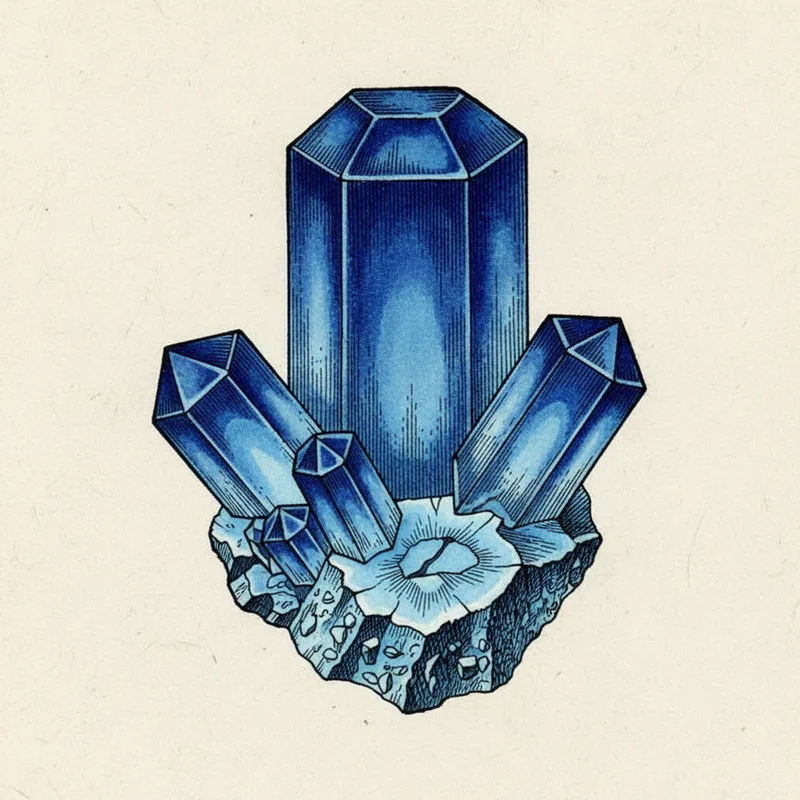
Sapphire is corundum, crystalline aluminum oxide (Al₂O₃), in any color other than red. Pure corundum is colorless; every color you see comes from trace elements sitting in the lattice.
Blue is the classic, and it comes from a specific pairing: iron (Fe²⁺) and titanium (Ti⁴⁺) ions trading an electron back and forth. That mechanism produces a stable blue that does not fade in sunlight, which is one reason sapphire has survived so well in antique jewelry. It is also chemically unrelated to what makes ruby red, which is chromium. Two stones, one mineral, two entirely different color mechanisms.
Corundum forms in aluminum-rich, silica-poor environments, which is an unusual combination and part of why gem-grade material is scarce. Much of what reaches the market is alluvial, weathered out of its host rock and concentrated in gravel beds.
The Kashmir standard
Every colored stone has a benchmark origin, and sapphire's is Kashmir.
The deposit was found around 1881 at roughly 4,500 meters in the Paddar region, and it produced intensively for only a few decades before being largely exhausted. What made it famous was not just the blue but the texture: microscopic rutile needles, called silk, scatter light through the stone and give it a soft, velvety, almost sleepy quality that material from other sources does not reproduce. A Kashmir sapphire looks lit from inside rather than through.
Because the mine is effectively finished, Kashmir stones are traded on provenance and can reach $20,000 to $200,000 per carat and beyond. For almost every buyer this is trivia rather than a shopping option, but it explains why lab reports for high-end sapphire spend so much attention on origin.
The colors beyond blue
This is where sapphire gets interesting, and where a September birthday has more choice than most.
Padparadscha
Padparadscha is a pink-orange sapphire named from the Sinhalese for lotus blossom, and it is the most valuable non-blue variety. The color has to sit in a narrow band between pink and orange; stones that drift too far either way are sold as pink or orange sapphire at a fraction of the price. Fine unheated Sri Lankan material with a lab report runs $10,000 to $30,000 and up per carat, though commercial treated stones under a carat start closer to $800.
Star sapphire
Star sapphire shows asterism, a floating star of light produced by the same rutile silk that gives Kashmir stones their velvet, this time aligned along the crystal's structure and cut as a cabochon so the reflection concentrates into rays. Grey and black commercial cabochons start around $20 to $100. Fine blue stars with sharp centered rays from Sri Lanka or Myanmar reach into the thousands.
Yellow and pink
Yellow sapphire is known as pukhraj in Vedic astrology, where it is the stone of Jupiter, and that demand supports a real market independent of Western jewelry. Pink sapphire is colored by chromium, the same element that makes ruby red, just at lower concentration. The line between a deep pink sapphire and a light ruby is a trade convention rather than a chemical boundary, and different labs have historically drawn it in slightly different places.
Treatments: what is accepted and what is not
Sapphire treatment is not a scandal, it is the market. But the categories carry very different price consequences and you should know which one you are buying.
Heat
Heat treatment is widespread and generally accepted. It dissolves silk and improves color, and it is stable and permanent. Assume any sapphire is heated unless a lab report says otherwise. Unheated stones of good color command a substantial premium precisely because they are uncommon.
Diffusion
Diffusion treatment adds color by driving elements into the stone. Surface diffusion produces a colored skin that can be polished through, which matters if the stone is ever recut. Beryllium diffusion penetrates deeper and remains contentious in the trade. Both must be disclosed, and both should cost far less than comparable heated-only material.
Lab-grown
Synthetic sapphire has been produced by flame fusion since 1902 and is now so cheap and so good that it is used industrially for watch crystals and phone screens. In gem sizes it is visually convincing and requires laboratory identification. This is the strongest argument for buying certified: with sapphire, the naked eye is not enough, and neither is a jeweler's loupe.
For anything significant, insist on a report from a recognized lab.
Sources and what they mean for price
Sri Lanka (Ratnapura). Gem gravels worked for over 2,000 years, producing the full color range including padparadscha. Ceylon sapphire tends toward a lighter, brighter blue and is the backbone of the fine-jewelry market.
Myanmar (Mogok). Fine royal blue with vivid fluorescence. Small volumes, high quality, and the usual sourcing and sanctions questions that follow Burmese stones.
Madagascar (Ilakaka). The major modern source, discovered in the 1990s, supplying diverse colors across every price tier. Most affordable commercial sapphire on the market today is Malagasy.
Kashmir. Effectively historical, as above.
How to buy sapphire intelligently
Decide first whether you are buying a stone or a story. A 1-carat heated Madagascar blue at $50 to $500 per carat is an excellent everyday gem that no one but a gemologist can distinguish from something ten times the price. Origin premiums are real but they buy provenance, not beauty.
Ask three questions and expect straight answers: is it heated, is it diffused, and is it natural or lab-grown. A seller who is vague on any of the three is telling you something. Then buy the stone you can actually see. Sapphire's color varies with the light it is under, so look at a candidate in daylight and under a lamp before committing.
Finally, do not pay a natural-stone price without a lab report. Synthetic sapphire is too cheap and too convincing for anything else to be prudent.
Sapphire versus its imposters
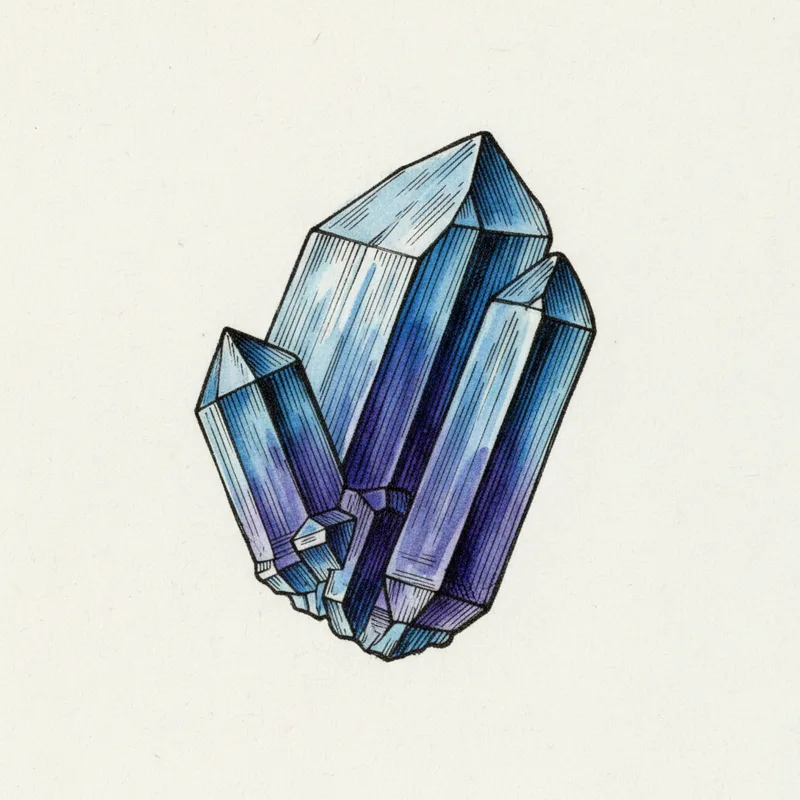
Tanzanite is softer at 6.5 and strongly pleochroic, showing blue and violet from different angles. Blue spinel is singly refractive with a lower specific gravity. Natural sapphire typically shows rutile silk and color zoning under magnification, and at a specific gravity of 4.00 it feels notably heavy for its size. Synthetic material is the one case where the tests above will not save you.
Lapis lazuli, September's other stone
Older birthstone lists give September a second option, and lapis lazuli still appears as the alternative. It could not be less like sapphire: a rock rather than a mineral, opaque rather than transparent, soft at 5.5, and blue because of a trapped sulfur ion rather than a metal pair. It is also far cheaper, and it carries a longer documented history than almost any gem, with the Afghan mines supplying material for more than 6,500 years.
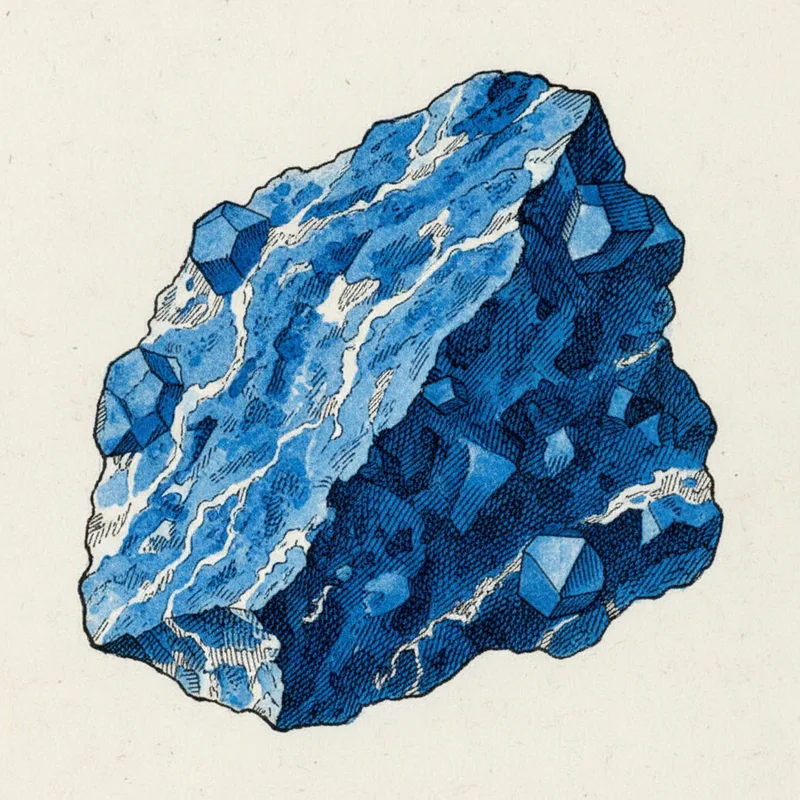
If you like the blue but not the price, it is a serious answer rather than a consolation prize. Just know it is frequently confused with sodalite, which our lapis lazuli vs sodalite guide sorts out, and that it does not take water: the pyrite in it can rust and the calcite degrades.
History and symbolism
Sapphire's association with the church is real and well documented. The 1913 Catholic Encyclopedia records that a cardinal's ring "is set with a sapphire," a convention long predating that entry. Medieval symbolism tied the stone to heaven, truth, and constancy, which is roughly where its modern reputation for wisdom and fidelity comes from.
You will also find claims that a specific pope decreed sapphire for bishops' rings. That attribution circulates widely in gem writing but the authoritative church reference does not support it, so we have left it out.
The modern September assignment is more recent and much more traceable: the standardized American birthstone list of 1912. Sapphire's current cultural profile owes a great deal to one piece of jewelry, the Ceylon sapphire engagement ring given to Diana, Princess of Wales in 1981 and now worn by Catherine, Princess of Wales.
Care
This is the easy one, and it is the strongest practical argument for sapphire as a daily-wear stone.
At hardness 9 it is second only to diamond and shrugs off the scratching that ruins softer gems in rings. It has no cleavage, it is not in our sunlight-risk group, and its color does not fade. It is safe with water and generally fine in ultrasonic cleaners, with the standard exception that fracture-filled or heavily included stones should be cleaned by hand.
For a September baby who will wear the thing every day for decades, there is not much competition.
Neighboring months are covered in our August birthstone (peridot) and October birthstones guides, and sapphire also appears in our Virgo season crystals guide as the bridge stone into the back half of that season.
Metaphysical and “healing” associations mentioned here are cultural traditions, not medical advice or scientific fact. Crystals are not a substitute for professional medical care. Full disclaimer.
Crystals in This Article
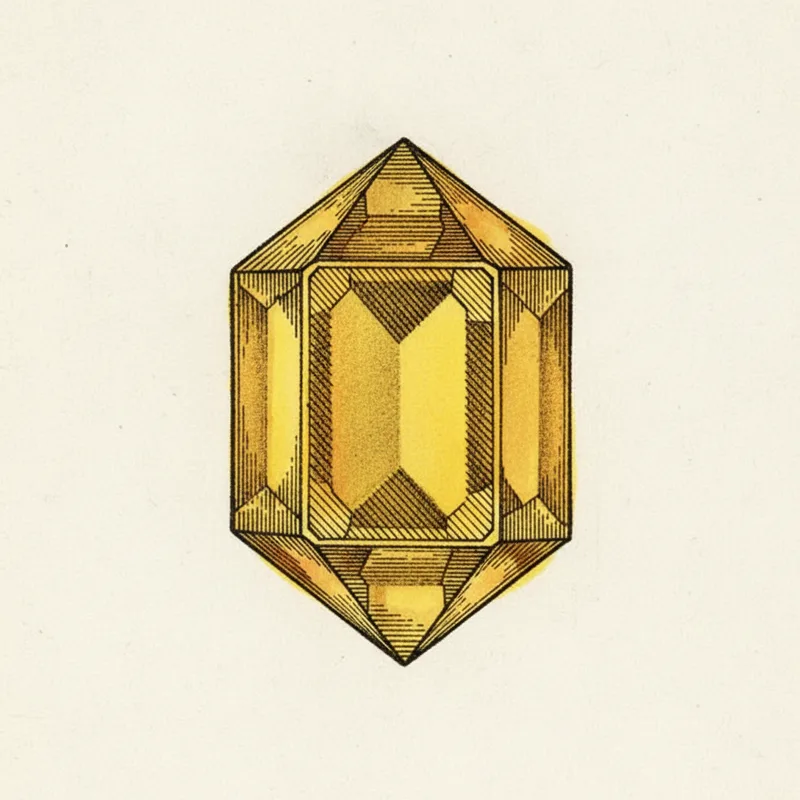
Yellow Sapphire
Pukhraj, the Stone of Jupiter

Star Sapphire
The Celestial Star Stone
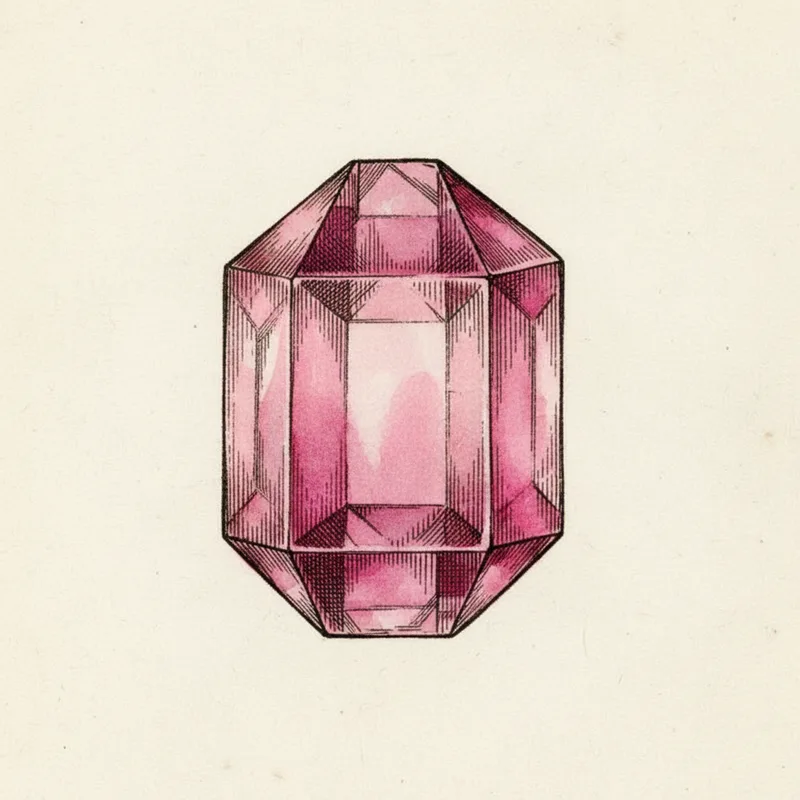
Pink Sapphire
Chromium's Softer Signature
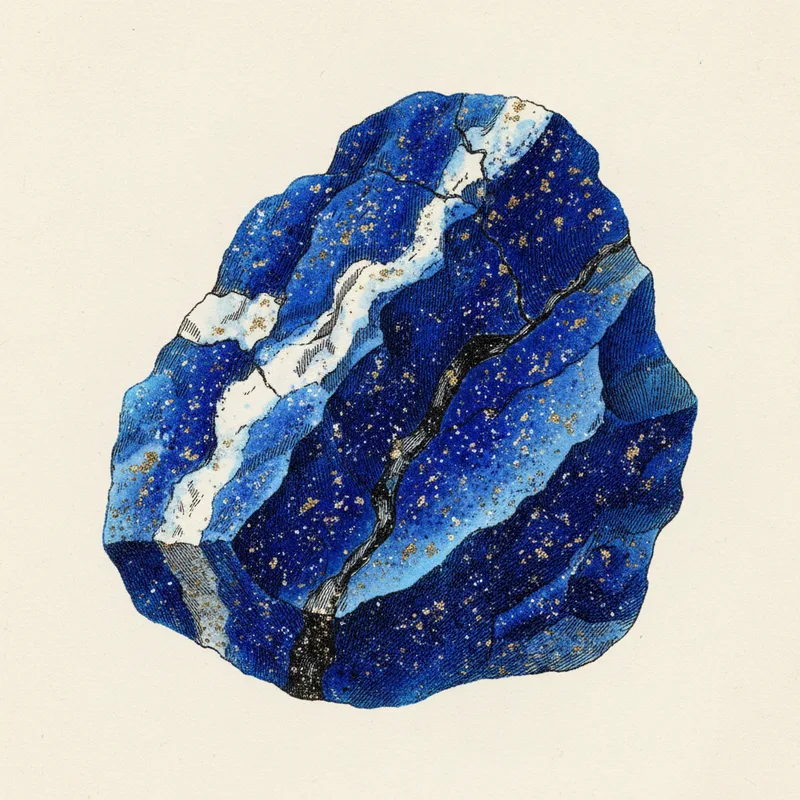
Lapis Lazuli
The Stone of the Heavens
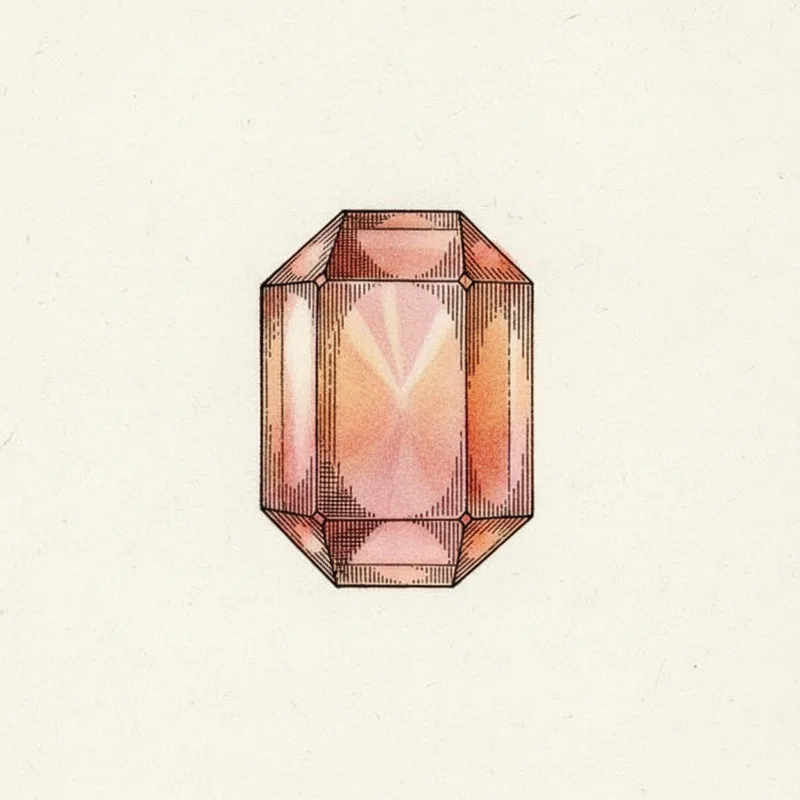
Padparadscha
The Lotus-Blossom Sapphire
Tanzanite
The Generation Stone
Sodalite
The Poet's Stone
Sapphire
The Gem of the Heavens
Peridot
The Evening Emerald
Diamond
The Invincible
Calcite
The Shapeshifter
Pyrite
The Fool's Gold
Keep Reading
Newsletter
Something shiny, now and then
A stone worth knowing, or a fake worth spotting, every so often. No spam.