Best Crystals for Meditation: A Science-First Guide
No crystal alters your brain chemistry. No stone raises your vibration or clears your chakras in any way a physicist can measure. What a well-chosen meditation stone actually does is give the body a tactile anchor, the eyes a complex focus object, and the ritual a physical component you can reach for. That is a real psychological mechanism, the same one that makes prayer beads, worry stones, and fidget tools work. Certain minerals happen to be exceptionally good at it, and this guide picks them on that basis rather than rehashed chakra color charts.
Why a stone helps at all
Pick up a heavy polished hematite and your nervous system registers something before any thought arrives. Weight presses into the palm. The surface feels cool because the mineral has high thermal mass and pulls heat from your skin. Your proprioceptive system now has a small steady signal to track, and that signal competes with the low background hum of everyday anxiety.
This is not mystical. It is the same principle behind weighted blankets, which a handful of peer-reviewed trials have linked to reduced self-reported anxiety and improved sleep onset. It is the same reason worry stones have appeared in nearly every culture that works stone. Deep pressure and sustained tactile input seem to engage the parasympathetic nervous system. A well-chosen crystal is a pocket-sized version of that effect, minus the blanket.
There is a second mechanism. Reaching for the stone is a cue. In behavioral psychology this is called an implementation intention, a small committed action that reliably triggers a larger behavior. When a specific stone lives on your meditation cushion and you only touch it during practice, picking it up becomes part of the session. The act of sitting, settling, and closing your fingers around something cool and heavy tells the mind what comes next.
A third mechanism matters for gaze meditation. The eyes want something to do. A crystal with internal complexity, phantoms, veils, flashes, inclusions, gives the visual cortex a task that is absorbing without being stimulating. The mind has somewhere to rest.
None of this requires metaphysical claims. A stone does not need to do anything magical to do real work.
What to look for in a meditation stone
Four criteria matter. Color mysticism is not on the list.
Weight and density. Hematite has a specific gravity around 5.26, which means a small piece feels startlingly heavy for its size. Pyrite runs close to 5.0. Most quartz sits near 2.65, galena reaches 7.5. For tactile grounding, heavier is a stronger signal. A dense stone in the palm is a louder cue to the nervous system than a light one.
Tactile quality. Smooth tumbles disappear in the hand in a good way, with no edge to snag attention. Cool thermal mass is what makes a stone feel alive against skin. Texture also matters in the other direction. Lemurian quartz has horizontal striations you can run a fingertip along, which gives the hand something to do without breaking focus.
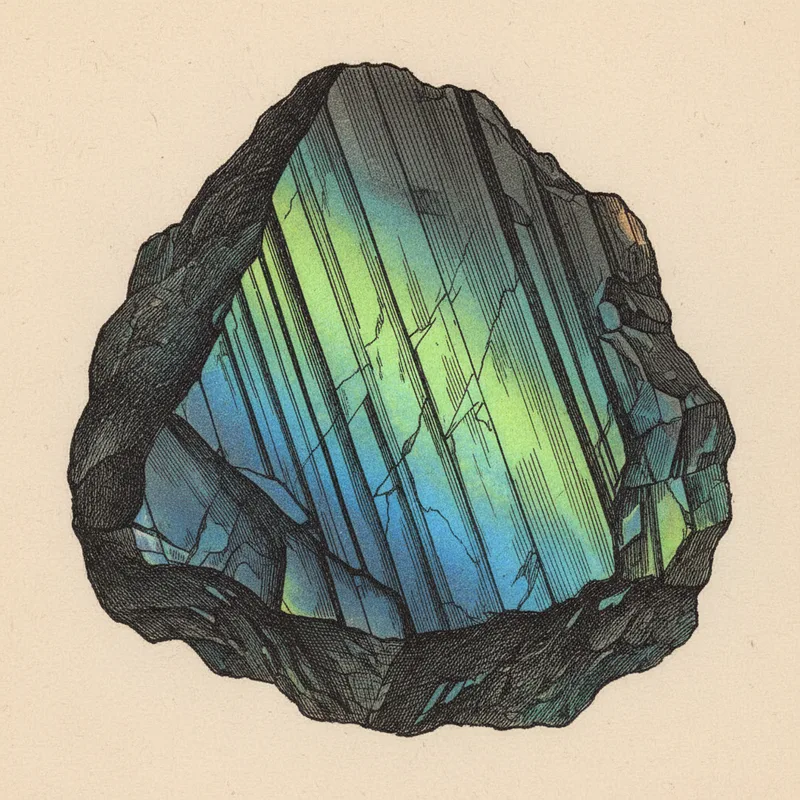
Visual complexity for gaze meditation. Labradorite only flashes at certain angles, so the eyes search and find and search again. Phantom quartz has ghost crystals frozen inside. Lodolite contains tiny landscapes of chlorite and hematite inclusions. These reward long looking.
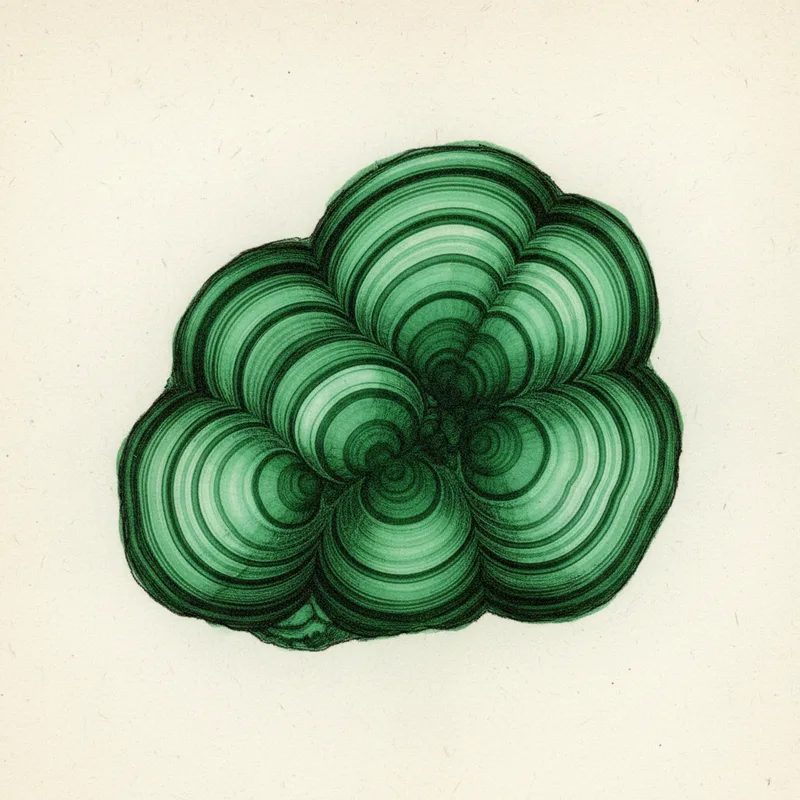
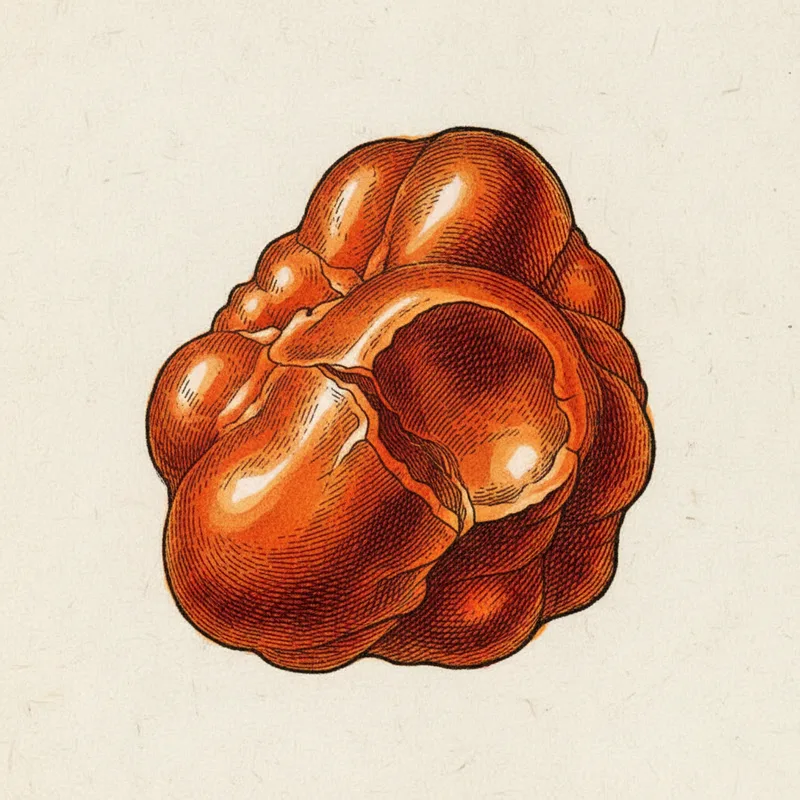
Visual calm. High-saturation pieces, bright carnelian, vivid malachite, electric blue fluorite, hijack attention during extended sessions. For meditation specifically, muted tones work better. Milky quartz, soft amethyst, grey labradorite, translucent selenite. The stone should settle the eye, not demand it.
The 10 stones, ranked by mechanism
1. Amethyst
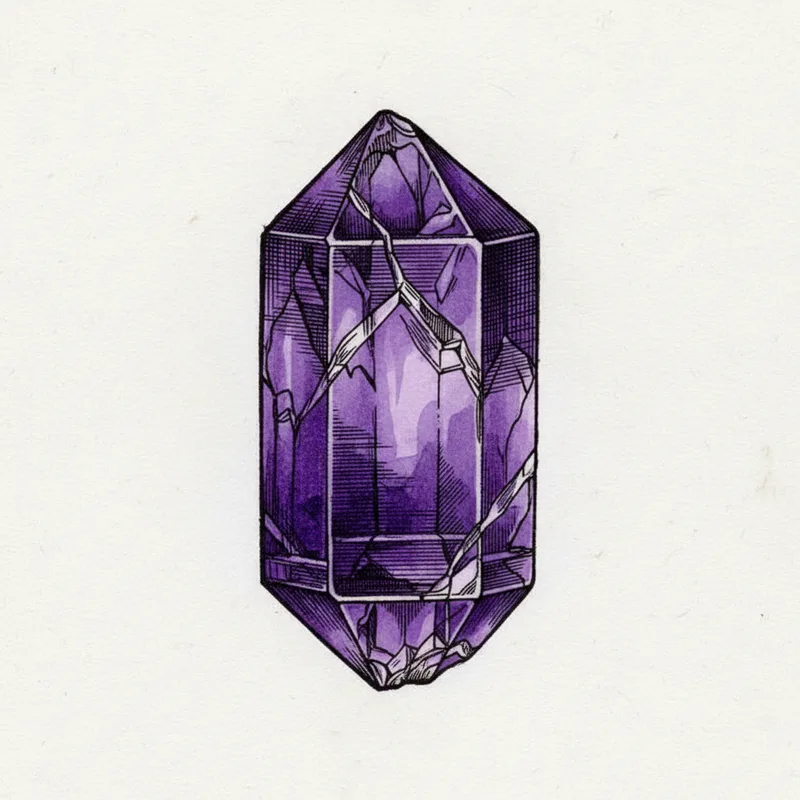
Amethyst is silicon dioxide, SiO₂, the same basic chemistry as clear quartz, colored purple by trace iron and natural gamma radiation acting on that iron over geological time. Hardness 7. It forms in geodes lined with terminated points, most famously in the basalt flows of Rio Grande do Sul, Brazil, and in Uruguay, Zambia, and the Thunder Bay region of Ontario.
For meditation, amethyst earns its top spot on tactile and visual grounds. Polished tumbles are smooth and pleasantly dense. The color is saturated enough to register but muted enough not to demand attention during a long sit. Internal zoning, phantom layers, and chevron banding reward close looking. It is also the most affordable serious meditation stone on this list, which matters if you want a dedicated piece that never leaves your cushion.
Purple has been associated with contemplative practice across Roman, Byzantine, and medieval Christian traditions, which is cultural context rather than a mechanism, but it does mean amethyst carries a long visual association with stillness. Use that as you like.
2. Clear Quartz
Pure silicon dioxide, SiO₂, hardness 7, trigonal system. The most abundant mineral in the continental crust after feldspar, and the baseline against which every other quartz variety is described. Major specimen sources include Arkansas, the Alps, Madagascar, and the Minas Gerais region of Brazil.
Clear quartz is the master attention object. A good piece has internal phantoms where growth paused and restarted, rainbows from healed internal fractures, veils of tiny fluid inclusions, and sometimes negative crystals that look like hollow ghost shapes floating inside. All of this is infinite visual complexity with no visual noise, which is exactly what gaze meditation asks for.
The stone is also honest. It does not pretend to be anything it is not. A clear, well-formed quartz point is literally frozen silica that grew molecule by molecule for thousands of years. That fact alone is worth a few minutes of attention.
3. Selenite
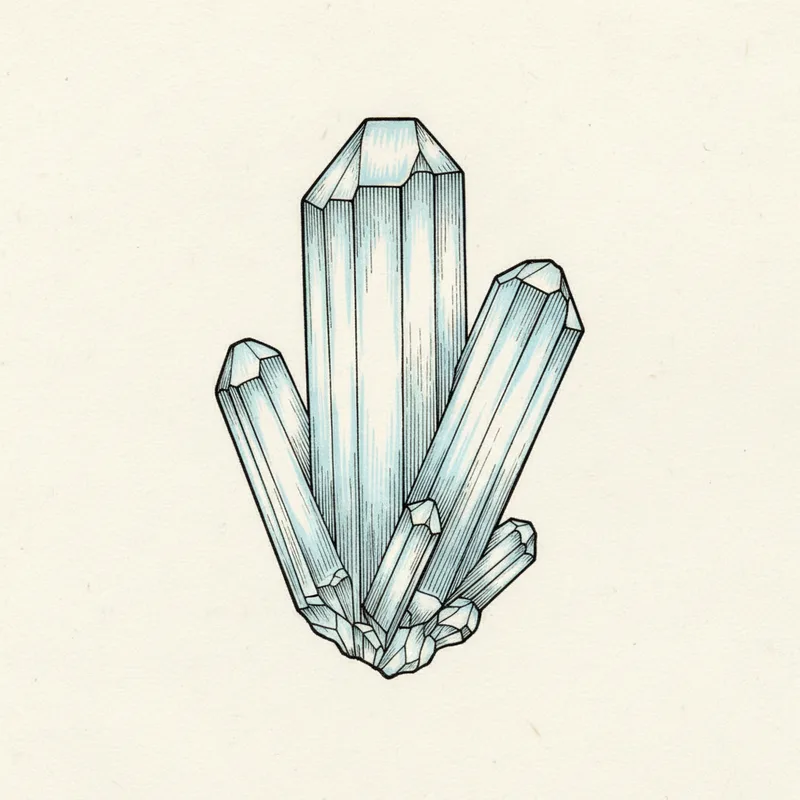
Selenite is a crystalline variety of gypsum, CaSO₄·2H₂O, hardness 2 on the Mohs scale. That is soft enough to scratch with a fingernail, which is why selenite is not a carry stone. It dissolves slowly in water and chips if dropped. Major sources include the Cave of the Crystals in Naica, Mexico, where beams reached 11 meters, along with deposits in Morocco and Oklahoma.
For meditation, selenite works as presence rather than object. A polished tower or wand on an altar or nightstand catches low light and glows. The internal fiber structure scatters light along the long axis so the whole piece seems lit from within. During evening practice with a single candle, a selenite wand is a remarkably effective focus point.
Do not carry it, do not wash it, do not leave it in damp places. It is a stationary stone.
4. Labradorite
Labradorite is a plagioclase feldspar, a sodium-calcium aluminosilicate with the general formula (Na,Ca)(Al,Si)₄O₈. Hardness 6 to 6.5. The diagnostic feature is labradorescence, a bright blue, gold, or green flash that appears when light hits internal layers of exsolved feldspar at the right angle. Finland produces the richest variety, marketed as spectrolite. The type locality is Paul Island, Labrador.
For gaze meditation this is ideal. Hold a polished piece and rotate it slowly. The flash appears, vanishes, shifts color, returns at a new angle. The eye tracks without the mind narrating. Unlike stones that reveal everything at once, labradorite rewards patience and a steady head.
Good pieces are grey or dark grey in the body color, which keeps the visual field calm between flashes. Stay away from ultra-bright marketing photos that have been lit from underneath. A real piece in ambient light is subtle.
5. Lemurian Quartz
Lemurian quartz is a trade name for clear to milky quartz, SiO₂, hardness 7, typically sourced from the Diamantina region of Minas Gerais, Brazil, and increasingly from Colombia and Zambia. The defining feature is a set of horizontal striations on the prism faces, spaced like tick marks along the long axis. These are real growth features produced by episodic crystallization.
What matters for meditation is that those ridges are tactile. Hold a lemurian point with the tip facing up and run a fingertip slowly down the striated face. Each tick is a small haptic event. Many practitioners pair this with breath, one breath per ridge or one ridge per exhale. The stone becomes a physical rosary.
The name comes from a 1990s channeling story about a lost continent, which is cultural overlay, not geology. The striations are real. The pacing works.
6. Phantom Quartz
Phantom quartz is standard SiO₂ with a ghost crystal preserved inside. A phantom forms when the crystal stops growing, receives a dusting of a different mineral, chlorite gives green phantoms, hematite gives red, clay gives white, and then resumes growing. The original shape is trapped permanently inside the new outer crystal. Hardness 7. Common localities include Brazil, Madagascar, and the Alps.
For meditation the phantom is the subject. You are looking at a crystal that paused, received a signal from its environment, and kept growing with that pause visible forever. It is a physical meditation on layers, on time, on how change leaves a record. Gaze meditation on a phantom naturally invites reflection on one's own pauses and resumptions.
Look for pieces with sharp, well-defined inner outlines. A good phantom looks like a smaller crystal floating inside a larger one, because that is what it is.
7. Tibetan Quartz
Tibetan quartz is SiO₂ from high-altitude deposits in the Himalayas, principally the Ganesh Himal range. Hardness 7. Most pieces are hand-collected by local villagers rather than mechanically mined, which means individual specimens often retain matrix, natural terminations, and black carbon inclusions of anthraxolite that give many stones a distinctive smoky inner speck.
The mineralogy is not exotic. What makes these stones meaningful for meditation is provenance. They come from mountains that have been the backdrop of Tibetan Buddhist contemplative practice for over a millennium, collected by hand at altitude by people who live alongside that tradition. Holding one connects physical object to cultural lineage in a way machine-extracted quartz does not.
That is a real thing, not a mystical claim. Objects with history carry associations, and associations shape ritual. Use a Tibetan quartz when you want that weight.
8. Scolecite
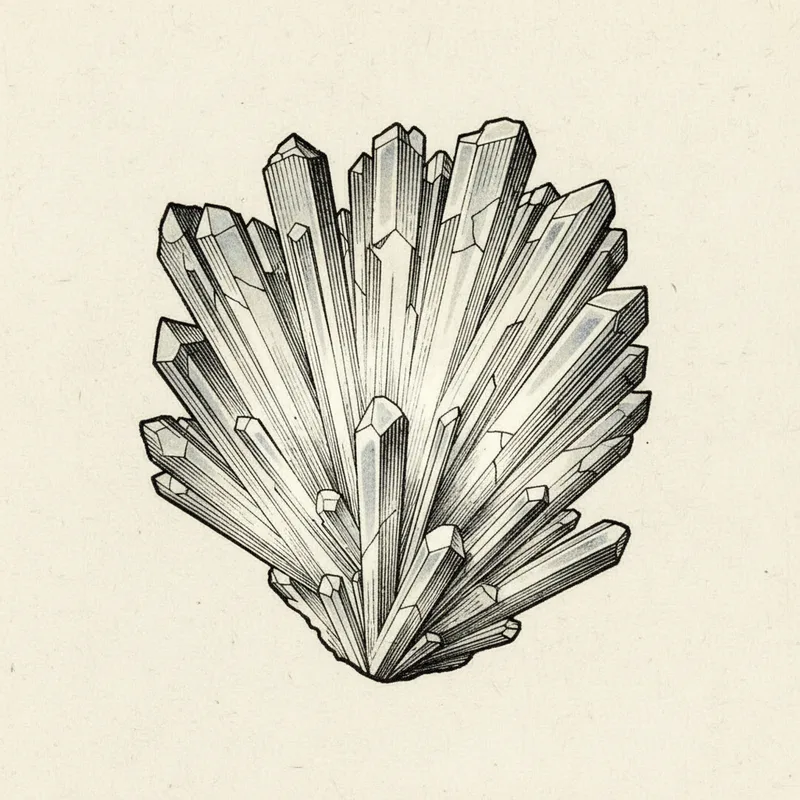
Scolecite is a zeolite, a hydrated calcium aluminum silicate with the formula CaAl₂Si₃O₁₀·3H₂O. Hardness 5 to 5.5. It forms radiating sprays of slender white or colorless prismatic crystals in the vesicles of basalt lavas. The Deccan Traps of India, particularly the Nashik and Pune regions, produce the world's finest scolecite specimens, often in combination with stilbite and apophyllite.
For visual focus, a scolecite spray is a small natural mandala. The crystals radiate from a central point in a fan or starburst, which the eye reads as a geometric structure without the stone having been carved. Gaze meditation on radial symmetry has deep roots across contemplative traditions, and scolecite gives you that for free, formed in volcanic gas pockets 60 million years ago.
Handle with care. Zeolites are relatively brittle and the needles snap easily.
9. Apophyllite
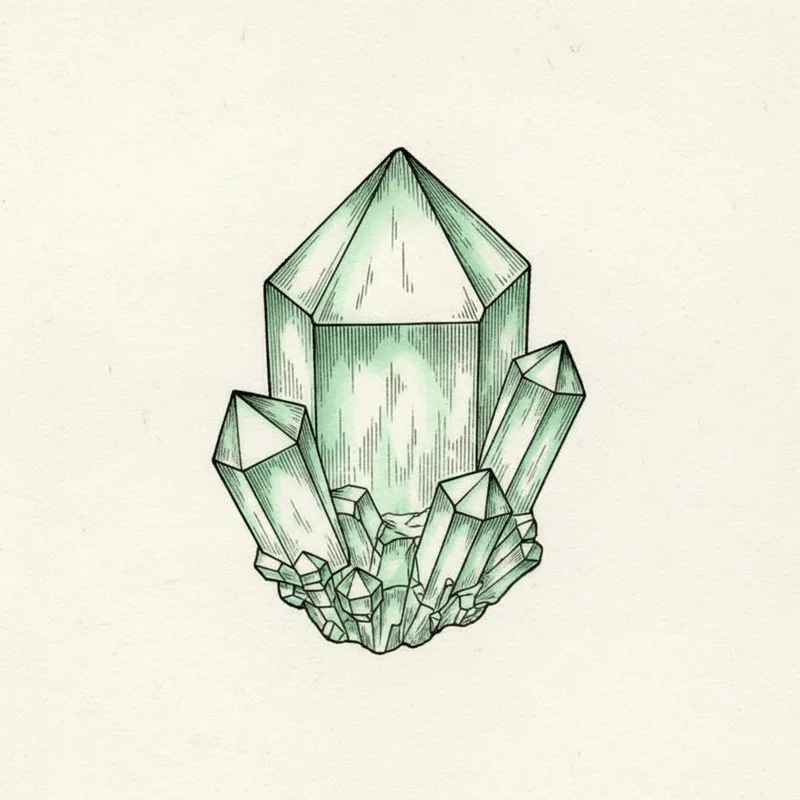
Apophyllite is a potassium calcium fluorosilicate, typical formula KCa₄Si₈O₂₀(F,OH)·8H₂O. Hardness 4.5 to 5. Crystals form pyramidal or tabular points with remarkable optical transparency and a pearly luster on basal cleavage surfaces. The same Deccan Traps basalts in India that produce scolecite also produce world-class apophyllite, often in clusters of glassy green or water-clear pyramids.
Apophyllite is the stone you do not look at. You look into. A good clear specimen has the optical quality of a small window, and experienced practitioners use it for trataka-style gazing, a fixed-point concentration technique where the eyes hold a single object until the visual field softens. The flat pyramidal faces of a water-clear apophyllite pyramid act as that point.
It is soft for its job, so keep it in a dedicated spot and do not carry it loose.
10. Lodolite
Lodolite, also called garden quartz or scenic quartz, is clear quartz, SiO₂, with internal inclusions of chlorite, hematite, feldspar, and clay that form landscape-like scenes inside the crystal. Hardness 7. The primary source is Brazil, particularly the Paraiba and Minas Gerais regions.
Every lodolite is unique in a way most crystals are not. One piece holds what looks like a green forest floor. Another has a reddish cliff face. A third contains a pale drift that reads as fog across a valley. None of this is imposed. The scenes are real mineral inclusions caught during growth.
For meditation, lodolite rewards the longest gaze of any stone on this list. There is always another detail. Practitioners sometimes sit with a single lodolite for weeks and keep finding new features. If you want a stone that functions as a micro-landscape for contemplative attention, this is it. Choose by eye. Photographs rarely capture the depth.
How to use a meditation stone
Keep it in one spot. The cushion, the altar, the nightstand. The stone is a cue, and cues work by consistency.
When you pick it up, notice the cool first. A stone at room temperature feels cold against a warm palm because the mineral pulls heat. Sit with that thermal shift for a few breaths. As your hand warms the stone, the sensation fades. That fade is its own small meditation on impermanence, and you did not have to invent it.
Hold with one hand, resting the stone in your palm or loosely closed fingers. Feel the weight. Notice the points of contact. If you lose your focus, return to the weight the way you would return to the breath. The stone is an anchor.
For gaze meditation, hold the stone at comfortable reading distance under soft indirect light. Harsh direct light flattens internal features. Low light reveals them. Let the eyes relax and the stone show you something.
The stone is the anchor. It is not the subject of the meditation.
What about chakras
Chakra-crystal correspondences are a real tradition with roots in Hindu tantric literature and later Buddhist adaptation, formalized in the West mostly through twentieth century New Age writing. Whether a particular stone belongs on a particular chakra is a cultural claim, not a measurable one. No published study has found evidence that matching stone color to chakra location produces outcomes beyond what a placebo would produce.
Practitioners who find the system meaningful are welcome to it. Practitioners who prefer to pick stones on tactile and visual grounds are on equally firm footing, and arguably firmer. This guide has taken the second path on purpose. Either can produce real meditation, because meditation does not depend on the stone.
Crystals in This Article
- Amethyst
- Clear Quartz
- Selenite
- Labradorite
- Lemurian Quartz
- Phantom Quartz
- Tibetan Quartz
- Scolecite
- Apophyllite
- Lodolite
- Hematite (referenced for density)
- Pyrite (referenced for density)
- Galena (referenced for density)
Metaphysical and “healing” associations mentioned here are cultural traditions, not medical advice or scientific fact. Crystals are not a substitute for professional medical care. Full disclaimer.
Crystals in This Article
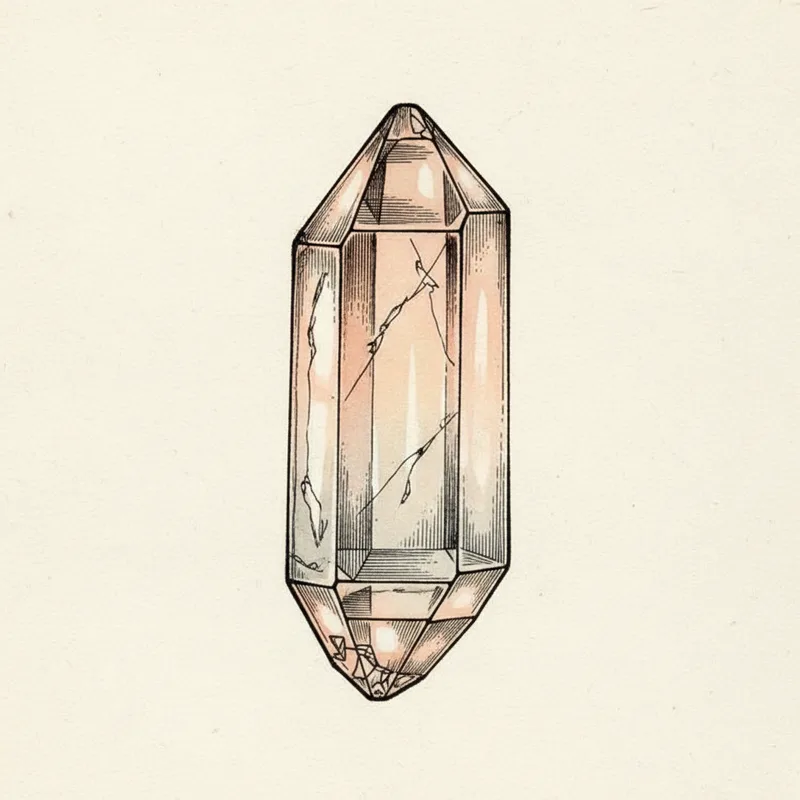
Lemurian Quartz
The Seed Crystal
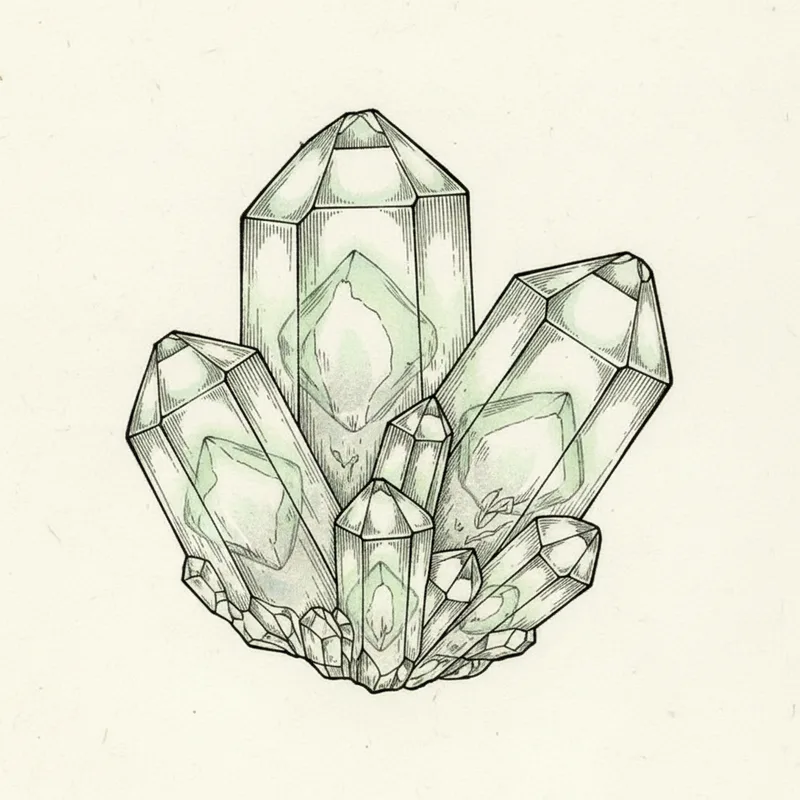
Phantom Quartz
The Ghost Crystal
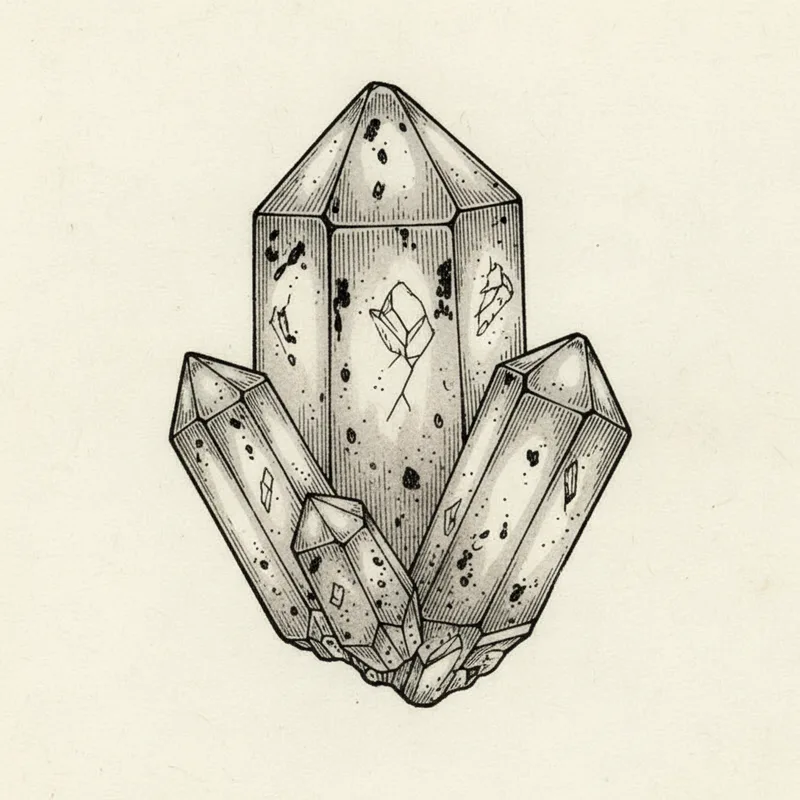
Tibetan Quartz
The Roof of the World Crystal
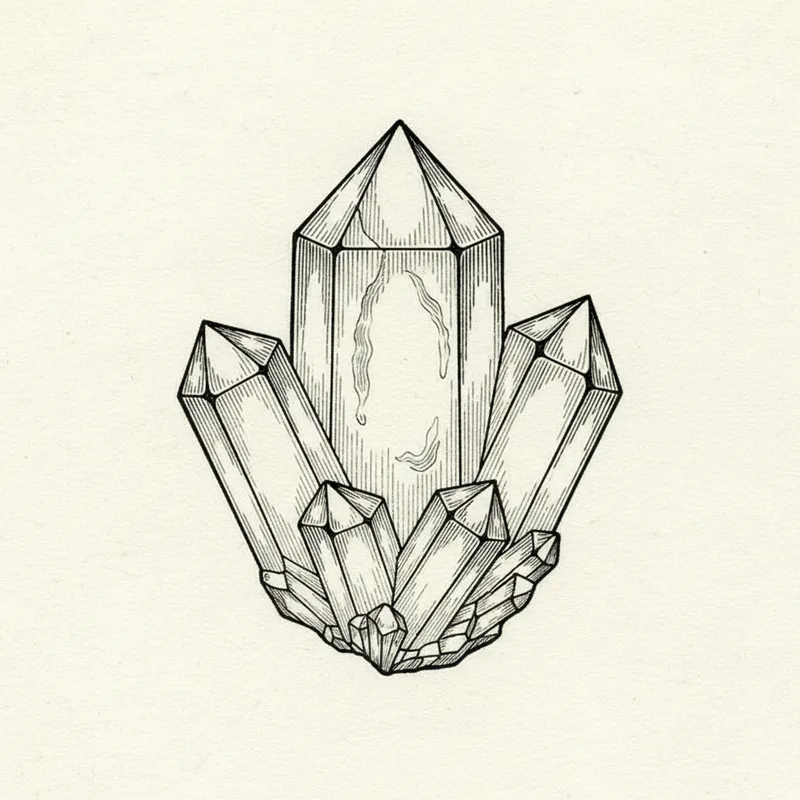
Clear Quartz
The Master Healer
Labradorite
The Stone of Transformation
Apophyllite
The Light Keeper
Malachite
The Stone of Transformation
Carnelian
The Singer's Stone
Scolecite
The Stone of Inner Peace
Amethyst
The Stone of Spiritual Wisdom
Fluorite
The Genius Stone
Selenite
The Liquid Light
Keep Reading
Newsletter
Something shiny, now and then
A stone worth knowing, or a fake worth spotting, every so often. No spam.