July Birthstone: Ruby Meaning, Value & Spotting Fakes
Ruby is the red variety of corundum (Al₂O₃), colored by trace chromium and ranking 9 on the Mohs hardness scale, second only to diamond among common gems. Fine ruby is rarer than fine diamond, and top material trades at higher per-carat prices than any other colored gemstone except red beryl and some color-change alexandrites. The July birthstone carries more than 2,000 years of documented cultural history. The modern market is also full of treatments, synthetics, and origin premiums that every serious buyer should understand before spending real money. This guide walks through the mineralogy, the pigeon-blood standard, what treatments are accepted versus controversial, how origin shapes price, and the specific checks you should run before a significant purchase.
What Ruby Actually Is
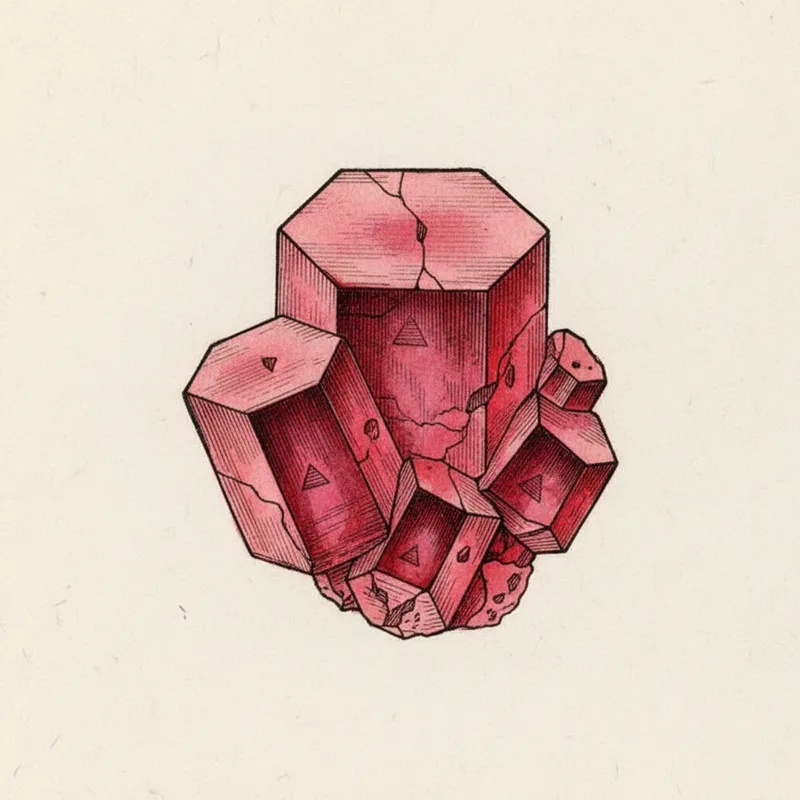
Ruby is corundum, an aluminum oxide with the formula Al₂O₃, that owes its red color to trace amounts of chromium substituting for aluminum in the crystal lattice. The chromium ion (Cr³⁺) sits in the same octahedral site that aluminum normally occupies. When white light passes through the stone, chromium absorbs wavelengths in the yellow-green and violet regions and transmits red. That selective absorption is responsible for the deep red we see.
Chromium also fluoresces. Under ultraviolet light, and even under strong visible light with a UV component, Cr³⁺ in corundum emits a bright red glow. This is the reason fine ruby seems to almost light up from within, especially in warm incandescent light or sunlight. The effect is real physics, not marketing.
Without chromium, the same mineral is called sapphire. Blue sapphire gets its color from iron and titanium. Yellow sapphire gets it from iron alone. Pink sapphire has a little chromium but not enough to cross the threshold into ruby. That threshold is fuzzy and the trade has argued over it for decades, but the basic rule stands: red chromium-rich corundum is ruby, and everything else in the same mineral family is sapphire.
Iron plays a quiet but important role. Iron suppresses fluorescence. Rubies from iron-rich geological settings, classically Thailand and Cambodia, tend to look darker and more garnet-like because the fluorescent boost is muted. Rubies from iron-poor marble-hosted deposits, classically Mogok in Burma, show strong fluorescence and the characteristic inner glow that collectors prize.
The crystal system is trigonal, the refractive index sits around 1.76 to 1.77, and specific gravity runs about 3.97 to 4.05. These are useful diagnostic numbers when you are trying to separate ruby from its imposters.
The Pigeon-Blood Standard
Pigeon-blood is a grade term, not a loose marketing phrase, although it gets abused as one. The classical definition describes pure red with a slight blue secondary hue, strong red fluorescence, medium to medium-dark tone, and vivid saturation. A stone that reads orangey, brownish, or purplish does not qualify. A stone that is too dark, so dark it looks black in dim light, does not qualify either. The color should appear vivid and alive across multiple light sources.
Historically, pigeon-blood was reserved for the finest stones from Mogok. Modern labs including GIA, Gubelin, and SSEF will apply the term to stones from other origins if the color, saturation, and fluorescence meet the standard. Mozambique rubies from Montepuez, for example, can and do earn pigeon-blood grading. The grading is about the stone, not the geography, but origin still drives premium because Burmese stones historically command higher prices for the same grade.
Expect the pigeon-blood designation on a reputable lab report to roughly double or triple the per-carat price compared with a near-equivalent stone that does not quite qualify. For a genuinely fine unheated Burmese pigeon-blood ruby over 3 carats, six figure per-carat prices are normal at auction.
Treatments: What Is Accepted and What Is Not
Treatment disclosure is where buyers lose the most money. Understand these categories before you shop.
Heat Treatment
Heating is standard and accepted industry-wide. The vast majority of commercial rubies, probably 95 percent or more, have been heated to improve color and dissolve silk inclusions that would otherwise cloud the stone. Heat treatment is permanent and stable. It does not need to be reapplied, it does not fade, and it does not require special care. Most jurisdictions do not require a jeweler to disclose heating on stones sold at common price points, but major labs will note it on any stone they grade. Unheated rubies with fine color command significant premiums, often two to five times the price of an equivalent heated stone, because they are rare.
Glass Filling and Lead-Glass Composite
This is the treatment that ruins lives in the retail market. A fractured low-grade ruby is soaked in molten lead glass, which seeps into the cracks and hides them. The result is a stone that looks cleaner and more transparent than it has any right to be, sold at prices that seem too good to be true. They are. Lead-glass composite rubies have almost no resale value. They are also fragile in ways natural ruby is not.
The practical test: acid etching. A drop of lemon juice or household cleaner on the stone over time will damage the glass filler and leave cloudy patches. Jewelers should never steam clean or ultrasonic clean a composite ruby. If a ruby at a mall jewelry counter costs a fraction of what pricing guides suggest, assume it is composite until proven otherwise and demand written disclosure.
Flux Healing and Beryllium Diffusion
Flux healing involves heating with a chemical flux that allows fractures to partially heal with synthetic corundum. Beryllium diffusion diffuses beryllium into the surface at very high temperatures to shift color. Both are controversial. Beryllium-diffused stones are worth a fraction of untreated or simply heated equivalents. Any reputable lab will identify these treatments and note them.
Lab-Grown Ruby
Synthetic ruby has been commercially produced since the early 1900s, originally by the Verneuil flame-fusion process. Modern methods include flux growth (Kashan, Chatham, Ramaura) and hydrothermal growth. Lab-grown ruby is chemically identical to natural ruby. It is real ruby, just made in a factory rather than in the crust over millions of years.
The honest position is simple. Disclosed synthetic ruby is a legitimate product. It is beautiful, durable, and affordable. The value question is about rarity and provenance, not about the material itself. Problems arise only when synthetic stones are sold as natural, which is fraud.
Sources and What They Mean for Price
Origin matters in the ruby market in ways it does not matter for most gems. Here is what each major source means.
Burma (Myanmar)
Mogok is the classical origin for the finest rubies ever mined. Stones from Mogok are typically marble-hosted, low in iron, and show the strong fluorescence and warm red glow that defines pigeon-blood. Mong Hsu, a second Burmese deposit that came online in the 1990s, produces smaller stones that almost always require heat treatment but can still reach very high quality. US and EU sanctions tied to the Myanmar political situation have repeatedly disrupted the trade, and buyers should expect documentation questions on any Burmese-origin stone.
Mozambique
The Montepuez deposit, in commercial production since 2009, is now the supply leader for fine ruby. Some Montepuez material rivals Burmese quality and has earned pigeon-blood grading from major labs. Prices for top Mozambique stones have climbed sharply and now approach Burmese pricing for equivalent quality.
Madagascar and Tanzania
Both produce mid-range rubies in commercial quantities. Individual exceptional stones appear but the average quality sits below top Mozambique or Burmese material. Prices are correspondingly lower.
Thailand and Cambodia
These iron-rich deposits, including the famous Chanthaburi and Pailin districts, historically produced darker, browner rubies with muted fluorescence. Thai cutting houses still dominate the global trade even though Thai production itself has declined sharply.
Greenland
A small boutique producer from genuinely ancient host rocks, nearly 3 billion years old. Greenland ruby will never be a volume source, but stones carry a strong geological story and some buyers pay a premium for that narrative.
How to Buy Ruby Intelligently
A practical checklist for any significant purchase.
- Ask for a lab report from GIA, AGL, Gubelin, or SSEF on any stone priced over roughly 2,000 dollars. A mall appraisal is not a lab report.
- Verify treatment disclosure in writing on the receipt. Heat is fine. Glass filling must be disclosed. Beryllium diffusion must be disclosed.
- Ask for origin if it is relevant to the price being charged. Origin can swing value by a factor of five or more on equivalent-looking stones.
- Check the color under multiple light sources. Take the stone to a window, view it under warm incandescent, and view it under cool LED. Good ruby holds its red across all three. Weak stones shift noticeably toward brown or purple.
- Look at the stone under a UV light. Strong red fluorescence is a positive signal for fine chromium-rich material. Inert behavior under UV suggests higher iron and often lower value.
- Check for visible inclusions under 10x magnification. Natural rubies almost always show some internal features such as silk, crystals, or healed fissures. A completely clean ruby is either very small, very expensive, or lab-grown. Flawlessness is a red flag for a low price point.
Ruby Versus Its Imposters
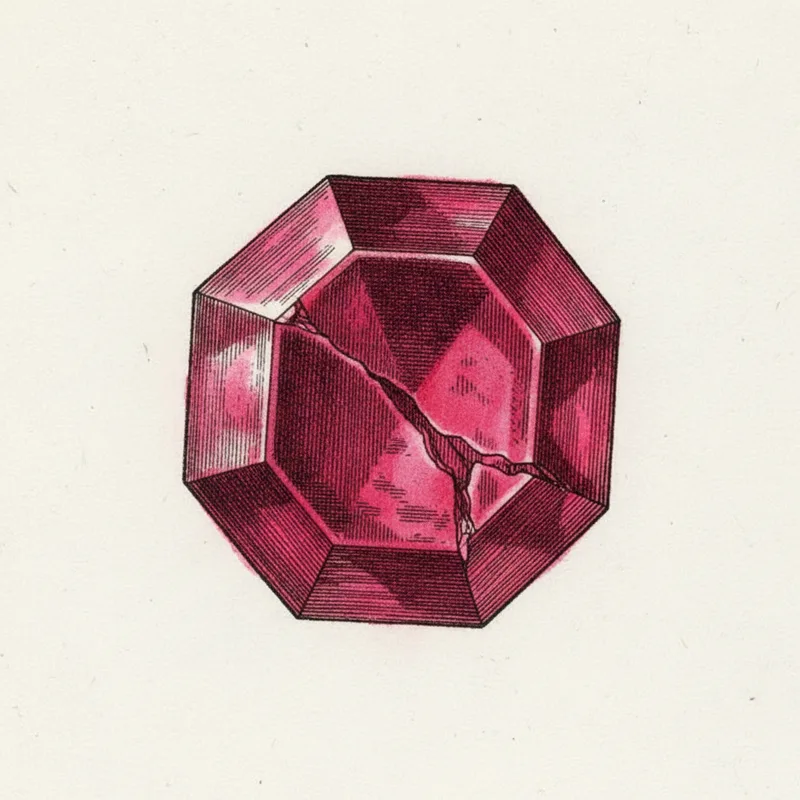
Red spinel, red garnet (especially pyrope and almandine), and red glass are the common substitutes for ruby. Each has a different density and refractive index, which is why lab testing separates them easily. Red spinel, in particular, has historically been mistaken for ruby, and some famous historical rubies in royal collections turned out to be spinels. Garnet confusion is more common at the retail level because some garnets approach ruby red but show no fluorescence and have a different refractive index. For a full treatment of ruby versus garnet separation, see our dedicated comparison post. This guide is focused on buying the July birthstone intelligently.
History and Symbolism
Ruby holds a special place in Sanskrit tradition as ratnaraj, the king of gems. Classical Indian texts describe ruby as the most valuable of the nine traditional gemstones and associate it with the sun. Burmese warrior legend held that rubies inserted beneath the skin would make the bearer invincible in battle, a practice reported in historical accounts but impossible to verify. Victorian jewelry used ruby in mourning pieces and engagement rings, and Edwardian platinum settings brought ruby into the modern luxury market.
Frame these stories as cultural history, which is what they are. The physical properties of ruby are extraordinary on their own. The cultural weight the stone carries is an accumulation of how humans have valued that rarity across civilizations, not evidence of any metaphysical property.
Care
Ruby has a hardness of 9 on the Mohs scale and no cleavage, which together make it one of the most durable stones you can wear daily. A well-set ruby ring will survive decades of normal wear. The main risks are hard impacts to girdle edges, which can chip even hardness 9 stones, and prolonged contact with other hard gems such as diamond in a shared jewelry box.
Heat-treated rubies are safe in ultrasonic and steam cleaners. Fracture-filled rubies, including lead-glass composite stones, should never be cleaned in ultrasonics, steamers, or hot water, and should not be exposed to acidic liquids including lemon juice or many household cleaners. When in doubt about treatment, warm soapy water and a soft brush is always safe.
Born in August instead? Ruby's summer neighbor is peridot, the August birthstone, a far more affordable option with its own meteorite-borne backstory.
Crystals in This Article
- Ruby
- Corundum
- Sapphire
- Garnet
- Spinel
- Pyrope
- Almandine
Metaphysical and “healing” associations mentioned here are cultural traditions, not medical advice or scientific fact. Crystals are not a substitute for professional medical care. Full disclaimer.
Crystals in This Article
Yellow Sapphire
Pukhraj, the Stone of Jupiter
Pink Sapphire
Chromium's Softer Signature
Red Beryl
The Scarlet Emerald
Sapphire
The Gem of the Heavens
Platinum
The Noble Metal
Peridot
The Evening Emerald
Diamond
The Invincible
Garnet
The Warrior's Stone
Spinel
The Great Impostor
Marble
The Sculptor's Canvas
Ruby
The King of Gems
Keep Reading
Newsletter
Something shiny, now and then
A stone worth knowing, or a fake worth spotting, every so often. No spam.