Mercury Retrograde Crystals: July 23 and the Shadow Period
Key Takeaway: Mercury stations direct on July 23, 2026, and the post-retrograde shadow closes on August 6. The retrograde began on June 29, in Cancer. Nothing up there is touching your inbox: retrograde is apparent motion, an effect of where we happen to be standing as Mercury laps Earth on the inside track. What a crystal offers is a physical prompt, an object you reach for before you fire off the reply. Four stones carry most of the retrograde tradition: black tourmaline (schorl), amazonite (a feldspar), clear quartz, and fluorite. Here is the real timetable, and what each of those stones actually is.
Every few months the same advice circulates. Back up your files. Reread the email. Do not sign the lease. Mercury is retrograde.
This one started on June 29, 2026, with Mercury in Cancer, and it ends on July 23, when the planet stations direct. Plenty of calendars print July 24 instead. They are not exactly wrong, and the reason takes one paragraph to explain.
The tradition also carries a coda, the post-retrograde shadow, which runs through August 6. So the window people actually observe is longer than the retrograde itself. If you have been sitting on a contract, the folklore says the coast is clear on August 6, not on the 23rd.
Below is the timetable, the astronomy underneath it, and the four stones people reach for. The stones are worth knowing on their own terms. Not one of them is doing anything to Mercury.
The 2026 Timetable
| Stage | US Eastern | Universal Time | What is happening |
|---|---|---|---|
| Pre-retrograde shadow begins | June 12, 2026, 8:54 pm | June 13, 00:54 | Mercury passes the degree of Cancer it will later station direct on |
| Mercury stations retrograde | June 29, 2026, 1:36 pm | June 29, 17:36 | The apparent backward motion begins, at 26 degrees of Cancer |
| Inferior conjunction | July 12, 2026, 9:20 pm | July 13, 01:20 | Mercury passes between Earth and the Sun |
| Mercury stations direct | July 23, 2026, 6:57 pm | July 23, 22:57 | Apparent forward motion resumes, at 16 degrees of Cancer |
| Post-retrograde shadow ends | August 6, 2026, 11:31 pm | August 7, 03:31 | Mercury clears the degree where it stationed retrograde |
Two columns, because most calendars print one and never say which. The direct station lands at 22:57 Universal Time on July 23, 2026: 6:57 pm Eastern, 3:57 pm Pacific. In Central European Summer Time (UTC+2) and points east the clock has already rolled past midnight, so those calendars print July 24. Britain, Ireland, and Iceland still read the 23rd. Same instant, different date on the wall. If you want one unambiguous number, it is 22:57 UTC, July 23, 2026.
The two station instants follow the GMT ephemeris tables at MoonTracks. The shadow dates and the Cancer degrees follow Cafe Astrology, whose tables run on Eastern Time; the clock time on each shadow boundary comes from the Pacific-Time 2026 key dates published by CHANI. One consequence worth flagging, since the rest of this page makes a fuss about it: the shadow bounds people quote are US dates. In Universal Time this cycle opens on June 13 and closes on August 7.
What Is Actually Happening Up There
Mercury takes 88 days to circle the Sun against Earth's 365, so it overtakes us three or four times a year, and each time it appears to slide backward against the stars for about three weeks. The Planetary Society puts the mechanism plainly: "Retrograde motion is technically called 'apparent retrograde motion' since it's not an actual change in the planet's motion through space, but rather an effect caused by our perspective from Earth."
This particular loop straddles inferior conjunction, which falls at 01:20 UTC on July 13, 2026, or 9:20 pm Eastern on July 12, when Mercury passes between Earth and the Sun. Think of a car overtaking you in the inside lane. For a few seconds it seems to drift backward against the far hills, though nothing about its motion has changed. Mercury is the car. The distant stars are the hills.
The geometry is real and rather beautiful. The predicted effects are the part with nothing behind them. The Planetary Society again: "there's no scientific evidence that any planet's apparent retrograde motion affects you at all." No mineral changes that. Nothing below claims a stone acts on a planet, on your email, or on your hard drive.
So Why Reach for a Stone?
Because the retrograde tradition, with the planet taken out of it, reduces to four unglamorous behaviors: back up the files, reread before sending, confirm the time and the place, ask the second question. Every one of them is a pause. A pause is easier to keep if it has a handle.
That is what a stone is here. Something with weight and temperature, sitting in a pocket or beside a keyboard, so that reaching for it puts a beat between the thing that annoyed you and the thing you were about to say. The stone is not slowing you down. Reaching for it is, because reaching for it was the plan. This is the same honest frame behind grounding stones and calming stones: the object is a cue, the practice is yours. For the long version of that argument, see the skeptic's guide to healing crystals.
Quick Reference: The Four Retrograde Stones
| Crystal | Formula | Mineral Class | Hardness | Retrograde Tradition |
|---|---|---|---|---|
| Black Tourmaline | NaFe₃Al₆(BO₃)₃Si₆O₁₈(OH)₄ | Cyclosilicate (schorl) | 7 | Protection, boundaries |
| Amazonite | KAlSi₃O₈ | Tectosilicate (feldspar) | 6 | Clear speech, truth-telling |
| Clear Quartz | SiO₂ | Tectosilicate (quartz) | 7 | Holding an intention |
| Fluorite | CaF₂ | Halide | 4 | Mental clarity, decisions |
1. Black Tourmaline: The Boundary Stone
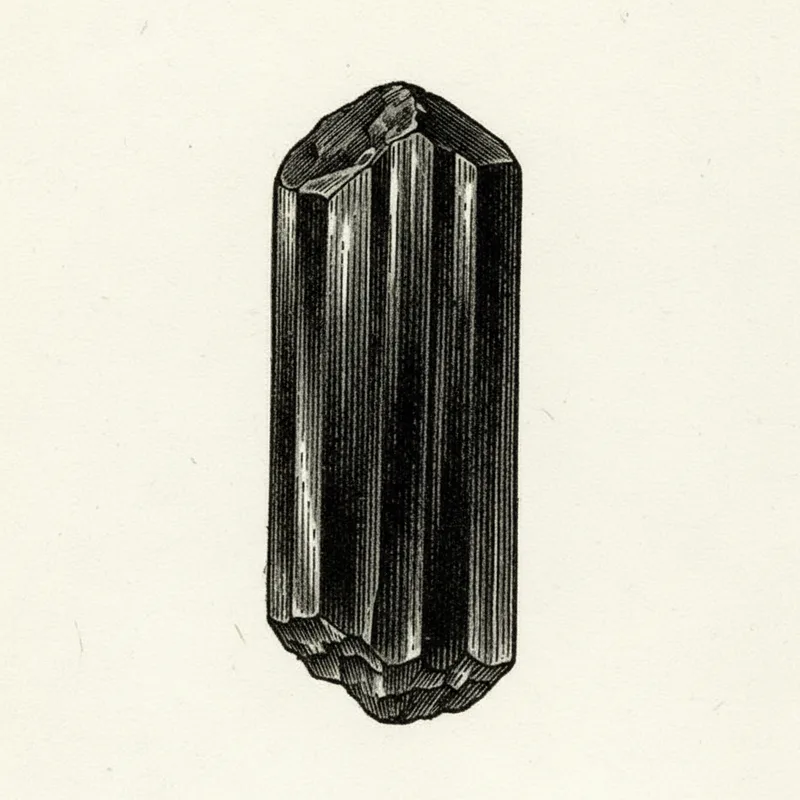
Black tourmaline is schorl, the sodium iron endmember of the tourmaline group and, by a wide margin, the most common tourmaline on Earth. It may account for 95 percent or more of all tourmaline in nature. It grows in long black prisms with striations running the length of the crystal, so a good specimen looks like a bundle of straws fused into stone.
Chemically it is a cyclosilicate, a ring silicate: the silicon and oxygen tetrahedra join into six-member rings rather than the endless three-dimensional framework you get in quartz, and boron is built into the structure. At Mohs 7 it takes daily carry without complaint.
Here is the part that earns it a place in a retrograde post, and then takes the place back. Tourmaline is pyroelectric and piezoelectric. Heat it or squeeze it and it develops an electric charge, a property so striking that early European accounts nicknamed the stone the Ceylonese Magnet after watching it attract and then repel hot ashes. That is a real electrical property of a real mineral, and it has nothing to do with your laptop. A tumbled pebble in a pocket is not generating a charge, and the charge it can generate would not touch an electronic device.
Practitioners traditionally reach for black tourmaline as a protection and boundary stone, kept by the door or on the desk. For three weeks of tradition about guarding your attention, it is the obvious pick. Expect $1 to $5 for a tumbled piece and $5 to $50 for a raw crystal.
Traditional associations: Protection, boundaries, grounding.
2. Amazonite: The Stone Reached for Before Speaking
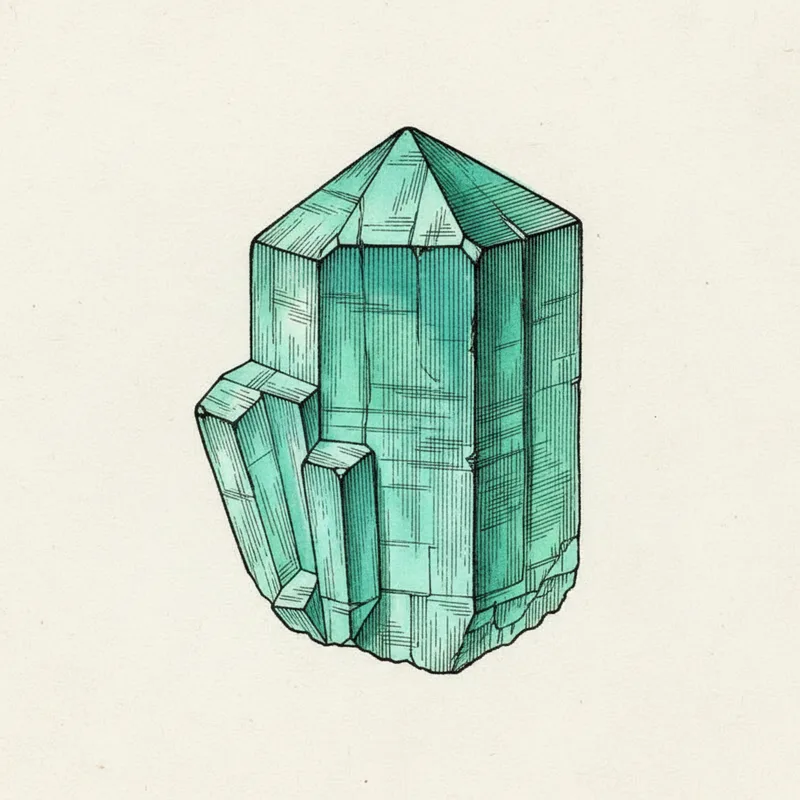
Amazonite is the blue-green variety of microcline, a potassium feldspar (KAlSi₃O₈). It is a tectosilicate, meaning those silicon-oxygen tetrahedra link into a continuous three-dimensional framework, and it crystallizes in the triclinic system at Mohs 6.
Two things the shops usually get wrong. The color is not copper. A 1985 study attributed the blue-green to quantities of lead and water in the feldspar structure, and later work has associated the color with the content of lead, rubidium, and thallium, while a 2010 study implicated divalent iron in the green. And the name is a misnomer. Amazonite is not found in the Amazon Basin at all; Spanish explorers appear to have confused it with a different green mineral from that region, and the misnaming stuck.
The retrograde tradition is mostly about miscommunication, so amazonite is on nearly every list. It is the stone tradition ties to clear speech and to saying the true thing, and the practical version is unremarkable: keep it where the conversation happens. Beside the phone, next to the keyboard.
Feldspar is softer than quartz and splits along cleavage planes, so treat it as a rinse-only stone rather than one you soak. See the water-safe guide before any water contact. Expect $2 to $8 for a tumbled stone, $15 to $100 for a polished piece.
Traditional associations: Clear communication, truth, calm speech.
3. Clear Quartz: The One That Really Does Regulate Electronics
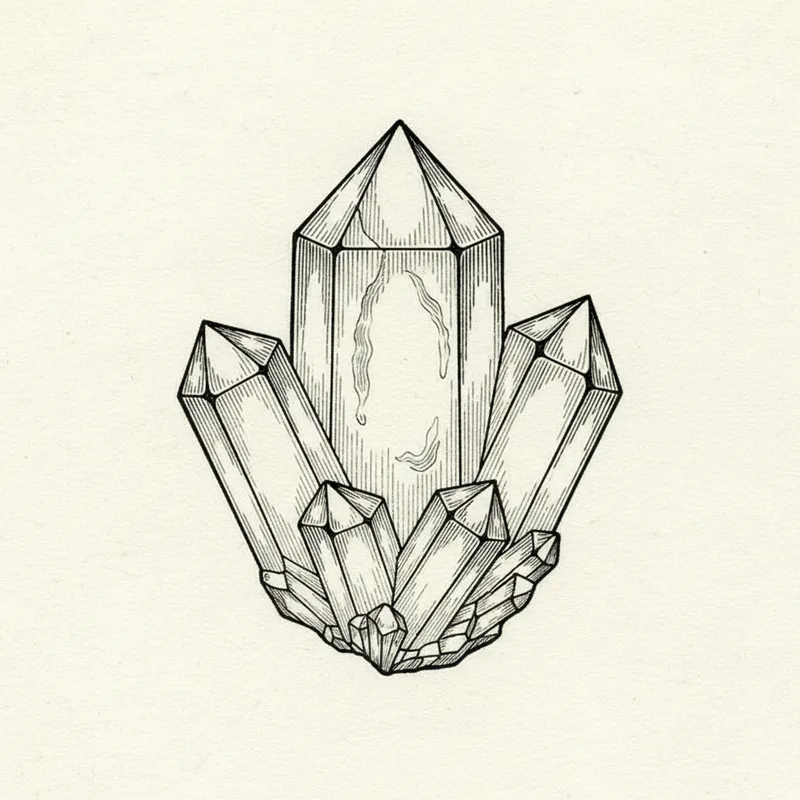
Clear quartz is silicon dioxide, SiO₂, its atoms linked in a continuous framework of silicon-oxygen tetrahedra with each oxygen shared between two of them. It is the mineral that defines 7 on the Mohs scale, and it is the second most abundant mineral in Earth's crust, exceeded only by the feldspars. Ordinary, in the way air is ordinary.
Quartz is also piezoelectric. Apply mechanical stress and it develops an electric potential; run that in reverse with a voltage and a precisely cut quartz crystal vibrates at a fiercely stable frequency. That is how a quartz oscillator keeps time in a wristwatch. So yes, a quartz crystal really does regulate an electronic device. In a factory. Cut to microns and wired into a circuit. The tumbled point on your desk is doing none of it, and no planet is going to change that.
Crystal tradition treats clear quartz as the blank slate of a collection, the stone you pair with a stated intention rather than one with a fixed meaning of its own. In retrograde practice that makes it the stone to set beside the thing you resolved to do. Reread before sending. Expect $1 to $5 for a tumbled stone, $10 to $100 for a crystal point.
Traditional associations: Amplifying and holding an intention, clarity.
4. Fluorite: The Soft One
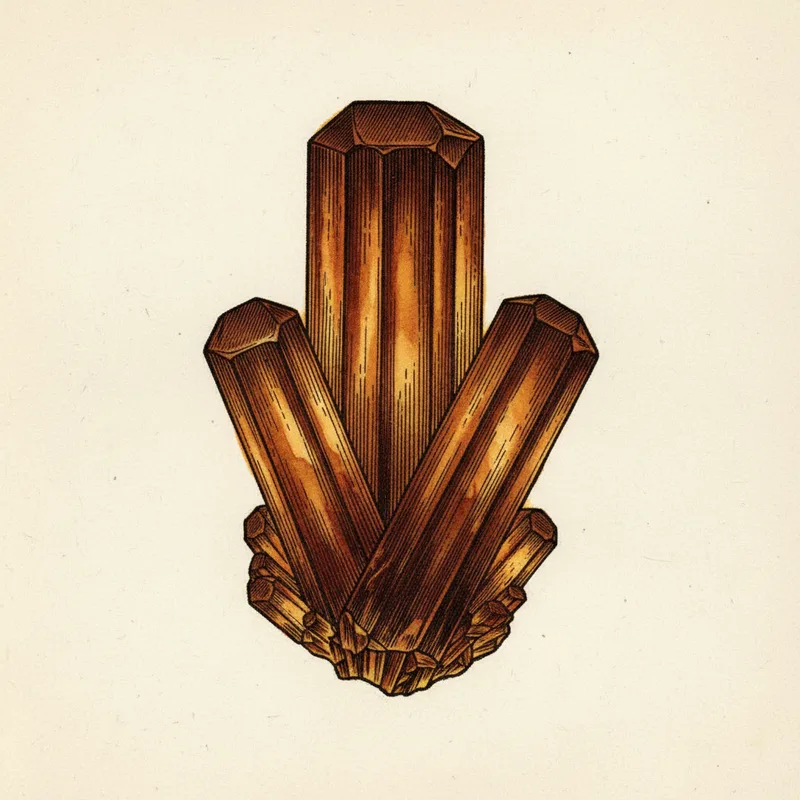
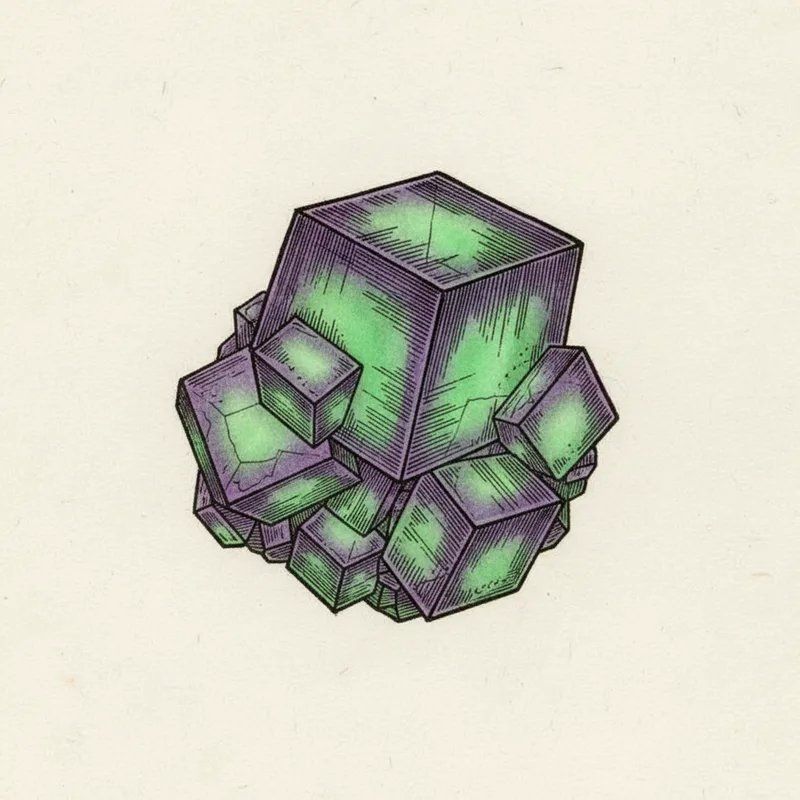
Fluorite is calcium fluoride, CaF₂, and the only stone here that is not a silicate. It is a halide, and it crystallizes cubic with four perfect cleavage planes that produce octahedral fragments, which is why shop trays are full of tidy fluorite octahedra. It defines 4 on the Mohs scale, and in 1852 it gave its name to fluorescence.
Softness plus four cleavage directions means it chips. Fluorite is also the light-sensitive one: its colors come from color centers and trace impurities that strong light can bleach, and some varieties, notably the deep purples and blues, pale noticeably with prolonged sun exposure. Keep it off the windowsill, and see the crystals that fade in sunlight guide for the full list. Calcium fluoride is slightly water-soluble over long exposure too, so a brief rinse is fine and a soak is not.
Crystal tradition ties fluorite to mental clarity and decision-making, which is why it sits on retrograde lists right next to the advice about rereading contracts. Expect $2 to $8 for a tumbled stone, $15 to $150 for a crystal specimen.
Traditional associations: Mental clarity, focus, decisions.
A Practice for the Stretch to August 6
Four stones is three too many. The retrograde window is a short one, and a habit that survives it will be a small habit.
- Pick one stone and one behavior. Amazonite and "reread before sending." Clear quartz and "back up the files on Fridays." Black tourmaline and "do not answer that message tonight." Fluorite and "sleep on the decision."
- Put it where the mistake would happen. Desk, phone charger, keyring, the pocket of the jacket you argue in. A stone in a drawer is decor.
- Use it as a pause cue. Pick it up, feel the weight and the cool of it, breathe once, then do the thing you said you would do. The beat is the whole exercise.
- Set an end date. August 6, when the shadow closes. A practice with a finish line is a practice you will actually keep.
None of this asks you to believe the mineral is working. It asks a small object, deliberately placed, to help a resolution survive contact with an ordinary Tuesday. That is a fair thing to ask of a rock, and it happens to be the reason people have carried them for a very long time.
The retrograde ends in the opening days of Leo season, and it has spent its whole run in Cancer, alongside the Cancer season stones.
Care Notes for These Four
Fluorite is the fragile one on every axis: Mohs 4, four cleavage directions, and a color that can fade in direct sun. Display it on an interior shelf and handle it gently.
Amazonite at Mohs 6 is a feldspar with cleavage planes, so it is a rinse-only stone, not a soaker.
Black tourmaline and clear quartz are both Mohs 7 and take everyday carry easily. Those are the two to put in a pocket. The full rules live on the care guide and the water-safe reference.
FAQ
When does Mercury retrograde end in July 2026? Mercury stations direct on July 23, 2026, at 22:57 Universal Time, which is 6:57 pm Eastern and 3:57 pm Pacific. The retrograde began on June 29, 2026, with Mercury in Cancer.
Why do some calendars say Mercury goes direct on July 24? Because of the clock, not the sky. The station falls at 22:57 UTC on July 23. That is still the 23rd across the Americas, and in Britain and Ireland, but the date has already turned over in Central European Summer Time and points east, so those calendars print July 24. It is one moment with two dates.
When does the Mercury retrograde shadow period end in 2026? August 6, 2026, US time, when Mercury finally clears the degree of Cancer where it first stationed retrograde. The pre-retrograde shadow began on June 12. So the full cycle that astrologers observe runs June 12 through August 6 on a US clock, and June 13 through August 7 in Universal Time.
What crystals are used for Mercury retrograde? Black tourmaline, amazonite, clear quartz, and fluorite appear on almost every list, tied by tradition to protection, clear speech, holding an intention, and mental clarity. None of them acts on the planet or on your devices. They work as prompts for a deliberate pause, which is the useful part of the tradition.
Does black tourmaline protect electronics during Mercury retrograde? No. Tourmaline is pyroelectric and piezoelectric, so it does develop a small electric charge when heated or squeezed, but that has no effect on any device, and there is no scientific evidence that a planet's apparent retrograde motion affects technology in the first place.
Is Mercury retrograde real? The motion is real and the astronomy is well understood. Mercury appears to move backward against the stars three or four times a year, an effect of Earth's viewing angle rather than any change in Mercury's orbit through space. The predicted effects on communication, travel, and electronics are tradition, not physics.
Metaphysical and “healing” associations mentioned here are cultural traditions, not medical advice or scientific fact. Crystals are not a substitute for professional medical care. Full disclaimer.
Crystals in This Article

Keep Reading
Newsletter
Something shiny, now and then
A stone worth knowing, or a fake worth spotting, every so often. No spam.