Quick Facts
Formation & Origin
Platinum is a native element (Pt), a dense, silvery-white noble metal that occurs naturally in the metallic state. Platinum forms in ultramafic igneous rocks, particularly in layered intrusions where dense platinum-group minerals settle out of cooling magma. The Bushveld Complex in South Africa contains the world's largest reserves in thin, laterally extensive layers called 'reefs' (the Merensky Reef and UG2 Reef).
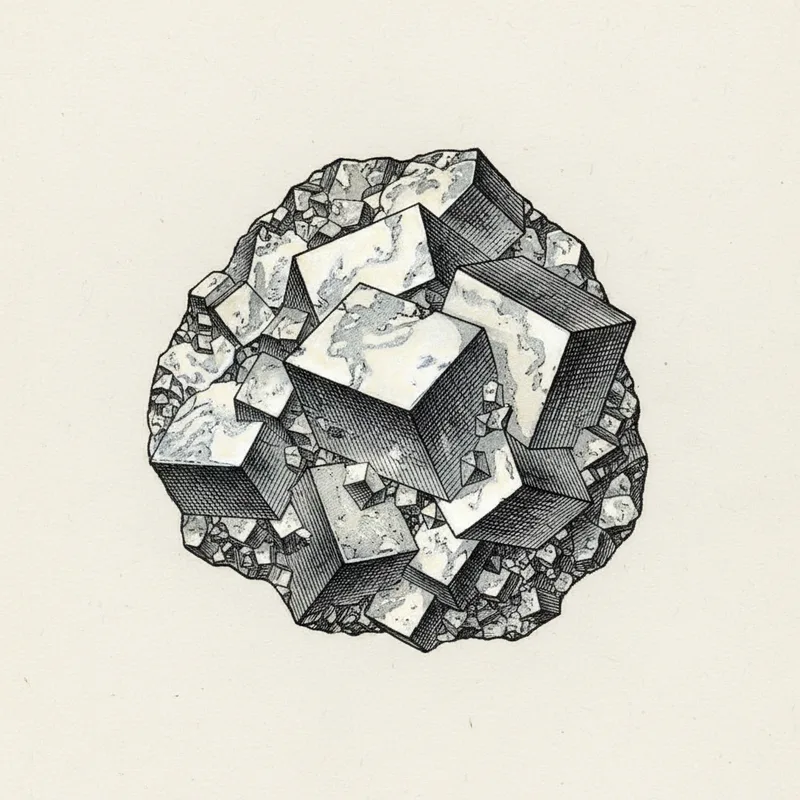
Native platinum occurs as small grains, nuggets, and rarely as cubic or octahedral crystals within dunite, chromitite, and other ultramafic rocks. It's almost always alloyed with other platinum-group elements (palladium, rhodium, iridium, osmium, ruthenium) and often contains iron.
Placer deposits (river gravels) were the original source of platinum. Indigenous peoples in Colombia's Chocó region worked platinum centuries before Europeans encountered it. Spanish conquistadors initially considered it a nuisance metal contaminating their gold, calling it 'platina' (little silver). They couldn't melt it with their technology and sometimes threw it back in the river. It wasn't until the 18th century that European scientists recognized platinum as a distinct, extraordinarily valuable element.
Identification Guide
Native platinum is identified by its silvery-white color, very high specific gravity (21.45, the densest commonly encountered mineral), malleability, and resistance to acids. It doesn't tarnish in air and is only dissolved by aqua regia (a mixture of hydrochloric and nitric acids).
Distinguish from silver (lighter SG of 10.5, tarnishes), white gold (an alloy, not found in nature), and palladium (slightly lighter SG, very similar appearance). Platinum's extreme density is the most practical field test: it feels remarkably heavy for its size.
Spotting Fakes
Platinum nuggets are valuable enough to warrant caution. Lead or tungsten (both dense metals) could be silver-plated to imitate platinum. A density test is the most accessible verification: platinum's SG of 21.45 far exceeds silver (10.5) though tungsten (19.3) comes closer. Acid testing (resistance to nitric acid) and professional XRF analysis provide definitive confirmation. For specimen collectors, provenance documentation from known deposits adds confidence.
Some links in this post go to Amazon and Etsy. Crystal Almanac earns a commission from qualifying purchases at no extra cost to you. Tools recommended here are ones we would use ourselves to run the tests described - the recommendation comes first, the link is downstream of it.
Cultural & Metaphysical Traditions
Presented as cultural traditions, not scientific evidence
Platinum is associated with transformation, endurance, and spiritual evolution in crystal healing. Its extreme rarity and resistance to corrosion connect it to themes of permanence and unwavering commitment. Some practitioners consider it the highest-vibration metal, used for amplifying the properties of other stones. Its role in catalytic converters (transforming pollutants into harmless gases) reinforces alchemical transformation associations.
Metaphysical and “healing” associations are cultural traditions, not medical advice or scientific fact. Crystals are not a substitute for professional medical care.
Where It's Found
World's largest platinum reserves, ~70% of global supply
Second-largest producer, placer deposits first discovered 1820s
Byproduct of nickel mining, significant production
Historical placer deposits, pre-Columbian indigenous use
Price Guide
Good to Know
Scratch test: At hardness 4.5, Platinum can be scratched with a copper coin. Handle gently and keep away from harder stones in your collection.
Global supply: Found in 4 notable locations worldwide, from South Africa to Colombia.
Heft test: With a specific gravity of 21.45, Platinum feels surprisingly heavy for its size. This weight is actually a useful identification tool.
Common Questions
What is the chemical formula of Platinum?
The chemical formula of Platinum is Pt.
What is Platinum's Mohs hardness?
Platinum has a Mohs hardness of 4.5 on the 1 to 10 Mohs scale, which a steel knife will scratch.
Is Platinum a mineral?
Yes. Platinum is a naturally occurring mineral (Native Element) with a definite chemical composition and an ordered crystal structure.
Care & Safety
The water, salt, and sunlight questions people actually ask before cleansing or displaying platinum, answered from its hardness (Mohs 4.5) and chemistry (Pt).
Can Platinum go in water?
Only briefly. A quick rinse under running water is fine for platinum, but do not let it soak or sit submerged. At Mohs 4.5 it is tough enough for a rinse but not for a long soak. Dry it thoroughly afterward.
Can Platinum go in salt water?
No. Platinum can take a brief fresh-water rinse and nothing more, and salt water is harder on it both ways: corrosive while wet, then abrasive as the salt dries into crystals. If it does meet salt water, rinse it with fresh water and dry it promptly.
Sources & References
The mineralogical and gemological data on this page is drawn from and can be cross-checked against these external references.
- WikipediaPlatinum on Wikipedia
- WebmineralPlatinum mineral data (Webmineral)
- Handbook of MineralogyPlatinum (Handbook of Mineralogy, PDF)
Related Minerals
Fellow noble metal, often found in similar placer deposits
Precious metal, much more common
Platinum-group element, often alloyed with platinum
Explore More
Save This Stone
%20could%20be%20silver-plated%20to%20imitate%20platinum.%20Meaning%2C%20properties%20%26%20how%20to%20spot%20fakes%20at%20Crystal%20Almanac.)
Keep this platinum reference handy. Save the card to a Pinterest board and the profile is one tap away.
Save to PinterestNewsletter
Something shiny, now and then
A stone worth knowing, or a fake worth spotting, every so often. No spam.