Is My Sunstone Real? How to Spot Goldstone Glass
Key Takeaway: Most "sunstone" sold at summer craft fairs is goldstone, a man-made copper glass, not a mineral at all. Natural sunstone is a copper-bearing feldspar (Mohs 6.5) whose shimmer comes from aligned metallic platelets. Goldstone gives itself away three ways: a too-uniform, intense sparkle, colors like blue and green that natural sunstone never shows, and round bubbles under a loupe. Here is the market test.
Sunstone is the orange, glittering stone you see in tumbled bowls at every summer craft fair and market. It is also one of the most consistently faked stones out there, because the thing usually sold as sunstone is not sunstone at all. It is goldstone, a manufactured glass. The two look alike at a glance, which is exactly why the substitution is so common at fairs and tourist shops.
This post covers what real sunstone is, what goldstone actually is, and the quick tests that separate them, including a three-second check you can run right at the table.
What Real Sunstone Is
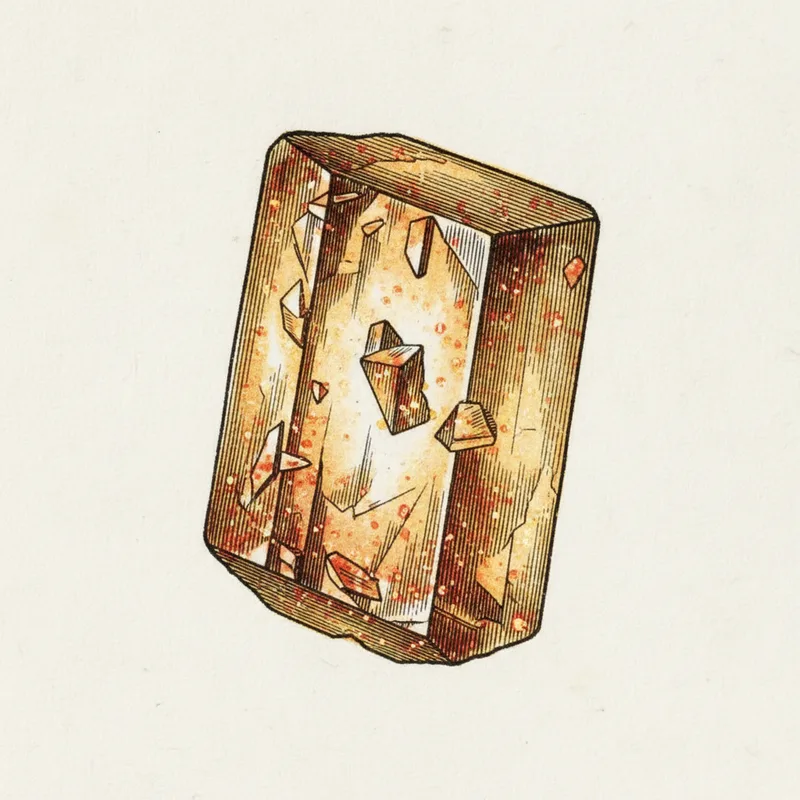
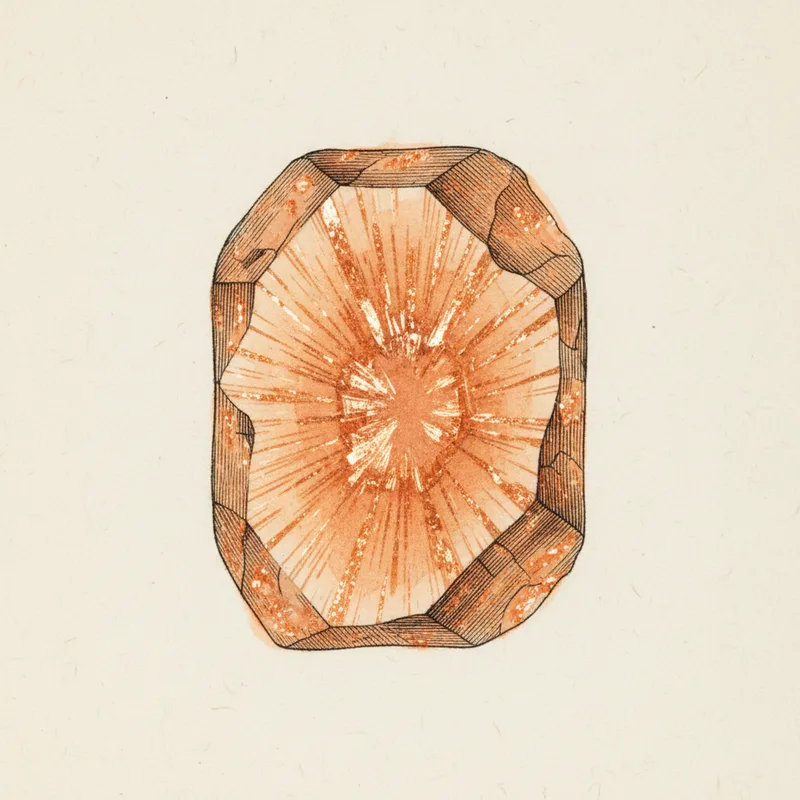
Sunstone is a member of the feldspar family, specifically a plagioclase feldspar with a composition ranging from NaAlSi₃O₈ to CaAl₂Si₂O₈. Its Mohs hardness is 6.5 and its crystal system is triclinic. The shimmer it is known for, called aventurescence or schiller, comes from tiny plates of copper (sometimes hematite or goethite) suspended in the stone and aligned along the same plane. When light hits those aligned platelets they flash together, which is why the sparkle in real sunstone shifts and concentrates as you tilt it.
Natural color runs golden orange, peach, and coppery red. The most valuable material is Oregon sunstone, which carries genuine copper schiller and comes with locality information from a reputable dealer. Real sunstone is a legitimate, buyable stone, so the goal here is not to avoid it but to make sure the sparkly orange thing in your hand is the mineral and not the glass.
What Goldstone Actually Is
Goldstone is glass. It was developed in 17th-century Venice and is made by melting silica with copper salts under controlled conditions so that microscopic copper crystals form and stay suspended as the glass cools. The result is a dense, sparkly material that has been sold as "sunstone," "gold sandstone," and "stardust" for centuries. It is attractive in its own right, and there is nothing wrong with buying goldstone when you know that is what it is. The problem is paying mineral prices for manufactured glass.
Test 1: The Sparkle Is Too Perfect
This is the fastest tell. In goldstone the coppery flecks are evenly distributed throughout, the same density and intensity in every spot, because they were stirred into molten glass. In natural sunstone the schiller is uneven: it concentrates in flashes, follows the internal platelet planes, and there are usually areas with little or no sparkle at all. If the glitter is uniform, dense, and identical across the whole stone, you are almost certainly holding goldstone.
Test 2: The Color Check (The Three-Second Test)
Natural sunstone is golden orange, peach, or coppery red. It is never blue and never green. Goldstone, because it is glass, is manufactured in blue and green too. So the single fastest market test is this: if a "sunstone" is blue or green, it is goldstone, full stop. Even on orange pieces, goldstone tends toward a slightly unnatural, candy-like orange-brown next to the warmer tone of real feldspar.
Test 3: Bubbles Under a Loupe
Carry a 10x jeweler's loupe to markets. Glass, including goldstone, traps round gas bubbles during manufacturing. Natural sunstone has mineral inclusions and the flat, reflective copper platelets, but never spherical bubbles. Spotting even one round bubble means the piece is glass.
Test 4: Schiller Direction
Tilt the stone slowly under a single light. Real sunstone's schiller appears and disappears as the aligned platelets catch the light at specific angles, so the flash moves and shifts across the surface. Goldstone sparkles uniformly from essentially every angle at once, because its copper crystals point every which way. Movement and directionality point to the real stone; flat, all-over glitter points to glass.
Test 5: Hardness and Price
Natural sunstone is Mohs 6.5 and resists a steel knife. Goldstone glass is softer, around 5 to 5.5, and scratches more easily, though this is a destructive test best saved as a last resort on a piece you already own. The simpler signal is price. Genuine Oregon sunstone with strong schiller is valuable, so a bin of large, intensely sparkly "sunstone" tumbles at a couple of dollars each is goldstone by economics alone.
The Market Test, in Order
When you pick up a "sunstone" at a fair:
- Is it blue or green? Goldstone. Done.
- Is the sparkle uniform and identical across the whole stone? Goldstone.
- Loupe it. Round bubbles? Glass.
- Tilt it. Does the flash move and concentrate, or glitter flatly from everywhere? Movement means real.
None of this means you should never buy goldstone. It means you should pay glass prices for glass and mineral prices for the mineral.
FAQ
Is goldstone the same as sunstone? No. Goldstone is man-made glass with copper crystals suspended in it. Sunstone is a natural copper-bearing feldspar. They look similar, but goldstone is not a mineral.
Is all sunstone at craft fairs fake? Not all, but a large share of inexpensive, intensely sparkly "sunstone" at fairs is goldstone. Natural sunstone exists and is sold honestly, especially Oregon material, but the cheap, uniformly glittery pieces are usually glass.
What is the fastest way to tell sunstone from goldstone? Color. Natural sunstone is only ever orange, peach, or coppery red. If a sunstone is blue or green, it is goldstone. For orange pieces, check whether the sparkle moves as you tilt it (real) or glitters uniformly from all angles (glass).
Is real sunstone valuable? Oregon sunstone with strong copper schiller can be valuable and is worth buying from a dealer who provides locality information. Common orange feldspar sunstone is affordable, but it is still a real mineral rather than glass.
Metaphysical and “healing” associations mentioned here are cultural traditions, not medical advice or scientific fact. Crystals are not a substitute for professional medical care. Full disclaimer.
Crystals in This Article
Keep Reading
Newsletter
Something shiny, now and then
A stone worth knowing, or a fake worth spotting, every so often. No spam.