Famous Stone No. 9
Sancy Diamond
55.23 carats Diamond
Quick Facts
The Story
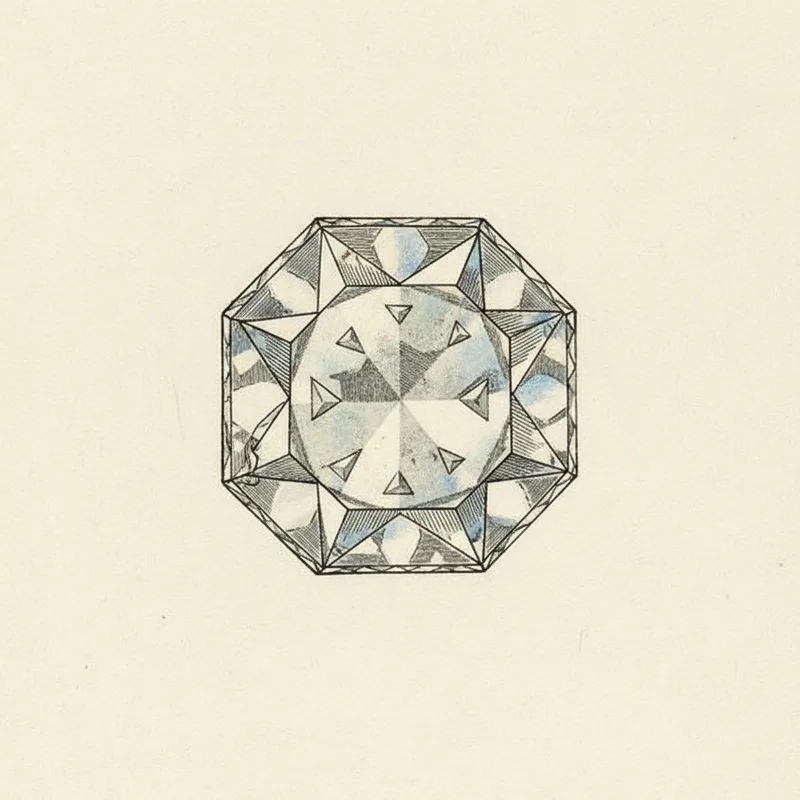
The Sancy is a 55.23 carat pale yellow diamond of Indian origin, cut in an asymmetrical pear shape faceted on both sides, with sixty-eight facets arranged in a star pattern. The cut is attributed to a Parisian lapidary of the second half of the 16th century. It belongs to the French Crown Jewels collection of the Musée du Louvre in Paris, though the Louvre's collection database currently lists it as not on display.
Traditional accounts trace the stone to earlier Burgundian and Portuguese royal jewels, but its first owner identified with certainty is Nicolas de Harlay, seigneur de Sancy, a diplomat and financier to Henry IV of France, who gave the diamond its name. It was sold to King James I of England in the early 17th century and remained with the English crown until Cardinal Mazarin purchased it in 1657. Mazarin bequeathed it to the French Crown in 1661 as one of the eighteen Mazarin diamonds.
The Sancy formed the heart of the fleur-de-lis at the top of the crown used for the coronation of Louis XV in 1722. It was stolen from the Garde-Meuble in September 1792 and recovered two years later, then passed through the Demidov family, Sir Jamsetjee Jeejeebhoy, and the Astor family before the Louvre purchased it from the Astors in 1978 for one million dollars.
Common Questions
How many carats is the Sancy Diamond?
The Sancy Diamond weighs 55.23 carats.
What color is the Sancy Diamond?
The Sancy Diamond is Pale yellow, nearly colorless with a faint yellow-green tint at the rim.
Where did the Sancy Diamond come from?
The Sancy Diamond originates from India.
Where is the Sancy Diamond now?
The Sancy Diamond is currently located at Musée du Louvre, Paris, France.
Ownership Timeline
late 16th century-1604
Nicolas de Harlay, seigneur de Sancy
Diplomat and financier to Henry IV of France; the first owner identified with certainty, and the source of the diamond's name.
1604-1657
English Crown (James I, Charles I, James II)
Sold to King James I and held among the English crown jewels.
1657-1661
Cardinal Mazarin
Purchased the diamond and bequeathed it to the French Crown as one of the eighteen Mazarin diamonds.
1661-1792
French Crown
Set at the top of the crown of Louis XV for his coronation in 1722; stolen from the Garde-Meuble in September 1792 and recovered two years later.
19th century
Demidov family
Russian industrialist collectors, beginning with Nicolas Demidov (1773-1828).
19th century
Sir Jamsetjee Jeejeebhoy
Bombay merchant (1811-1877) recorded by the Louvre as an owner after the Demidovs.
1892-1978
Astor family
Acquired by William Waldorf Astor, first Viscount Astor, in 1892.
1978-present
Musée du Louvre
Purchased from the Astor family for one million dollars; held in the French Crown Jewels collection.
Notable Events
1657
Purchased by Cardinal Mazarin
Mazarin acquired the Sancy and in 1661 bequeathed it to the French Crown among his eighteen Mazarin diamonds.
1722
Set in the coronation crown of Louis XV
The Sancy formed the heart of the fleur-de-lis at the top of the crown used for the coronation.
1792
Stolen during the French Revolution
Taken from the Garde-Meuble between September 11 and 17, 1792, and recovered two years later.
1978
Acquired by the Louvre
The Astor family sold the Sancy to the Louvre for one million dollars, returning it to the French Crown Jewels collection.
Lore & Legend
Documented legend, not historical fact
undated
LoreThe loyal messenger tale
An apocryphal story, repeated in accounts of the stone's history, claims a courier carrying the diamond was murdered and the stone was later recovered from his body. It is recounted as legend, not documented fact.
Sources & References
The provenance and facts on this page are drawn from and can be cross-checked against these sources.
- WikipediaSancy - Wikipedia
- LouvreDiamant dit Le Sancy - Louvre collections
The Mineral Behind It
Diamond →
Formation, identification, and fake-spotting
More Famous Diamonds
Newsletter
Something shiny, now and then
A stone worth knowing, or a fake worth spotting, every so often. No spam.