Quick Facts
The Story
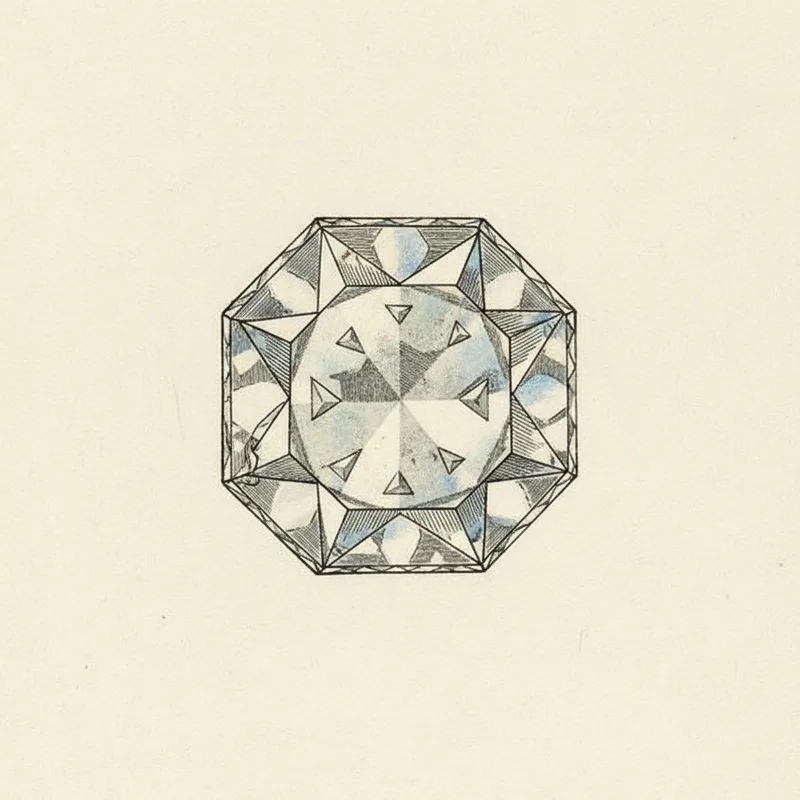
The Regent Diamond is a 140.64 carat cushion brilliant cut diamond, white with a pale blue tint and noted for its exceptional purity. It belongs to the French Crown Jewels collection of the Musée du Louvre in Paris, where it has been held since 1887, though the Louvre's collection database currently lists it as not on display.
The rough stone, weighing about 426 carats, was found in 1698 at the Kollur mines in India. Thomas Pitt, the English governor of Madras, purchased it in 1701 for 48,000 pagodas and had it cut in London between 1704 and 1706, an early showcase of the brilliant cut. In 1717 Philippe II, Duke of Orleans, then Regent of France, bought the stone for the French crown for 135,000 pounds, and it took his title as its name.
The Regent was set in the coronation crowns of Louis XV in 1722 and Louis XVI in 1775. Stolen with the rest of the crown jewels in 1792, it was recovered in 1793, hidden in a Parisian timber structure. Napoleon Bonaparte redeemed it permanently in 1801 and had it mounted on his First Consul's sword. It later adorned the regalia of Louis XVIII, Charles X, and Napoleon III, including a diadem of Empress Eugenie.
Common Questions
How many carats is the Regent Diamond?
The Regent Diamond weighs 140.64 carats.
What color is the Regent Diamond?
The Regent Diamond is White with a pale blue tint.
Where did the Regent Diamond come from?
The Regent Diamond originates from Kollur Mine, near the Krishna River, India.
Where is the Regent Diamond now?
The Regent Diamond is currently located at Musée du Louvre, Paris, France.
Ownership Timeline
c. 1698-1701
Jamchand, Indian merchant
Merchant who held the rough stone after its discovery at the Kollur mines.
1701-1717
Thomas Pitt
English governor of Fort St. George, Madras; bought the rough for 48,000 pagodas and had it cut in London between 1704 and 1706.
1717-1792
Philippe II, Duke of Orleans, for the French Crown
Purchased June 6, 1717 for 135,000 pounds while Regent of France; worn at the coronations of Louis XV and Louis XVI.
1792-1801
Unknown (stolen), then French state
Stolen in the 1792 crown jewels robbery, recovered in 1793, and pawned by revolutionary governments.
1801-1887
Napoleon Bonaparte and the French state
Redeemed permanently by Napoleon in 1801 and set in his First Consul's sword; later in Bourbon and Second Empire regalia.
1887-present
Musée du Louvre
Kept in the French Crown Jewels collection at the Louvre since 1887.
Notable Events
1704-1706
Cut in London
The 426 carat rough was faceted into a cushion brilliant by the cutter Harris, one of the earliest great demonstrations of the brilliant cut.
1717
Purchased by the Regent of France
Philippe II, Duke of Orleans, secured the purchase through the Regency Council on June 6, 1717, and the diamond took his title as its name.
1792
Stolen during the French Revolution
Taken in the robbery of the royal Garde-Meuble; recovered in 1793 hidden in a Parisian timber structure.
1801
Set in Napoleon's sword
Napoleon Bonaparte redeemed the diamond from pawn and had it mounted on his ceremonial First Consul's sword, later his imperial saber.
Sources & References
The provenance and facts on this page are drawn from and can be cross-checked against these sources.
The Mineral Behind It
Diamond →
Formation, identification, and fake-spotting
More Famous Diamonds
Newsletter
Something shiny, now and then
A stone worth knowing, or a fake worth spotting, every so often. No spam.