Quick Facts
The Story
The Hope Diamond is a 45.52 carat blue diamond graded by GIA as Fancy Dark Grayish Blue. It is the centerpiece of the National Gem Collection at the Smithsonian National Museum of Natural History in Washington, D.C., where it has been on display since 1958. The stone originated at the Kollur Mine in the Golconda region of India.
The French gem merchant Jean-Baptiste Tavernier acquired a large blue diamond in India around 1666 and sold it to King Louis XIV of France in 1668. Court jeweler Jean Pitau recut the stone for the king in the 1670s, reducing it to about 67 carats, and it became known as the French Blue. The diamond was stolen along with the rest of the French crown jewels in September 1792 during the French Revolution and disappeared for two decades. A blue diamond of the present size, recut from the French Blue, was documented in the hands of London diamond merchant Daniel Eliason in 1812.
The stone appeared in the 1839 gem catalogue of the London banking family Hope, from which it takes its name. Jeweler Pierre Cartier acquired it in 1910 and sold it in 1911 to American heiress Evalyn Walsh McLean, who owned it until her death in 1947. Harry Winston purchased it from her estate in 1949 and donated it to the Smithsonian Institution on November 10, 1958.
Common Questions
How many carats is the Hope Diamond?
The Hope Diamond weighs 45.52 carats.
What color is the Hope Diamond?
The Hope Diamond is Fancy Dark Grayish Blue.
Where did the Hope Diamond come from?
The Hope Diamond originates from Kollur Mine, Golconda region, India.
Where is the Hope Diamond now?
The Hope Diamond is currently located at Smithsonian National Museum of Natural History, Washington, D.C., United States.
Ownership Timeline
c. 1666-1668
Jean-Baptiste Tavernier
French gem merchant who acquired the rough blue diamond in India and sold it to Louis XIV in 1668.
1668-1792
French Crown (Louis XIV, Louis XV, Louis XVI)
Recut by Jean Pitau into the roughly 67 carat French Blue; held in the crown jewels until the Revolution.
1792-1812
Unknown (stolen)
Taken in the September 1792 crown jewels robbery; recut to its present form during its missing years.
documented 1812
Daniel Eliason
London diamond merchant in whose possession the recut blue diamond was first recorded.
1839-1901
Hope family
Listed in Henry Philip Hope's 1839 gem catalogue; the family name attached to the stone. Lord Francis Hope sold it in 1901.
1910-1911
Pierre Cartier
Acquired the diamond and reset it to court Evalyn Walsh McLean as a buyer.
1911-1947
Evalyn Walsh McLean
American mining heiress and socialite who owned the diamond until her death.
1949-1958
Harry Winston
Purchased the diamond from the McLean estate and toured it in his Court of Jewels exhibition.
1958-present
Smithsonian Institution
Donated by Harry Winston on November 10, 1958; on display at the National Museum of Natural History.
Notable Events
1668
Sold to Louis XIV
Tavernier sold the large blue diamond to the French king, bringing it into the French crown jewels.
1792
Stolen during the French Revolution
The French Blue was taken in the looting of the royal Garde-Meuble in September 1792 and never recovered in its original form.
1812
Recut diamond resurfaces in London
A 45 carat class blue diamond, recut from the French Blue, was documented in the possession of merchant Daniel Eliason.
1958
Donated to the Smithsonian
Harry Winston gave the diamond to the Smithsonian Institution, where it became the most visited object in the collection.
Lore & Legend
Documented legend, not historical fact
early 1900s
LoreCurse legend popularized
A curse legend, developed through late 19th and early 20th century newspaper accounts and used to enhance the stone's marketability, claims misfortune follows its owners. Historians treat it as promotional myth, not documented fact.
Sources & References
The provenance and facts on this page are drawn from and can be cross-checked against these sources.
- WikipediaHope Diamond - Wikipedia
- Encyclopaedia BritannicaHope diamond - Britannica
The Mineral Behind It
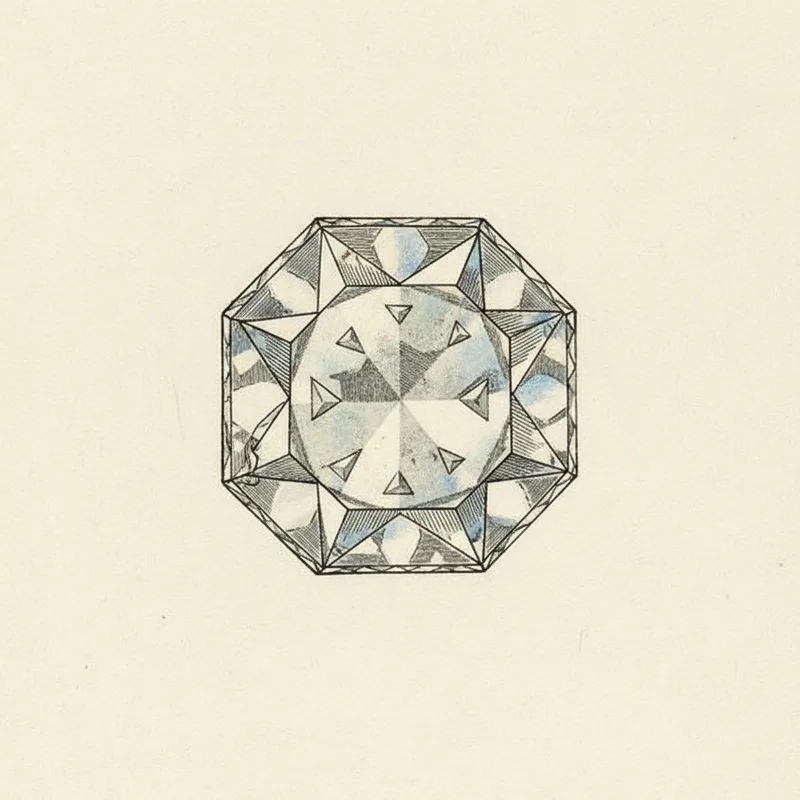
Diamond →
Formation, identification, and fake-spotting
More Famous Diamonds
Newsletter
Something shiny, now and then
A stone worth knowing, or a fake worth spotting, every so often. No spam.