Quick Facts
The Story
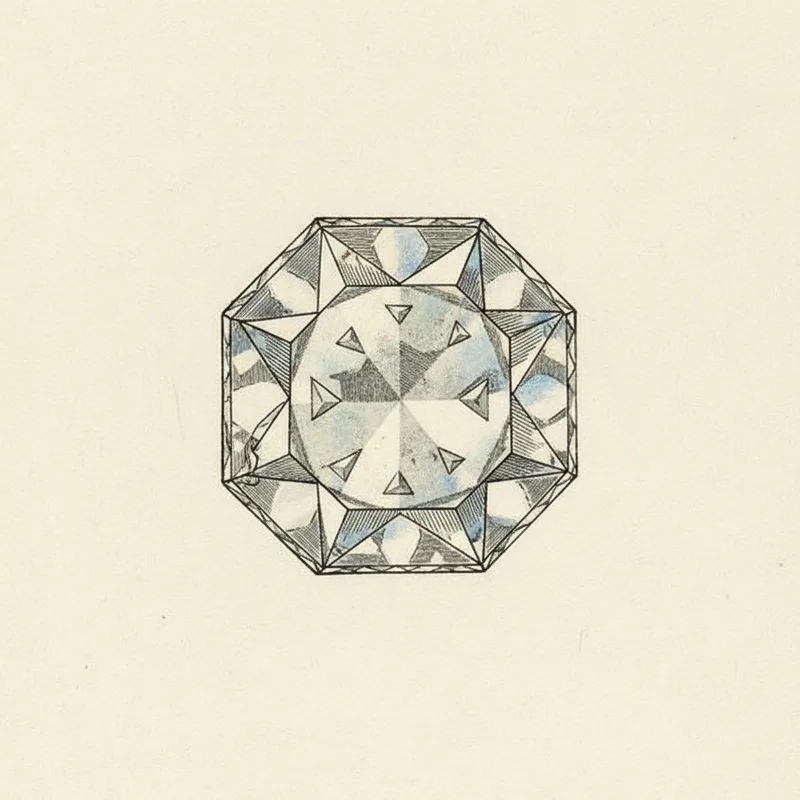
The Orlov is a 189.62 carat diamond of Indian origin, white with a faint bluish-green tinge, cut in a Mughal-style rose form often described as having the shape and proportions of half an egg, with a faceted domed surface and a nearly flat underside. It measures roughly 32 by 35 by 21 millimeters. The stone is mounted at the top of the Russian Imperial Sceptre and is held in the Diamond Fund collection at the Moscow Kremlin.
The diamond is attributed to the Kollur Mine in the Golconda region of India. Its authenticated history begins in the mid-18th century, when it may have belonged to Nader Shah of Persia. A widely repeated legend, which Britannica and other sources present as unverified, claims the stone once served as the eye of a deity in a Hindu temple in southern India and was stolen by a French deserter. Some modern scholars have proposed that the Orlov is identical to the lost Great Mogul diamond described by Tavernier, but this identification remains disputed.
After passing through the hands of an Armenian merchant named Shaffrass, the diamond was purchased in 1774 by Count Grigory Grigoryevich Orlov, who presented it to Empress Catherine II the Great in an unsuccessful attempt to regain her favor. Catherine named the stone after him and had it mounted in the Imperial Sceptre, where it remains.
Common Questions
How many carats is the Orlov Diamond?
The Orlov Diamond weighs 189.62 carats.
What color is the Orlov Diamond?
The Orlov Diamond is White with a faint bluish-green tinge.
Where did the Orlov Diamond come from?
The Orlov Diamond originates from Kollur Mine, Golconda region, India.
Where is the Orlov Diamond now?
The Orlov Diamond is currently located at Diamond Fund, Moscow Kremlin, Russia.
Ownership Timeline
mid-18th century
Possibly Nader Shah of Persia
The earliest authenticated period of the stone's history; ownership by the Persian ruler is reported as probable, not certain.
before 1774
Shaffrass, Armenian merchant
Merchant through whose hands the diamond passed before its sale to Count Orlov.
1774
Count Grigory Grigoryevich Orlov
Purchased the diamond and presented it to Catherine the Great in an unsuccessful bid to regain her favor.
1774-1917
Catherine II and the Russian Crown
Catherine named the stone after Orlov and had it mounted at the top of the Imperial Sceptre in 1774.
Soviet era-present
Diamond Fund, Moscow Kremlin
Held in the Russian state collection of tsarist regalia, still set in the Imperial Sceptre.
Notable Events
1774
Gift to Catherine the Great
Count Grigory Orlov gave the diamond to Empress Catherine II, who named it after him and had it set in the Imperial Sceptre.
disputed
Possible identity with the Great Mogul diamond
Some modern scholars propose the Orlov is the lost Great Mogul diamond described by Tavernier in the 17th century; the identification remains disputed.
Lore & Legend
Documented legend, not historical fact
legendary
LoreThe temple idol eye legend
A legend claims the diamond was the eye of a deity in a Hindu temple in southern India and was stolen by a French deserter who fled to Madras. Reference sources recount this as unverified lore, not documented history.
Sources & References
The provenance and facts on this page are drawn from and can be cross-checked against these sources.
- WikipediaOrlov (diamond) - Wikipedia
- Encyclopaedia BritannicaOrlov diamond - Britannica
The Mineral Behind It
Diamond →
Formation, identification, and fake-spotting
More Famous Diamonds
Newsletter
Something shiny, now and then
A stone worth knowing, or a fake worth spotting, every so often. No spam.