Quick Facts
The Story
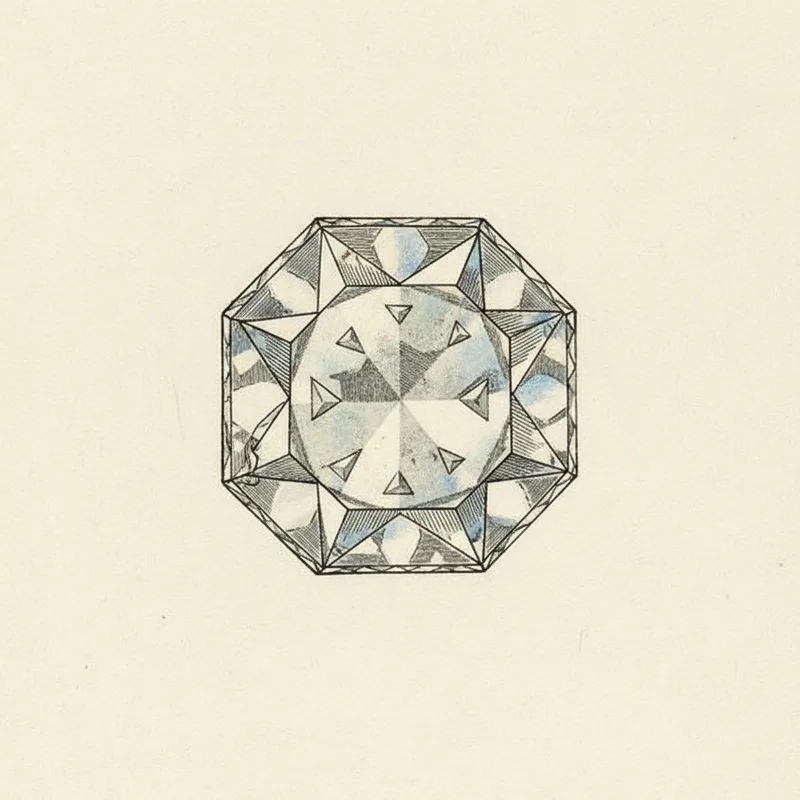
The Koh-i-Noor is a 105.6 carat colorless diamond cut as an oval brilliant. It is set in the Crown of Queen Elizabeth The Queen Mother, made for the 1937 coronation, and is on public display in the Jewel House at the Tower of London.
The stone's early history is heavily mythologized, and centuries of legend have attached it to rulers it cannot be tied to. The first verifiable record dates from the 1740s, when the historian Muhammad Kazim Marvi documented the diamond on the Mughal Peacock Throne, which Nader Shah of Iran had looted from Delhi in 1739. After Nader Shah's assassination in 1747 the stone passed to Ahmad Shah Durrani of Afghanistan, and in 1813 to Maharaja Ranjit Singh of the Sikh Empire in Punjab.
Following the Second Anglo-Sikh War, the 1849 Treaty of Lahore ceded the diamond to Queen Victoria. The transfer remains contested: Maharaja Duleep Singh was a ten year old child at the time, and the governments of India, Pakistan, Iran and Afghanistan have all claimed the stone since 1947. The British government maintains the 1849 treaty made the transfer legal. In 1852 Prince Albert had the diamond recut from about 186 old carats (some sources give 191) to its present 105.6 carats to improve its brilliance.
Common Questions
How many carats is the Koh-i-Noor?
The Koh-i-Noor weighs 105.6 carats.
What color is the Koh-i-Noor?
The Koh-i-Noor is Colorless.
Where did the Koh-i-Noor come from?
The Koh-i-Noor originates from India (Golconda region traditionally cited; early origin undocumented).
Where is the Koh-i-Noor now?
The Koh-i-Noor is currently located at Jewel House, Tower of London, United Kingdom.
Ownership Timeline
to 1739
Mughal emperors
First reliably documented in the 1740s as part of the Peacock Throne in Delhi.
1739-1747
Nader Shah of Iran
Acquired when he sacked Delhi and looted the Peacock Throne.
1747-1813
Ahmad Shah Durrani and the Durrani dynasty, Afghanistan
Passed to the Durranis after Nader Shah's assassination; Shah Shuja Durrani later wore it in a bracelet.
1813-1849
Maharaja Ranjit Singh and successors, Sikh Empire
Ranjit Singh took possession from Shah Shuja in 1813; the child Maharaja Duleep Singh held it last.
1849-present
Queen Victoria and the British Crown
Ceded under the 1849 Treaty of Lahore after the Second Anglo-Sikh War; recut in 1852; now set in the Crown of Queen Elizabeth The Queen Mother.
Notable Events
1739
Nader Shah sacks Delhi
Nader Shah of Iran looted the Mughal Peacock Throne, which held the diamond. A 1740s account of his invasion is the stone's first verifiable record.
1849
Treaty of Lahore cedes the diamond to Britain
After the Second Anglo-Sikh War, the treaty compelled ten year old Maharaja Duleep Singh to surrender the diamond to Queen Victoria along with the Punjab. The legality of the transfer is still disputed.
1852
Recut in London
Prince Albert commissioned a recut by Garrard of London, reducing the stone from about 186 old carats to 105.6 carats over 38 days at a cost of 8,000 pounds.
1947-present
Repatriation claims
India first demanded the diamond's return after independence in 1947, with later claims from Pakistan (1976), Afghanistan (2000) and Iran. The British government has rejected all claims, citing the 1849 treaty.
Lore & Legend
Documented legend, not historical fact
1850s
LoreCurse legend on male owners
A legend that the diamond brings misfortune to male owners spread through the press, originating with the Delhi Gazette and amplified by The Illustrated London News. It is documented lore, not history, and since Victoria the stone has been set only in crowns of queens and queens consort.
Sources & References
The provenance and facts on this page are drawn from and can be cross-checked against these sources.
- WikipediaKoh-i-Noor
- Encyclopaedia BritannicaKoh-i-noor (diamond)
The Mineral Behind It
Diamond →
Formation, identification, and fake-spotting
More Famous Diamonds
Newsletter
Something shiny, now and then
A stone worth knowing, or a fake worth spotting, every so often. No spam.