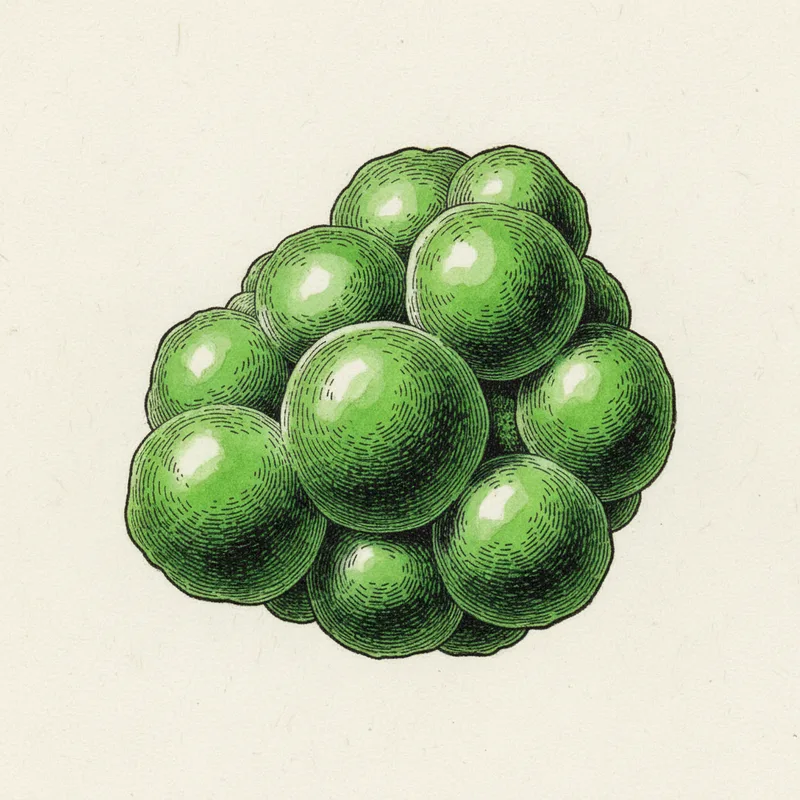
Variscite
The Healer's Heart Stone
Affiliate links. We may earn a commission, at no cost to you.
Quick Facts
Formation & Origin
Variscite is a hydrated aluminum phosphate that forms in the near-surface oxidation zone where phosphate-rich solutions (often derived from bone, guano, or organic material) interact with aluminum-bearing rocks. It typically fills fractures and cavities in sedimentary rocks as massive, botryoidal, or nodular deposits.
The finest variscite comes from Utah, where nodules of vivid apple-green material form in limestone and shale. Utah variscite's intense green color comes from trace chromium - the same element that colors emerald and chrome tourmaline. The saturation and evenness of color in top Utah material rivals turquoise in beauty.
Variscite has been used as a gemstone for thousands of years - prehistoric inhabitants of the Iberian Peninsula mined variscite for beads and ornaments. It's been found in Neolithic burial sites across Europe, indicating it held significant cultural value long before modern mineralogy identified it as a distinct species.
Identification Guide
Variscite is identified by its apple-green to mint-green color, waxy to vitreous luster, and moderate hardness (4-5). It's softer than turquoise (5-6) and has a slightly different green tone - variscite tends toward true green or yellow-green, while turquoise leans blue-green.
Distinguish from turquoise (harder, typically more blue, different matrix pattern), chrysoprase (harder at 7, chalcedony not phosphate), and green-dyed howlite (dye concentrates in cracks). Variscite often occurs with characteristic black or brown matrix veining.
Spotting Fakes
Variscite is sometimes sold as turquoise (which commands higher prices). The color difference is the main tell - variscite is greener while turquoise is bluer. Dyed howlite and dyed magnesite are also sold as variscite. The hardness test helps: variscite is softer (4-5) than turquoise (5-6). Some material sold as 'green turquoise' is actually variscite. For expensive pieces, lab testing confirms identity.
Some links in this post go to Amazon and Etsy. Crystal Almanac earns a commission from qualifying purchases at no extra cost to you. Tools recommended here are ones we would use ourselves to run the tests described - the recommendation comes first, the link is downstream of it.
Cultural & Metaphysical Traditions
Presented as cultural traditions, not scientific evidence
Variscite's Neolithic use as burial goods suggests it held spiritual significance in prehistoric European cultures. Modern practitioners associate it with emotional healing, calming anxiety, and heart-centered compassion. Its gentle green color connects it to nature and growth. Variscite is less well-known than turquoise in the crystal market, which gives it an 'insider' appeal among knowledgeable collectors.
Metaphysical and “healing” associations are cultural traditions, not medical advice or scientific fact. Crystals are not a substitute for professional medical care.
Where It's Found
Premier source, finest green material
Good quality material
Type locality, named after Variscia (old name for region)
Some gem-quality material
Price Guide
Good to Know
Scratch test: At hardness 4.5, Variscite can be scratched with a copper coin. Handle gently and keep away from harder stones in your collection.
Global supply: Found in 4 notable locations worldwide, from United States to Brazil.
Heft test: Variscite has average mineral density (2.57). It feels about as heavy as you'd expect from a stone its size.
Common Questions
What is the chemical formula of Variscite?
The chemical formula of Variscite is AlPO₄·2H₂O.
What is Variscite's Mohs hardness?
Variscite has a Mohs hardness of 4.5 on the 1 to 10 Mohs scale, which a steel knife will scratch.
Is Variscite a mineral?
Yes. Variscite is a naturally occurring mineral (Phosphate Group) with a definite chemical composition and an ordered crystal structure.
Care & Safety
The water, salt, and sunlight questions people actually ask before cleansing or displaying variscite, answered from its hardness (Mohs 4.5) and chemistry (AlPO₄·2H₂O).
Can Variscite go in water?
Only briefly. A quick rinse under running water is fine for variscite, but do not let it soak or sit submerged. At Mohs 4.5 it is tough enough for a rinse but not for a long soak. Dry it thoroughly afterward.
Can Variscite go in salt water?
No. Variscite can take a brief fresh-water rinse and nothing more, and salt water is harder on it both ways: corrosive while wet, then abrasive as the salt dries into crystals. If it does meet salt water, rinse it with fresh water and dry it promptly.
Sources & References
The mineralogical and gemological data on this page is drawn from and can be cross-checked against these external references.
- WikipediaVariscite on Wikipedia
- WebmineralVariscite mineral data (Webmineral)
- Handbook of MineralogyVariscite (Handbook of Mineralogy, PDF)
Related Minerals
Explore More
Save This Stone

Keep this variscite reference handy. Save the card to a Pinterest board and the profile is one tap away.
Save to PinterestNewsletter
Something shiny, now and then
A stone worth knowing, or a fake worth spotting, every so often. No spam.