The Surprisingly Recent History of Crystal Healing
Key Takeaway: Crystal healing as most people encounter it today, the idea of stones assigned to chakras, cleansed under moonlight, chosen for their vibrational energy, is not an unbroken practice stretching back to ancient Egypt. Individual civilizations really did prize specific stones for specific reasons, but the synthesized system sold in crystal shops today came together in a specific place and time: the New Age movement of the 1970s and 1980s. Here's the actual timeline, and where the older traditions fit into it.
Ask most people where crystal healing comes from and you'll get some version of "ancient civilizations." Egypt, usually. Sometimes Atlantis. The implication is always the same: a continuous practice, handed down through millennia, that modern crystal shops merely inherited.
The real history is more interesting than that, and less tidy. Older cultures absolutely used stones for protection, status, and ritual. But the specific system now called "crystal healing," a coherent practice of chakra placements, energy cleansing, and metaphysical properties assigned stone by stone, is a modern synthesis. It was assembled, largely from scratch, in the second half of the 20th century.
What the older traditions actually did
There's no shortage of real history here, which is exactly why the myth of an unbroken lineage is so easy to believe.
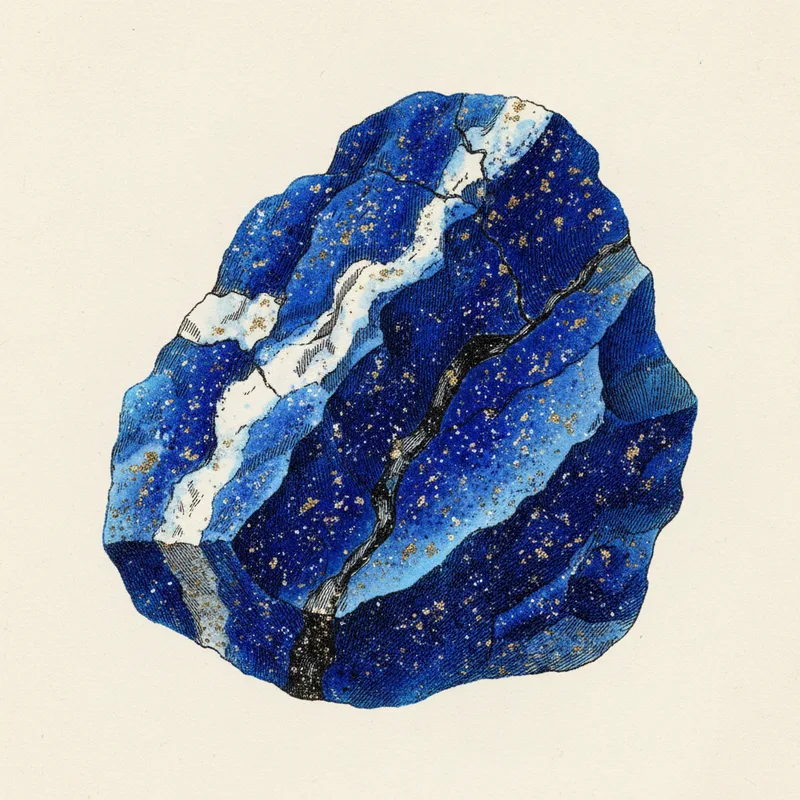
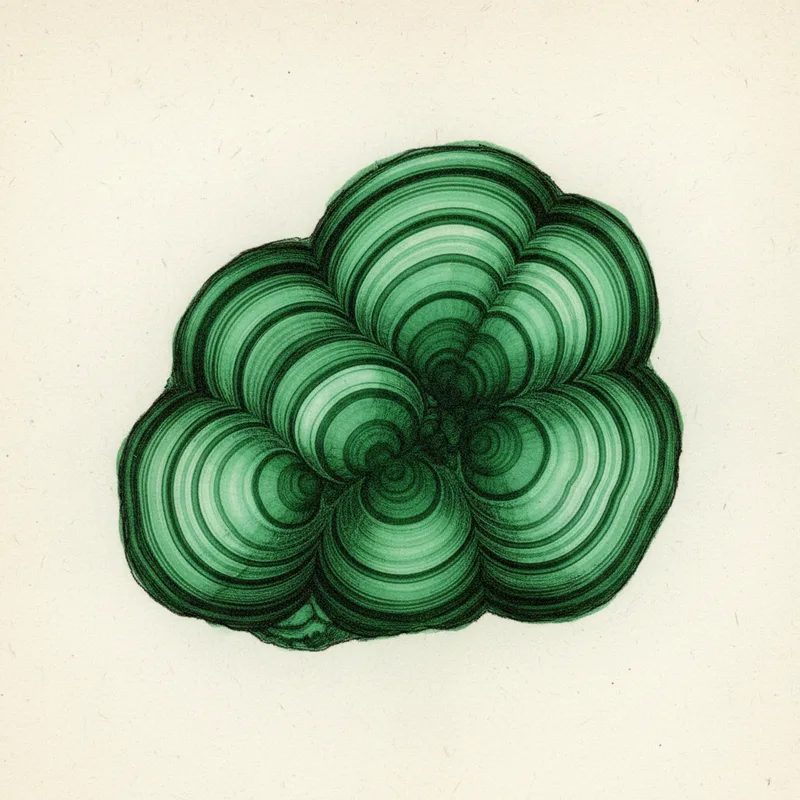
Ancient Egyptians ground lapis lazuli and malachite into cosmetics and carved carnelian into protective amulets, largely for use in burial and religious ritual rather than as a wellness system a person would use day to day. Roman soldiers wore engraved gemstone rings tied to specific gods and planets. Chinese tradition has valued jade for thousands of years, though as a marker of status, virtue, and ceremony more than a healing modality in the way the term is used now.
The oldest thread that survives into the present system is the Breastplate of Aaron, described in Exodus 28:17-20: a ceremonial garment set with twelve stones, one for each of the twelve tribes of Israel. By the first century CE, the historian Josephus had connected those twelve stones to the twelve months of the year and the twelve zodiac signs, a mapping that stayed loose and kept shifting for the next 1,800 years. It's the same lineage behind the modern birthstone chart, and behind the case each sign makes for its own stones in our zodiac crystal guide.
What none of this amounts to is a single system of energy healing that traveled intact from Alexandria to a crystal shop counter. These were separate traditions, in separate cultures, doing separate jobs: status, protection, religious symbolism, medicine (Greek physicians prescribed ground hematite for blood disorders on the strength of the name alone, "hematite" literally means "bloodstone"). None of them describe chakras. None of them describe cleansing a stone's energy in moonlight. That vocabulary comes from somewhere else.
Where the modern system actually starts: Theosophy
The direct ancestor of today's crystal healing is the Theosophical Society, founded in 1875 by Helena Blavatsky. Theosophy blended Western esotericism with (often loosely interpreted) Hindu and Buddhist concepts, including the chakra system, and packaged them for a Western audience hungry for an alternative to both mainstream religion and cold materialism.
This is the point worth sitting with: chakras, in the specific seven-point, color-coded form used on crystal packaging today, entered Western metaphysical culture through Theosophy in the late 19th and early 20th centuries, not through an unbroken line from the Vedas, and certainly not from Egypt. Theosophy supplied the vocabulary and the framework. It did not yet include crystals as a central healing tool.
The actual assembly: New Age, 1970s-1980s
The pieces came together during the New Age movement. Scholars disagree on the exact starting gun (the historian J. Gordon Melton points to the early 1970s, while Wouter Hanegraaff traces the movement's emergence to the late 1970s), but there's no real disagreement that it reached full development in the 1980s, complete with dedicated retail stores, conventions, and its own music genre.
Crystal healing specifically was not a holdover from that earlier esoteric tradition. It was a New Age-era invention. As even Wikipedia's own overview of the New Age movement puts it, "this practice was not common in esotericism prior to their adoption in the New Age milieu," meaning the version of crystal healing sold today did not exist, in the form we'd recognize, before New Age practitioners built it.
A big part of that building happened in print. Katrina Raphaell's "Crystal Enlightenment," published in 1985 as the first volume of her Crystal Trilogy, is widely credited as a foundational text of the modern movement. She opened the Crystal Academy of Advanced Healing Arts the following year and is credited with developing "the laying on of stones," the practice of placing crystals on the body's chakra points that anyone who has had a crystal healing session would recognize instantly. Her books, along with others that followed through the 1980s and 1990s, took Theosophy's chakra framework, added ideas borrowed loosely from the myth of Atlantis, and built the specific, stone-by-stone system of properties and placements that New Age shops began selling alongside crystals themselves.
By the late 1980s, crystals were among the most popular items at New Age conventions and the dedicated shops that had sprung up to serve that audience. The system had gone from a handful of authors' original ideas to a retail category in under a decade.
So is it "fake"?
Not in any way that matters for how you should think about it. This isn't a story about a hoax. It's a story about a modern spiritual and wellness tradition, assembled by real people (Blavatsky, Raphaell, and many others) who were sincerely trying to build a coherent practice out of borrowed and reinterpreted pieces. New traditions get built out of old materials all the time; that's how most traditions actually form, closer up than their believers usually think.
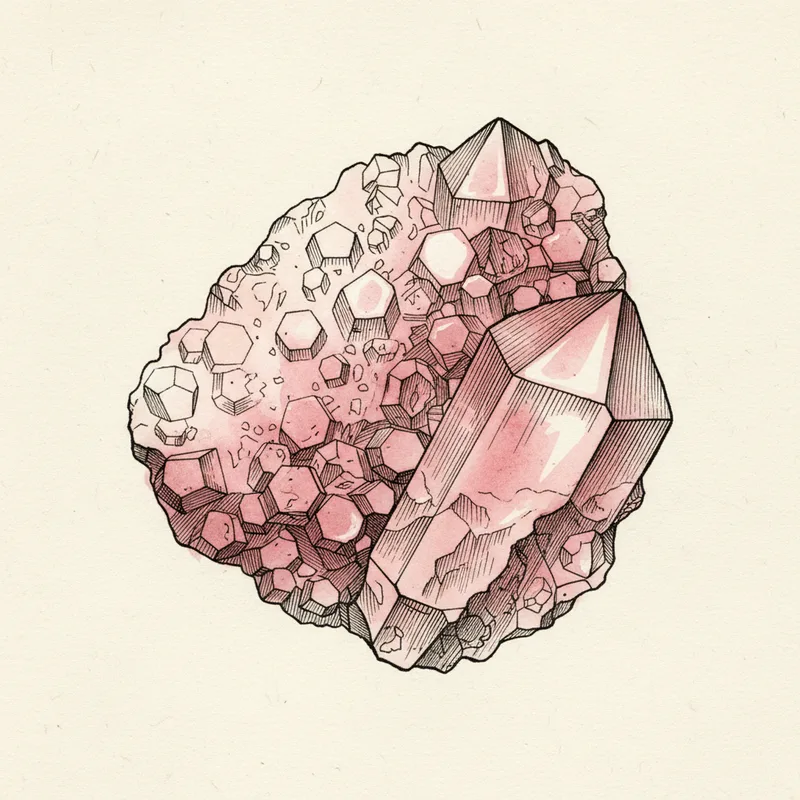
What it isn't is ancient. The specific claim that Cleopatra cleansed her rose quartz under the full moon, or that pharaohs practiced chakra-based crystal placement, doesn't hold up, because chakras as commonly understood in the West are a 19th-century import and crystal-specific healing protocols are a 20th-century invention. The stones are ancient. The system for using them this way is not.
That doesn't make the practice meaningless to the millions of people who find comfort in it today. For a closer look at what's actually going on when someone reports feeling calmer holding a stone, and what the research does and doesn't support, see our skeptic's honest guide to healing crystals. This is presented as a matter of cultural and historical record, not as scientific or medical evidence, and none of it should be read as health or medical advice.
FAQ
Is crystal healing an ancient practice? The use of specific stones for protection, status, and ceremony is ancient and well documented across many cultures. The specific practice known as crystal healing today, with chakra placements and stone-by-stone metaphysical properties, is a modern synthesis that came together during the New Age movement of the 1970s and 1980s.
Where do chakras fit into crystal history? Chakras entered Western spiritual culture through the Theosophical Society, founded in 1875 by Helena Blavatsky, which adapted the concept from Hindu and Buddhist sources for a Western audience. Crystals were not yet a central part of that early framework.
Who popularized modern crystal healing? Katrina Raphaell's 1985 book "Crystal Enlightenment," the first in her Crystal Trilogy, is widely credited as a foundational text of the modern crystal healing movement. She developed "the laying on of stones" and opened the Crystal Academy of Advanced Healing Arts in 1986.
Does the New Age origin of crystal healing mean it doesn't work? That's a separate question from its history. This piece is about where the practice came from, not whether it's effective. For a look at what the science and psychology actually say about why people report benefits, see our skeptic's honest guide.
What's the difference between birthstones and crystal healing traditions? Birthstones trace to the Breastplate of Aaron and its later zodiac associations, standardized commercially by the jewelry industry in 1912. Crystal healing is a separate, more recent tradition focused on energy and chakra work rather than monthly gemstone assignments. See our full birthstones by month reference for that history.
Metaphysical and “healing” associations mentioned here are cultural traditions, not medical advice or scientific fact. Crystals are not a substitute for professional medical care. Full disclaimer.
Crystals in This Article
Keep Reading
Newsletter
Something shiny, now and then
A stone worth knowing, or a fake worth spotting, every so often. No spam.