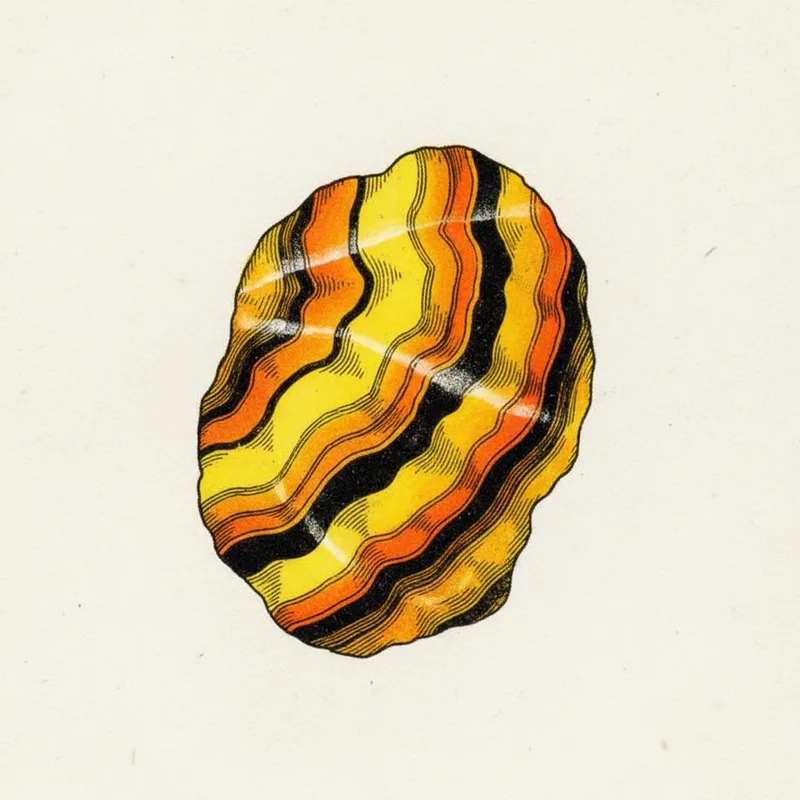
Bumble Bee Jasper
The Radiant Stone
Affiliate links. We may earn a commission, at no cost to you.
Quick Facts
Formation & Origin
Bumble bee jasper is not a true jasper but a banded volcanic rock, a mix of aragonite, sulfur, and arsenic-bearing minerals deposited around fumaroles. Bumble bee jasper isn't jasper at all - it's a volcanic rock composed of sulfur, calcium carbonate (aragonite), and various arsenic-bearing minerals including realgar and orpiment. It forms at fumaroles (volcanic gas vents) on the active volcano Mount Papandayan in West Java, Indonesia.
The vivid yellow bands are sulfur. The orange-red bands are realgar (arsenic sulfide). The black bands are pyrite or manganese oxide. The white-gray areas are calcium carbonate. This multicolored banding occurs as different minerals precipitate from hot volcanic gases and fluids at the fumarole vent, creating layered deposits.
IMPORTANT SAFETY NOTE: Bumble bee jasper contains arsenic-bearing minerals (realgar and orpiment). Polished pieces are safe to handle briefly and display, but do not make gem elixirs (water infusions), do not inhale dust when cutting, and wash hands after handling. The arsenic content is locked in the mineral structure when the stone is intact, but becomes hazardous if the stone is ground, dissolved, or heated.
Identification Guide
Bumble bee jasper is identified by its vivid yellow, orange, and black banding pattern - the color intensity and contrast are unlike any true jasper. The yellow (sulfur) is brighter and more saturated than any silicate mineral. At hardness 5, it's softer than true jasper (7).
Distinguish from actual jasper varieties (harder, different composition), tiger iron (red, gold, and black but metallic), and painted stones (genuine bumble bee jasper's colors extend through the stone). The sulfur component may have a faint sulfurous smell when freshly cut.
Spotting Fakes
Bumble bee jasper is distinctive enough and affordable enough that faking is uncommon. The main issues are: 1) the misnomer 'jasper' (it's not jasper), 2) failure to disclose arsenic content, and 3) some sellers marketing other yellow-banded stones under the name. Genuine bumble bee jasper comes only from Mount Papandayan, Indonesia. The vivid sulfur-yellow color is essentially impossible to replicate with dyes on actual jasper.
Some links in this post go to Amazon and Etsy. Crystal Almanac earns a commission from qualifying purchases at no extra cost to you. Tools recommended here are ones we would use ourselves to run the tests described - the recommendation comes first, the link is downstream of it.
Cultural & Metaphysical Traditions
Presented as cultural traditions, not scientific evidence
Bumble bee jasper entered the crystal market in the 2010s and has no ancient traditions. Modern practitioners associate it with creative energy, self-confidence, and manifestation - drawing on the vivid warm colors and the bee symbolism of productive work and community. The volcanic origin connects it to transformation and primal Earth energy. However, practitioners should be aware of the arsenic content and exercise appropriate caution. This stone should never be used in gem elixirs or placed in drinking water.
Metaphysical and “healing” associations are cultural traditions, not medical advice or scientific fact. Crystals are not a substitute for professional medical care.
Where It's Found
The only known source, active volcano
Price Guide
Good to Know
Scratch test: At hardness 5, Bumble Bee Jasper resists scratching from a knife but can be scratched by quartz. Best for pendants and earrings rather than rings.
Global supply: Found at only one location on Earth - Indonesia. Supply is inherently limited.
Heft test: With a specific gravity of 2.40, Bumble Bee Jasper feels lighter than most minerals. This lightness can help identify it.
Common Questions
What is the chemical formula of Bumble Bee Jasper?
The chemical formula of Bumble Bee Jasper is Variable (calcium carbonate + sulfur + arsenic minerals).
What is Bumble Bee Jasper's Mohs hardness?
Bumble Bee Jasper has a Mohs hardness of 5 on the 1 to 10 Mohs scale, which a steel knife will scratch.
Is Bumble Bee Jasper a mineral?
Not quite. Bumble Bee Jasper is a rock (a naturally occurring mixture of minerals), not a single mineral species.
Care & Safety
The water, salt, and sunlight questions people actually ask before cleansing or displaying bumble bee jasper, answered from its hardness (Mohs 5) and chemistry (Variable (calcium carbonate + sulfur + arsenic minerals)).
Can Bumble Bee Jasper go in water?
Not recommended. Bumble Bee Jasper can react with water, draw in moisture, or break down when it gets wet, so skip the rinse. Wipe it with a dry or barely damp cloth and dry it right away. Important: bumble bee jasper contains arsenic minerals. Never use it for gem elixirs or crystal-infused water, and wash your hands after handling it.
Can Bumble Bee Jasper go in salt water?
No. Bumble Bee Jasper is best kept away from water altogether, and salt water is the harsher version of that problem: the dissolved salt is corrosive while the stone is wet, then leaves gritty crystals behind in cracks and crevices as it dries.
Explore More
Save This Stone

Keep this bumble bee jasper reference handy. Save the card to a Pinterest board and the profile is one tap away.
Save to PinterestNewsletter
Something shiny, now and then
A stone worth knowing, or a fake worth spotting, every so often. No spam.