Famous Stone No. 6
La Peregrina
55.95 carats (223.8 grains) as found; 203.84 grains (about 50.96 carats) after 1913 cleaning and drilling Natural Pearl
Quick Facts
The Story
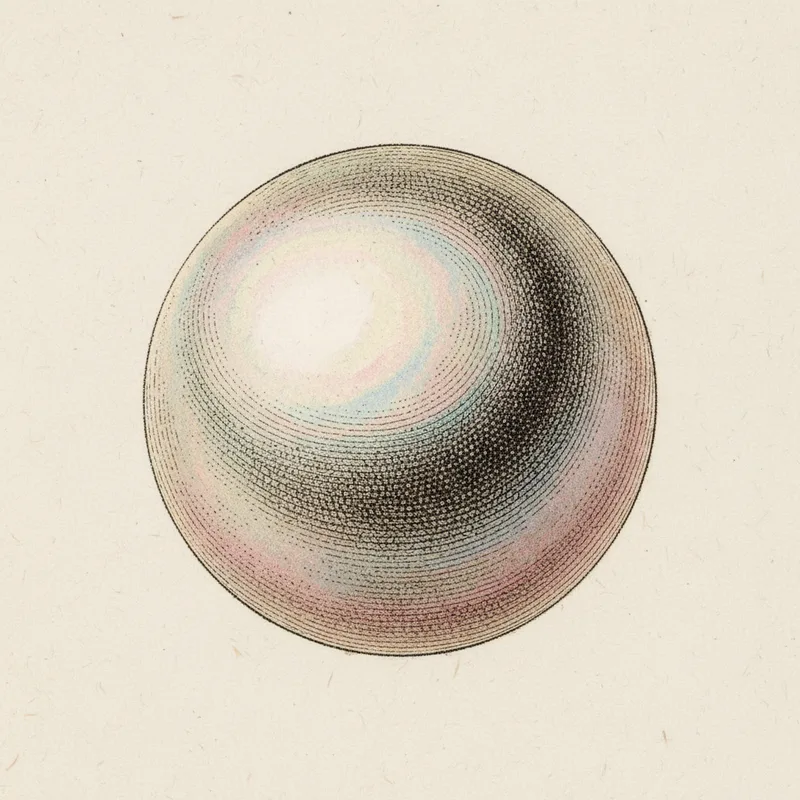
La Peregrina, Spanish for the Pilgrim or the Wanderer, is a pear shaped natural saltwater pearl found in the Gulf of Panama in the sixteenth century. As found it weighed 223.8 grains (55.95 carats); cleaning and drilling in 1913 reduced it to 203.84 grains, about 50.96 carats. It sold at Christie's New York in December 2011 for 11.8 million dollars, a record price for a pearl jewel at auction, and is now in a private collection.
The documented provenance begins with the Spanish crown. The pearl was presented to King Philip II of Spain, who made it part of the Spanish Crown Jewels, and it appears in royal inventories for more than 200 years. Queens Margaret of Austria and Elisabeth of France wore it, as recorded in portraits by Velazquez. Joseph Bonaparte took the pearl with him when he left Spain after his 1808-1813 rule and bequeathed it to the future Napoleon III, who later sold it to James Hamilton, Duke of Abercorn. The Hamiltons kept it until 1969, when Richard Burton bought it for 37,000 dollars at Sotheby's London for Elizabeth Taylor, who had Cartier set it in a necklace of pearls, diamonds, and rubies.
One famous chapter is contested. Tradition holds that Philip II gave the pearl to Queen Mary I of England and that it appears in her portraits, but La Peregrina is first recorded in 1579, 21 years after Mary's death, and the pearl in her portraiture is now identified as a different jewel.
Common Questions
How many carats is the La Peregrina?
The La Peregrina weighs 55.95 carats (223.8 grains) as found; 203.84 grains (about 50.96 carats) after 1913 cleaning and drilling.
What color is the La Peregrina?
The La Peregrina is White.
Where did the La Peregrina come from?
The La Peregrina originates from Gulf of Panama (Pearl Islands).
Where is the La Peregrina now?
The La Peregrina is currently located at Private collection (sold at Christie's New York, December 2011).
Ownership Timeline
1579-1808
Spanish Crown (Philip II and successors)
Crown Jewel recorded in royal inventories for over 200 years; worn by Queens Margaret of Austria and Elisabeth of France in Velazquez portraits.
1808-1860s
Joseph Bonaparte, then the future Napoleon III
Joseph Bonaparte took the pearl on leaving Spain and bequeathed it to Louis Napoleon, later Napoleon III.
1860s-1969
Hamilton family (Dukes of Abercorn)
Napoleon III sold the pearl to James Hamilton, Duke of Abercorn; the family held it until the 1969 sale.
1969-2011
Elizabeth Taylor
Richard Burton bought it at Sotheby's London for 37,000 dollars as a Valentine's Day gift; Taylor commissioned a Cartier necklace setting.
2011-present
Private collector
Sold at Christie's New York in December 2011 for 11.8 million dollars as part of the Elizabeth Taylor collection sale.
Notable Events
1579
First record under the Spanish crown
The pearl is first recorded in 1579 and was elevated to the Spanish Crown Jewels by Philip II, after which it appears in royal inventories for more than 200 years.
1913
Cleaning reduces the weight
Cleaning, polishing, and drilling work in 1913 reduced the pearl from 223.8 grains to 203.84 grains.
1969
Richard Burton buys it for Elizabeth Taylor
Burton purchased the pearl for 37,000 dollars at Sotheby's London and gave it to Taylor, who had Cartier design a pearl, diamond, and ruby necklace around it.
2011
Record sale at Christie's
The Cartier necklace containing La Peregrina sold for 11.8 million dollars at Christie's New York, far above its 2 to 3 million dollar estimate.
Lore & Legend
Documented legend, not historical fact
16th century
LoreDiscovery account and a freed slave
A historical account holds that the pearl was found in Panama by an enslaved worker who was rewarded with his liberty. The account is documented but its details are traditional.
1554
LoreMary I of England attribution
Tradition links the pearl to Philip II's marriage to Mary I of England and to her portraits. The identification is contested because the pearl is first recorded in 1579, 21 years after Mary's death.
Sources & References
The provenance and facts on this page are drawn from and can be cross-checked against these sources.
- WikipediaLa Peregrina pearl
- WikipediaPearl (history of pearl hunting, La Peregrina account)
The Mineral Behind It
Pearl →
Formation, identification, and fake-spotting
Newsletter
Something shiny, now and then
A stone worth knowing, or a fake worth spotting, every so often. No spam.