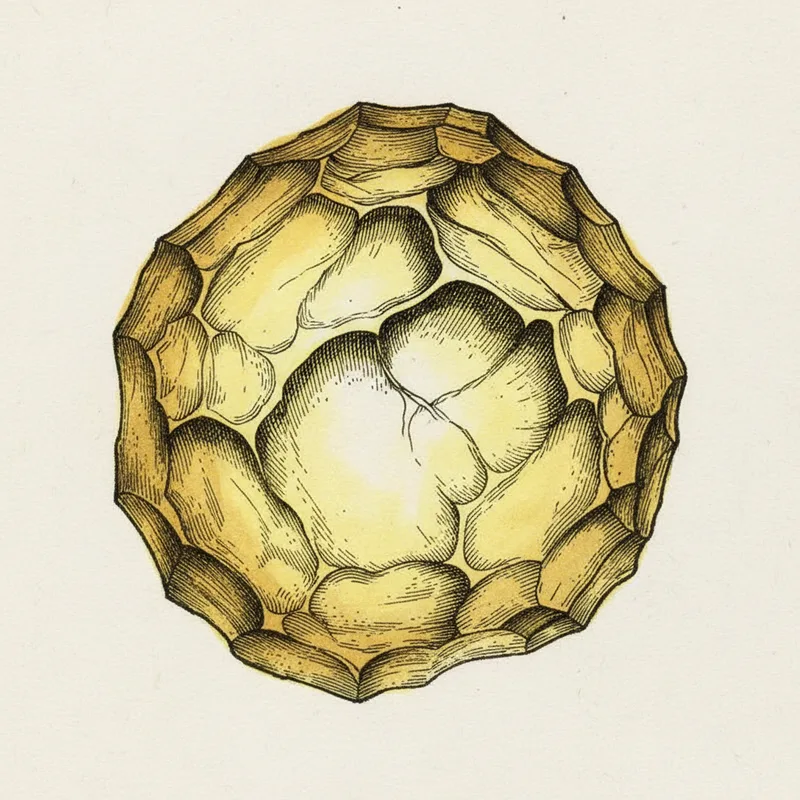
Libyan Desert Glass
The Gem of the Sahara
Affiliate links. We may earn a commission, at no cost to you.
Quick Facts
Formation & Origin
Libyan desert glass is one of the most mysterious natural materials on Earth. Found scattered across a remote area of the Saharan desert on the Egypt-Libya border, these pale yellow glass fragments are approximately 29 million years old and are nearly pure silica (98%+) - purer than any man-made glass.
The origin is debated. The leading theory is that an asteroid or comet impact (or airburst) melted the desert sand at temperatures exceeding 1,600 degrees Celsius, creating a vast sheet of glass that has since been fragmented by millions of years of desert weathering. No impact crater has been definitively identified, though the Kebira Crater (partially buried under sand) is a candidate. An airburst event (like the 1908 Tunguska event but much larger) could explain the glass without a crater.
The ancient Egyptians knew and valued this material. A scarab carved from Libyan desert glass was found in Tutankhamun's pectoral breastplate - the centerpiece of one of the most famous pieces of jewelry ever discovered. This means the glass was collected from the deep desert, transported hundreds of kilometers, and carved with precision over 3,300 years ago.
Identification Guide
Libyan desert glass is identified by its pale yellow color, glass-like conchoidal fracture, low density (2.21, lower than most natural glass), and characteristic surface texture (wind-eroded, frosted exterior from millions of years of desert sandblasting).
Distinguish from citrine (crystalline, higher SG, no conchoidal fracture patterns), yellow glass (artificial glass is denser and often has bubbles), and amber (organic, much lighter, warm to touch). Genuine LDG has a unique frosted, wind-sculpted surface texture on natural specimens.
Spotting Fakes
Libyan desert glass has been increasingly faked as prices rose. Common fakes include yellow-tinted man-made glass and heated natural glass. Genuine LDG has characteristic flow lines (lechatelierite), may contain dark streaks of cristobalite, and shows the wind-eroded surface texture on at least part of the specimen. Very clean, perfectly clear, uniformly colored pieces should be examined skeptically. Reputable dealers provide locality information and many collectors prefer specimens with natural desert surface texture as proof of authenticity.
Some links in this post go to Amazon and Etsy. Crystal Almanac earns a commission from qualifying purchases at no extra cost to you. Tools recommended here are ones we would use ourselves to run the tests described - the recommendation comes first, the link is downstream of it.
Cultural & Metaphysical Traditions
Presented as cultural traditions, not scientific evidence
The Tutankhamun connection gives Libyan desert glass an extraordinary historical pedigree for a metaphysical stone. Modern practitioners associate it with personal power, manifestation, and accessing ancient wisdom. Its cosmic origin (formed by an extraterrestrial impact event) connects it to themes of transformation through catastrophic change. Some healers work with it for past-life access and connecting to Egyptian spiritual traditions.
Metaphysical and “healing” associations are cultural traditions, not medical advice or scientific fact. Crystals are not a substitute for professional medical care.
Where It's Found
The only known source, Saharan desert
Price Guide
Good to Know
Scratch test: At hardness 6, Libyan Desert Glass resists scratching from a knife but can be scratched by quartz. Best for pendants and earrings rather than rings.
Global supply: Found at only one location on Earth - Egypt/Libya. Supply is inherently limited.
Heft test: With a specific gravity of 2.21, Libyan Desert Glass feels lighter than most minerals. This lightness can help identify it.
Common Questions
What is the chemical formula of Libyan Desert Glass?
The chemical formula of Libyan Desert Glass is SiO₂ (98%+ silica glass).
What is Libyan Desert Glass's Mohs hardness?
Libyan Desert Glass has a Mohs hardness of 6 on the 1 to 10 Mohs scale, hard enough to scratch glass but softer than quartz.
Is Libyan Desert Glass a mineral?
No. Libyan Desert Glass is a natural glass (a mineraloid), not a true mineral, because it cooled too fast to develop the ordered crystal structure that defines a mineral.
Care & Safety
The water, salt, and sunlight questions people actually ask before cleansing or displaying libyan desert glass, answered from its hardness (Mohs 6) and chemistry (SiO₂ (98%+ silica glass)).
Can Libyan Desert Glass go in water?
Yes. Libyan Desert Glass is not water-soluble and durable enough (Mohs 6), so a rinse or a quick wash with mild soap is no problem, cleanse it in water freely if that is your practice. A long soak does nothing for it either way, so skip that, and dry the stone afterward.
Can Libyan Desert Glass go in salt water?
Not recommended, even though libyan desert glass itself is hard and not water-soluble. Salt is both corrosive and mildly abrasive: it can dull a polished surface, attack metal settings, and crystallize inside small fractures as the stone dries. A quick dip will not destroy libyan desert glass, but rinse it with fresh water afterward and dry it. For routine cleaning, plain water is the kinder choice.
Sources & References
The mineralogical and gemological data on this page is drawn from and can be cross-checked against these external references.
- WikipediaLibyan desert glass on Wikipedia
Explore More
Save This Stone

Keep this libyan desert glass reference handy. Save the card to a Pinterest board and the profile is one tap away.
Save to PinterestNewsletter
Something shiny, now and then
A stone worth knowing, or a fake worth spotting, every so often. No spam.