Celestite
The Stone of Angels
Affiliate links. We may earn a commission, at no cost to you.
Quick Facts
Formation & Origin
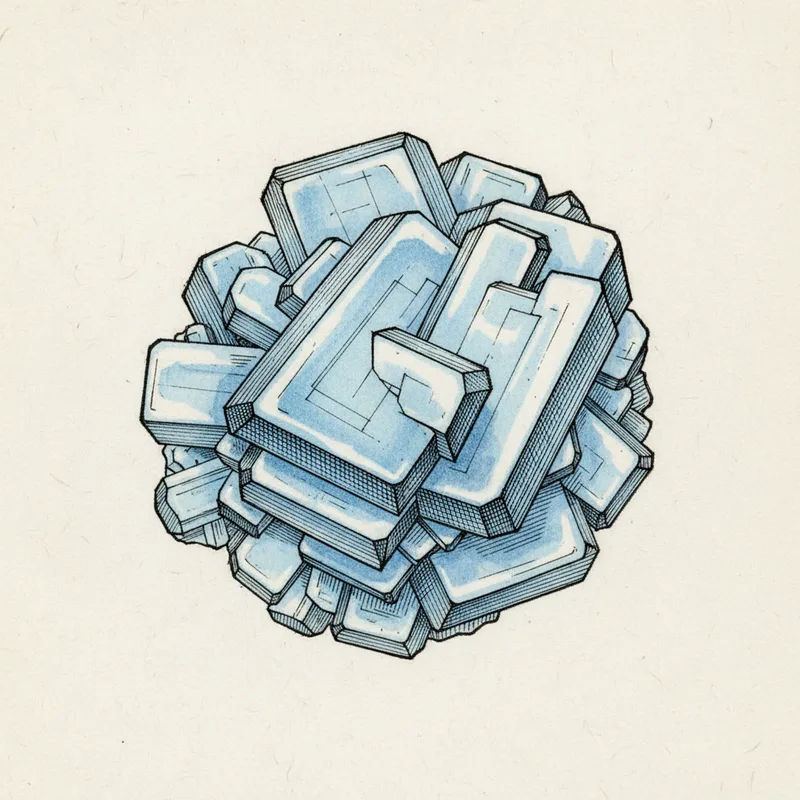
Celestite, also called celestine, is a sulfate mineral, strontium sulfate (SrSO₄), often found as pale blue crystals. Celestite (also called celestine) is a strontium sulfate mineral that forms in sedimentary environments - particularly in evaporite deposits, limestone cavities, and as a replacement mineral in fossils. The pale blue color comes from natural irradiation of trace impurities during the crystal's formation.
The world's most spectacular celestite specimens come from Sakoany, Madagascar, where sky-blue crystal clusters line geode cavities within sedimentary rock. These geodes, some exceeding a meter across, contain sharply terminated crystals with exceptional transparency. The Crystal Cave at Put-in-Bay, Ohio, contains the world's largest known celestite geode - a room-sized cavity lined with celestite crystals up to 45 centimeters long.
Industrially, celestite is the primary ore of strontium, which is used in fireworks (strontium compounds burn bright red), ceramic magnets, and specialty glass for cathode ray tube screens.
Identification Guide
Celestite is identified by its pale blue color, orthorhombic crystal habit (tabular or prismatic crystals), and high specific gravity (3.97 - noticeably heavy for a pale mineral). It has perfect cleavage in three directions.
Distinguish from blue calcite (lower SG, acid reaction), blue barite (very similar but even denser at SG 4.50), and angelite (opaque, massive vs crystalline). Celestite's combination of sky-blue color, high density, and well-formed crystal habit is diagnostic. It does not fluoresce under UV light, which separates it from some similar minerals.
Spotting Fakes
Celestite geodes from Madagascar are abundant and affordable enough that faking is uncommon. The main concern is damage - celestite is soft (3.5) and has perfect cleavage in multiple directions, making it extremely fragile. Handle with care and avoid placing in direct sunlight, which can fade the blue color over time. Some celestite is color-enhanced - natural celestite ranges from pale to medium blue, so very vivid blue specimens should be examined skeptically.
Some links in this post go to Amazon and Etsy. Crystal Almanac earns a commission from qualifying purchases at no extra cost to you. Tools recommended here are ones we would use ourselves to run the tests described - the recommendation comes first, the link is downstream of it.
Cultural & Metaphysical Traditions
Presented as cultural traditions, not scientific evidence
The name comes from the Latin 'caelestis' meaning celestial or heavenly, referring to its sky-blue color. Celestite has become strongly associated with angelic communication in modern crystal practice - it's one of the most popular stones sold for this purpose. Practitioners place it in bedrooms for peaceful sleep and dream work. The gentle blue color and fragile, ethereal crystal form reinforce these associations.
Metaphysical and “healing” associations are cultural traditions, not medical advice or scientific fact. Crystals are not a substitute for professional medical care.
Where It's Found
World's finest blue crystal geodes, the primary source
World's largest known celestite geode
Fine specimens, often colorless
European source, collector specimens
Price Guide
Good to Know
Scratch test: At hardness 3.5, Celestite can be scratched with a copper coin. Handle gently and keep away from harder stones in your collection.
Global supply: Found in 4 notable locations worldwide, from Madagascar to Poland.
Heft test: Celestite has a specific gravity of 3.97 - noticeably heavier than quartz. You'll feel the density when you pick it up.
Common Questions
What is the chemical formula of Celestite?
The chemical formula of Celestite is SrSO₄.
What is Celestite's Mohs hardness?
Celestite has a Mohs hardness of 3.5 on the 1 to 10 Mohs scale, soft enough to scratch with a copper coin.
Is Celestite a mineral?
Yes. Celestite is a naturally occurring mineral (Sulfate Group) with a definite chemical composition and an ordered crystal structure.
Care & Safety
The water, salt, and sunlight questions people actually ask before cleansing or displaying celestite, answered from its hardness (Mohs 3.5) and chemistry (SrSO₄).
Can Celestite go in water?
Not recommended. Strontium sulfate. Slightly water-soluble, extremely fragile, and fades in light. Handle as little as possible.
Can Celestite go in salt water?
No. Celestite is best kept away from water altogether, and salt water is the harsher version of that problem: the dissolved salt is corrosive while the stone is wet, then leaves gritty crystals behind in cracks and crevices as it dries.
Does Celestite fade in sunlight?
Yes. Celestite's delicate sky blue fades with prolonged exposure to sunlight, and the change is permanent. The mineral is also fragile and slightly water-soluble, so a shaded, stable display spot suits it on every count.
Sources & References
The mineralogical and gemological data on this page is drawn from and can be cross-checked against these external references.
- WikipediaCelestine (mineral) on Wikipedia
- WebmineralCelestite mineral data (Webmineral)
Related Minerals
Very similar crystal structure, contains barium instead
Compressed celestite, opaque blue
Similar pale blue, different chemistry
Another strontium mineral, different structure
Explore More
Sulfate Minerals
The Calming Collection
Named for its heavenly blue color. Placed in bedrooms for peaceful energy.
The Communication Collection
Named 'celestial' for its sky color. Associated with angelic communication and expressing higher truths.
Best Calming Crystals for Anxiety and Stress
Crystal Hardness Chart: What Mohs Means for You
Crystals That Fade in Sunlight (The Chemistry Explained)
Mohs Hardness Scale
See where Celestite sits on the scale
Crystal Care Guide
Water safety, sunlight, and handling tips
Save This Stone

Keep this celestite reference handy. Save the card to a Pinterest board and the profile is one tap away.
Save to PinterestNewsletter
Something shiny, now and then
A stone worth knowing, or a fake worth spotting, every so often. No spam.