Quick Facts
The Story
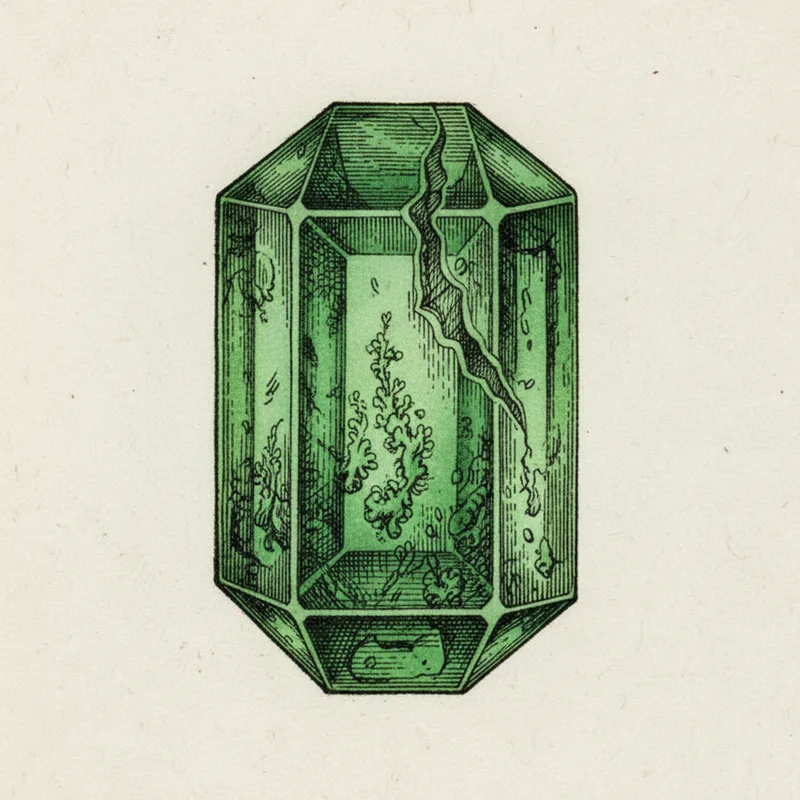
The Gachala Emerald is an 858 carat uncut emerald crystal, about 5 centimeters across, regarded as one of the largest and finest gem quality emerald crystals in the world. It is part of the permanent collection of the Smithsonian Institution's National Museum of Natural History in Washington, D.C., where it carries catalog number 122078.
The crystal was found in 1967 at the Vega de San Juan mine in Gachala, a municipality in the Cundinamarca Department of Colombia, and was named for the town where it was discovered. Colombia produces most of the world's fine emeralds, and the Gachala crystal shows the vivid green color for which Colombian stones are known. Crystals of this size and quality are rarely preserved intact, since most large rough emeralds are cut into gems.
Soon after its discovery the emerald was acquired by the New York jeweler Harry Winston, who donated it to the Smithsonian in 1969. The gift was one of several by Winston that helped build the museum's National Gem Collection into the largest of its kind. Because it was never faceted, the Gachala Emerald is displayed as a natural crystal rather than a finished jewel.
Common Questions
How many carats is the Gachala Emerald?
The Gachala Emerald weighs 858 carats (uncut crystal).
What color is the Gachala Emerald?
The Gachala Emerald is Vivid green.
Where did the Gachala Emerald come from?
The Gachala Emerald originates from Vega de San Juan mine, Gachala, Cundinamarca, Colombia.
Where is the Gachala Emerald now?
The Gachala Emerald is currently located at National Museum of Natural History, Smithsonian Institution, Washington, D.C..
Ownership Timeline
1967
Found at Vega de San Juan mine, Gachala, Colombia
Discovered as an 858 carat crystal and named for the municipality of Gachala.
1967-1969
Harry Winston
The New York jeweler acquired the crystal soon after its discovery.
1969-present
Smithsonian Institution
Donated by Harry Winston in 1969; catalog number 122078 at the National Museum of Natural History.
Notable Events
1967
Discovery in Colombia
The 858 carat crystal was found at the Vega de San Juan mine in Gachala, Cundinamarca, and named after the municipality.
1969
Harry Winston donates it to the Smithsonian
Winston gave the uncut crystal to the Smithsonian Institution, where it remains on permanent display.
Sources & References
The provenance and facts on this page are drawn from and can be cross-checked against these sources.
- WikipediaGachala Emerald
- WikipediaColombian emeralds (notable emeralds list)
The Mineral Behind It
Emerald →
Formation, identification, and fake-spotting
More Famous Emeralds
Newsletter
Something shiny, now and then
A stone worth knowing, or a fake worth spotting, every so often. No spam.