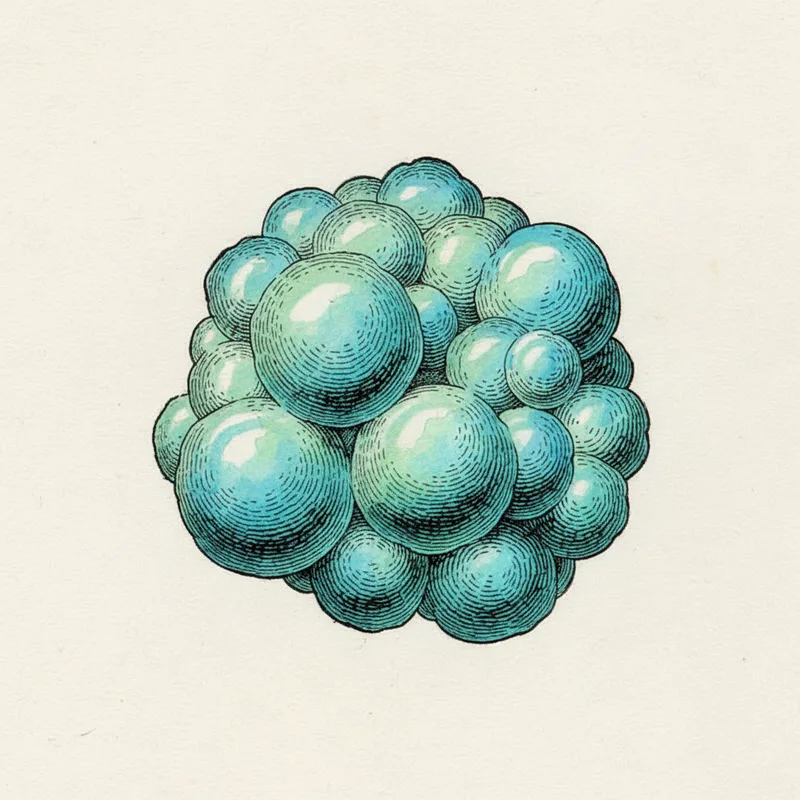
Smithsonite
The Pastel Zinc Carbonate
Affiliate links. We may earn a commission, at no cost to you.
Quick Facts
Formation & Origin
Smithsonite is a zinc carbonate mineral (ZnCO₃), historically mined as a zinc ore and named for the chemist James Smithson. Smithsonite forms as a secondary mineral in the oxidation zone of zinc ore deposits. When zinc sulfide minerals like sphalerite are exposed to weathering, the released zinc combines with carbonate-rich groundwater to precipitate smithsonite.
It typically forms in rounded, grape-like (botryoidal) masses rather than distinct crystals. The stunning color variety comes from trace elements: copper produces blue-green, cobalt creates pink to lavender, cadmium yields bright yellow, and manganese can add warm tones. Pure smithsonite is white to colorless.
The mineral was named after James Smithson, the British mineralogist whose bequest founded the Smithsonian Institution. He was the first to distinguish smithsonite from hemimorphite, minerals that had long been confused under the name 'calamine.'
Identification Guide
Smithsonite's botryoidal habit, high specific gravity for a carbonate (noticeably heavy for its size), and pastel colors are diagnostic. It effervesces weakly in cold hydrochloric acid and vigorously when warmed.
Distinguish from hemimorphite (lighter, often forms blade-like crystals), prehnite (lower specific gravity, different habit), and chrysoprase (much harder, quartz family). The combination of bubbly surface texture, heaviness, and acid reaction narrows it down quickly.
Spotting Fakes
Dyed howlite or magnesite is sometimes sold as blue smithsonite. Genuine smithsonite is noticeably heavier than these substitutes. The botryoidal texture should be natural and somewhat irregular. Perfectly smooth, uniformly colored pieces at low prices warrant skepticism. Genuine specimens from Kelly Mine or Tsumeb command premium prices.
Some links in this post go to Amazon and Etsy. Crystal Almanac earns a commission from qualifying purchases at no extra cost to you. Tools recommended here are ones we would use ourselves to run the tests described - the recommendation comes first, the link is downstream of it.
Cultural & Metaphysical Traditions
Presented as cultural traditions, not scientific evidence
Smithsonite is considered a soothing stone in crystal healing, associated with calming emotional turbulence and easing anxiety. The blue-green variety connects to the throat chakra, while pink specimens are associated with the heart. It's sometimes called the 'stone of charm' for its reputed ability to enhance pleasant interactions.
Metaphysical and “healing” associations are cultural traditions, not medical advice or scientific fact. Crystals are not a substitute for professional medical care.
Where It's Found
World-class blue-green botryoidal specimens
Exceptional green and blue crystallized specimens
Classic locality, yellow and blue varieties
Type locality, first described here
Price Guide
Good to Know
Scratch test: At hardness 4.5, Smithsonite can be scratched with a copper coin. Handle gently and keep away from harder stones in your collection.
Global supply: Found in 4 notable locations worldwide, from Mexico to Zambia.
Heft test: Smithsonite has a specific gravity of 4.4-4.5 - noticeably heavier than quartz. You'll feel the density when you pick it up.
Common Questions
What is the chemical formula of Smithsonite?
The chemical formula of Smithsonite is ZnCO₃.
What is Smithsonite's Mohs hardness?
Smithsonite has a Mohs hardness of 4.5 on the 1 to 10 Mohs scale, which a steel knife will scratch.
Is Smithsonite a mineral?
Yes. Smithsonite is a naturally occurring mineral (Carbonate Mineral) with a definite chemical composition and an ordered crystal structure.
Care & Safety
The water, salt, and sunlight questions people actually ask before cleansing or displaying smithsonite, answered from its hardness (Mohs 4.5) and chemistry (ZnCO₃).
Can Smithsonite go in water?
Only briefly. A quick rinse under running water is fine for smithsonite, but do not let it soak or sit submerged. At Mohs 4.5 it is tough enough for a rinse but not for a long soak. Dry it thoroughly afterward.
Can Smithsonite go in salt water?
No. Smithsonite can take a brief fresh-water rinse and nothing more, and salt water is harder on it both ways: corrosive while wet, then abrasive as the salt dries into crystals. If it does meet salt water, rinse it with fresh water and dry it promptly.
Sources & References
The mineralogical and gemological data on this page is drawn from and can be cross-checked against these external references.
- WikipediaSmithsonite on Wikipedia
- WebmineralSmithsonite mineral data (Webmineral)
- Handbook of MineralogySmithsonite (Handbook of Mineralogy, PDF)
Explore More
Carbonate Minerals
The Calming Collection
Called the 'stone of charm.' Its soft pastel colors and botryoidal texture are associated with soothing emotional turbulence and easing anxiety.
Mohs Hardness Scale
See where Smithsonite sits on the scale
Crystal Care Guide
Water safety, sunlight, and handling tips
Save This Stone

Keep this smithsonite reference handy. Save the card to a Pinterest board and the profile is one tap away.
Save to PinterestNewsletter
Something shiny, now and then
A stone worth knowing, or a fake worth spotting, every so often. No spam.