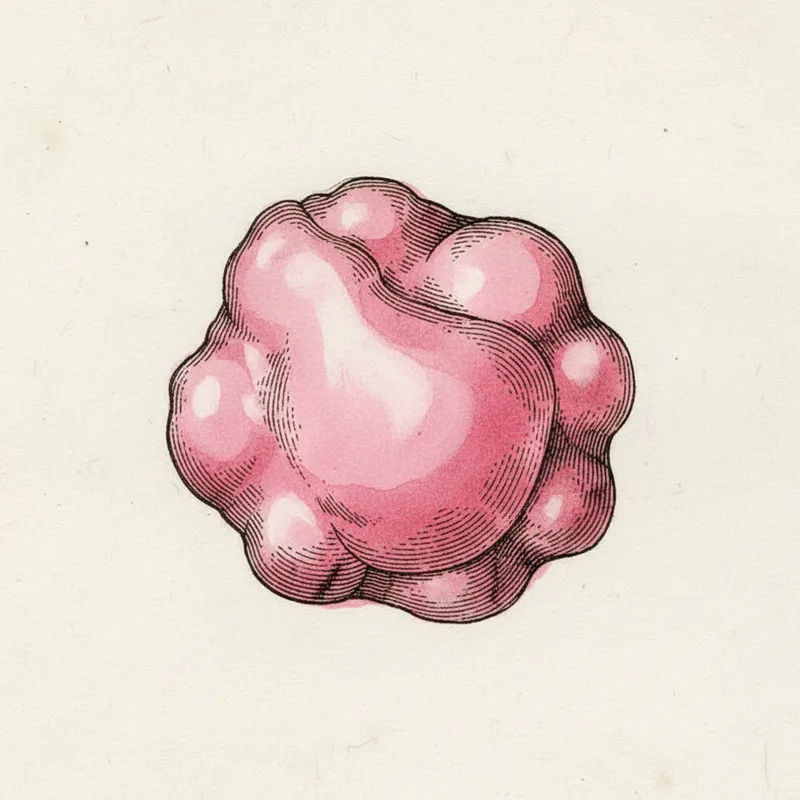
Pink Opal
The Stone of Gentle Love
Affiliate links. We may earn a commission, at no cost to you.
Quick Facts
Formation & Origin
Pink opal is a variety of common opal, an amorphous hydrated silica mineraloid (SiO₂·nH₂O) that lacks the play-of-color seen in precious opal. Pink opal (also called Andean opal) is a variety of common opal - meaning it doesn't show the play-of-color fire that precious opal displays. Its soft pink color comes from organic compounds (quinacridone-like molecules) or from inclusions of palygorskite, a pink clay mineral, dispersed throughout the opal's silica structure.
Peruvian pink opal forms in Andean volcanic deposits where silica-rich solutions deposit in cavities and fractures within ignimbrite (welded volcanic ash). The specific organic compounds that produce the pink color are unique to the Peruvian deposits, giving this material a distinctive candy-pink that's softer and warmer than most other pink gemstones.
Pink opal is Peru's national stone, and Peruvian opal (both pink and blue-green varieties) has been mined and prized since pre-Columbian times. Inca craftspeople carved it into ceremonial objects and jewelry.
Identification Guide
Pink opal is identified by its opaque to translucent body, soft pink color, waxy luster, and lower hardness (5-6). It has no play of color (unlike precious opal). The pink is typically even and gentle rather than vivid.
Distinguish from rose quartz (harder at 7, different luster), rhodonite (harder, often has black veining), and pink calcite (softer, fizzes in acid). Pink opal's waxy luster and moderate hardness are characteristic. It should not be confused with pink precious opal from Ethiopia or Australia (which shows play of color).
Spotting Fakes
Dyed white opal and dyed chalcedony are sometimes sold as pink opal. Genuine Peruvian pink opal has a distinctive warm, even pink with a slightly translucent depth. Dyed material shows color concentration in surface cracks. Pink opal is also sometimes confused with pink aragonite or pink calcite, which are softer and react to acid. Lab-created 'pink opal' (synthetic opal with added color) exists but is uncommon in the market.
Some links in this post go to Amazon and Etsy. Crystal Almanac earns a commission from qualifying purchases at no extra cost to you. Tools recommended here are ones we would use ourselves to run the tests described - the recommendation comes first, the link is downstream of it.
Cultural & Metaphysical Traditions
Presented as cultural traditions, not scientific evidence
In Peruvian Andean tradition, pink opal has been associated with love, hope, and gentle emotional healing for centuries. Inca culture connected it to Pachamama (Earth Mother) energy. Modern practitioners consider it the gentlest heart stone in the crystal world - associated with self-love, compassion, and healing from grief. Its soft pink energy is considered less intense than rose quartz, making it suitable for sensitive individuals.
Metaphysical and “healing” associations are cultural traditions, not medical advice or scientific fact. Crystals are not a substitute for professional medical care.
Where It's Found
Primary source, national stone of Peru
Some pink common opal material
Pink fire opal (different variety)
Limited pink opal material
Price Guide
Good to Know
Scratch test: At hardness 5.5, Pink Opal resists scratching from a knife but can be scratched by quartz. Best for pendants and earrings rather than rings.
Global supply: Found in 4 notable locations worldwide, from Peru to Tanzania.
Heft test: With a specific gravity of 2.00, Pink Opal feels lighter than most minerals. This lightness can help identify it.
Common Questions
What is the chemical formula of Pink Opal?
The chemical formula of Pink Opal is SiO₂·nH₂O (with palygorskite or quinacridone inclusions).
What is Pink Opal's Mohs hardness?
Pink Opal has a Mohs hardness of 5.5 on the 1 to 10 Mohs scale, hard enough to scratch glass but softer than quartz.
Is Pink Opal a mineral?
Not exactly. Pink Opal is a mineraloid: it has a mineral-like composition but lacks the ordered, repeating crystal structure required to be a true mineral.
Care & Safety
The water, salt, and sunlight questions people actually ask before cleansing or displaying pink opal, answered from its hardness (Mohs 5.5) and chemistry (SiO₂·nH₂O (with palygorskite or quinacridone inclusions)).
Can Pink Opal go in water?
Yes. Pink Opal is not water-soluble and durable enough (Mohs 5.5), so a rinse or a quick wash with mild soap is no problem, cleanse it in water freely if that is your practice. A long soak does nothing for it either way, so skip that, and dry the stone afterward.
Can Pink Opal go in salt water?
Not recommended, even though pink opal itself is hard and not water-soluble. Salt is both corrosive and mildly abrasive: it can dull a polished surface, attack metal settings, and crystallize inside small fractures as the stone dries. A quick dip will not destroy pink opal, but rinse it with fresh water afterward and dry it. For routine cleaning, plain water is the kinder choice.
Is sunlight safe for Pink Opal?
Keep it out of prolonged sun. Pink opal is a common opal with structural water, and the heat and dryness of sustained sun exposure can dehydrate it, paling the pink and risking fine surface cracks. Store it away from direct sunlight and heat.
Sources & References
The mineralogical and gemological data on this page is drawn from and can be cross-checked against these external references.
- WikipediaOpal on Wikipedia
- WebmineralOpal mineral data (Webmineral)
- GIAPink Opal in the GIA Gem Encyclopedia
Explore More
Quartz & Chalcedony
The Love Collection
Peru's national stone. Inca tradition connects it to Pachamama (Earth Mother) energy. Considered the gentlest heart stone.
Mohs Hardness Scale
See where Pink Opal sits on the scale
Crystal Care Guide
Water safety, sunlight, and handling tips
Save This Stone

Keep this pink opal reference handy. Save the card to a Pinterest board and the profile is one tap away.
Save to PinterestNewsletter
Something shiny, now and then
A stone worth knowing, or a fake worth spotting, every so often. No spam.