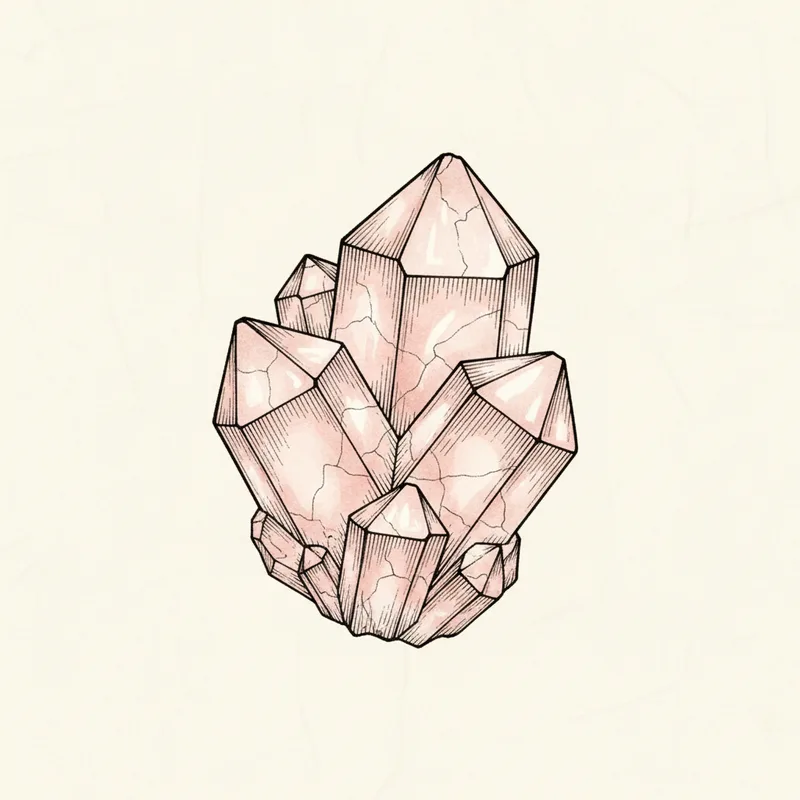
Pink Amethyst
The Patagonian Rose
Affiliate links. We may earn a commission, at no cost to you.
Quick Facts
Formation & Origin
Pink amethyst is a recently discovered variety of quartz from a single mine in Patagonia, Argentina. It first appeared on the mineral market around 2017-2019 and is distinguished by its soft pink to rose-mauve color, different from both amethyst (purple) and rose quartz (pink but typically massive, not crystallized points).
The pink color is believed to result from a combination of hematite inclusions and iron-related color centers similar to but distinct from those in purple amethyst. The specific geological conditions at the El Chiquito Mine created this unusual color variant. The crystals grow in druzy-lined geodes, similar to classic amethyst geodes from Brazil and Uruguay.
Pink amethyst is genuinely rare in the geological sense. Unlike purple amethyst (found worldwide) or rose quartz (extremely common), pink amethyst comes from a single small deposit. However, production has been sufficient to make it commercially available, and it has quickly become popular in the crystal market.
Identification Guide
Pink amethyst is identified by its soft pink to rose-mauve color in druzy crystal formations, typically in geode form. The crystals are small (usually under 1cm) and form druzy coatings similar to amethyst geodes but in pink rather than purple.
Distinguish from rose quartz (massive, no crystal points), amethyst (purple), and lithium quartz (larger crystals, mauve from lithium mica inclusions). Pink amethyst's druzy geode habit with small crystalline points in a distinctly pink-not-purple color is its signature.
Spotting Fakes
Heat-treated amethyst can sometimes produce pink tones, but the result typically looks more washed-out than natural pink amethyst. Some sellers dye pale amethyst or quartz druzy pink. Check that the pink color is consistent and doesn't concentrate in fractures (a sign of dye). Genuine pink amethyst from Argentina comes in specific geode and druzy forms. Large, deeply saturated pink crystals should be viewed with skepticism.
Some links in this post go to Amazon and Etsy. Crystal Almanac earns a commission from qualifying purchases at no extra cost to you. Tools recommended here are ones we would use ourselves to run the tests described - the recommendation comes first, the link is downstream of it.
Cultural & Metaphysical Traditions
Presented as cultural traditions, not scientific evidence
Pink amethyst is too recently discovered for ancient traditions, but it has quickly been embraced by the crystal healing community. Practitioners associate it with gentle heart opening, compassionate understanding, and combining the calming properties of amethyst with the love associations of pink stones. It's considered a softer, more nurturing alternative to purple amethyst.
Metaphysical and “healing” associations are cultural traditions, not medical advice or scientific fact. Crystals are not a substitute for professional medical care.
Where It's Found
Only significant source worldwide
Price Guide
Good to Know
Scratch test: At hardness 7, Pink Amethyst can scratch glass and steel. It's durable enough for any type of jewelry.
Global supply: Found at only one location on Earth - Argentina. Supply is inherently limited.
Heft test: Pink Amethyst has average mineral density (2.65). It feels about as heavy as you'd expect from a stone its size.
Common Questions
What is the chemical formula of Pink Amethyst?
The chemical formula of Pink Amethyst is SiO₂ (with hematite inclusions and Fe³⁺ color centers).
What is Pink Amethyst's Mohs hardness?
Pink Amethyst has a Mohs hardness of 7 on the 1 to 10 Mohs scale, hard enough to scratch glass and stand up to daily wear.
Is Pink Amethyst a mineral?
Yes. Pink Amethyst is a naturally occurring mineral (Quartz Family) with a definite chemical composition and an ordered crystal structure.
Care & Safety
The water, salt, and sunlight questions people actually ask before cleansing or displaying pink amethyst, answered from its hardness (Mohs 7) and chemistry (SiO₂ (with hematite inclusions and Fe³⁺ color centers)).
Can Pink Amethyst go in water?
Yes. Pink Amethyst is hard (Mohs 7) and chemically stable, so a rinse or a quick wash with mild soap is no problem, cleanse it in water freely if that is your practice. A long soak does nothing for it either way, so skip that, and dry the stone afterward.
Can Pink Amethyst go in salt water?
Not recommended, even though pink amethyst itself is hard and not water-soluble. Salt is both corrosive and mildly abrasive: it can dull a polished surface, attack metal settings, and crystallize inside small fractures as the stone dries. Pink Amethyst's iron content also makes rust staining likely if salt residue sits on the surface. A quick dip will not destroy pink amethyst, but rinse it with fresh water afterward and dry it. For routine cleaning, plain water is the kinder choice.
Does Pink Amethyst fade in sunlight?
Yes, it can fade. Pink amethyst carries trace-element color centers like its purple sibling, and prolonged direct sunlight can gradually pale the soft pink. Display it away from sunny windowsills.
Sources & References
The mineralogical and gemological data on this page is drawn from and can be cross-checked against these external references.
- WikipediaAmethyst on Wikipedia
- WebmineralQuartz mineral data (Webmineral)
- Handbook of MineralogyQuartz (Handbook of Mineralogy, PDF)
Explore More
Quartz & Chalcedony
The Love Collection
The rare Patagonian amethyst with crystalline points, blushed pink by hematite inclusions (not a rose quartz, despite the look). Pairs amethyst's traditional calming associations with a gentle pink that tradition links to the heart. A newer discovery already beloved for nurturing emotional tenderness.
Rose Quartz vs Pink Amethyst: The Pink Quartz Debate
Mohs Hardness Scale
See where Pink Amethyst sits on the scale
Crystal Care Guide
Water safety, sunlight, and handling tips
Save This Stone

Keep this pink amethyst reference handy. Save the card to a Pinterest board and the profile is one tap away.
Save to PinterestNewsletter
Something shiny, now and then
A stone worth knowing, or a fake worth spotting, every so often. No spam.