Quick Facts
Formation & Origin
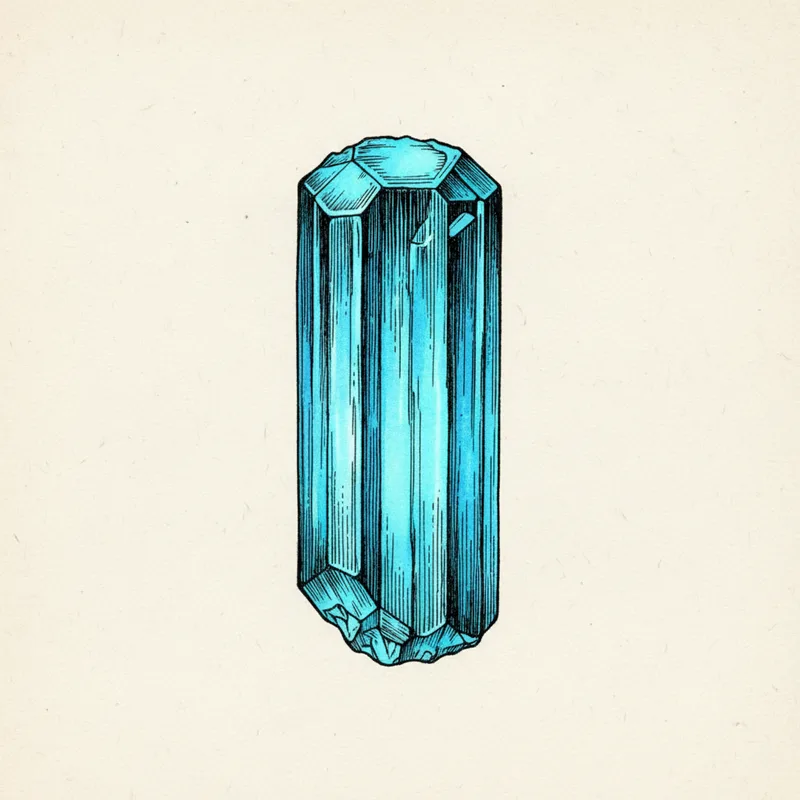
Paraíba tourmaline is colored by copper (Cu²⁺), which is extremely unusual in the tourmaline family. This copper coloring produces the unmistakable neon blue-green glow that no other gemstone can match. The intensity seems to come from within the stone, as if it's lit from the inside.
The original discovery was made in the 1980s by Heitor Dimas Barbosa, who spent years digging in the hills of São José da Batalha in Paraíba state, Brazil, convinced he would find something extraordinary. The resulting gem caused a sensation in the gem world. Original Brazilian Paraíba mines are now virtually exhausted.
Similar copper-bearing tourmaline was later found in Nigeria (2001) and Mozambique (2005). The African material is chemically similar (copper-colored elbaite) but typically contains less copper and more manganese, often requiring heat treatment to achieve neon colors. Whether African stones deserve the Paraíba name is a contentious debate in the gem trade.
Identification Guide
Paraíba tourmaline's neon blue-green color is unlike any other gemstone and is the primary identifier. The color has been described as 'swimming pool blue' or 'electric.' Chemical analysis showing copper as the chromophore is the definitive test.
Distinguish from blue apatite (softer, different RI), blue zircon (tetragonal, higher RI), and heated blue topaz (different properties). No treatment can replicate the specific neon quality of copper-colored tourmaline in other minerals.
Spotting Fakes
Heat treatment is standard and accepted for Paraíba tourmaline. Many African stones are heated to remove brownish or violet tones, revealing the blue-green copper color. Lab reports from GIA, Gübelin, or SSEF are essential for expensive stones. Coating, diffusion treatment, and imitation with blue glass or synthetic spinel are all concerns. The market value difference between Brazilian and African origin makes provenance testing important for high-value stones.
Some links in this post go to Amazon and Etsy. Crystal Almanac earns a commission from qualifying purchases at no extra cost to you. Tools recommended here are ones we would use ourselves to run the tests described - the recommendation comes first, the link is downstream of it.
Cultural & Metaphysical Traditions
Presented as cultural traditions, not scientific evidence
Paraíba tourmaline, though too recently discovered for ancient traditions, has quickly become one of the most coveted stones in crystal healing. Practitioners associate its electric glow with heightened communication, emotional breakthrough, and connecting to higher purpose. The copper content adds associations with conductivity and energy flow.
Metaphysical and “healing” associations are cultural traditions, not medical advice or scientific fact. Crystals are not a substitute for professional medical care.
Where It's Found
Original discovery, most valuable source
Second Brazilian source, similar material
Major current source, debated nomenclature
Copper-bearing tourmaline similar to Paraíba
Price Guide
Good to Know
Scratch test: At hardness 7.5, Paraíba Tourmaline can scratch glass and steel. It's durable enough for any type of jewelry.
Global supply: Found in 4 notable locations worldwide, from Brazil to Nigeria.
Heft test: Paraíba Tourmaline has average mineral density (3.01-3.11). It feels about as heavy as you'd expect from a stone its size.
Common Questions
What is the chemical formula of Paraíba Tourmaline?
The chemical formula of Paraíba Tourmaline is Na(Li,Al)₃Al₆(BO₃)₃Si₆O₁₈(OH)₄ (with Cu²⁺, Mn).
What is Paraíba Tourmaline's Mohs hardness?
Paraíba Tourmaline has a Mohs hardness of 7.5 on the 1 to 10 Mohs scale, hard enough to scratch glass and stand up to daily wear.
Is Paraíba Tourmaline a mineral?
Yes. Paraíba Tourmaline is a naturally occurring mineral (Tourmaline Group (Elbaite)) with a definite chemical composition and an ordered crystal structure.
Care & Safety
The water, salt, and sunlight questions people actually ask before cleansing or displaying paraíba tourmaline, answered from its hardness (Mohs 7.5) and chemistry (Na(Li,Al)₃Al₆(BO₃)₃Si₆O₁₈(OH)₄ (with Cu²⁺, Mn)).
Can Paraíba Tourmaline go in water?
Yes. Paraíba Tourmaline is hard (Mohs 7.5) and chemically stable, so a rinse or a quick wash with mild soap is no problem, cleanse it in water freely if that is your practice. A long soak does nothing for it either way, so skip that, and dry the stone afterward.
Can Paraíba Tourmaline go in salt water?
Not recommended, even though paraíba tourmaline itself is hard and not water-soluble. Salt is both corrosive and mildly abrasive: it can dull a polished surface, attack metal settings, and crystallize inside small fractures as the stone dries. Salt also accelerates corrosion of copper-bearing minerals like paraíba tourmaline. A quick dip will not destroy paraíba tourmaline, but rinse it with fresh water afterward and dry it. For routine cleaning, plain water is the kinder choice.
Sources & References
The mineralogical and gemological data on this page is drawn from and can be cross-checked against these external references.
- WikipediaElbaite on Wikipedia
- WebmineralElbaite mineral data (Webmineral)
- Handbook of MineralogyElbaite (Handbook of Mineralogy, PDF)
- GIAParaíba Tourmaline in the GIA Gem Encyclopedia
Explore More
Save This Stone

Keep this paraíba tourmaline reference handy. Save the card to a Pinterest board and the profile is one tap away.
Save to PinterestNewsletter
Something shiny, now and then
A stone worth knowing, or a fake worth spotting, every so often. No spam.