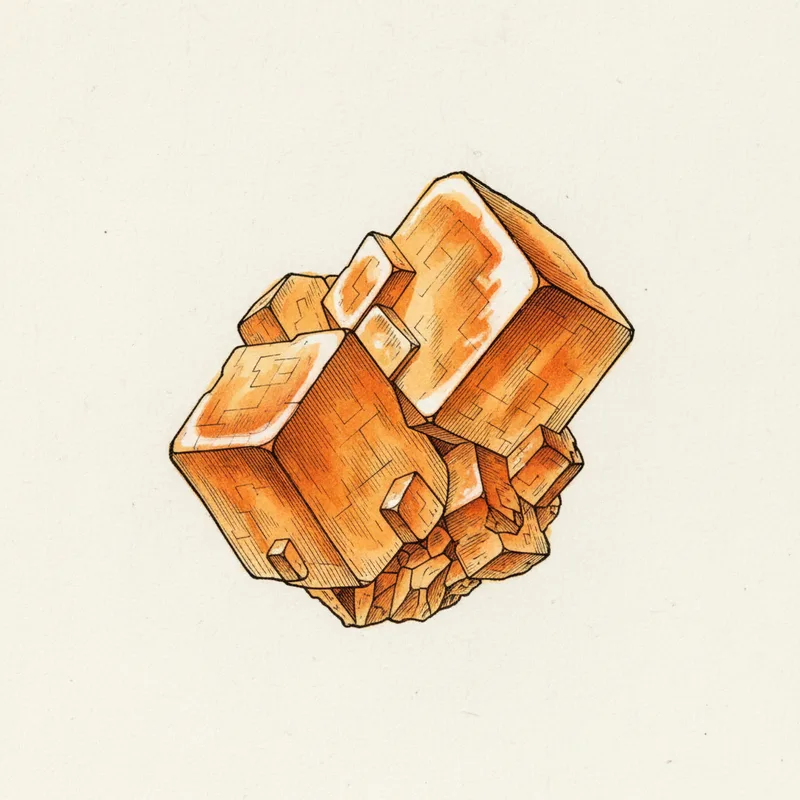
Orange Calcite
The Liquid Sunshine
Affiliate links. We may earn a commission, at no cost to you.
Quick Facts
Formation & Origin
Orange calcite is the warm-toned variety of calcite, a calcium carbonate mineral (CaCO₃) colored by dispersed iron oxide. Orange calcite gets its warm color from iron oxide inclusions dispersed throughout the calcium carbonate crystal structure. The intensity ranges from pale peach (low iron) to vivid tangerine (higher iron concentration).
It forms in the same environments as other calcite varieties, with the orange color developing when iron-rich solutions are present during crystallization. Some of the finest vivid orange calcite comes from Mexican deposits where the combination of volcanic activity and carbonate host rocks creates iron-rich conditions ideal for producing saturated orange specimens.
Orange calcite is one of the most popular and widely available colored calcite varieties in the crystal market, prized for its warm, cheerful appearance and accessibility.
Identification Guide
Orange calcite is identified by its warm orange color, low hardness (Mohs 3), perfect rhombohedral cleavage, and strong effervescence in dilute HCl. Translucent specimens have a warm, glowing quality when backlit.
Distinguish from carnelian (much harder, quartz family), sunstone (harder, feldspar), and orange selenite (different chemistry, won't effervesce). The acid test confirms calcite instantly.
Spotting Fakes
Orange calcite is too common and affordable to be worth faking. Occasionally, pale calcite may be dyed a more vivid orange. Natural orange calcite has some color variation rather than perfectly uniform saturation. Under UV light, some orange calcite fluoresces, which can help confirm natural color. The softness (Mohs 3) quickly distinguishes it from harder orange stones.
Some links in this post go to Amazon and Etsy. Crystal Almanac earns a commission from qualifying purchases at no extra cost to you. Tools recommended here are ones we would use ourselves to run the tests described - the recommendation comes first, the link is downstream of it.
Cultural & Metaphysical Traditions
Presented as cultural traditions, not scientific evidence
Orange calcite is associated with creativity, passion, and energizing the sacral chakra. Its warm color connects it to themes of joy, playfulness, and creative inspiration. Practitioners use it for overcoming lethargy, boosting confidence in creative projects, and increasing personal motivation. It's considered one of the most uplifting stones in the calcite family.
Metaphysical and “healing” associations are cultural traditions, not medical advice or scientific fact. Crystals are not a substitute for professional medical care.
Where It's Found
Major source of vivid orange massive specimens
Good quality material
Fine specimens
Classic European locality
Price Guide
Good to Know
Scratch test: At hardness 3, Orange Calcite can be scratched with a copper coin. Handle gently and keep away from harder stones in your collection.
Global supply: Found in 4 notable locations worldwide, from Mexico to Belgium.
Heft test: Orange Calcite has average mineral density (2.71). It feels about as heavy as you'd expect from a stone its size.
Common Questions
What is the chemical formula of Orange Calcite?
The chemical formula of Orange Calcite is CaCO₃ (with iron oxide).
What is Orange Calcite's Mohs hardness?
Orange Calcite has a Mohs hardness of 3 on the 1 to 10 Mohs scale, soft enough to scratch with a copper coin.
Is Orange Calcite a mineral?
Yes. Orange Calcite is a naturally occurring mineral (Carbonate Mineral) with a definite chemical composition and an ordered crystal structure.
Care & Safety
The water, salt, and sunlight questions people actually ask before cleansing or displaying orange calcite, answered from its hardness (Mohs 3) and chemistry (CaCO₃ (with iron oxide)).
Can Orange Calcite go in water?
Not recommended. At Mohs 3, orange calcite is soft enough that water can slowly dull, etch, or wear down the surface, so a water cleanse does more harm than good here. Reach for a dry cloth instead.
Can Orange Calcite go in salt water?
No. Orange Calcite is best kept away from water altogether, and salt water is the harsher version of that problem: the dissolved salt is corrosive while the stone is wet, then leaves gritty crystals behind in cracks and crevices as it dries.
Sources & References
The mineralogical and gemological data on this page is drawn from and can be cross-checked against these external references.
- WikipediaCalcite on Wikipedia
- WebmineralCalcite mineral data (Webmineral)
- Handbook of MineralogyCalcite (Handbook of Mineralogy, PDF)
Explore More
Carbonate Minerals
The Creative Collection
Liquid sunshine in mineral form. Its vivid orange energizes the sacral chakra and is associated with breaking through creative blocks, sparking imagination, and finding joy in the creative process.
Carnelian: Meaning, Properties, and How to Use It
Mohs Hardness Scale
See where Orange Calcite sits on the scale
Crystal Care Guide
Water safety, sunlight, and handling tips
Save This Stone

Keep this orange calcite reference handy. Save the card to a Pinterest board and the profile is one tap away.
Save to PinterestNewsletter
Something shiny, now and then
A stone worth knowing, or a fake worth spotting, every so often. No spam.