Fluorapatite
The Gemstone in Your Teeth
Affiliate links. We may earn a commission, at no cost to you.
Quick Facts
Formation & Origin
Fluorapatite is a calcium phosphate mineral (Ca₅(PO₄)₃F), the fluorine-rich and most abundant member of the apatite group and the reference mineral for hardness 5 on the Mohs scale. Apatite is the most common phosphate mineral on Earth and the defining mineral of hardness 5 on the Mohs scale. Fluorapatite (the fluorine-dominant variety) is the most abundant apatite species, forming in igneous, metamorphic, and sedimentary environments.
What makes apatite remarkable is its biological role: your bones and teeth are made of hydroxyapatite, a close relative of fluorapatite. When fluoride is added to drinking water or toothpaste, it converts tooth hydroxyapatite to the more acid-resistant fluorapatite - this is literally the chemistry of cavity prevention. Fluorapatite in your teeth is the same mineral species as the neon blue gemstone.
Gem-quality apatite comes in a spectacular range of colors: neon blue-green from Paraiba-type localities (colored by manganese and rare earth elements), vivid purple (manganese), bright yellow (iron), and pink (manganese and rare earths). The neon blue-green variety from Madagascar and Brazil has surged in popularity as an affordable alternative to Paraiba tourmaline.
Identification Guide
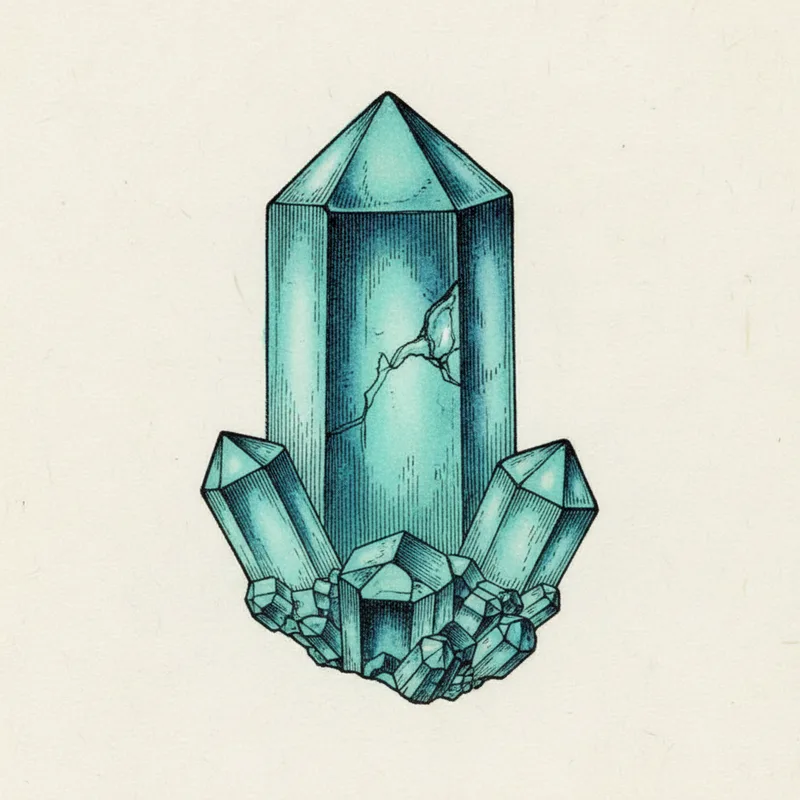
Apatite is identified by its hexagonal crystal habit, hardness of exactly 5 (the Mohs scale reference mineral), and characteristic colors. The neon blue-green variety is particularly distinctive.
Distinguish from tourmaline (harder at 7, different crystal shape), beryl (harder at 7.5-8), and fluorite (softer at 4, cubic not hexagonal). Apatite's hardness of 5 is its most practical diagnostic - it's scratched by a knife (5.5) but not by a copper coin (3.5). This makes it too soft for most ring settings but fine for pendants and earrings.
Spotting Fakes
Synthetic apatite doesn't exist commercially for gem purposes. The main concerns are: 1) apatite sold as more expensive stones (neon blue apatite labeled as Paraiba tourmaline), 2) heavily treated material (some apatite is heated to improve color), and 3) glass imitations of neon blue apatite. The hardness test (5, scratchable by a knife) quickly separates apatite from tourmaline (7) or beryl (7.5+). Apatite's relative softness is the buyer's best verification tool.
Some links in this post go to Amazon and Etsy. Crystal Almanac earns a commission from qualifying purchases at no extra cost to you. Tools recommended here are ones we would use ourselves to run the tests described - the recommendation comes first, the link is downstream of it.
Cultural & Metaphysical Traditions
Presented as cultural traditions, not scientific evidence
Apatite's name comes from the Greek 'apate' meaning deceit - it was frequently mistaken for other minerals (beryl, tourmaline, olivine). Modern crystal practitioners have repurposed this etymology positively, associating apatite with seeing through deception and accessing truth. Blue apatite is popular for communication and self-expression work. The bone and teeth connection gives it associations with physical healing and structural support.
Metaphysical and “healing” associations are cultural traditions, not medical advice or scientific fact. Crystals are not a substitute for professional medical care.
Where It's Found
Neon blue 'Paraiba-type' apatite
Vivid neon blue and green
Fine yellow and purple crystals
Excellent crystal specimens
Price Guide
Good to Know
Scratch test: At hardness 5, Fluorapatite resists scratching from a knife but can be scratched by quartz. Best for pendants and earrings rather than rings.
Global supply: Found in 4 notable locations worldwide, from Brazil to Morocco.
Heft test: Fluorapatite has average mineral density (3.20). It feels about as heavy as you'd expect from a stone its size.
Common Questions
What is the chemical formula of Fluorapatite?
The chemical formula of Fluorapatite is Ca₅(PO₄)₃F.
What is Fluorapatite's Mohs hardness?
Fluorapatite has a Mohs hardness of 5 on the 1 to 10 Mohs scale, which a steel knife will scratch.
Is Fluorapatite a mineral?
Yes. Fluorapatite is a naturally occurring mineral (Phosphate Group (Apatite)) with a definite chemical composition and an ordered crystal structure.
Care & Safety
The water, salt, and sunlight questions people actually ask before cleansing or displaying fluorapatite, answered from its hardness (Mohs 5) and chemistry (Ca₅(PO₄)₃F).
Can Fluorapatite go in water?
Only briefly. A quick rinse under running water is fine for fluorapatite, but do not let it soak or sit submerged. At Mohs 5 it is tough enough for a rinse but not for a long soak. Dry it thoroughly afterward.
Can Fluorapatite go in salt water?
No. Fluorapatite can take a brief fresh-water rinse and nothing more, and salt water is harder on it both ways: corrosive while wet, then abrasive as the salt dries into crystals. If it does meet salt water, rinse it with fresh water and dry it promptly.
Sources & References
The mineralogical and gemological data on this page is drawn from and can be cross-checked against these external references.
- WikipediaFluorapatite on Wikipedia
- WebmineralFluorapatite mineral data (Webmineral)
- Handbook of MineralogyFluorapatite (Handbook of Mineralogy, PDF)
Related Minerals
Similar neon blue, much harder, different mineral
Similar colors available, softer at 4
Also hexagonal, much harder, different chemistry
The biological form in bones and teeth
Explore More
Save This Stone

Keep this fluorapatite reference handy. Save the card to a Pinterest board and the profile is one tap away.
Save to PinterestNewsletter
Something shiny, now and then
A stone worth knowing, or a fake worth spotting, every so often. No spam.