Scapolite
The Shaft Stone
Affiliate links. We may earn a commission, at no cost to you.
Quick Facts
Formation & Origin
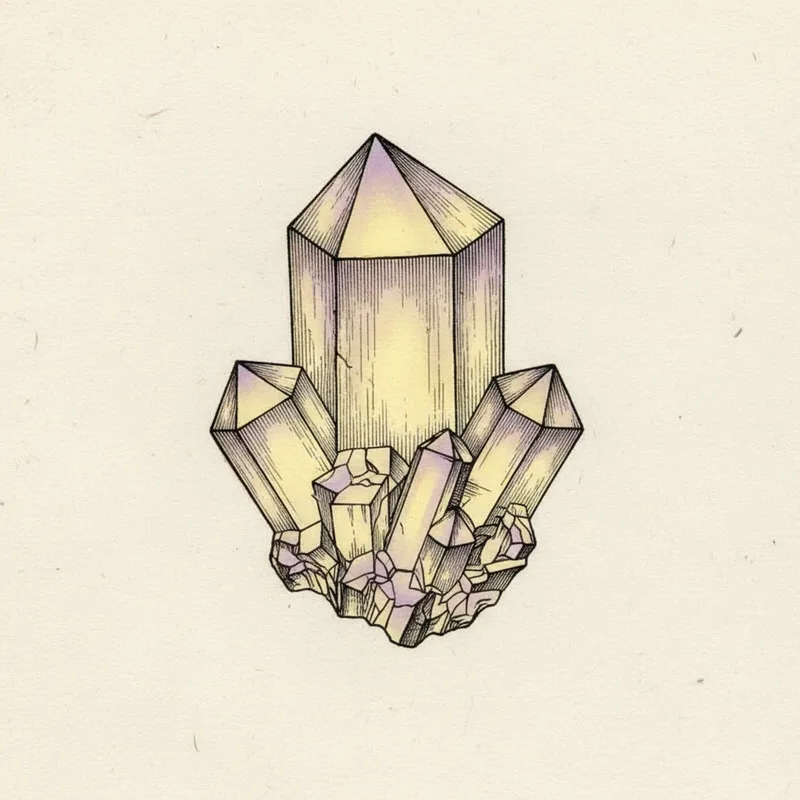
Scapolite (from the Greek 'skapos' meaning shaft or stick, referring to its prismatic crystal habit) is actually a solid solution series between two end members: marialite (sodium-rich) and meionite (calcium-rich). Most specimens fall between these extremes.
It forms in metamorphic rocks, particularly in skarns (contact-metamorphosed limestones), amphibolites, and granulites. In these environments, scapolite replaces plagioclase feldspar through a process called scapolitization, where chlorine and carbon dioxide-bearing fluids alter the original feldspar.
Gem-quality scapolite comes in attractive purple, golden yellow, and pink varieties. Purple specimens can resemble amethyst, and yellow stones can look like golden beryl. Cat's-eye scapolite (showing chatoyancy from needle inclusions) is particularly sought-after.
Identification Guide
Scapolite is identified by its tetragonal prismatic crystal habit (long, square-cross-section columns), moderate hardness (6), and vitreous luster. RI of 1.536-1.600 and biaxial optic sign help separate it from similar-looking gems.
Distinguish from amethyst (trigonal, different RI for purple varieties), golden beryl (hexagonal, different RI for yellow varieties), and topaz (orthorhombic, higher RI). The tetragonal crystal system and specific RI range are diagnostic.
Spotting Fakes
Scapolite is not well-known enough to be commonly faked. The main confusion is with more familiar gems of similar color: purple scapolite for amethyst, yellow scapolite for citrine, and pink scapolite for morganite. RI measurements distinguish between these. Cat's-eye scapolite is distinctive enough to be less commonly confused.
Some links in this post go to Amazon and Etsy. Crystal Almanac earns a commission from qualifying purchases at no extra cost to you. Tools recommended here are ones we would use ourselves to run the tests described - the recommendation comes first, the link is downstream of it.
Cultural & Metaphysical Traditions
Presented as cultural traditions, not scientific evidence
Scapolite is associated with problem-solving, independence, and breaking free from self-imposed limitations. Its columnar crystal habit connects it to themes of direction and reaching for goals. The replacement of feldspar by scapolite in nature is interpreted as a metaphor for transformation and upgrades in personal development.
Metaphysical and “healing” associations are cultural traditions, not medical advice or scientific fact. Crystals are not a substitute for professional medical care.
Where It's Found
Fine purple and yellow gem material
Pink and violet crystals
Large yellow crystals
Large crystal specimens
Price Guide
Good to Know
Scratch test: At hardness 6, Scapolite resists scratching from a knife but can be scratched by quartz. Best for pendants and earrings rather than rings.
Global supply: Found in 4 notable locations worldwide, from Tanzania to Canada.
Heft test: Scapolite has average mineral density (2.55-2.74). It feels about as heavy as you'd expect from a stone its size.
Common Questions
What is the chemical formula of Scapolite?
The chemical formula of Scapolite is Na₄Al₃Si₉O₂₄Cl - Ca₄Al₆Si₆O₂₄CO₃ (solid solution).
What is Scapolite's Mohs hardness?
Scapolite has a Mohs hardness of 6 on the 1 to 10 Mohs scale, hard enough to scratch glass but softer than quartz.
Is Scapolite a mineral?
Yes. Scapolite is a naturally occurring mineral (Silicate Mineral (Tectosilicate)) with a definite chemical composition and an ordered crystal structure.
Care & Safety
The water, salt, and sunlight questions people actually ask before cleansing or displaying scapolite, answered from its hardness (Mohs 6) and chemistry (Na₄Al₃Si₉O₂₄Cl - Ca₄Al₆Si₆O₂₄CO₃ (solid solution)).
Can Scapolite go in water?
Yes. Scapolite is not water-soluble and durable enough (Mohs 6), so a rinse or a quick wash with mild soap is no problem, cleanse it in water freely if that is your practice. A long soak does nothing for it either way, so skip that, and dry the stone afterward.
Can Scapolite go in salt water?
Not recommended, even though scapolite itself is hard and not water-soluble. Salt is both corrosive and mildly abrasive: it can dull a polished surface, attack metal settings, and crystallize inside small fractures as the stone dries. A quick dip will not destroy scapolite, but rinse it with fresh water afterward and dry it. For routine cleaning, plain water is the kinder choice.
Sources & References
The mineralogical and gemological data on this page is drawn from and can be cross-checked against these external references.
- WikipediaScapolite on Wikipedia
- WebmineralScapolite mineral data (Webmineral)
Related Minerals
The feldspar it often replaces during metamorphism
Similar color (purple variety), different mineral
Similar crystal habit, often confused
Explore More
Save This Stone

Keep this scapolite reference handy. Save the card to a Pinterest board and the profile is one tap away.
Save to PinterestNewsletter
Something shiny, now and then
A stone worth knowing, or a fake worth spotting, every so often. No spam.