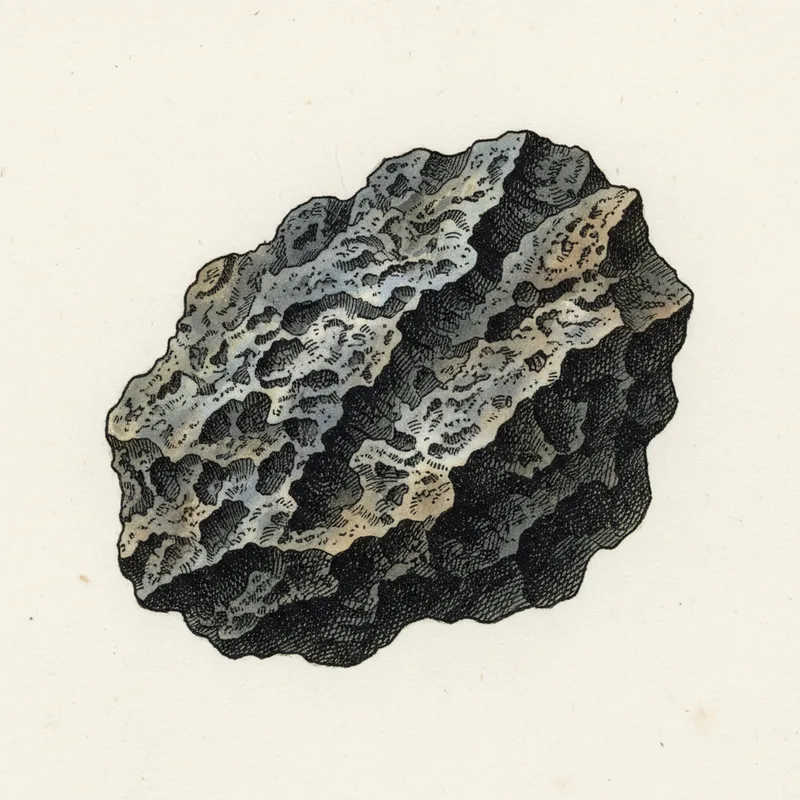
Lava Rock
The Grounding Stone
Affiliate links. We may earn a commission, at no cost to you.
Quick Facts
Formation & Origin
Lava rock is solidified volcanic lava - molten rock that erupted at the Earth's surface and cooled. The vesicular (bubbly) texture that makes it recognizable comes from dissolved gases escaping the lava as pressure drops during eruption. The frozen gas bubbles create the lightweight, porous character.
The most common lava rock in the crystal market is basaltic scoria - dark, vesicular basalt formed from low-viscosity lava typical of shield volcanoes and mid-ocean ridges. The dark color comes from iron and magnesium-rich mineral content (olivine, pyroxene, plagioclase feldspar).
Lava rock is not a mineral but a rock composed of multiple minerals, glass, and gas bubbles. Its composition varies depending on the specific eruption chemistry, but most is basaltic (low in silica, high in iron and magnesium). The porous texture has made it popular as a diffuser stone for essential oils - the cavities absorb and slowly release oil.
Identification Guide
Lava rock is identified by its dark color, rough porous texture (visible gas bubbles/vesicles), and light weight. It's one of the easiest rocks to identify - the bubbly, rough texture is unmistakable.
Distinguish from obsidian (glassy, no bubbles, dense), black tourmaline (crystalline, striated, no bubbles), and pumice (so porous it floats on water). Lava rock sinks in water, while pumice floats. The visible gas bubbles throughout the material are diagnostic.
Spotting Fakes
Lava rock is so abundant and inexpensive that faking makes no sense. However, some 'lava stone' beads on the market are actually dyed ceramic or manufactured material - these tend to be too uniform in shape and pore distribution. Genuine lava rock beads have irregular, natural-looking pores and slight variations in density and texture. The pores in real lava rock extend into the interior, while artificial material may have only surface-level texture.
Some links in this post go to Amazon and Etsy. Crystal Almanac earns a commission from qualifying purchases at no extra cost to you. Tools recommended here are ones we would use ourselves to run the tests described - the recommendation comes first, the link is downstream of it.
Cultural & Metaphysical Traditions
Presented as cultural traditions, not scientific evidence
Lava rock's origin from the Earth's molten interior gives it strong associations with grounding, primal energy, and rebirth in modern crystal practice. Hawaiian tradition connects lava to Pele, the volcano goddess. In some traditions, taking lava rock from Hawaii is considered disrespectful to Pele and brings bad luck - Hawaii Volcanoes National Park receives packages of returned lava rock regularly from tourists who believe they've been cursed. The porous texture's use as an essential oil diffuser has made lava bead bracelets one of the most popular wellness accessories.
Metaphysical and “healing” associations are cultural traditions, not medical advice or scientific fact. Crystals are not a substitute for professional medical care.
Where It's Found
Found wherever volcanoes have erupted
Abundant, iconic volcanic landscapes
Active volcanism, fresh lava flows
Historic volcanic sites
Price Guide
Good to Know
Scratch test: At hardness 5, Lava Rock resists scratching from a knife but can be scratched by quartz. Best for pendants and earrings rather than rings.
Global supply: Found in 4 notable locations worldwide, from Worldwide to Italy.
Heft test: With a specific gravity of 2.00-3.00 (varies with porosity), Lava Rock feels lighter than most minerals. This lightness can help identify it.
Common Questions
What is the chemical formula of Lava Rock?
The chemical formula of Lava Rock is Variable (basaltic composition: SiO₂, FeO, MgO, CaO, etc.).
What is Lava Rock's Mohs hardness?
Lava Rock has a Mohs hardness of 5 on the 1 to 10 Mohs scale, which a steel knife will scratch.
Is Lava Rock a mineral?
Not quite. Lava Rock is a rock (a naturally occurring mixture of minerals), not a single mineral species.
Care & Safety
The water, salt, and sunlight questions people actually ask before cleansing or displaying lava rock, answered from its hardness (Mohs 5) and chemistry (Variable (basaltic composition: SiO₂, FeO, MgO, CaO, etc.)).
Can Lava Rock go in water?
Only briefly. A quick rinse under running water is fine for lava rock, but do not let it soak or sit submerged. At Mohs 5 it is tough enough for a rinse but not for a long soak. Dry it thoroughly afterward.
Can Lava Rock go in salt water?
No. Lava Rock can take a brief fresh-water rinse and nothing more, and salt water is harder on it both ways: corrosive while wet, then abrasive as the salt dries into crystals. Lava Rock's iron content also makes rust staining likely if salt residue sits on the surface. If it does meet salt water, rinse it with fresh water and dry it promptly.
Sources & References
The mineralogical and gemological data on this page is drawn from and can be cross-checked against these external references.
- WikipediaBasalt on Wikipedia
Related Minerals
Volcanic glass, formed from the same magma but cooled faster
Even more porous volcanic rock that floats on water
Dense, non-vesicular version of the same rock type
Mineral commonly found within basaltic lava
Explore More
Save This Stone

Keep this lava rock reference handy. Save the card to a Pinterest board and the profile is one tap away.
Save to PinterestNewsletter
Something shiny, now and then
A stone worth knowing, or a fake worth spotting, every so often. No spam.