Cobaltocalcite
The Pink Crystal Bloom
Affiliate links. We may earn a commission, at no cost to you.
Quick Facts
Formation & Origin
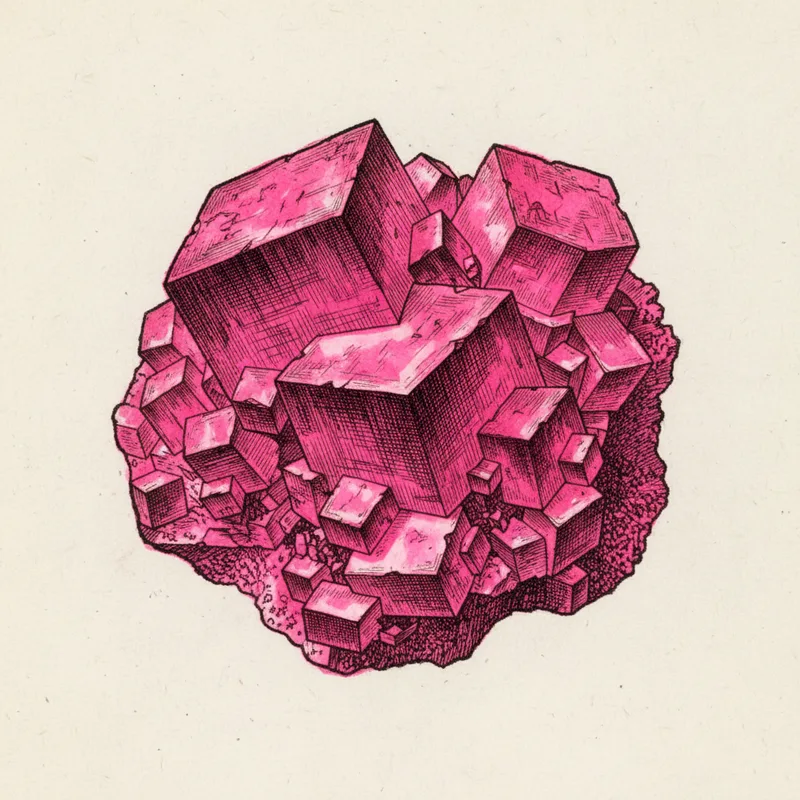
Cobaltocalcite is a pink to magenta variety of the carbonate mineral calcite (CaCO₃) in which cobalt substitutes for some calcium, giving it its color. Cobaltocalcite (also called cobaltian calcite or cobalt calcite) is a variety of calcite where cobalt ions substitute for some of the calcium in the crystal structure, producing an intense pink to magenta color. It forms as a secondary mineral in the oxidation zones of cobalt-bearing ore deposits.
The finest specimens come from the copper-cobalt mines of Katanga Province in the Democratic Republic of Congo, where cobalt-rich solutions percolate through limestone host rock and deposit druzy crusts of tiny, sparkling pink crystals. These often form on malachite or other copper minerals, creating stunning green-and-pink combinations.
The depth of color depends directly on cobalt concentration. Specimens with higher cobalt content display more intense magenta-pink colors, while lower concentrations produce softer rose tones. The crystals are typically small (under 5mm) and grow in druzy crusts rather than large individual crystals.
Identification Guide
Cobaltocalcite's vivid pink to magenta color on druzy crystal surfaces is distinctive. Like all calcite, it effervesces in dilute hydrochloric acid and has a hardness of 3. The small, sparkly crystal habit in crusts distinguishes it from other pink minerals.
Distinguish from rhodochrosite (typically forms banded or rhombohedral crystals, different habit), rhodonite (much harder at 5.5-6.5), and dyed calcite (check for uneven color distribution). Natural cobaltocalcite color is remarkably even across the crystal surfaces.
Spotting Fakes
Some dealers sell dyed calcite as cobaltocalcite. The dye test: rub a wet white cloth on the specimen. Dyed material may transfer color. Natural cobaltocalcite won't lose color when wiped. Also check that the pink color is distributed evenly through the crystals, not concentrated on surfaces. Very large pink calcite crystals (over 1cm) claimed as cobaltocalcite should be viewed skeptically, as the mineral typically forms small crystals.
Some links in this post go to Amazon and Etsy. Crystal Almanac earns a commission from qualifying purchases at no extra cost to you. Tools recommended here are ones we would use ourselves to run the tests described - the recommendation comes first, the link is downstream of it.
Cultural & Metaphysical Traditions
Presented as cultural traditions, not scientific evidence
Cobaltocalcite is considered one of the most powerful heart-chakra stones in crystal healing, associated with unconditional love, emotional healing, and self-acceptance. Its vibrant pink color connects it to themes of joy and playful affection. Practitioners sometimes pair it with malachite (its natural companion from Congolese mines) for combined heart-opening and protective energy.
Metaphysical and “healing” associations are cultural traditions, not medical advice or scientific fact. Crystals are not a substitute for professional medical care.
Where It's Found
World's finest specimens from copper-cobalt mines
Good specimens from cobalt-arsenic mines
Associated with copper mining
Price Guide
Good to Know
Scratch test: At hardness 3, Cobaltocalcite can be scratched with a copper coin. Handle gently and keep away from harder stones in your collection.
Global supply: Found in 3 notable locations worldwide, from DR Congo to Zambia.
Heft test: Cobaltocalcite has average mineral density (2.71). It feels about as heavy as you'd expect from a stone its size.
Common Questions
What is the chemical formula of Cobaltocalcite?
The chemical formula of Cobaltocalcite is CaCO₃ (with Co²⁺ substitution).
What is Cobaltocalcite's Mohs hardness?
Cobaltocalcite has a Mohs hardness of 3 on the 1 to 10 Mohs scale, soft enough to scratch with a copper coin.
Is Cobaltocalcite a mineral?
Yes. Cobaltocalcite is a naturally occurring mineral (Carbonate Mineral) with a definite chemical composition and an ordered crystal structure.
Care & Safety
The water, salt, and sunlight questions people actually ask before cleansing or displaying cobaltocalcite, answered from its hardness (Mohs 3) and chemistry (CaCO₃ (with Co²⁺ substitution)).
Can Cobaltocalcite go in water?
Not recommended. At Mohs 3, cobaltocalcite is soft enough that water can slowly dull, etch, or wear down the surface, so a water cleanse does more harm than good here. Reach for a dry cloth instead.
Can Cobaltocalcite go in salt water?
No. Cobaltocalcite is best kept away from water altogether, and salt water is the harsher version of that problem: the dissolved salt is corrosive while the stone is wet, then leaves gritty crystals behind in cracks and crevices as it dries.
Sources & References
The mineralogical and gemological data on this page is drawn from and can be cross-checked against these external references.
- WikipediaCalcite on Wikipedia
- WebmineralCalcite mineral data (Webmineral)
- Handbook of MineralogyCalcite (Handbook of Mineralogy, PDF)
Explore More
Carbonate Minerals
The Love Collection
One of the most vivid pink minerals on Earth. Cobalt creates an intense magenta that practitioners associate with unconditional love and emotional opening.
Mohs Hardness Scale
See where Cobaltocalcite sits on the scale
Crystal Care Guide
Water safety, sunlight, and handling tips
Save This Stone

Keep this cobaltocalcite reference handy. Save the card to a Pinterest board and the profile is one tap away.
Save to PinterestNewsletter
Something shiny, now and then
A stone worth knowing, or a fake worth spotting, every so often. No spam.