Aurichalcite
The Blue Lace Mineral
Affiliate links. We may earn a commission, at no cost to you.
Quick Facts
Formation & Origin
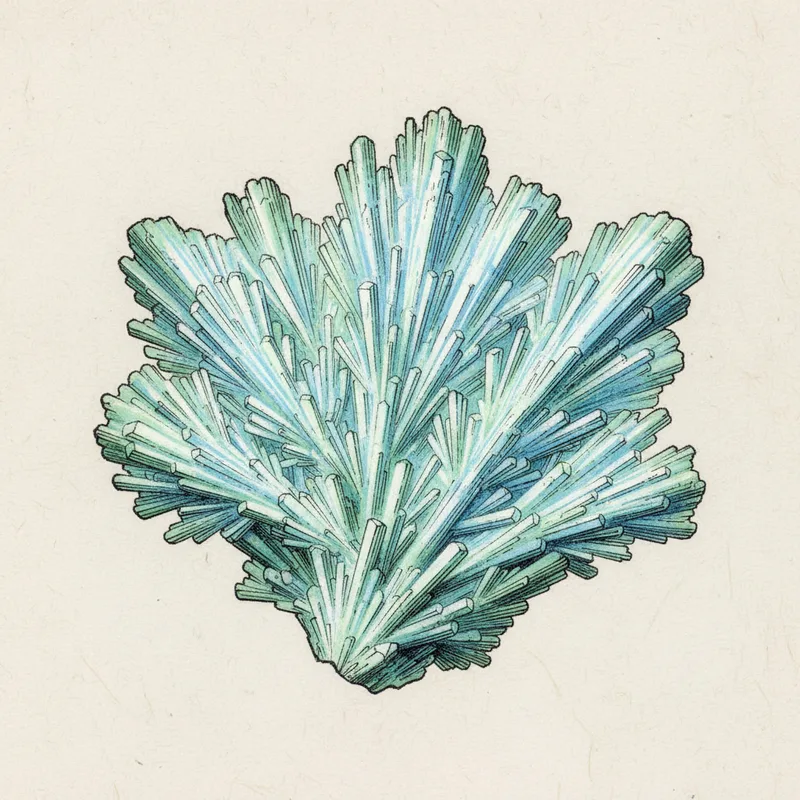
Aurichalcite is a zinc-copper carbonate mineral ((Zn,Cu)₅(CO₃)₂(OH)₆) that forms delicate, pale blue to blue-green tufts of needle-like crystals. Aurichalcite forms as a secondary mineral in the oxidation zone of zinc-copper ore deposits. When zinc and copper carbonates precipitate from carbonate-rich groundwater in the presence of both metals, aurichalcite grows as delicate tufts, sprays, and crusts of tiny acicular (needle-like) crystals.
The pale blue color results from the copper content in the zinc-copper carbonate structure. Specimens from different localities show varying copper-to-zinc ratios, which subtly affects the shade of blue. The crystals are extremely delicate, growing as feathery, lace-like aggregates that look almost unreal.
The name comes from the Greek 'oreichalkos' (mountain copper), which is also the origin of the word 'orichalcum,' the legendary metal of Atlantis described by Plato. Despite this exotic etymology, aurichalcite is a straightforward secondary carbonate mineral.
Identification Guide
Aurichalcite is identified by its delicate sky-blue tufts of acicular crystals, silky to pearly luster, and extremely low hardness (2). The feathery, lace-like crystal aggregates are distinctive. It effervesces in dilute hydrochloric acid.
Distinguish from rosasite (similar color but forms botryoidal crusts rather than tufts), hemimorphite (harder, different crystal habit), and chrysocolla (amorphous, different luster). The delicate tufted habit is aurichalcite's most diagnostic feature.
Spotting Fakes
Aurichalcite is not faked because it's too delicate for commercial use and is primarily a collector mineral. The main concern is damage during transport. These specimens are among the most fragile in the mineral kingdom. Even gentle handling can crush the delicate crystal tufts. Carefully packaged specimens with intact, fluffy blue crystal sprays are the most desirable.
Some links in this post go to Amazon and Etsy. Crystal Almanac earns a commission from qualifying purchases at no extra cost to you. Tools recommended here are ones we would use ourselves to run the tests described - the recommendation comes first, the link is downstream of it.
Cultural & Metaphysical Traditions
Presented as cultural traditions, not scientific evidence
Aurichalcite is associated with gentle communication, compassion, and releasing anxiety in crystal healing. Its delicate, ethereal appearance connects it to themes of lightness and letting go. The Atlantis connection through its name adds mystical associations. Practitioners use it primarily as a display mineral for meditative contemplation rather than carrying it, given its extreme fragility.
Metaphysical and “healing” associations are cultural traditions, not medical advice or scientific fact. Crystals are not a substitute for professional medical care.
Where It's Found
Finest tufted crystal specimens
Classic copper mining locality
Fine specimens from ancient mining district
Good European specimens
Price Guide
Good to Know
Scratch test: At hardness 2, Aurichalcite can be scratched with a fingernail. This is a display specimen, not a wearable stone.
Global supply: Found in 4 notable locations worldwide, from Mexico to Italy.
Heft test: Aurichalcite has a specific gravity of 3.96 - noticeably heavier than quartz. You'll feel the density when you pick it up.
Common Questions
What is the chemical formula of Aurichalcite?
The chemical formula of Aurichalcite is (Zn,Cu)₅(CO₃)₂(OH)₆.
What is Aurichalcite's Mohs hardness?
Aurichalcite has a Mohs hardness of 2 on the 1 to 10 Mohs scale, soft enough to scratch with a fingernail.
Is Aurichalcite a mineral?
Yes. Aurichalcite is a naturally occurring mineral (Carbonate Mineral) with a definite chemical composition and an ordered crystal structure.
Care & Safety
The water, salt, and sunlight questions people actually ask before cleansing or displaying aurichalcite, answered from its hardness (Mohs 2) and chemistry ((Zn,Cu)₅(CO₃)₂(OH)₆).
Can Aurichalcite go in water?
Not recommended. At Mohs 2, aurichalcite is soft enough that water can slowly dull, etch, or wear down the surface, so a water cleanse does more harm than good here. Reach for a dry cloth instead.
Can Aurichalcite go in salt water?
No. Aurichalcite is best kept away from water altogether, and salt water is the harsher version of that problem: the dissolved salt is corrosive while the stone is wet, then leaves gritty crystals behind in cracks and crevices as it dries. Salt also accelerates corrosion of copper-bearing minerals like aurichalcite.
Sources & References
The mineralogical and gemological data on this page is drawn from and can be cross-checked against these external references.
- WikipediaAurichalcite on Wikipedia
- WebmineralAurichalcite mineral data (Webmineral)
- Handbook of MineralogyAurichalcite (Handbook of Mineralogy, PDF)
Related Minerals
Similar copper-zinc carbonate, different habit
Zinc carbonate, often found together
Copper carbonate, darker green version
Explore More
Save This Stone

Keep this aurichalcite reference handy. Save the card to a Pinterest board and the profile is one tap away.
Save to PinterestNewsletter
Something shiny, now and then
A stone worth knowing, or a fake worth spotting, every so often. No spam.